Suddenly listening to advice, Apple makes me a bit unaccustomed.
Last time, Tony talked with you about John Ternus, who may take over as Apple's CEO. You should have some understanding of this hardware guy.
To put it simply, if Ternus really takes office in the future, this executive with a hardware engineering background may bring some new trends to Apple. Well, I'm just saying, it's not impossible to recreate the kind of amazing feeling when we first saw the iPhone 4...
But actually, Apple's future plans and trends are not only reflected in the change of leadership. So today, Tony will talk about the possible changes that may happen to Apple from the perspective of the entire Apple ecosystem.
01
Let's start with something beneficial to us consumers. In the future, when switching between Apple and Android devices, data may be interoperable.
Those who have switched from Apple to Android or vice versa may have experienced the pain of device switching. The device - switching apps on the market can basically only preserve contacts, photos, etc. As for the data within apps, you basically have to start over. As for WeChat, there is a chat history migration function, but those who have used it know...
Example: OPPO Migration
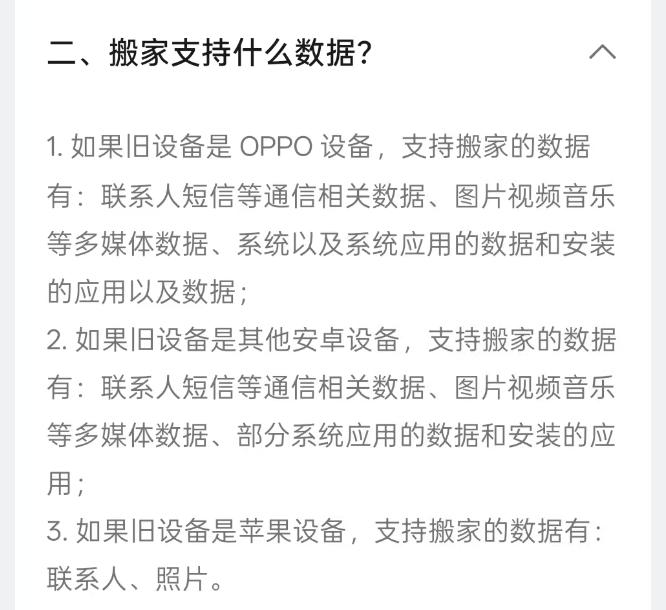
The root cause of the pain in device switching is that the file systems and data structures of Apple and Android are different, and Apple also strictly restricts various third - party apps from accessing the entire device's data. So other mobile phone manufacturers can only stare blankly at the data stored in iPhones. Therefore, for a long time, when switching across systems, only public directory data such as photos that Apple allows to be read can be transferred.
Well, no wonder people say that Apple uses ecological coercion. It turns out they're holding me back in this aspect.
But in October this year, Apple quietly added a new framework document called "AppMigrationKit (Application Migration Kit)" on its developer page. Maybe it's aimed at solving the problem of device switching.
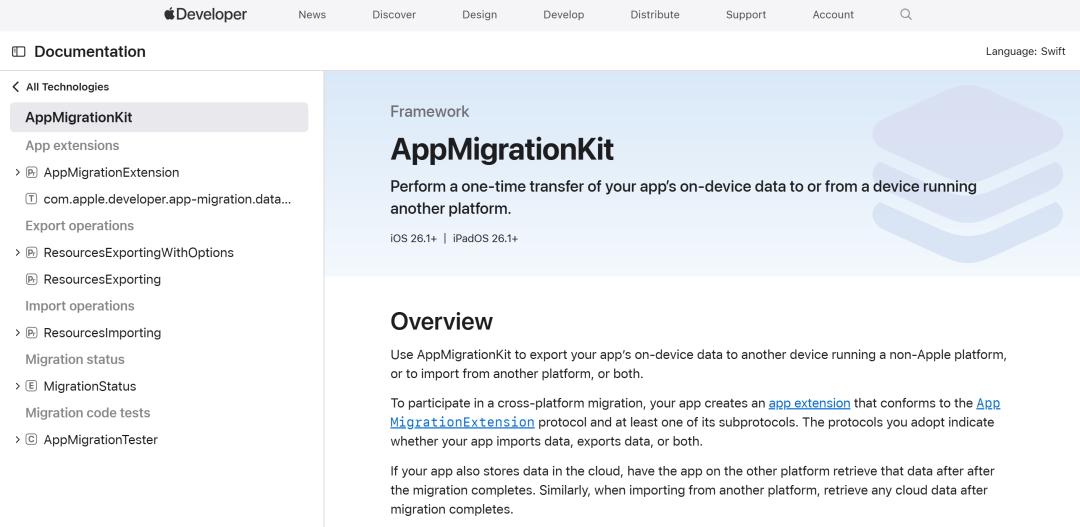
In the developer documentation, Apple specifically emphasized that AppMigrationKit is not used to transfer data between two iOS devices. Its design goal is to migrate in - app data between iOS and "other platforms".
What are these "other platforms"? It's really hard to guess.
It is reported that Apple is already developing the relevant implementation features. From the pictures leaked by 9to5mac, in the future, the new version of iOS will directly add an option of "Transfer to Android" in the "Transfer or Restore iPhone" option.
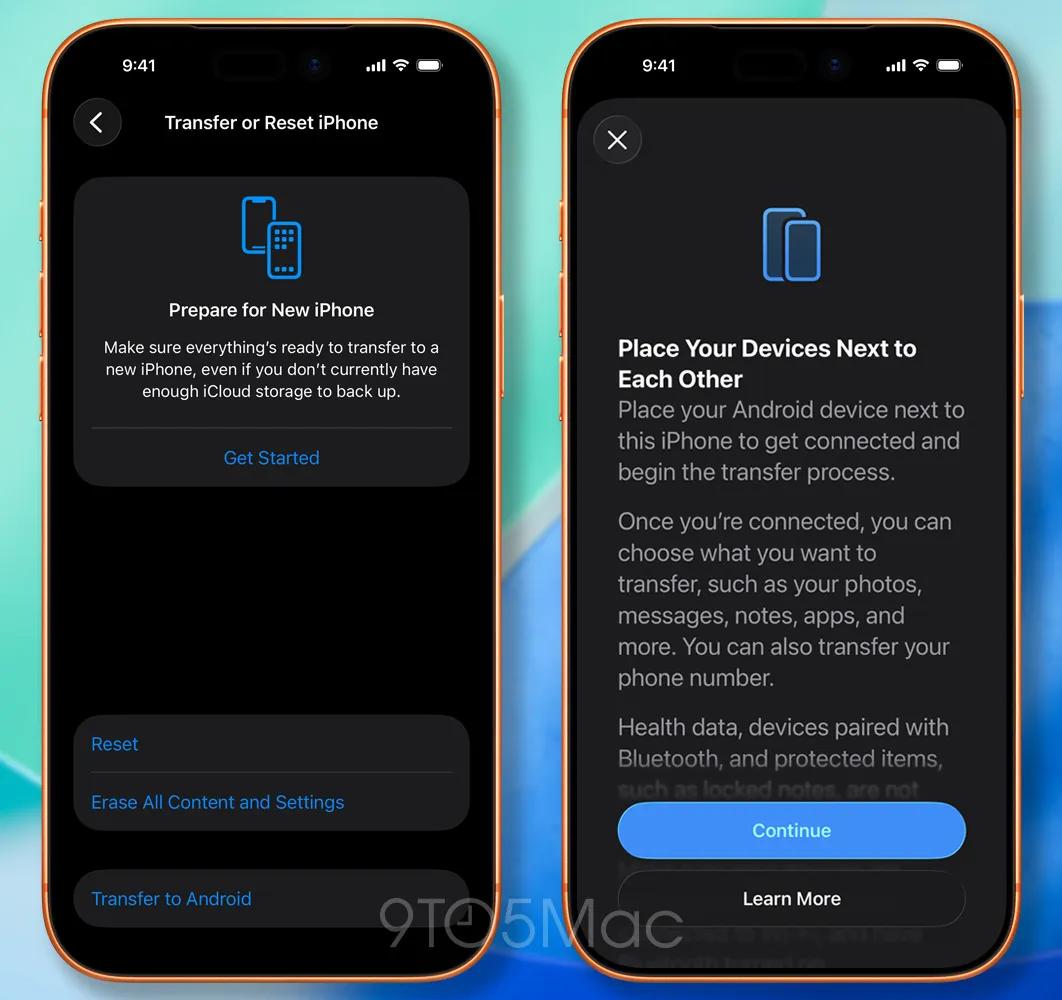
Moreover, it's not only Apple that is working on this. Android is also cooperating. It not only has to receive the data transferred from iOS, but will also have an app called "Transfer to iPhone" in the future. This is an epic collaboration.

Those who have detailed knowledge of the ins and outs of this matter should know that Apple's support for the mutual migration of applications between systems this time is actually a change made in response to the requirements of the European Union's "Digital Markets Act (DMA)". It is also a solution to the problem of data migration for third - party sideloaded applications in the EU region.
Yes, it's the same thing as the recent uproar about the EU requiring Apple to open its third - party app market.
Sure enough, the European Ministry of Industry and Information Technology... Although it's the EU that is pushing behind the scenes, Tony thinks it also cannot do without Apple's own change in attitude.
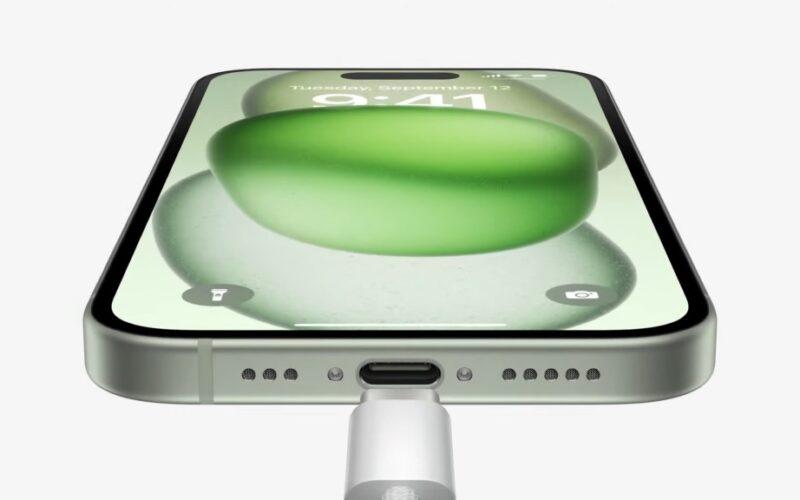
You know, Apple didn't used to follow the EU's requirements blindly. For example, in the matter of unifying the USB - C port, Apple kept the Lightning interface alive for several years. It was not until the EU finally lost patience and directly required Apple to either switch to the C port or stop selling in the EU that the iPhone 15 series finally got the Type - C interface.
And the DMA Act, which requires Apple to open app data migration, also forced Apple to open third - party app sideloading and non - WebKit browser kernels in the EU. Although there were still some small episodes in the middle, overall, Apple is more receptive to advice than ever before.
Moreover, in my opinion, besides benefiting us consumers, Apple's receptiveness to advice this time also serves its own interests.
Simplifying the data migration between Android and Apple not only makes it easier for iPhone users to switch to Android, but also for Android users to switch to iPhone. In this way, in the future, users will choose which brand based entirely on which product has stronger capabilities. Judging from the sales performance of the iPhone 17 this year, Apple still has confidence in this regard.
02
In addition to the ecological opening that benefits consumers, Apple has also been very active in its development ecosystem. Its Swift programming language is trying to break through the Apple ecosystem and be compatible with Android and Windows.
On October 24th this year, Apple released a preview version of the Swift SDK (Software Development Kit) for the Android platform.
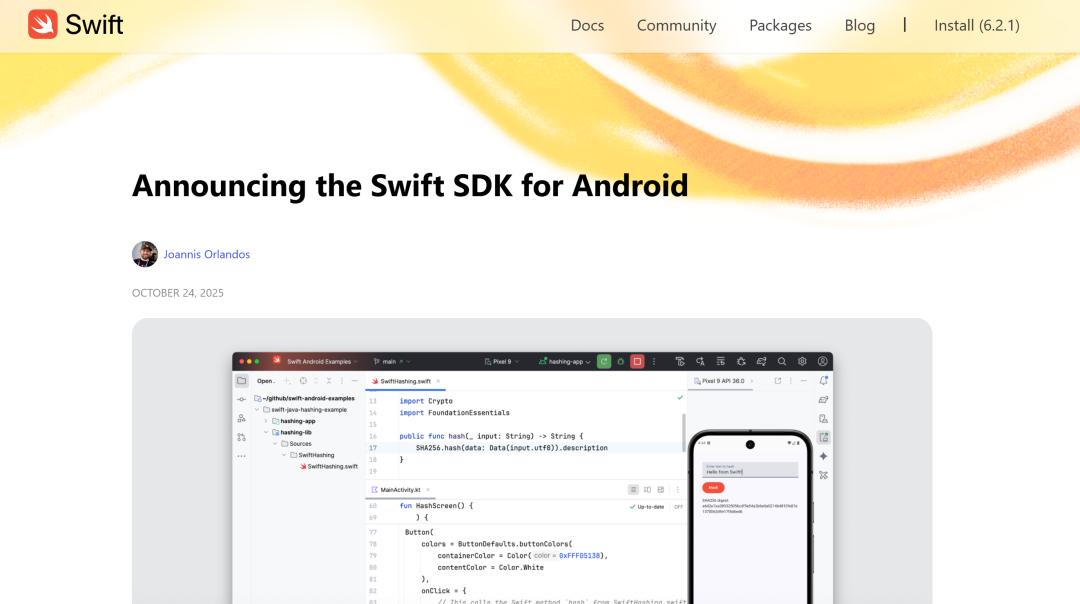
Let me briefly explain to those who don't understand what's going on here -
Swift is a programming language released by Apple. In the early days, it was mainly used to write apps for Apple operating systems such as iOS and macOS. With the release of the Android SDK this time, it will be more convenient for developers to develop cross - platform Android applications in the future.
You know, Apple's Swift didn't do much in the aspect of cross - platform development in the past.
At the end of 2015, Apple open - sourced Swift, making this programming language theoretically capable of running across platforms. However, just open - sourcing is not enough to write software for other platforms using Swift. The lack of an official SDK, debugging links, etc. will greatly discourage developers. So for many years, people still rely on frameworks such as Flutter, React Native, and Xamarin for cross - platform development. Google's Android programming language Kotlin also has a project called Kotlin Multiplatform to promote cross - platform development, but Apple has not made much supporting efforts in this regard.
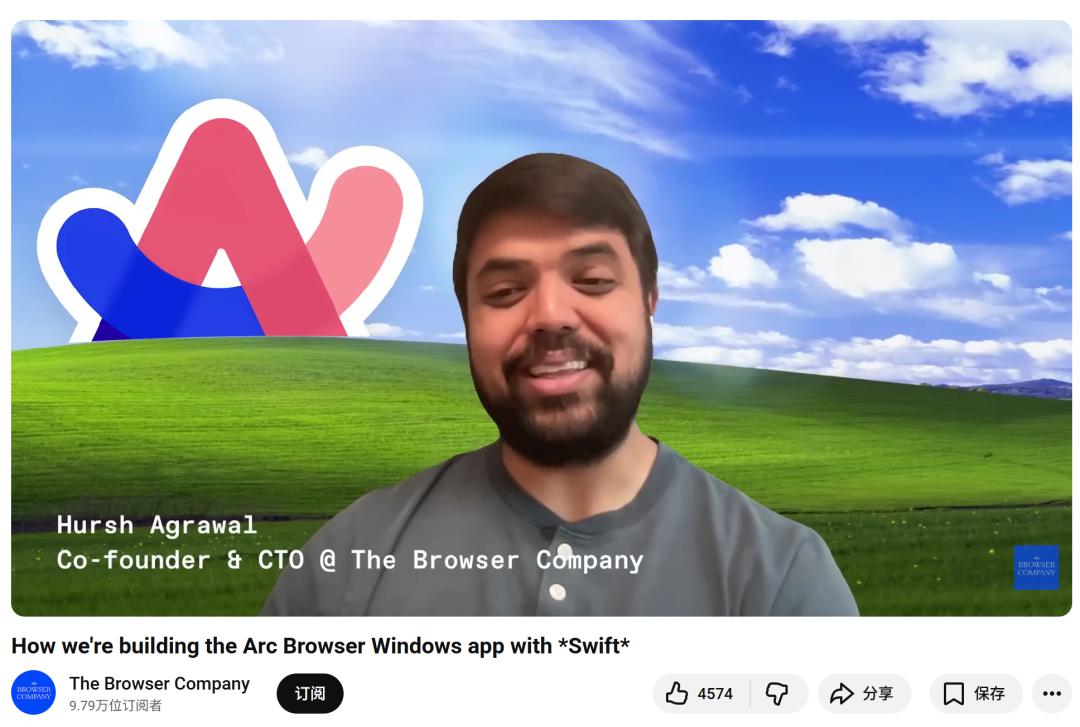
Let me give you another example of Swift cross - platform development. Before, the colleagues in our editorial department who use Macs really liked a browser called Arc. The experience was really good. But at first, it was an application exclusive to macOS. Tony and other Windows users were really envious.
It wasn't until April last year that the Arc browser team used Swift for cross - platform development and released the Windows version. They used the same set of code to share the core logic, which made maintenance more convenient. Their CTO even made a video specifically explaining how they developed it using Swift.
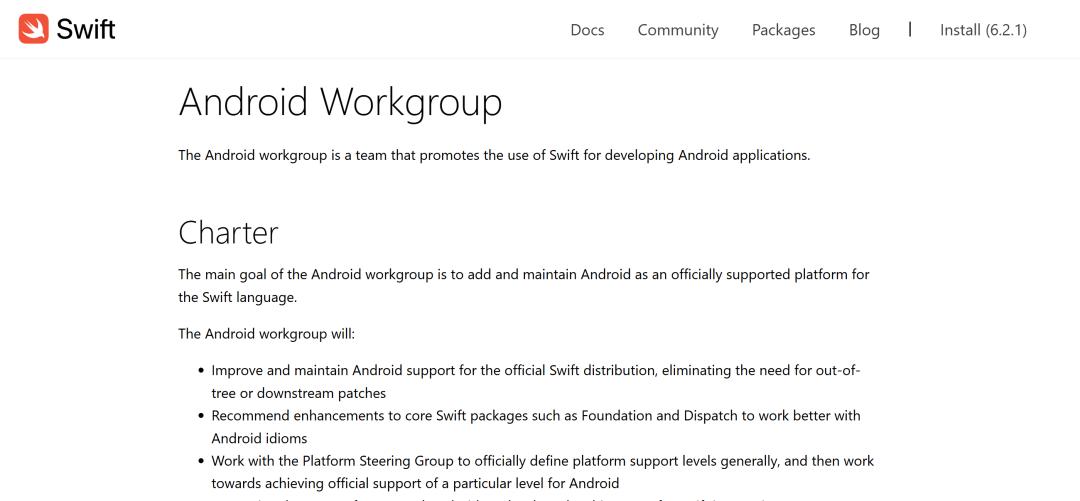
According to Apple's official statement, earlier this year, Swift gathered some Apple engineers and open - source workers to form an Android working group. Their main task is to promote developers to use Apple's programming language Swift to develop Android apps. This SDK is the result of the working group's efforts.
From these things, we can actually see that in recent years, Swift is gradually getting rid of the label of "Apple ecosystem language" and slowly developing into a cross - platform language.
Since it was open - sourced in 2015, it first supported Linux, and its support for Windows has also been gradually improved. Now there is also an Android SDK. It's not impossible to develop HarmonyOS programs in the future...
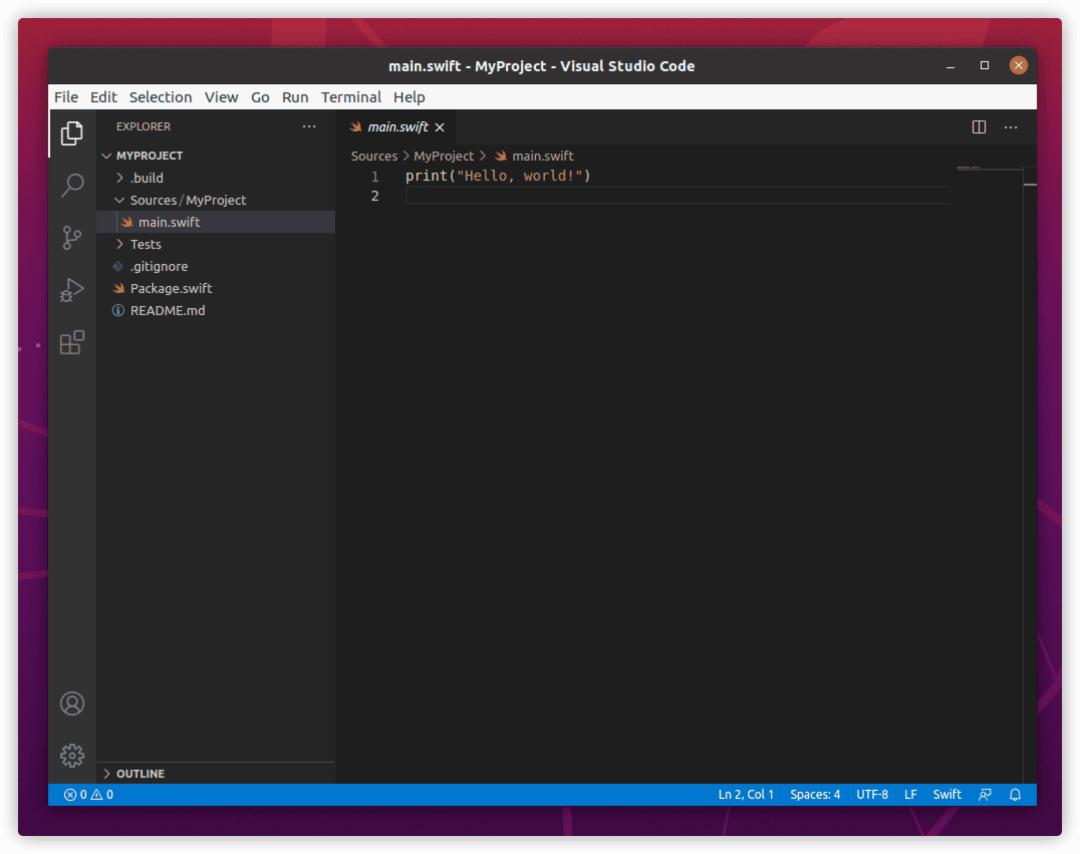
After the release of the Android SDK this time, those developers who are familiar with the Swift language can more quickly port their apps developed based on the Apple ecosystem to the Android platform. For example, the Todoo app introduced by Shichao some time ago. Tony saw many people in the comment section hoping that it would have an Android version.
Tony is also looking forward to the Android version of the Dazz camera with a Fuji - like style. Now all the Android versions are fakes, and the shooting effect is completely off...
However, in the final analysis, Apple's move this time is not some groundbreaking new invention. Tony prefers to understand it as locking the stable door after the horse has bolted and doing what it should have done in the first place.
Think about it. If developers choose Kotlin for cross - platform development, they will definitely prioritize the Android experience. This will be very embarrassing for Apple. If Kotlin monopolizes the cross - platform development path, no matter how powerful Swift is, it can only be used within Apple's own ecosystem and will become more and more marginalized.
So Apple's promotion of the Android SDK for Swift is indeed a sign of greater openness, but in essence, it's also a form of self - rescue.
03
What we've talked about above are all Apple's initiatives to break out of its ecological circle. But from an external perspective, the forced compatibility and active integration of Android manufacturers have actually made the Apple ecosystem more open.
It started with manufacturers like OPPO and vivo supporting the mutual transfer of Apple Live Photos. Now there are also features such as instant connection when opening the AirPods case, Apple Watch notification alerts, and even the transfer of iPhone calls and text messages. Recently, Android has also launched a cross - platform interoperability function called Quick Share, which can directly "AirDrop" photos and files to iPhones.