2025 isn't officially over yet, but 2026 is already showing its fangs.
Recently, I participated in several exclusive interviews with senior executives of new - energy vehicle startups.
On the one hand, I'm genuinely happy to see each company gradually getting on the right track. On the other hand, from the words of these leaders, I felt the huge pressure and challenges from the end - market.
In the Chinese auto market, one can never afford to be careless. In this article today, I'll try to piece together some views on the Chinese auto market next year with some fragmented information.
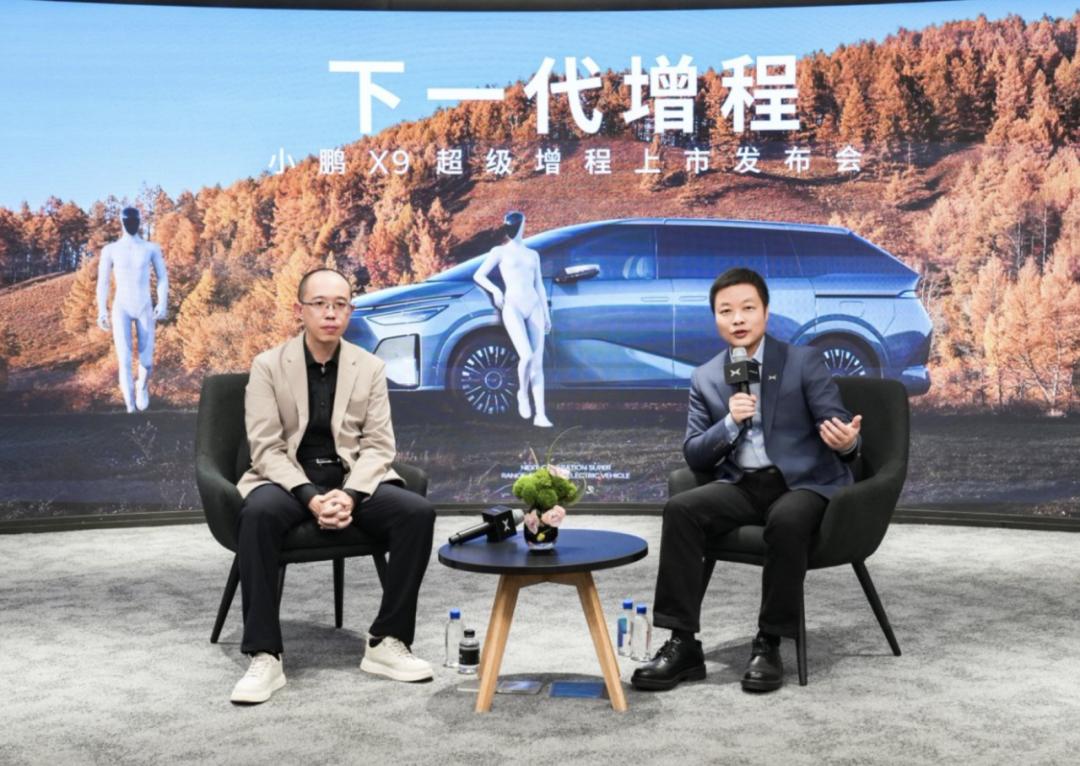
"I think every automaker is walking on eggshells and wants to achieve stable and long - term development. A year ago, we could hardly imagine the current changes, and it's also hard to foresee what will happen a year later. I think there will be many changes. The only thing certain is that the competition will be more brutal and bloody."
After the launch event of the extended - range version of XPeng X9 on November 20th, when asked about his views on the market pattern next year by the media, the above was the answer given by He Xiaopeng.
At a media communication meeting the day after the release of the third - quarter financial report, Li Bin was also asked a similar question and quickly gave his opinion: "I agree with Mr. He. The intensity of competition in the Chinese auto market has actually been increasing year by year. Which year isn't brutal? Which year isn't cruel? Maybe it won't be until 2035 that the market pattern will truly stabilize."
Based on their statements, the core idea is clear: "Whether it's joint - venture or domestic automakers, all OEMs should abandon their illusions. The competition next year will only be more intense."
Actually, according to the current known product plans, almost every niche market will be filled with new products. Take the large six - seat SUV segment as an example. We thought that the influx of more than a dozen "latecomers" this year had made the competition reach the so - called "extreme".

Unexpectedly, next year, with the continuous iteration and new product launches of real "powerhouses" like Li Auto, Xiaomi, NIO, and Hongmeng Zhixing, the more intense competition is just beginning.
Against this background, many players are doomed to become "cannon fodder". Similar scenarios will continue to play out in various segments of the Chinese auto market.
"Currently, it's very difficult to defeat the opponent with one move. It's already remarkable if a company can lead in core technologies for a year. For example, our fully active suspension can lead for at most a year and a half. If we look at the basic rules of this industry, it's a long - distance marathon. In the end, it's about comprehensive capabilities. There can't be any weak points. If you can be one or two percentage points more efficient than others in every aspect, then ultimately you can be three to five percentage points better than others. This is the difference between an excellent company and an ordinary one. In the end, you have to build solid fortifications and fight steadily, making continuous progress day by day."
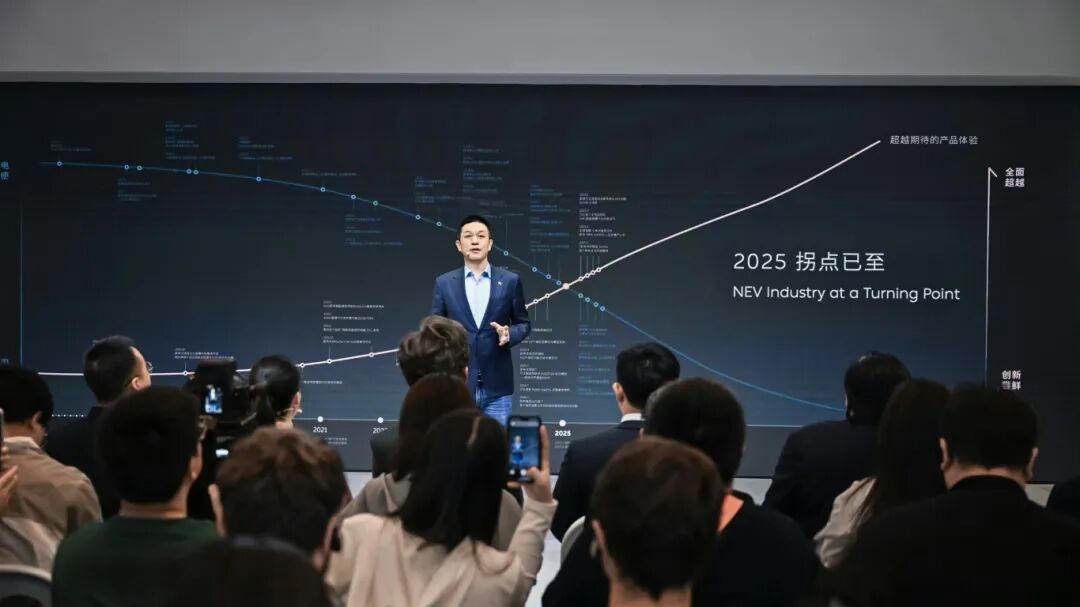
In less than 200 words, Li Bin shared his deeper views on the current overall market situation. The key point is: "In the Chinese auto market next year, there will be no blitzkrieg, only attrition warfare. It's time to truly test the multi - dimensional resource reserves."
In a subsequent exclusive interview, Li Bin said somewhat helplessly: "Due to the early withdrawal of the replacement subsidy this year, the tail - end effect in the fourth quarter is gone. Except for the new ES8, Firefly, and ET9, the sales of other models have been affected to some extent."
This also explains in advance why NIO's delivery volume in November declined month - on - month and failed to break through the 40,000 - unit mark again. Generally speaking, from November 1st to November 23rd, the retail sales data of passenger cars nationwide also declined both year - on - year and month - on - month.
So far, there are no signs of improvement in the cold market situation.
Although, judging from the weekly sales reports of each company, leading players like BYD, Geely, and Hongmeng Zhixing can still perform strongly, but more often we see the struggling of mid - tier and lower - tier OEMs, who are trying hard to maintain their market share from shrinking too quickly.
Facing this situation, I can't help but sigh: "The era of high - speed growth in the Chinese auto market is over. Instead, the rather terrifying era of stock competition has arrived."
Looking at the new - energy vehicle segment, with the complete withdrawal of the replacement subsidy and the overall halving of the purchase tax subsidy, the cold market situation will probably get even worse.
If the absence of the tail - end effect in the fourth quarter this year has already made us feel a bit of the chill, then the first quarter of next year will be the truly tough winter.
On one hand, the external survival environment continues to deteriorate. On the other hand, the internal demand for survival is intensifying. The difficult - to - resolve contradictions are becoming more and more prominent in the Chinese auto market.
Most likely, the result will be the continuous escalation of price wars and the further concentration of industry resources towards the top - tier players. To quote the words of another OEM executive, "The real process of weeding out the weak has begun."
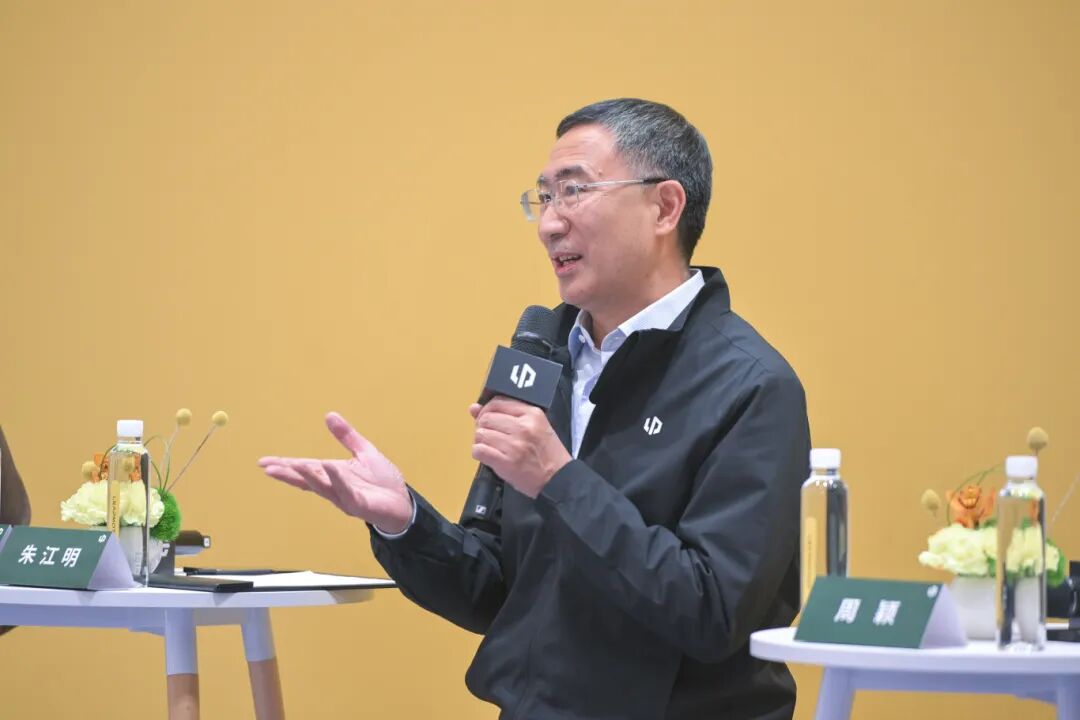
This leads to the next topic. In an exclusive interview after the launch of the Leapmotor Lafa5, Zhu Jiangming once again emphasized Leapmotor's determination to reach one million units in sales next year.
"Although the withdrawal of subsidies has had a certain impact on the end - market demand, I believe that the total volume of the Chinese auto market next year won't change much. The penetration rate of new - energy vehicles is estimated to increase by 5% - 10% on this year's basis. For us, we need to strive for incremental sales based on the existing 500,000 - unit sales of our current models, and the rest will be shared by several new models."
As we all know, this year, Leapmotor, thanks to the excellent performance of several hot - selling models in its B - series and C - series, completed its original target of 500,000 units 45 days ahead of schedule.
Next year, after the Leapmotor Lafa5, this new - energy vehicle startup will launch several new models in its A - series and D - series. After the full expansion, its product portfolio will reach double - digits, which is its absolute bargaining chip to achieve a higher sales target.
Objectively speaking, referring to the "one - million - unit curse" that has occurred many times, Leapmotor's path forward won't be smooth. But at this moment, it at least has the confidence and probability to reach this important milestone.
The tactical approach of this new - energy vehicle startup confirms another truth: "Since the Chinese auto market has entered the era of stock competition next year, from the perspective of OEMs, they must increase the frequency of new product launches to maintain their share of the market, not only for sales but also for brand awareness."
Of course, it's not advocating blindly "having more children to fight better".
Instead, I'd like to call on everyone to be more efficient, have a precise positioning, offer sincere pricing, take advantage of platform - based advantages, and try to innovate from the user's perspective.
Coincidentally, in a conference call after the release of the third - quarter financial report, He Xiaopeng revealed that seven extended - range models will be launched next year. According to reports, Hongmeng Zhixing will release more than 20 new models next year. Not to mention self - owned giants like BYD and Geely, their saturation - style product launches are a certainty.
Almost all automakers are trying to bet on the qualitative change brought about by quantitative change.
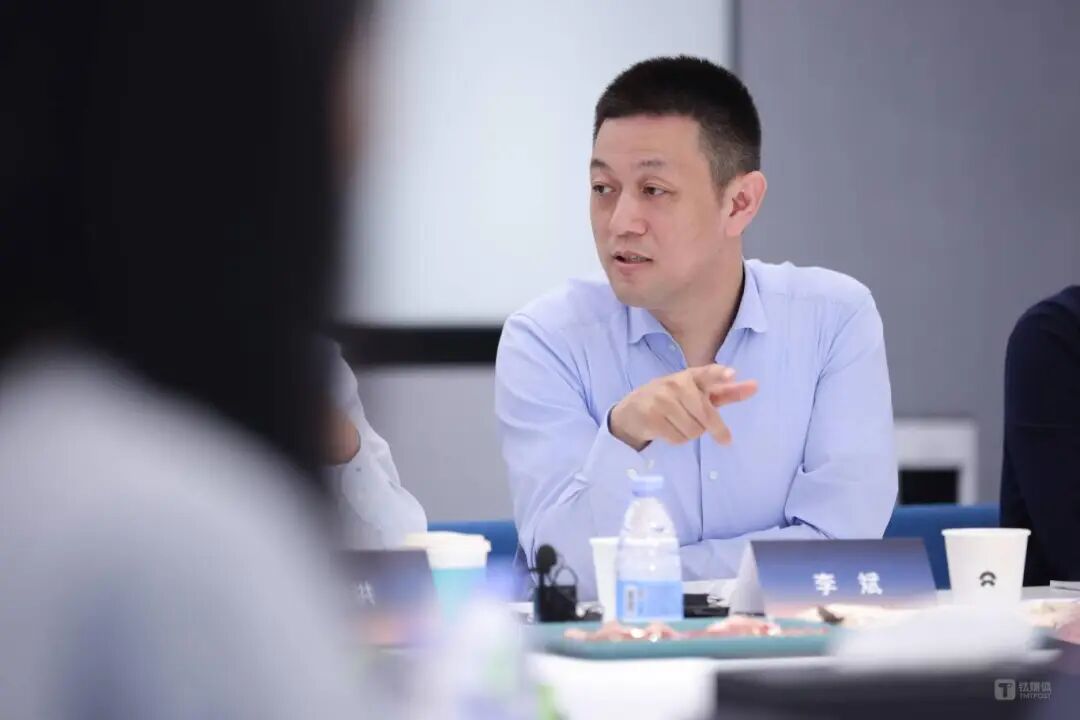
However, Li Bin has a different view: "We'll only have three models next year. I don't think we have to keep launching new products. Look, we only had two models this year and they sold well. It doesn't have to be so dense, and the team may not be able to handle it. Now, we should spread out the launches more evenly. In the past, we launched all the models of one generation in a relatively short period, and that may not be a good approach."
So, which path will lead to victory? I believe time will give the most real answer.
Currently, from the sales fluctuations of the LeDao L90 in November, I've realized another truth: "The leading period and the profit - harvesting window for a strong product won't be long, maybe at most three months. The pursuers behind will catch up and try their best to erode your advantages."
As this article is coming to an end, through several recent exclusive interviews with senior executives of new - energy vehicle startups, I have a deeper understanding of the current situation. As the title of this article says, "Before 2025 officially ends, 2026 is already showing its fangs."
The Chinese auto market is becoming more and more like a fierce "beast". As the year - end approaches, after a short break, all OEMs have to immediately plunge into the new round of competition.
The truth is just that harsh.
This article is from the WeChat official account "Auto Commune" (ID: iAUTO2010), author: Cui Liwen. Republished by 36Kr with permission.