Mercilessly eliminate PPT players. In the US AI startup circle, a PhD is the key to the door.
In the era of AI, a doctoral degree is replacing the MBA as the new "passport" for entrepreneurs, and college dropouts are now the exception.

Unlike a decade ago, today's entrepreneurs are not dropping out of school to make their mark. Instead, they are leading the AI revolution with in - depth scientific research. After all, in the field of AI, "technology itself is the product."
Former OpenAI Researcher: New Trends in AI Entrepreneurship
Today's emerging companies are led by CEOs with strong technical backgrounds: doctors, winners of Olympiad medals, and "graduates" from top - tier AI labs.
Although these teams are small in size, they are extremely efficient and flexible, and their per - capita revenue often reaches five to ten times the benchmark of the SaaS industry.
They have an experimental mindset and are proficient in underlying models, enabling them to quickly adjust their direction within a few months of establishment and find the product - market fit.

The founders and teams driving this AI boom present a very different picture compared to entrepreneurs in the software era of the past. The most prominent feature is their youthfulness.
The venture capital firm Leonis Capital has released a latest AI entrepreneurship report, systematically comparing the most important AI startups in 2025.

The report also shows that AI entrepreneurs tend to have a technical mindset rather than a business - oriented one, and team members generally lack shared work experience.
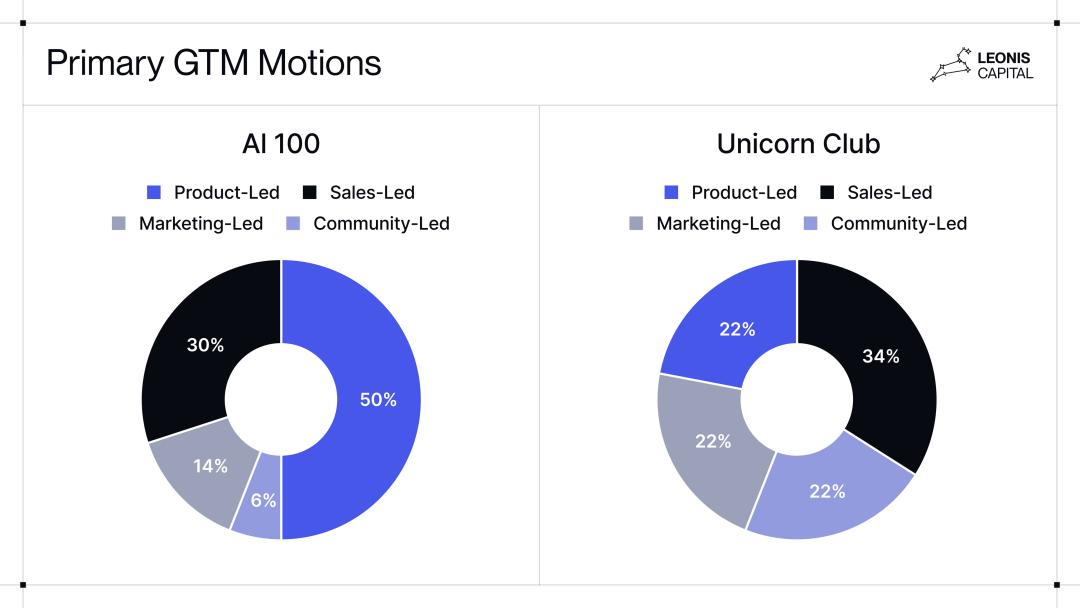
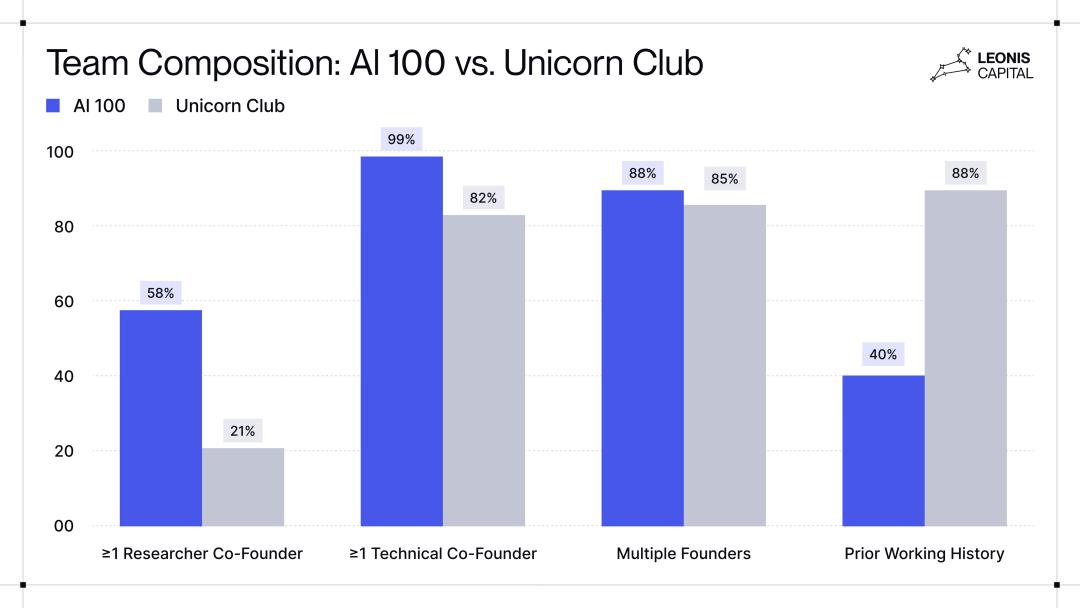
The report uses its internal AI research tools and public data to conduct an in - depth analysis of 100 of the fastest - growing AI startups.
Looking back at the 2010s, the leaders of "unicorn club" members such as Airbnb, Box, and LinkedIn were more likely to be product managers and business elites with MBA degrees.
The situation is different now. Founders in the AI field are more likely to have doctoral degrees, and they come together because of a common technological breakthrough.
Jenny Xiao, a partner at Leonis and a former OpenAI researcher, hit the nail on the head: "In the era of AI, technology itself is the product."

She added: "In previous generations of entrepreneurial tides, technology mostly played the role of an enabler," citing Airbnb's short - term rental platform and Uber's ride - hailing market as examples.
Start Your Business Early
The report shows that the median age of current AI founders is 29, while it was 34 for entrepreneurs in the 2010s. The most common age for starting a business is 26 or 27.
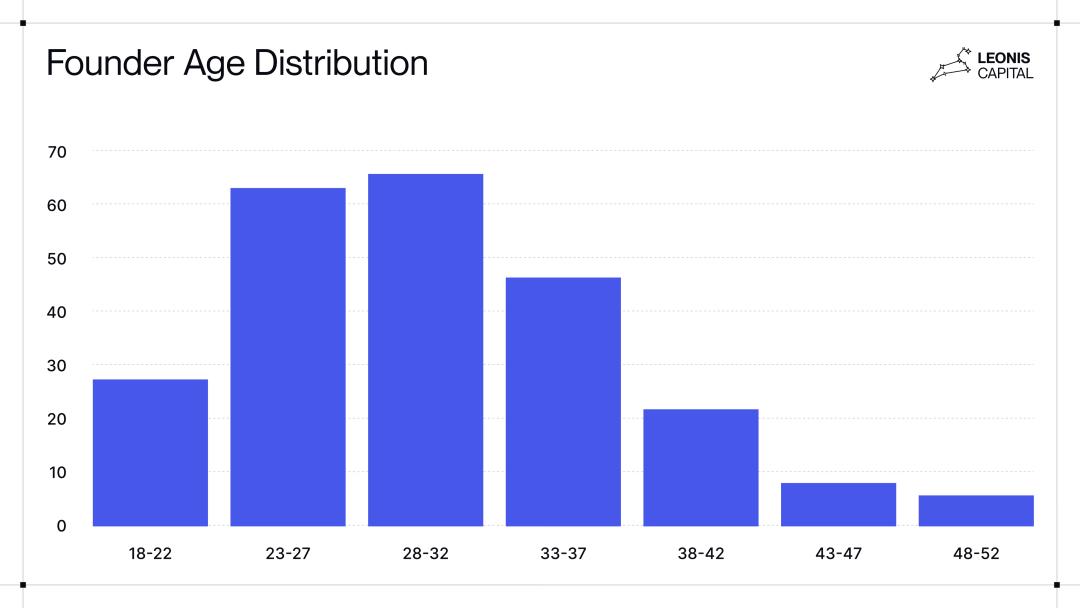
For example, the founders of the code - collaboration tool Cursor left the Massachusetts Institute of Technology (MIT) in their early 20s to start their business.
Aravind Srinivas, the CEO of the AI search engine Perplexity, was only 28 when he co - founded the company.
The co - founders of the legal tech startup Harvey also started their business in their twenties.


Doctoral Degree: The Key to Entrepreneurship
Although founders are getting younger, the myth of "college dropout" may be just an exception.
The prestige of elite universities still matters. The report points out that more than 60% of top AI founders graduated from elite universities such as MIT, Stanford University, and Harvard University.

Under the leadership of these new - generation leaders, the team structure is also evolving quietly.
The teams are smaller in size and have a flatter hierarchy. CEOs often participate in multi - level management work personally.
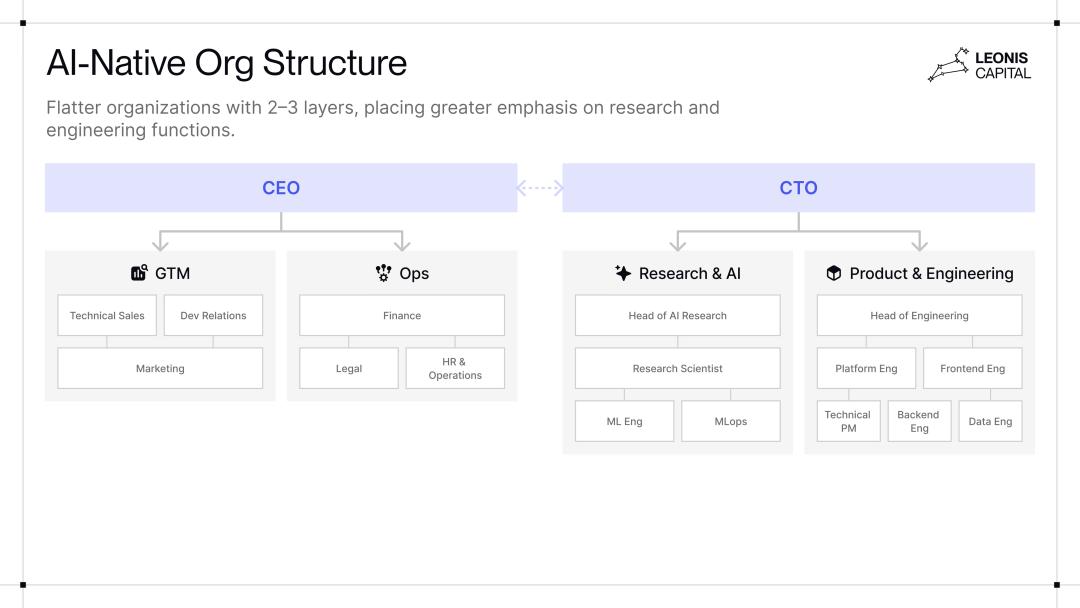
Xiao attributes this to two factors: first, AI is replacing some job positions; second, across Silicon Valley, it has become a broader trend for companies to lay off middle - level managers to improve efficiency.

The report also finds that as the capabilities of models continue to evolve, AI startups can usually adjust their business directions more quickly.
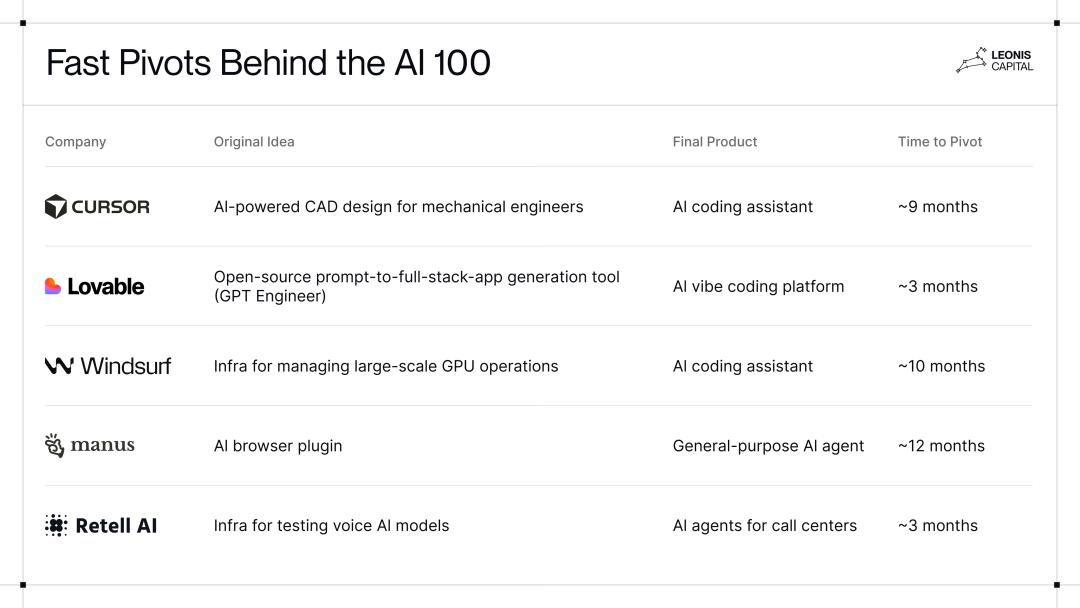
Compared with previous entrepreneurial tides, today's AI startups also achieve revenue scale - up more rapidly.

Leonis gives an example: the AI programming tool Cursor reached an annual recurring revenue of over $100 million in just one year -
while it took the instant - messaging software Slack three years to achieve the same feat.
The company believes that this is mainly due to AI's ability to replace a large amount of technical labor hours and founders' ability to convert technology into revenue more quickly.
Which AI Tracks Are Profitable?
In the current AI boom, many successful companies are emerging and developing side by side in many fields.
In previous technology waves (such as search and social media), a single platform often dominated the market.
AI seems to have become a wave that drives all companies forward. The huge surge in demand and investment allows many AI startups in the same field to thrive simultaneously, at least in the early stage.
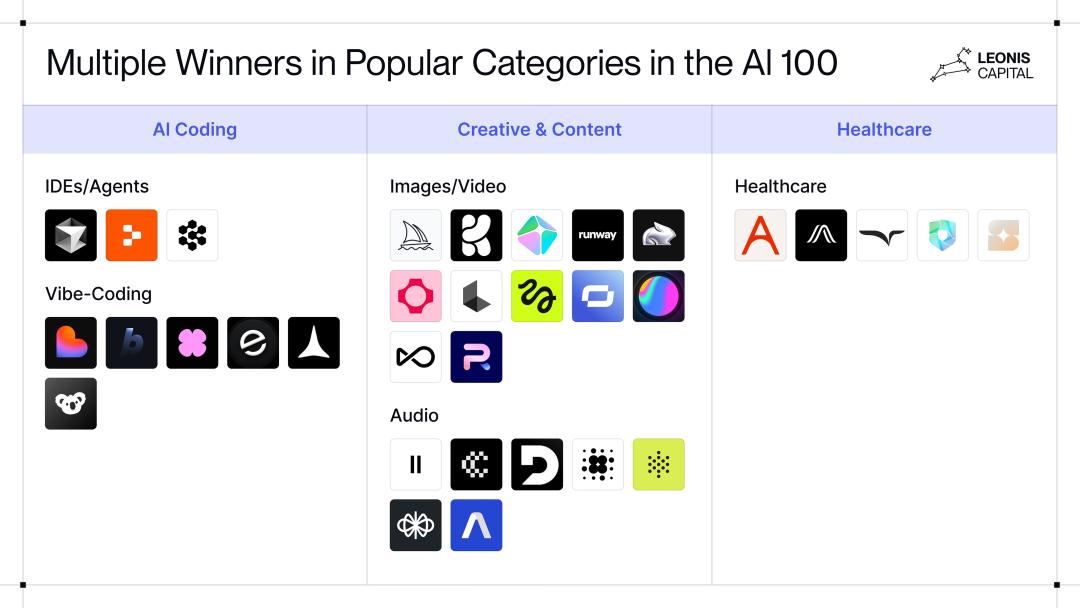
In the programming field, products such as Replit's Ghostwriter, Cursor, and Cognition's Devin each have their own strengths and have won loyal users:
Replit excels in cloud - based collaboration features.
Cursor has the advantage of local speed and control.
Devin focuses on complete agent autonomy and end - to - end workflows.
Similarly, there has been a "Cambrian explosion" in the creative and content fields (including image, video, and audio generation), with many early winners emerging.
The demand for AI - generated content is so extensive that no single service can meet all use cases or audiences. There are always new services for images, videos, and audio.
In addition, healthcare is another field with multiple winners. This is mainly because healthcare itself encompasses many different and complex needs. Their co - existence highlights that even in narrowly defined workflows, multiple viable sub - markets can emerge based on user types, integration depth, and market - entry strategies.
Who Is Investing in These AI Startups?
Finally, the report also analyzes the venture capital institutions behind this AI boom.
At the seed and angel investment stages, Y Combinator leads by a wide margin. More than 20% of the 100 fastest - growing AI startups have received its support.
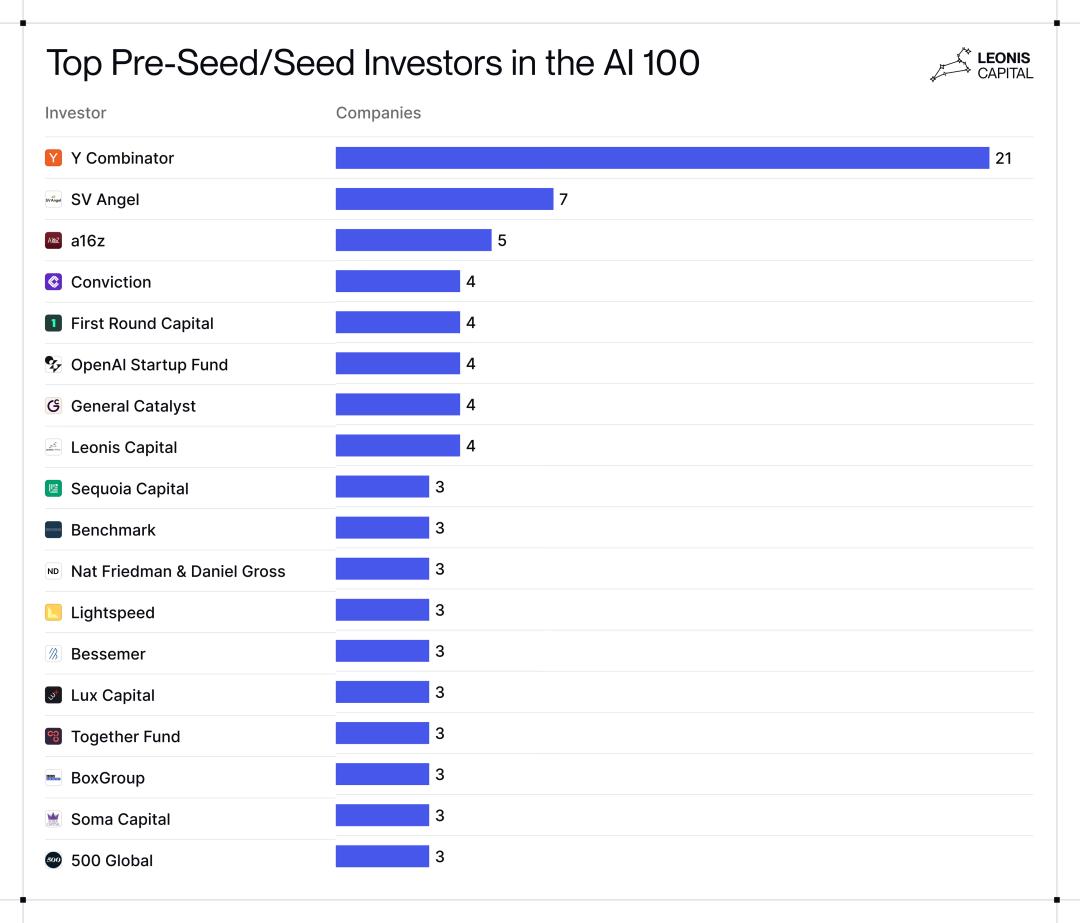
Nevertheless, Leonis also points out that Andreessen Horowitz and Sequoia dominate the Series A and Series B financings.

But they are also "moving upstream actively," that is, participating in early - stage investments earlier.
References:
https://www.businessinsider.com/ai-startup-founders-younger-technical-vcs-2025-11
https://www.leoniscap.com/research/the-leonis-ai-100
This article is from the WeChat public account "New Intelligence Yuan". Author: New Intelligence Yuan, Editor: KingHZ. Republished by 36Kr with permission.