The AI hardware battles of OpenAI, Alibaba, and ByteDance: Fear of missing out on the next-generation entry point
OpenAI is gearing up to launch its own AI hardware.
Some time ago, news spread in Silicon Valley, USA, that OpenAI was aggressively poaching talent. Dozens of Apple hardware engineers have been recruited into its in - house hardware team. Coincidentally, this year OpenAI also announced the acquisition of io Products, founded by Jony Ive, for a hefty $6.5 billion. At the same time, it appointed Ive and the LoveFrom team to take over all design and creative work within OpenAI.
Jony Ive is the former chief designer of Apple. Since the 1990s, he has led the industrial design of a series of products such as the iMac, iPod, iPhone, iPad, Apple Watch, and even the Apple Park headquarters building, almost defining the appearance and feel of Apple's hardware in the past two decades.
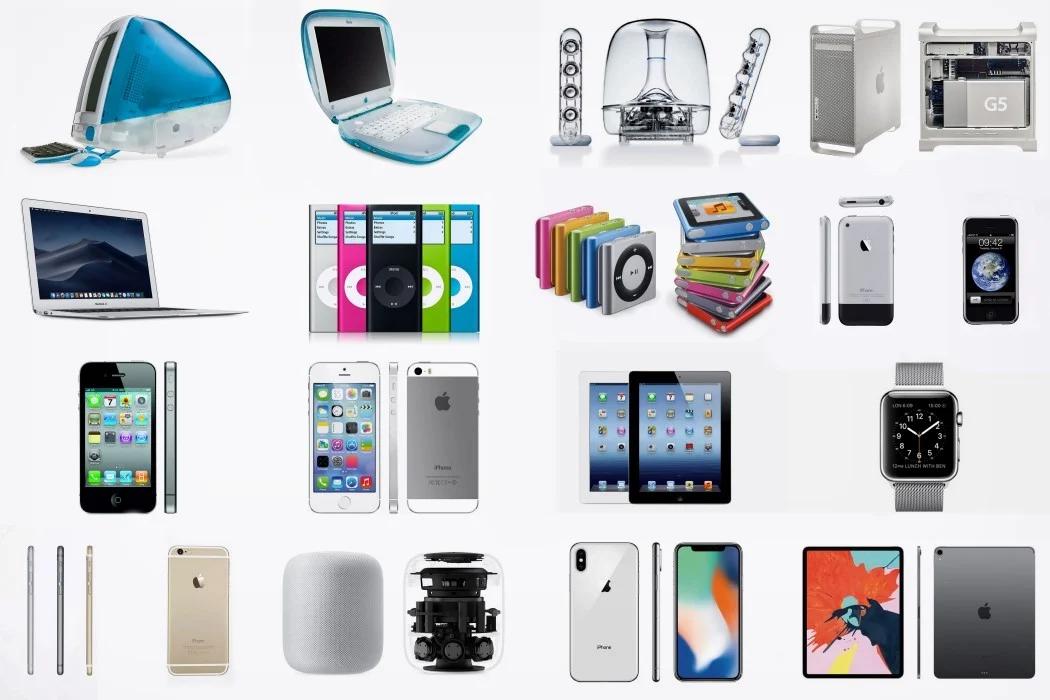
Image source: Twitter
After the acquisition of io Products, OpenAI didn't slow down. Instead, it targeted "Apple alumni". Multiple media reported that since early 2025, OpenAI has poached more than twenty hardware and product engineering personnel from Apple.
As of now, the members of OpenAI's recruited hardware team cover various aspects such as industrial design, iPhone and Mac hardware, camera engineering, audio, watches and Vision Pro, chips, testing and reliability engineering, manufacturing and supply - chain management, and there are also many mid - and high - level positions. It's as if OpenAI has rebuilt an "Apple hardware design team" internally.
What on earth does OpenAI want to do by poaching so many people?
Is OpenAI going to make an AI version of the iPhone?
As the initiator of the AI large - model boom, OpenAI has mainly focused on the "cloud" in the past few years, including model training, inference deployment, and ecological interfaces. These are also OpenAI's greatest advantages.
However, with the further development of the AI industry, OpenAI has found itself seemingly trapped in the cloud. Although it has the world's top AI large models, it has difficulty accessing the real front - line hardware ecosystem. In contrast, its competitor Google has a series of hardware products such as the Pixel series of mobile phones, the Nest series of smart home products, and the upcoming AI glasses, clearly outperforming OpenAI in this regard.
You might say, "OpenAI doesn't need to operate its own hardware ecosystem. It just needs to sell AI services externally." The problem is that the number of AI hardware devices using OpenAI's large models is actually decreasing. Although I don't have specific statistics, from the perspective of overseas AI hardware products, the number of products using open - source large models is significantly increasing.
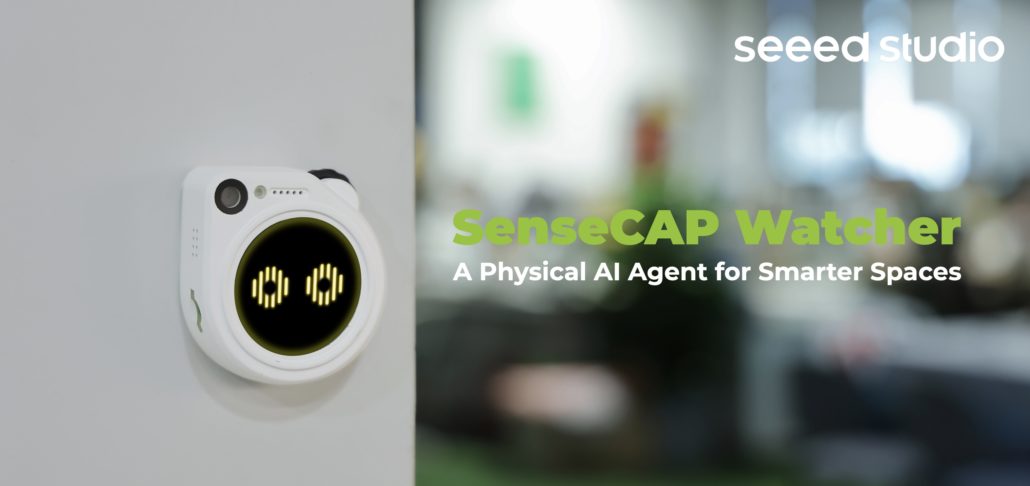
Image source: SenseCAP Watcher
Even many small and medium - sized enterprises are starting to rely more on open - source models rather than OpenAI's or Google's commercial closed - source models. It all boils down to economic considerations. Open - source models are completely free and can be easily customized and privately trained. Although OpenAI also offers similar services, it requires high training costs and continuous usage fees.
So, OpenAI has to roll up its sleeves and get to work. Looking at the resumes of the Apple employees they've poached, many have worked in the design departments of core hardware such as the iPhone, Apple Watch, Mac, and Vision Pro for many years. Clearly, they didn't come to design products like AI Pins or AI rings.
I think what OpenAI really wants to do might be an "AI - version iPhone". In fact, rumors of this kind have been around for a while. Earlier, there were reports that Altman, Jony Ive, and Masayoshi Son (SoftBank) wanted to jointly develop a mobile phone. At that time, SoftBank even planned to invest over $1 billion in this project.
However, the plan was temporarily shelved due to various reasons and was only restarted in 2025. Altman and Ive confirmed at a recent public event that they already have the first batch of prototype devices and expect to start mass - producing and launching them within two years.
What's more interesting is that Altman described the experience of using this device as "as quiet as sitting in a small wooden cabin by the lake", emphasizing that it should contrast with today's mobile phones full of notifications and strong stimuli. So, based on the currently available information, this device will probably be smaller than a mobile phone, may not have a traditional large screen, and will be an "AI terminal" with a built - in microphone, camera, a certain computing power, and network connectivity.
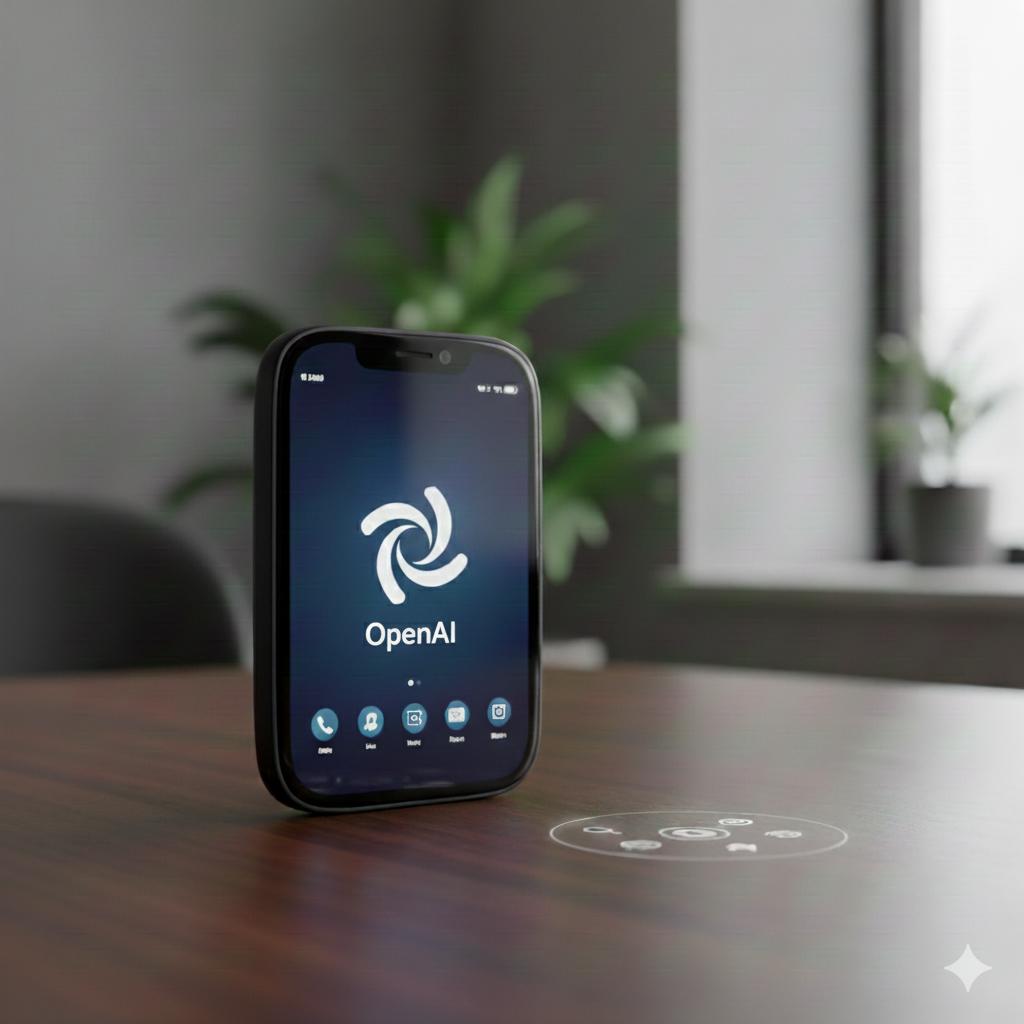
Image source: Gemini
Does it seem similar to the Rabbit r1 we talked about last week? I don't think so. At least according to Altman's description, this hardware is more operable than the Rabbit r1 and will be more like a "mobile phone", but its size may be closer to that of the iPhone 7 or 8 and doesn't require users to pay constant attention like a mobile phone.
In short, this AI hardware will be more "proactive". It can not only respond to your voice commands at any time but also make autonomous decisions based on the user's surrounding environment and actively assist users in handling tasks and information.
For example, when you're sitting in front of your computer playing a game and a message is sent to your terminal, the AI can automatically determine whether you need to be notified immediately. If the AI thinks the message is important, it will notify you by voice and ask if you want it to be read out. If it's an unimportant message, it will choose to be silent and add the message to the notification bar, reminding you later when you're free.
In addition, this product will obviously have a series of autonomous agent functions and can make autonomous decisions and organize task chains in many tasks. So, in my opinion, simply classifying this AI hardware product as an AI mobile phone underestimates OpenAI's ambition. They may want to build a new AI operating system based on this, and the hardware is just a carrier to showcase this system.
The hardware ambitions of China's three AI giants:
ByteDance makes mobile phones, Alibaba goes "Inside", and Baidu relies on Xiaodu
Compared with OpenAI, which is still in the "preparing for hardware" stage, Chinese AI manufacturers are clearly moving faster. In the past year, whether it's Doubao from ByteDance, Qianwen from Alibaba, or Xiaodu from Baidu, they have all integrated large models into hardware or systems, making the concept of "AI terminals" no longer just a PPT idea but a reality in consumers' hands.
1. Doubao: Launched an AI mobile phone.
Doubao recently released its first controversial AI mobile phone. Different from OpenAI, Doubao didn't develop it entirely on its own. Instead, it cooperated with ZTE. After ByteDance finalized the design internally, ZTE was responsible for manufacturing. It also has a system - level AI assistant called "Doubao Mobile Assistant" built - in.
Thanks to the deeply customized solution, Doubao Mobile Assistant can directly gain global control across applications, enabling it to perform various operations under users' voice commands. However, this implementation is still based on the Android underlying service. It's like an application getting the right to use a number of core services, including system signature permissions, full - screen recording, and simulated touch and input. This has led to some issues. For example, logging in to WeChat on a Doubao AI mobile phone may result in the account being temporarily blocked because WeChat detects abnormal permission calls and mistakenly thinks the user is engaging in "illegal activities (such as brushing orders)".
However, judging from the capabilities shown by Doubao Mobile Assistant, it is indeed worthy of our expectation. Many tasks that originally required complex operations can now be directly handled by the AI. For example, if you see a good product on Xiaohongshu, you can directly select the product and let the AI compare prices across the entire network, then choose the most cost - effective product link to place an order. You only need to confirm the order and make the payment.
At least according to current user feedback, Doubao Mobile Assistant does meet most of our expectations for an AI mobile phone. Although there are still some flaws, it is much more useful than traditional mobile phones with AI voice assistants. However, its drawbacks are also obvious. It easily raises users' privacy concerns, and it's difficult to convince leading mobile phone manufacturers to hand over system - level permissions. Major manufacturers like Xiaomi, OPPO, and VIVO generally prefer to promote the AI transformation of their systems based on their self - developed large models.
Doubao has proven with its product that when AI can operate across apps, the way we use mobile phones will change fundamentally.
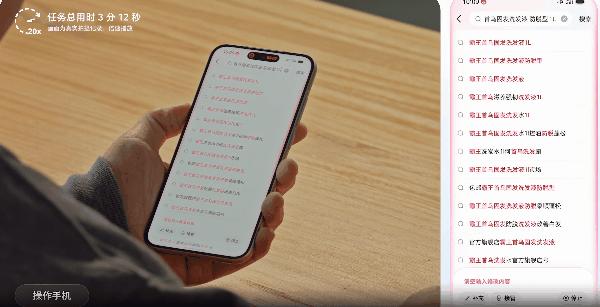
Image source: Doubao. Produced by Lei Technology
2. Qianwen: Combining software and hardware, aiming to be "Inside" all hardware.
Different from Doubao, which started with mobile phones, Alibaba's Qianwen strategy is to make AI an "operating layer" that spans computers, browsers, and all future terminals. The emergence of the Quark AI browser gives Qianwen the initial form of system - level permissions. It can understand the entire web - page structure, actively collect content, manage information, and perform tasks across tabs and pages.
More importantly, it automates the entire chain of "search - analyze - organize - output", eliminating the need for users to manually switch interfaces. Instead, Qianwen, as a "global intelligent agent", completes complex processes for users.
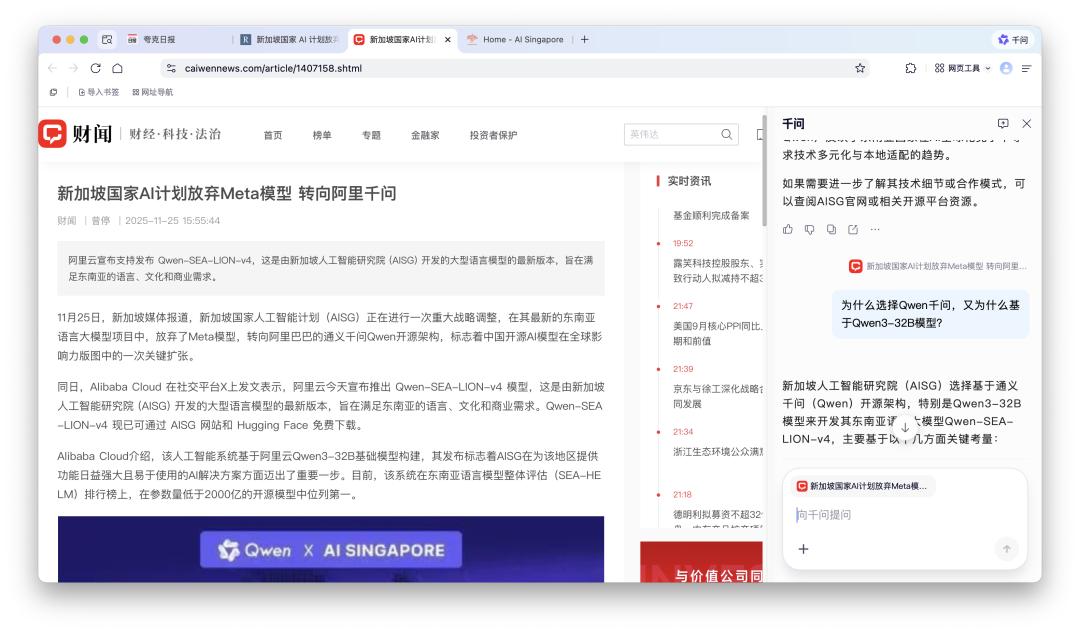
Image source: Lei Technology
Although Qianwen hasn't rushed into making its own mobile phone, its penetration into PCs, browsers, and office scenarios is extremely rapid. Thanks to Alibaba's layout in the cloud, office platforms, and browser entrances, Qianwen is like the lubricant between gears. It can flow to different gears according to demand and make all the "gears" (Alibaba's software) work more in harmony.
In the hardware field, Alibaba has also made many deployments. The recently released Quark AI glasses and DingTalk A1 are AI hardware products targeting niche markets. So, I think Qianwen's approach is to be comprehensive in software and refined in hardware, taking two steps: coordinating the cross - device ecosystem and building a vertically segmented hardware ecosystem.
Moreover, I think Qianwen doesn't prioritize hardware. Instead, it believes that the user entrance is the key. As long as Qianwen can become the "system - level lubricant", it will maintain its presence regardless of how the terminal form changes in the future.
This approach is different from Doubao's but equally important. One is trying to reconstruct the mobile - phone system, and the other is trying to reconstruct the system entrance. Both are trying to define "how AI should be involved in daily operations", just taking different paths.
Meanwhile, Alibaba Cloud is also continuously incubating AI hardware through the Tongyi large model. From January 8th to 11th next year, Alibaba Cloud plans to hold a smart hardware exhibition in Shenzhen, where more than 1000+ AI hardware products will be on display. You may find that Alibaba's AI hardware ecosystem has quietly grown into a big tree. Perhaps this is the charm of open - source (Qwen).
3. Baidu: Relying on Xiaodu to build its own hardware matrix.
Although Xiaodu released its first AI glasses in November, in terms of hardware coverage, the number of terminals, and the perfection of the ecosystem, Xiaodu's series of home smart terminals, such as smart speakers, may be Baidu's biggest "AI foundation". As early as Baidu World Conference in 2024, Xiaodu's hardware was positioned as the "center of the whole - house AI". At the 2025 conference, it took a step further and became the foundation of "AI - native family life".
It can be said that from the Xiaodu Smart Screen, Xiaodu Smart Speaker, to the newly upgraded Xiaodu Home Central OS, and the scenario - based capabilities of Wenxin Yiyan, Baidu has truly placed the home smart scenario at the strategic center this year. The "whole - house proactive AI system" that Baidu highlighted no longer just waits for instructions passively. It can actively judge users' needs based on sound, image, location, and behavior data.
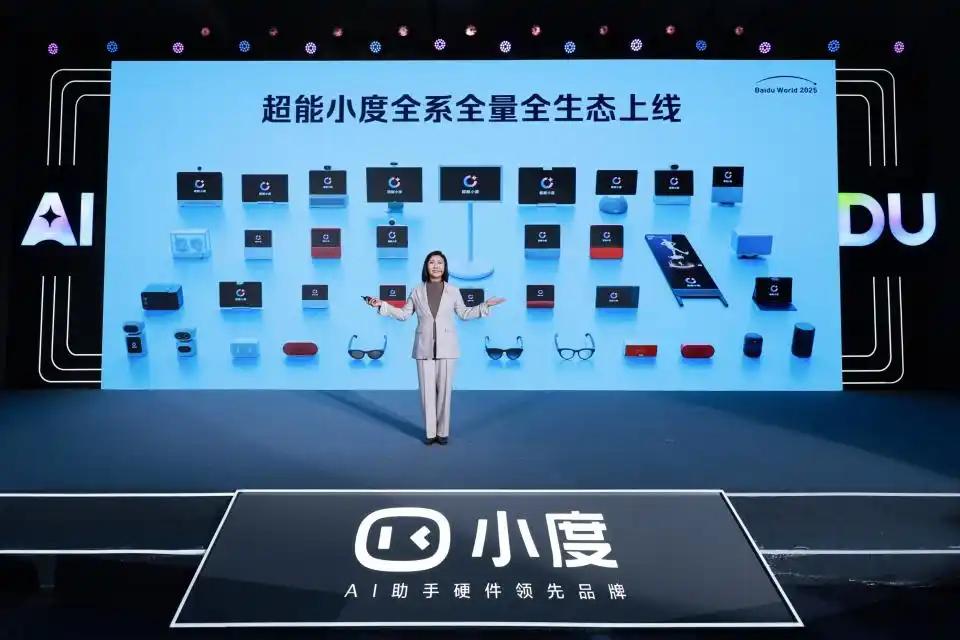
Image source: Baidu
For example, it can automatically push recipes when you're preparing dinner in the kitchen, switch to the study mode automatically when your child is doing homework, and even distinguish family members intelligently and provide personalized responses. Different from mobile phones, Xiaodu devices are naturally in a long - term environment of being always - on, shared by multiple people, and continuously sensing. This allows Baidu's AI to use more modal information to build true proactive intelligence.
In my opinion, this is Baidu's greatest advantage. Relying on Xiaodu's hardware coverage, continuous online feature, and the natural advantage of the Wenxin model in the Chinese scenario, Baidu has carved out its own path in the home AI ecosystem, and currently, no other competitor has the same - level capabilities.
If Doubao is "reconstructing the operation process" on mobile phones, and Qianwen hopes to "reconstruct the information entrance" across devices, Baidu has chosen a more life - oriented, long - term, and unshakable path: making AI a natural part of daily family life.
Overseas AI giants are also in the race. Google, Microsoft, and Meta are vying for the next - generation entrance
After discussing domestic AI companies, let's take a look at OpenAI's real competitors. Google, Microsoft, and Meta are also promoting AI hardware and ecosystems. However, upon closer inspection, their paths are more dependent on their existing ecosystems. Although different companies have different understandings of the "entrance in the AI era", they all regard hardware as the key to the next stage.
From PCs to mobile phones, from glasses to wearables, each company is looking for new operating - system - level opportunities. This competition is more intense than the smartphone era.
1. Google: With the Android empire, has its AI ecosystem been established?