Tesla's quality has failed, and the Model Y has become the "least reliable" model.
The situation has reversed. The globally best - selling Model Y has won another "first" in Germany.
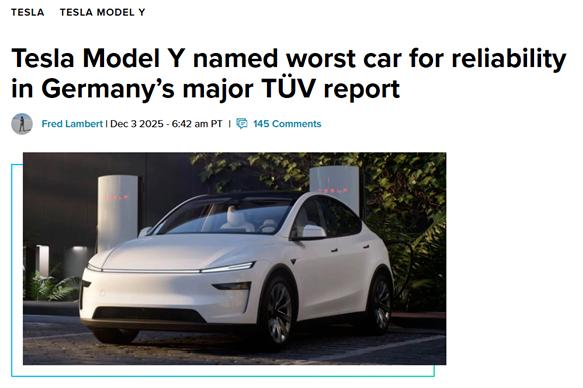
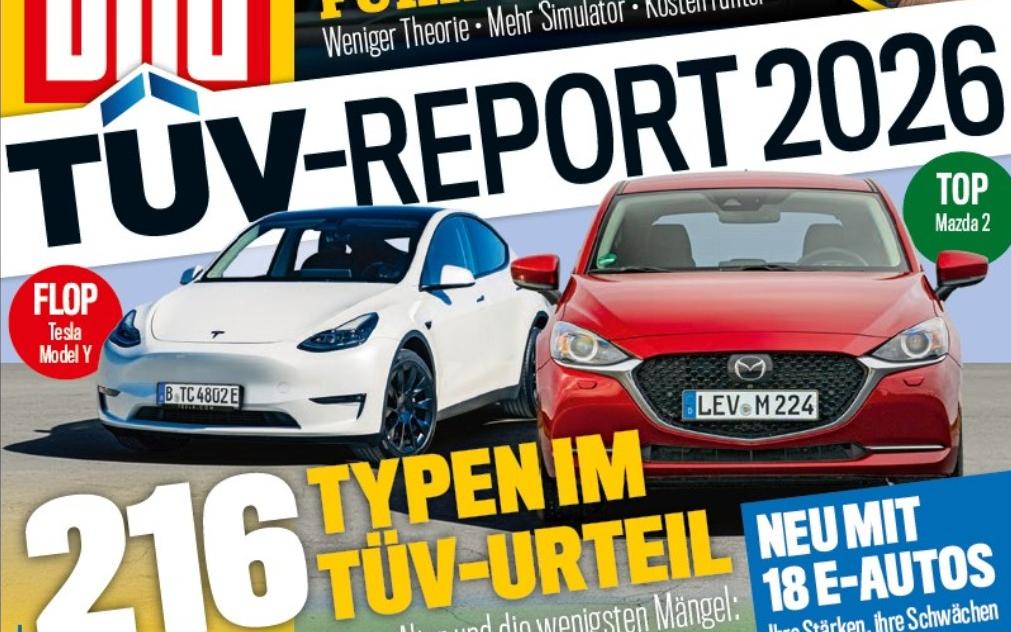
However, this "first" is really disgraceful. In the 2026 German "TÜV Report", it was listed as the "least reliable model" among models with a vehicle age of 2 - 3 years.
With an extremely high defect rate of 17.3%, Model Y ranked last and set the worst record among all tested models in the past decade of TÜV. This is also the first time the Model Y has participated in this kind of inspection test. The TÜV Association probably didn't expect to catch such a big "fish".
What's more interesting is that before the Model Y joined, the bottom - ranked model was the Model 3...
Thanks to the "support" of the Model Y this time, the ranking of the Model 3 has risen. With a defect rate of 13.1%, it ranked second from the bottom, creating an embarrassing situation of "both models at the bottom".
01
Both at the Bottom
Although the Model Y is the first pure - electric vehicle in history to top the global annual sales chart, the result given by the Germans this time may really be authoritative.
The organization that issued this annual report is not a so - called "chicken - feather" institution that works for money. The full name of the TÜV Association is Technischer Überwachungsverein (German Technical Inspection Association), which is responsible for the mandatory safety inspection of motor vehicles in Germany.
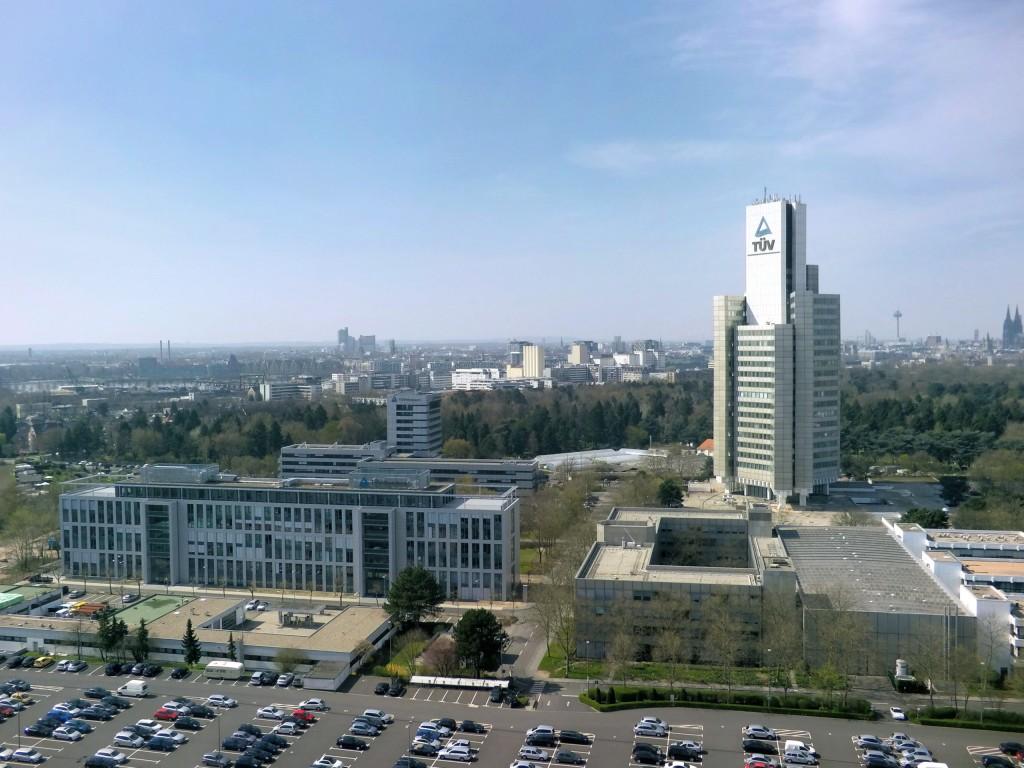
Moreover, this organization is not a single institution. It is a global top - level testing and certification network jointly composed of seven authoritative and independent institutions such as TÜV Rheinland and TÜV Süd. Its headquarters is located in Cologne, Germany, with a history of nearly 150 years, and it is known as the global safety and quality benchmark.
Their business covers almost all important fields such as automobiles, energy, medical care, and IT. The certification mark is a globally recognized symbol of safety and quality. Products with this mark can even directly convert certification qualifications in multiple countries. The Rheinland Certification often heard usually is theirs.
Taking automobiles as an example, each vehicle must undergo regular mechanical performance tests by TÜV to ensure its legal qualification to be on the road. The test is not a subjective survey. It requires providing 3 sample vehicles, going through a 6 - 9 - month hard - core technical evaluation covering more than 200 indicators, and controlling the error rate within ±1.5% before it can be on the road in Germany.
For example, the "TÜV Report 2026" this time was summarized through the test data of 9.5 million vehicles.
This report evaluated 216 best - selling models with a vehicle age between 2 and 3 years, among which there were 9 pure - electric models. The report shows that 17.3% of Model Ys failed the inspection due to "serious" or "dangerous" defects.
That is to say, among every 6 Tesla Model Ys tested, one fails the test. Moreover, this data directly sets the highest defect value for models of the same age group recorded in the past decade, which can be said to be the "worst in history" performance.
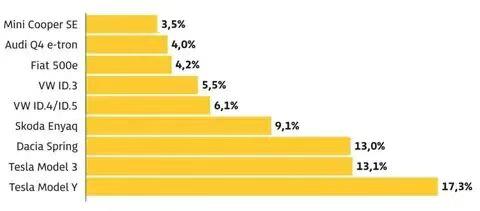
In contrast, the average failure rate of models in this age group is only 6.5%, more than double the level. The pure - electric model with the best result, the Mini Cooper SE, has a defect rate of only 3.5%, and the second - ranked Audi Q4 e - tron has a defect rate of 4.0%.
And the first place in the overall list, which may be unexpected to everyone, is the small Mazda car Mazda 2, with a defect rate of only 2.9%.
The performance of the Tesla Model 3 is not much better. With a defect rate of 13.1%, it ranked third from the bottom in the overall list. The Ford Mondeo ranked second from the bottom in the overall list with a failure rate of 14.3%. If only the pure - electric models are considered, the Model 3 ranked second from the bottom.
Actually, in last year's TÜV report, the Model 3 already ranked last in terms of reliability, with a defect rate of 14.2%. And there was no Model Y participating in the inspection last year. Who would have thought that it would directly "top the list" in its first inspection.
It is worth noting that the inspection direction of the TÜV Association report focuses more on road adaptability rather than the vehicle's intelligence level. Simply put, it only looks at the mechanical quality.
02
Problems with Hardware and Mechanical Quality
Where exactly did the Model Y go wrong? The TÜV Association report pointed out three major problem areas: suspension system, braking system, and lighting.
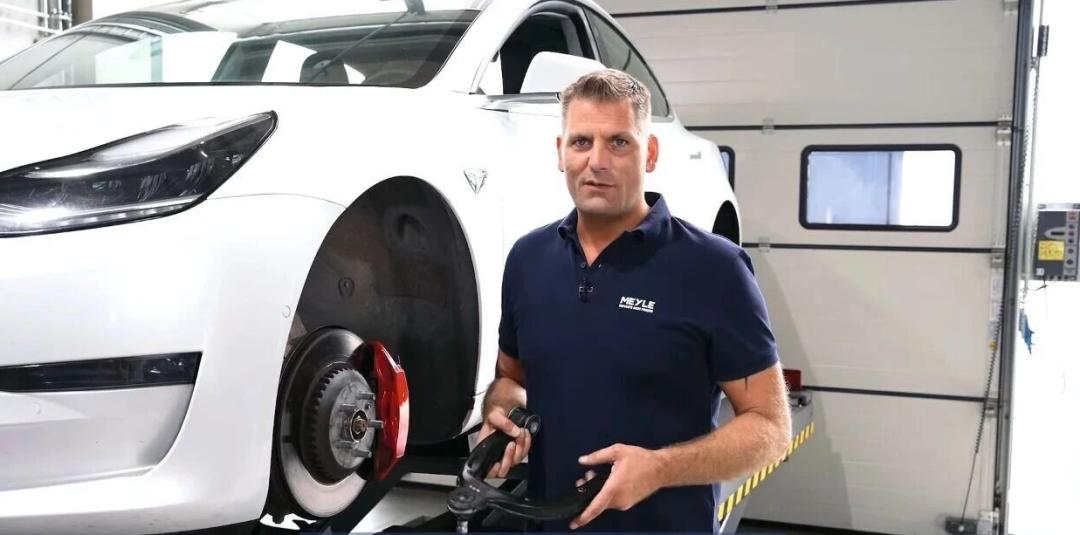
First is the suspension system. Problems frequently occur in Tesla's suspension components. Nearly one - fifth of the cars failed the first mandatory inspection, especially the "control arm bushing" problem that has long troubled Tesla owners.
Previously, in response to the situation that Tesla's original suspension was widely criticized for frequent abnormal noises, Meyle, a German auto aftermarket parts giant, specially developed reinforced parts to solve this annoying suspension abnormal noise problem.
Dr. Joachim Bühler, the person - in - charge of the TÜV Association, also said that this phenomenon is a common "problem" among electric vehicles.
Because electric vehicles are generally heavier, especially the large battery at the chassis, which is really heavy. This undoubtedly brings continuous high - load to the suspension system. Over time, the probability of problems naturally is higher than that of ordinary fuel - powered vehicles. However, this phenomenon is more obvious in the Tesla Model Y.
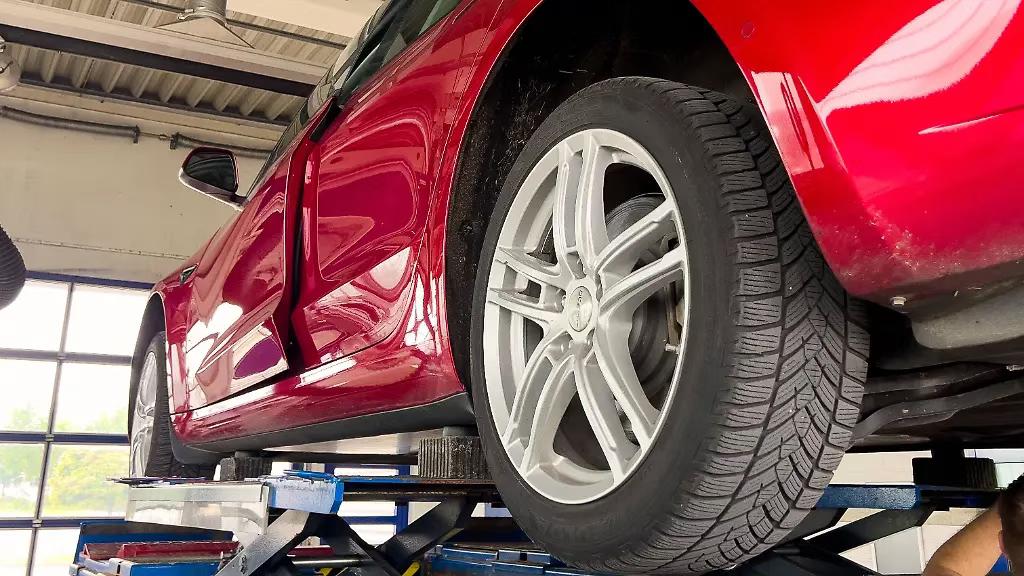
As for the brake discs, it also suffers from the characteristics of electric vehicles. Dr. Joachim Bühler said bluntly: "Although the kinetic energy recovery system improves energy efficiency, the traditional brake discs are 'idle' for a long time, and are extremely prone to rust and performance degradation." The problem of the Model Y's brake discs was also fully exposed in our long - term test.
This is also easy to understand. Because electric vehicles rely on energy - recovery braking, in many cases, they can slow down just by releasing the accelerator. As a result, the physical brakes are used less frequently. Coupled with the humid climate in Germany, the brake discs are prone to rust and corrosion. Even if the mechanical function is normal, they will fail the safety inspection due to rust.
However, on the other hand, for other electric vehicles like the Mini Cooper SE and Audi Q4 E - Tron, they can control the defect rate at a relatively low level. This means that the problem may not entirely be caused by the "electric vehicle" identity. Tesla itself probably still needs to improve in terms of quality control, parts supply chain, or assembly technology.
Finally, there is the problem with the vehicle lighting system. Some front headlights of the Model Y have problems such as offset of the irradiation angle and brightness attenuation. In case of an emergency, the reaction distance is greatly reduced. In addition, the reverse lights may not light up normally when the vehicle is in reverse gear. This detail problem further increases the failure rate.
Tesla is indeed a leader in the industry in terms of electrification and intelligence, which is beyond doubt. But under the trend of "software - defined vehicles", consumers cannot only pay for technological functions and acceleration performance. The long - term reliability of the vehicle and after - sales costs are all key factors affecting car purchases.
03
The European Market is Almost Lost
This report may also point out the reason why Tesla sells quite poorly in Germany.
In November this year, according to the data of the German Federal Motor Transport Authority (KBA), Tesla's market registrations were only 1,763 vehicles, a decrease of more than one - fifth compared with the same period last year.
Correspondingly, more than 55,740 newly registered pure - electric vehicles (BEVs) in Germany in November, a 58.5% increase compared with the same period last year. Pure - electric vehicles accounted for more than 22% of all newly registered vehicles.
If we look further, as of October, the total sales of new - energy vehicles in Germany reached 434,627, a nearly 40% increase compared with the same period last year. Among them, Tesla only sold 15,595 vehicles, a sharp drop of 50% compared with the same period last year, with an average monthly sales of 1,550 vehicles.
Although part of the sales decline can be attributed to Musk's incendiary political remarks, which made many European consumers uncomfortable, the product's own quality - control problems spread through word - of - mouth among users is also a reason that cannot be ignored.
Previously, the German T - Online website also conducted a survey, and more than 100,000 Germans participated. Among them, 94% of Germans said they would not buy Tesla, and only 3% were willing to consider it.
Moreover, Tesla's new vehicle registrations in many major European markets in November all declined significantly year - on - year. For example, in France, it decreased by 58% to 1,593 vehicles; in Sweden, it decreased by 59% to 1,466 vehicles; in Denmark, it decreased by 49% to 534 vehicles; in the Netherlands, it decreased by 44% to 1,627 vehicles; in Portugal, it decreased by 47% to 425 vehicles.
Meanwhile, after entering the Indian market for the first time, Tesla's performance was also disappointing. Since orders were opened in July, only more than 100 vehicles were sold in two months.
This report also reveals that whether consumers will pay for cool innovations or vote with their feet and turn to more reliable products, the market will finally give an answer. For Tesla, making up for the mechanical quality may be more urgent than releasing any new functions.
This article is from the WeChat official account "SuperEV - Lab" (ID: SuperEV - Lab), written by Wang Lei and edited by Qin Zhangyong. It is published by 36Kr with authorization.