TCL, at a crossroads
If we look at the history of a technology company, we'll find that what truly determines the fate of an enterprise is often not the long years, but a few key time points.
For Apple, the moment when it separated from Intel and shifted its chip development to in - house R & D was a turning point; for NVIDIA, promoting CUDA to the forefront was a significant moment. In the most chaotic era of lithography technology, the moment when "bare - footed" ASML bet on EUV, which "might never be developed", was also a crucial juncture.
These moments are called choices.
In business narratives, choices are never in short supply. However, most of the time, players just move forward along the path of certainty. The so - called "decision - making" is more of a follow - up to the industry consensus. Only when the industry undergoes drastic changes and the consensus collapses does the value of choices surface. The differences in choices can even determine the different fates of enterprises.
TCL is precisely at such a crossroads.
In recent years, the fluctuations in the panel cycle, combined with the wavering of technological routes, have kept the display industry in a state of high entropy.
From continuing to bet on LCD to turning to embrace OLED, every move of TCL seems to be a response to the cycle and supply - demand situation. But in essence, they are all answering the same question: In a race without a standard answer, does an enterprise still have the courage to forge its own path?
TCL: Living in the Present
In many industries, making choices about directions is more of a strategic issue. However, in the display industry, which has heavy assets and is strongly influenced by cycles, the choice of direction largely determines an enterprise's survival mode.
After all, few industries are as large - scale as the display industry, yet so uncertain about "where to go next". A production line can cost tens of billions, and considering the depreciation of production lines and the irreversibility of technological iteration, each choice is heavier, slower, and harder to reverse.
The past CRT industry "collapsed" in this way.
In the 1990s, if a family didn't have a "big - butt" CRT TV, they would feel embarrassed to say they were living a good life. The "hissing" sound when turning on the TV, the flickering snow - filled screen, and the remote control wrapped in a plastic bag together painted a picture of the living rooms of that era.
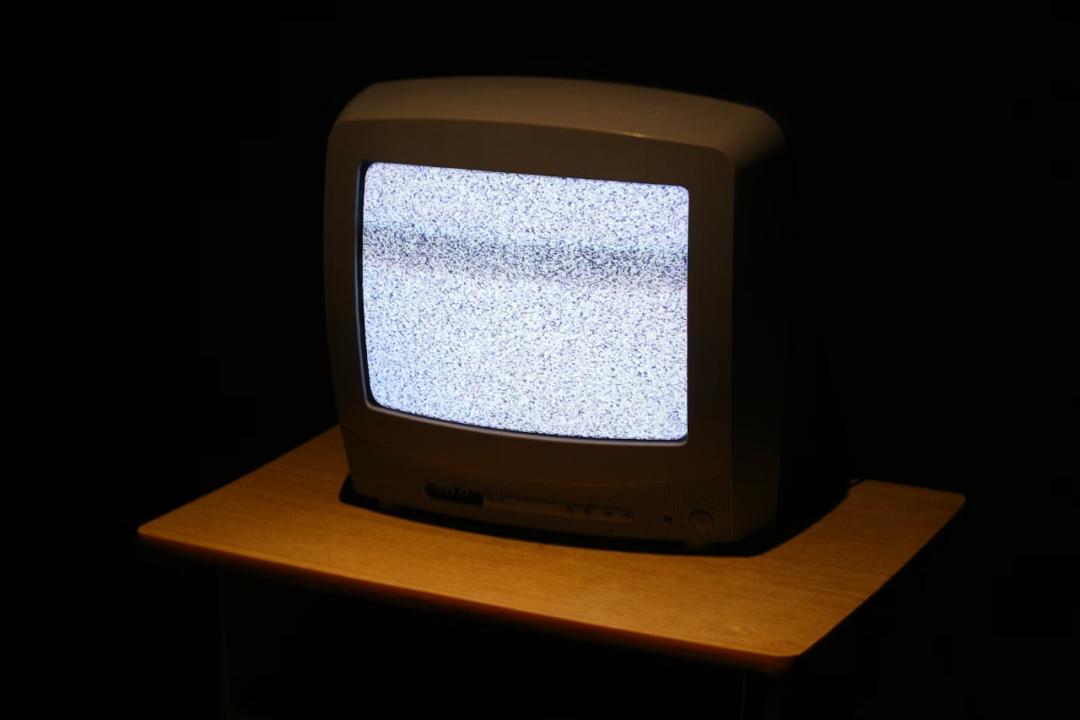
Domestic manufacturers rushed in, building factories and investing heavily. From Mudan and Xihu to Changhong and Kangjia, players emerged one after another, creating a story of the "rise of domestic color TVs".
However, after the turn of the millennium, plasma TVs, rear - projection TVs, and LCD TVs emerged one after another, with multiple technological routes advancing simultaneously. Gradually, when people walked into shopping malls, they found that the TV section had suddenly become "flat" - no more big butts, no more curved screens, and no more the iconic hissing sound. An era had passed.
After years of competition, only LCD remained on the stage. Everyone saw the same "certainty" at the same time and stepped on the accelerator together, ultimately taking over the display industry for nearly two decades.
However, in the past five years, the overall decline of the panel cycle, combined with the accelerated withdrawal of Korean manufacturers from LCD and their rush into OLED, has once again changed the industry trend rapidly, diluting the "consensus" in the display industry. Against this background, the industrial main line has gradually diverged, and the importance of choices has become prominent again.
Looking at TCL's choices in recent years, they can be simply summarized as three words: stability, perseverance, and gamble.
Let's first look at "stability". The most representative move was taking over the production capacity of LGD's 8.5 - generation line in Guangzhou. In the short term, this decision seemed like taking over a hot potato that others didn't want. In fact, it was more like TCL choosing to live in the present when the future was still uncertain.
The reason why LCD has not been profitable in the long term is that the production capacity is over - saturated, not that there is no demand.
Although high - end flagship mobile phones have fully switched to OLED, in large - and medium - sized scenarios such as TVs and monitors, the marginal improvement in picture quality is far less sensitive than price. Therefore, LCD will still cover the mainstream market with high cost - effectiveness in the large - size segment.
As long as the market doesn't collapse, there is still a chance to make money. Naturally, players who haven't made enough money find it difficult to turn around lightly.
On the other hand, at present, the uncertainty in the industry makes players very cautious about expanding LCD panel production. When players stop investing in new production lines, as long as TV sizes continue to increase and downstream demand remains stable, more existing production capacity will be absorbed.
Combined with the more flexible production capacity scheduling of panel manufacturers, there is no need to worry about survival in the next few years. Those who can survive until the "spring" will enjoy the last round of dividends from LCD.
TCL's "perseverance" is reflected in Mini LED.
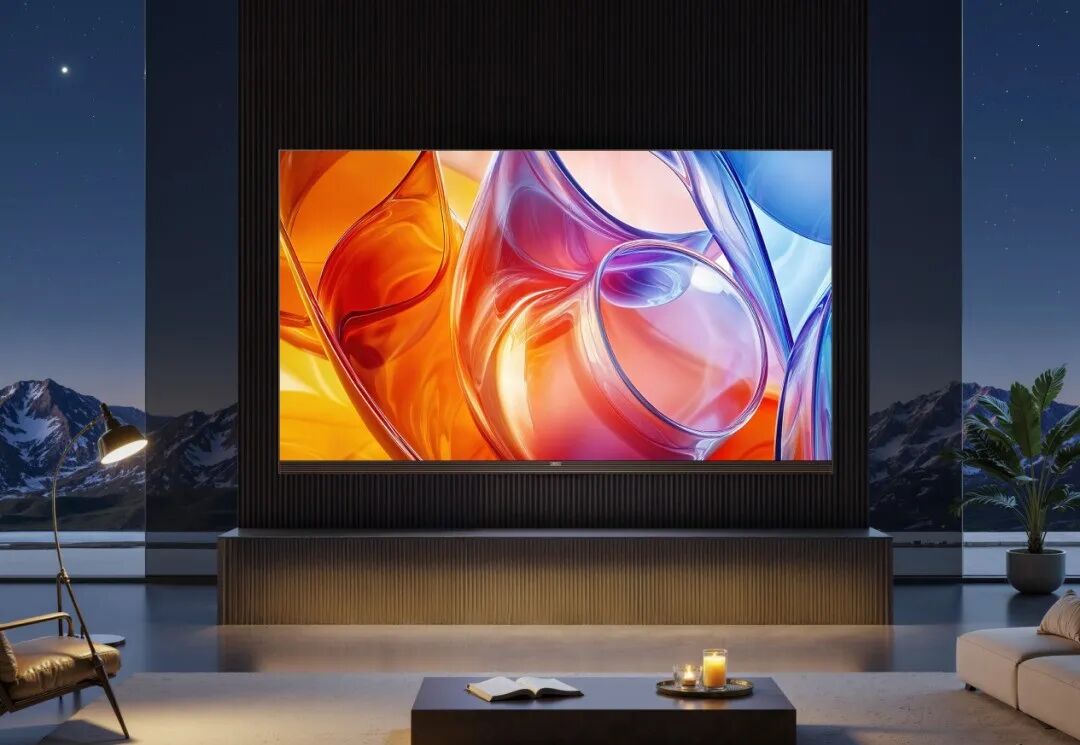
Facing the rapid development of OLED, LCD has never stood still. Instead, it has "evolved" into Mini LED. Based on technologies such as zone - based dimming, Mini LED approaches the self - emitting OLED in terms of contrast.
Although Mini LED was generally regarded as a transitional technology for LCD to "extend its life", when leading players changed directions and the industry lost its sense of direction, "staying put" sometimes required more courage than innovation.
In recent years, domestic players, including TCL's SQD - Mini LED, Hisense's RGB - Mini LED, and others, have continuously made efforts, raising the level of LCD technology by a generation. A new path parallel to OLED has emerged from an intermediate stage.
This has eliminated OLED's overwhelming advantage in the high - end TV market. Even Samsung, which was the first to bet on OLED, has kept Mini LED in its high - end TV product line and used terms like "RGB MicroLED" to blur the focus.
So, at present, players who have stayed with LCD have forged their own path through their efforts. However, how long this path can last and where it will ultimately lead remain uncertain. In the face of uncertainty, TCL has taken an extra precaution.
A Gamble, a Narrow Gate
In the display industry, almost all solutions have their limitations, and this is true for both OLED and Mini LED.
The halo effect is one aspect, but only enthusiasts can clearly perceive it. What is truly fatal for ordinary users is the high power consumption.
Although Mini LED has improved the brightness and contrast of LCD panels, it has also increased power consumption. In scenarios such as monitors and TVs that are always plugged in, this may not be a big problem as few people will care about the extra electricity cost. However, when it comes to mobile devices, it becomes a "power - hungry monster".
Apple, which is extremely strict in screening supply - chain technologies, has experienced this problem.
In 2021, Apple introduced a 12.9 - inch Mini LED screen for the iPad Pro. Although the screen quality was excellent, the battery life was not satisfactory. Three years later, Apple decided to correct its course and returned to OLED.
This is the Achilles' heel of Mini LED. It can neither enter the huge mobile phone and tablet market nor catch the future AI hardware and XR trends.
For TCL, relying solely on Mini LED and large - screen products may not be enough to build long - term competitiveness, especially when OLED players are achieving continuous success. If the difficulties in large - size OLED are overcome, the challenges will be even more severe.
Against this background, a new gamble on OLED is slowly unfolding.
It is called a "gamble" because TCL is betting on printed OLED, which is not yet fully mature but has more potential, rather than the mainstream evaporation - based OLED.
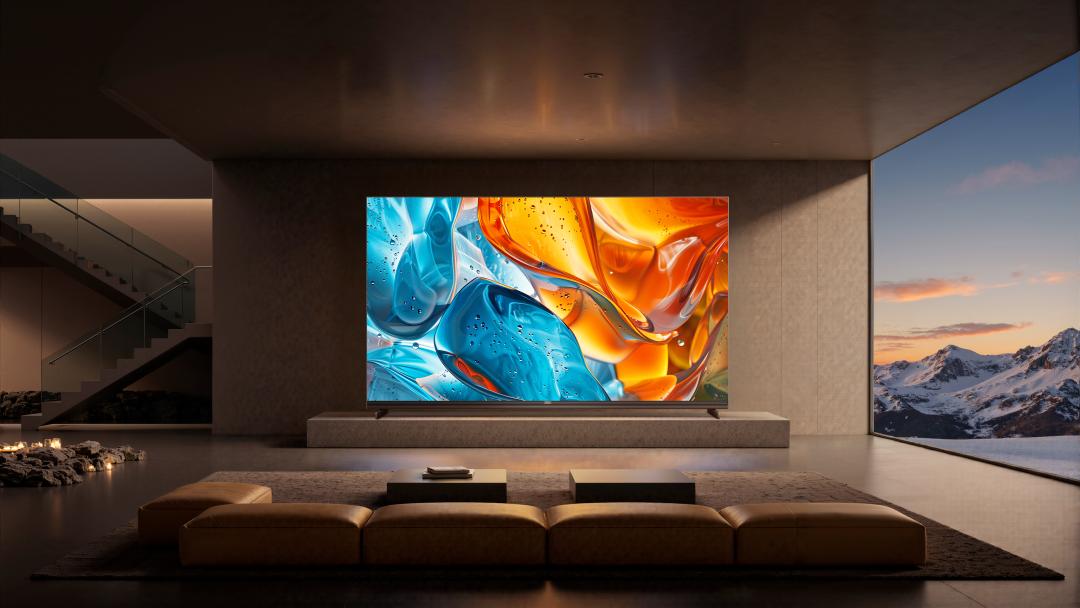
In 2020, TCL CSOT launched a printed OLED project and invested in Japanese manufacturer JOLED the same year, deeply binding itself to this technology route. After JOLED went bankrupt, the production line originally in Japan was relocated to its Wuhan factory to verify the process through "mass - production methods".
A bigger bet is on the 8.6 - generation printed OLED production line that started construction this year. Jointly invested by TCL and the Guangzhou government with an investment of about 29.5 billion yuan, it will become the world's first large - scale mass - production line for printed OLED displays after completion.
Theoretically, compared with the traditional evaporation process, the printing process has advantages in material utilization, cost structure, etc., and is more suitable for large - and medium - sized products. However, the difficulty lies in turning theory into practice.
According to an industry insider, a pixel of OLED is essentially a stack of multiple layers. When printing the next layer in printed OLED, there is a risk that the "solution may dissolve the previous layer". The solution is to use partially orthogonal solvents and molecular cross - linking methods to prevent the new solution from destroying the formed film structure. However, the film density is still lower than that of the evaporation process.
In addition, printed OLED also faces problems such as the "coffee - ring" effect, low yield rate, and low PPI. Although it is "attractive" at the technical level, it is "risky" at the engineering level.
It is this "risk" that has discouraged almost all players except TCL CSOT. Even for TCL CSOT, betting on the printed OLED route itself has a somewhat hard - to - explain meaning.
After all, in many cases, choices are determined not by subjective will but by objective conditions.
Around 2010, the decline of plasma TVs was inevitable. Panasonic and Samsung, both industry giants, made the same choice - to abandon the plasma route and fully switch to LCD. However, their fates were completely different.
The reason was laid long before. The Japanese LCD industry generally regarded the 5th - generation line as the limit of LCD, ignoring the research and layout of high - generation lines. For example, Panasonic at that time almost completely focused on the plasma industry chain, while Korean enterprises represented by Samsung had always been at the forefront of the LCD industry.
Imperceptibly, their endowments had diverged, and this divergence led to vastly different outcomes.
The same is true for TCL. What it can and cannot do at present is already determined by its own history and the development of the industry.
In the OLED industry, Korean enterprises represented by Samsung are guarding one "fortress", and Japanese and Korean evaporation equipment manufacturers represented by Canon Tokki are also guarding another.
An old empire that thinks it has mastered the rules will never voluntarily tear down its own walls. Therefore, TCL has to dig a tunnel, just like Visionox, which is developing the ViP OLED process.
Under the ground, there is loose sand, sharp - edged gravel, and the risk of collapse. For TCL CSOT, which is almost the only one betting on the printed OLED route, whether it can catch up with or even surpass mainstream players largely depends on whether it can overcome the technical difficulties of printed OLED within a limited time frame.
Of course, users and the market don't care about these routes and difficulties. They only care about products. The quality of products will be judged by consumers' wallets.
The Answer Lies in the Distance
Clayton Christensen used the hard - drive industry to illustrate the "innovator's dilemma". Looking back, the same scenario has been playing out in the display industry. The question is, with multiple technological routes coexisting, how can we identify the real "innovators"?
This is a difficult question to answer because the answer lies in the end - game, while decisions have to be made in the fog of uncertainty.
The only answer close to a consensus in the industry at present is MicroLED, which is almost perfect but still far from reality.
TCL has not missed this opportunity.
Like Samsung and Hisense, TCL has also produced a 163 - inch giant - screen MicroLED TV. However, its applications in areas such as automotive and micro - displays are more practical. For example, TCL CSOT recently released a single - chip full - color silicon - based MicroLED solution, which seems to be targeting the current popular AI glasses.
However, compared with its bold bet on printed OLED, TCL's attitude towards MicroLED is more cautious. This may be due to considerations of technological maturity and some subjective reservations.
MicroLED has always been the "elephant in the room". All players have been making long - term investments in it and are also afraid of it. If MicroLED suddenly matures and its commercialization accelerates, the current technological lines may be regarded as "intermediate products" and be bypassed. Players neither want to miss out on the future nor want it to come too soon.
On the other hand, if domestic manufacturers currently dominate the LCD industry and are catching up in the OLED industry, they are on an equal footing with international players in the MicroLED field.
Recently, a Korean media reported that a domestic mobile - phone manufacturer plans to launch a smartphone with a MicroLED screen in 2028. Considering the cost, PPI, and power consumption, this is probably false news. However, being the subject of such a "scary story" is itself a recognition of the domestic MicroLED industry.
One of the fascinating aspects of the technology narrative is that it always has two sides. Players who make choices often believe in free will and expect the future to unfold as they wish. However, in the long run, the nature of the technological world is mostly deterministic.
In the medium - to - long term, MicroLED may be the end - game. For TCL, which is deeply rooted in LCD and making efforts in OLED, although it doesn't have the determination to burn bridges, its steady progress along the way has ultimately accumulated the ability to cross the cycle and reach the other side.
This article is from the WeChat official account "guangzi0088" (ID: TMTweb). Author: Wen Yehao, Editor: Wu Xianzhi. Republished by 36Kr with permission.