Five questions about the battle of hundreds of "smart glasses": If a mobile phone can do the job, why buy it?
At the end of 2025, the battle of the "hundred smart glasses" intensified.
On December 3rd, Li Auto launched its first AI smart glasses, Livis, with a starting price of 1,999 yuan. Since November, Baidu and Alibaba have been making frequent moves in the field of AI smart glasses. With numerous players entering the market, what makes their products different?
Question 1: Are AI glasses all the same?
Open an e - commerce platform and search for "AI glasses". Most of the product features shown on the page are "ultra - high - definition photography", "AI translation", and "navigation".
Focusing on product selling points, each manufacturer has a flagship feature. Xiaomi's official website shows that its AI glasses are positioned as a "portable AI entry point"; INMO GO3 from INMO positions itself as the "benchmark for AI glasses aesthetics"; Baidu's AI glasses, when unveiled last year, claimed to be the "world's first native AI glasses equipped with a Chinese large - language model"; and Quark AI Glasses S1 is "Alibaba's first self - developed flagship dual - display AI glasses".
"At this stage, there isn't much difference in AI capabilities among manufacturers," said Sun Yanbiao, an analyst at Chaodian Think Tank, in an interview with China News Service. Currently, when developing products, manufacturers mainly focus on hardware functions, such as shooting ability, battery life, and wearing comfort. In his view, AI functions have not yet become the core of product differentiation.
There are also differences in the mainstream forms. Liu Yushi, a senior analyst at market research firm CINNO Research, introduced that AI glasses are currently divided into two types: first - person view shooting AI glasses without a display, and single - or dual - eye waveguide AI glasses with a display.
In terms of weight, Zhu Dianrong, the founder and CEO of Shenzhen Feihong Lingjing Technology and an expert in the smart glasses industry, said that the industry generally believes that people can tolerate wearing glasses weighing up to 50 grams all day. At present, products weighing over 40 grams or even less than 40 grams have emerged. In fact, this is also an important reason for the rapid rise of the smart glasses industry in the past two years.
Question 2: What are their specialties?
Since this year, many manufacturers have flocked to the AI glasses market. A report released by Zhongtai Securities in March mentioned that five forces, including traditional mobile phone manufacturers, Internet giants, AR/VR manufacturers, AI glasses startups, and cross - border enterprises, have gathered, and the "battle of the hundred smart glasses" has begun.
In June this year, Xiaomi officially launched its first AI glasses. In October, INMO Technology released its new AI smart glasses, INMO GO3; Alibaba's first self - developed Quark AI glasses were launched at the Quark Smart Device Flagship Store. In November, Baidu's Xiaodu brand officially launched its AI glasses and plans to start sales within the year; Rokid and BOLON jointly released a new generation of AI glasses, BOLON AI Glasses.
Sun Yanbiao told China News Service that in December this year, Huawei and Tencent will also launch AI glasses products, and in January 2026, Honor will release relevant new products. In addition, as he understands, ByteDance is developing smart glasses.
"Each company leverages its own strengths and develops products in combination with its ecosystem," analyzed Zhu Dianrong. Automobile manufacturers and Internet giants develop AI glasses as an extension of their resource endowments, entering the market with their core advantages.
Zhu Dianrong gave an example. Automobile manufacturers like Li Auto focus more on the linkage between cars and glasses. In the in - car scenario, AI glasses can be used for anti - glare, headrest audio, voice - controlled cars, parking control through voice commands, and even solve the battery life problem through in - car charging.
According to the poster promoted on Li Auto's official Weibo, the selling points of Livis are "long battery life, lightweight" and "no range anxiety".
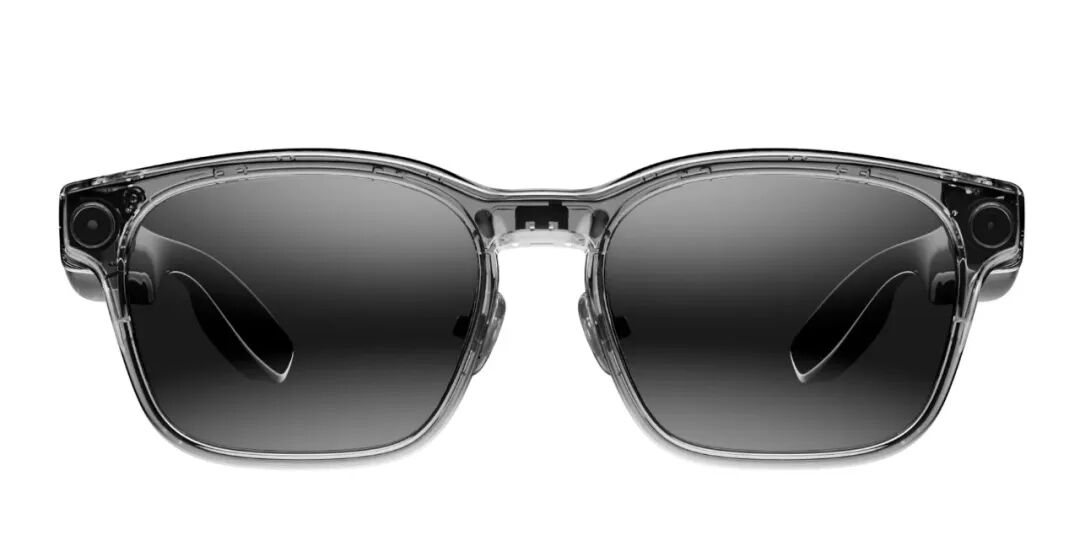
Li Auto Livis Source: Li Auto official website
For Internet giants, the AI glasses they launch are strong in ecological empowerment. For example, the AI glasses launched by Alibaba's Quark in November support QR code payment on the glasses and real - time traffic reporting. Song Gang, the person in charge of the intelligent terminal business of Alibaba's Smart Information Business Group, said that the joint construction of the internal ecosystem has built an AI capabilities matrix covering vertical scenarios such as search, navigation, payment, and business travel.
One of the highlights of Baidu's Xiaodu AI Glasses Pro is that it is equipped with Xiaodu Technology's newly launched multi - modal AI intelligent assistant, "Super Xiaodu". This enables the product not only to achieve language interaction but also to have multi - modal perception and interaction capabilities.
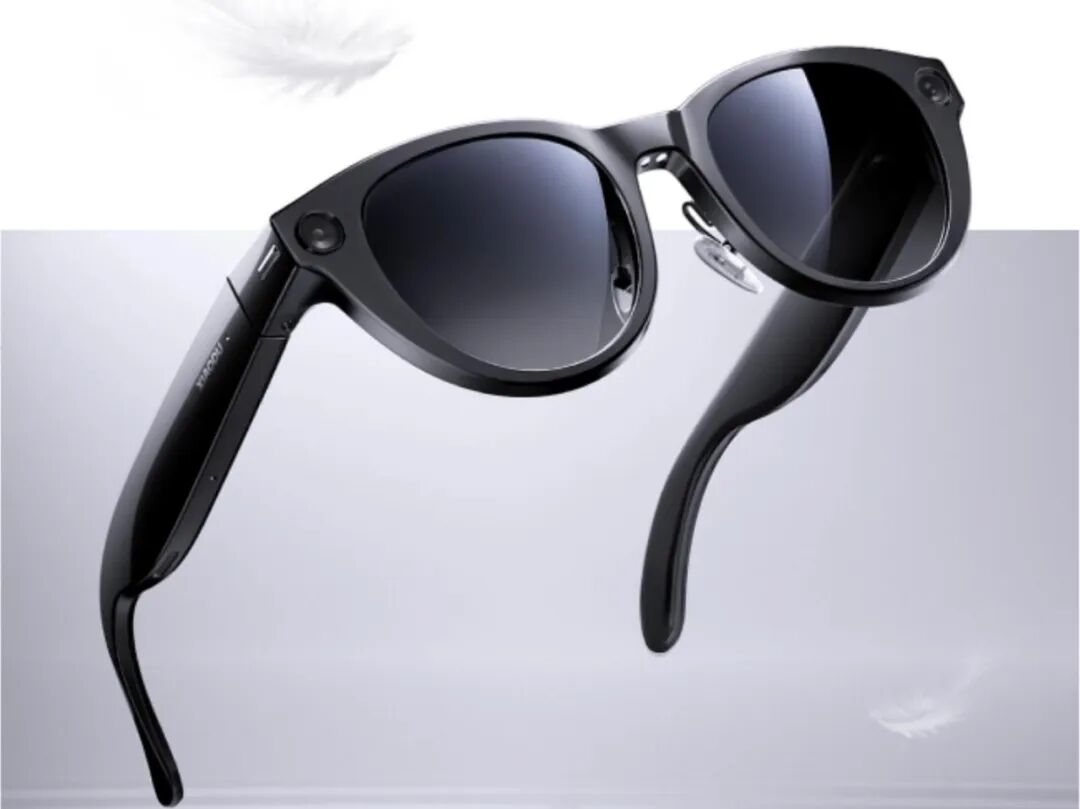
Xiaodu AI Glasses Pro Picture Source: Xiaodu Mall
Traditional smart glasses manufacturers such as TCL Thunderbird and Rokid have deeper accumulations in wearing design and optical display. Zhu Dianrong believes that such manufacturers are more open when integrating large - language models, and users can freely choose various large - language models, such as Tongyi Qianwen, DeepSeek, Doubao, Wenxin Yiyan, ChatGPT, Llama, and Gemini, without being restricted by a single ecosystem.
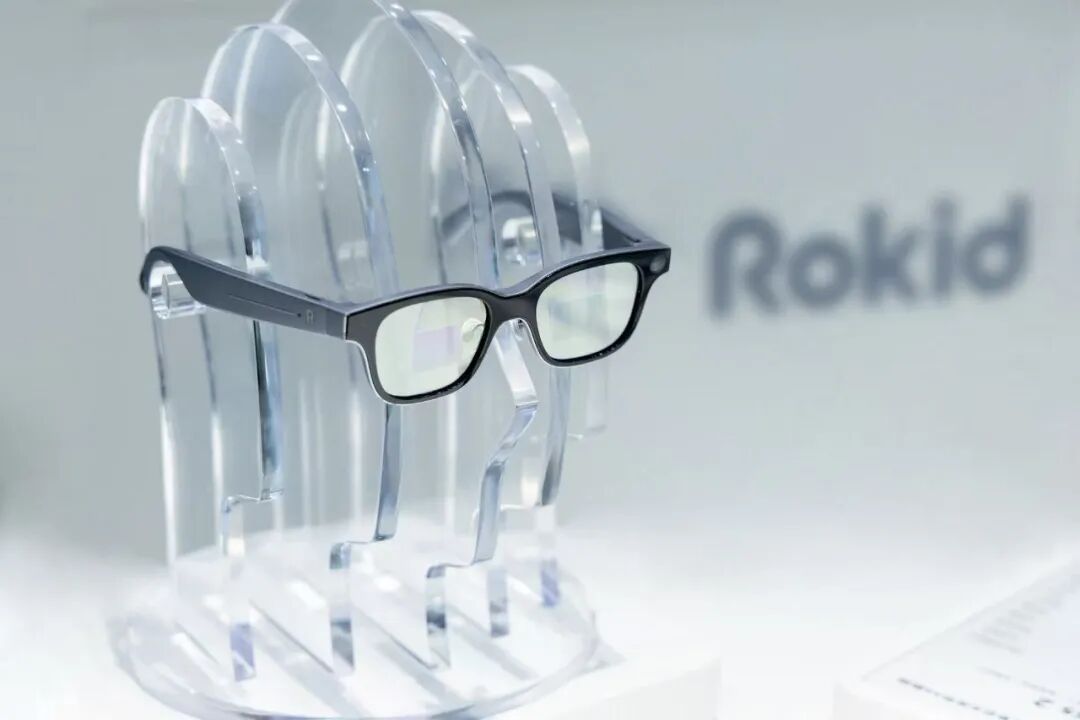
Rokid Glasses Source: Rokid official
Question 3: Are they really useful or a false demand?
Judging from the content related to AI glasses posted on social platforms, the purchasers of high - end and new products launched by mainstream manufacturers are still technology review bloggers. For ordinary consumers, are AI glasses practical?
In the view of industry experts, at this stage, AI glasses can basically be regarded as trendy tech products and toys for technological innovation. Sun Yanbiao pointed out that the current buyers of AI glasses are mainly tech enthusiasts and young people, mostly out of a desire to try something new.
From a data perspective, taking Meta as an example, the sales volume of its smart glasses increased from 200,000 pairs in 2023 to 1.5 million pairs in 2024, and this year's sales are expected to reach 7 - 8 million pairs. Zhu Dianrong believes that the significant growth rate can prove that there is a real demand for such products.
In terms of the user group, overseas, most of the current consumers of AI glasses are those who have a demand for sunglasses. "Sunglasses have a more fashionable and decorative function and do not have particularly high requirements for battery life, so this shortcoming is not obvious," said Zhu Dianrong.
Liu Yushi said that AI glasses have formed a diverse user ecosystem, covering a wide range of consumer groups such as bloggers, international students, tech enthusiasts, and sports lovers, and have also achieved in - depth penetration in industrial scenarios. CINNO Research predicts that the shipment volume of AI/AR glasses in the Chinese market is expected to reach 900,000 units in 2025, a year - on - year increase of 133%, and the market scale is expected to exceed 1 billion yuan within three years.
Question 4: What's the difference between AI glasses and mobile phones?
Mobile phones can do navigation, take pictures, send messages, and translate. Why wear glasses? Freeing hands and achieving multi - modal natural interaction may be the core answers to this question.
Many industry experts mentioned that the value of AI glasses is not to replace mobile phones but to fill in the gaps in scenarios where mobile phones are inconvenient to use.
In terms of taking pictures, AI glasses are inferior to mobile phones in terms of clarity and conductivity, but their unique advantage is the reaction speed when taking candid shots. Mobile phones solve the problem of "taking good pictures", while AI glasses solve the problem of "capturing the moment".
In the translation scenario, AI glasses perform better. "I once used it for teleprompting and video recording. Generally speaking, it was much smoother than using a teleprompter on a large screen," said Sun Yanbiao.
Zhu Dianrong summarized that AI glasses have three unique advantages: they can shoot from a first - person perspective, have a faster candid - shot speed, and are suitable for recording daily life and live - streaming; their open - audio design is more suitable for users to wear for a long time compared to in - ear headphones; and the head - up display (HUD) function makes information float in front of the eyes, providing a better experience for applications such as translation, navigation, information prompts, AI interaction, teleprompting, and memo - taking.
Liu Yushi believes that the core irreplaceability of AI glasses lies in leading the spatial computing revolution. That is, by integrating Micro LED and waveguide technology, digital information can be accurately superimposed on the physical coordinates of the real world, achieving a three - dimensional interaction of what you see is what you get. For example, when using AI glasses for navigation, the arrows can be directly attached to the road surface, or the equipment maintenance steps can be dynamically suspended above the physical object, breaking the limitations of traditional two - dimensional screens.
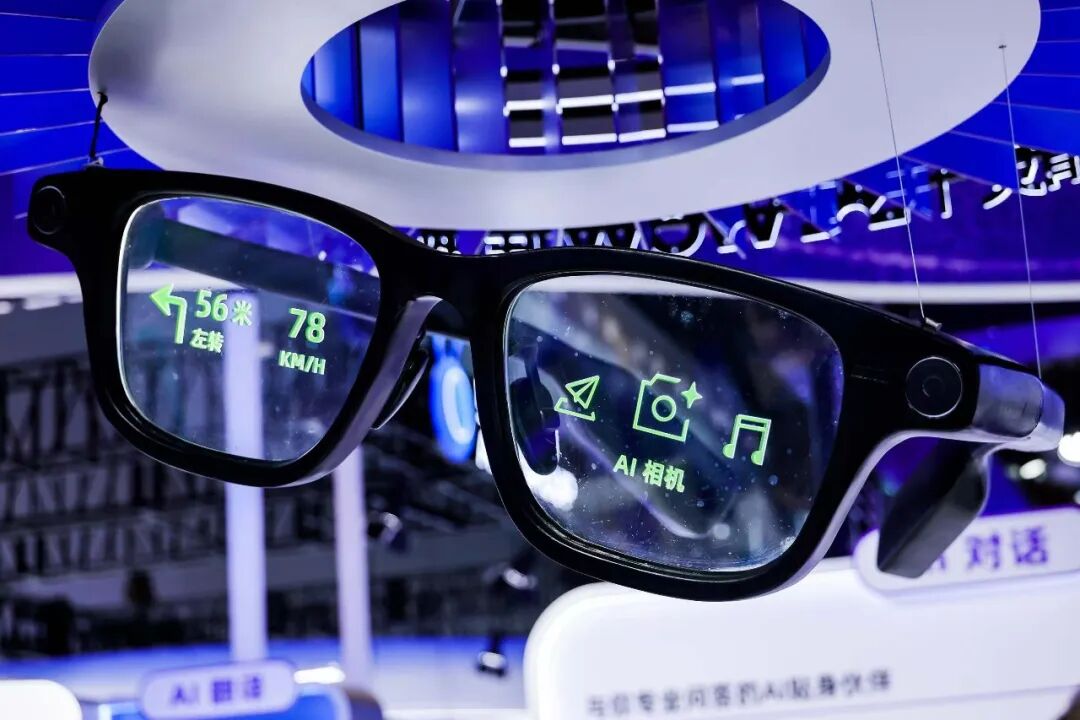
Quark AI Glasses Source: Quark official
Question 5: With a ten - fold price difference, when should consumers buy?
Currently on the market, the price range of AI glasses is extremely large. Some basic shooting glasses are sold for a few hundred yuan, while products on the official websites of TCL Thunderbird and Rokid are generally priced above 2,000 yuan. With a nearly ten - fold price difference, when is it suitable for consumers to make a purchase?
"Low - end products priced between 200 - 300 yuan are still the mainstream in terms of sales volume, but they are still far from mature products in terms of user experience," Sun Yanbiao mentioned. The cheaper the product, the greater the deficiencies in battery life, wearing comfort, and aesthetics.
Zhu Dianrong pointed out that the current price range of smart glasses launched by mainstream manufacturers is between 1,800 - 3,000 yuan. For large - scale popularization in the future, the price of function - only models without a display should drop below 1,000 yuan, and those with a display should be priced below 2,000 yuan. He expects that the price will start to decline in the second half of next year. "Currently, most main control chips use Qualcomm solutions, with a cost of about 65 US dollars, equivalent to about 460 yuan. In the future, when domestic chips mature, the cost can be significantly reduced."
The large - scale development of AI glasses has become a trend. On December 2nd, at the China ICT Market Forecast Forum, Wang Jiping, the global and China vice - president of IDC, said that lightweight smart glasses are becoming the key layout direction for leading manufacturers as they expand from shooting functions to basic display and interaction functions. According to IDC's prediction, in 2026, the global shipment volume of smart glasses will reach 23.7 million units, and the shipment volume of the Chinese smart glasses market will reach 4.915 million units.
Liu Yushi believes that at present, the mass - production capabilities of micro - display screens and waveguides are constantly improving, while the defect rate and price are constantly decreasing. With the decline in technology costs, optimization of battery life, maturity of the ecosystem, and improvement in user acceptance, it is expected that AI/AR glasses will enter the mainstream consumer market in the next 3 - 5 years.
In addition, Zhu Dianrong mentioned that the single style, large weight, and poor wearing comfort are still the main pain points hindering the popularization of smart glasses. To encourage mass consumers to purchase the products, the above problems also need to be solved.
"2028 may be the turning point for AI glasses to truly become a mass - market product," Sun Yanbiao said. With the promotion of events such as the World Cup next year, scenarios such as candid - shot taking and translation will drive a small - scale boom.
This article is from the WeChat official account "China News Service" (ID: jwview), author: Xie Jingwen, editor: Li Xiaoxuan. Republished by 36Kr with permission.