"The end of technology is to make people's lives easier." Linear Capital hosted a salon titled "N+1 Possibilities of AI Consumer Hardware" | Frontline
Author: Peng Li
Editor: Yuan Silai
When AI hardware is in high demand, how to define what a good AI hardware is? How to attract market attention? How to build a good AI hardware startup team?
On November 29th, Linear Capital held a cutting - edge technology salon event titled "N + 1 Possibilities of AI Consumer Hardware" in Shenzhen to answer the above questions. In addition to nearly 100 practitioners from different industries and companies and investors from Linear Capital, the event also invited Rokid, which focuses on AI and AR; Odyss, which specializes in wearable devices; Digua Robot, which provides underlying hardware and software platform construction for robots; Qinglantu, a product design service company; and CGL, a headhunting service provider for entrepreneurs, as guests.
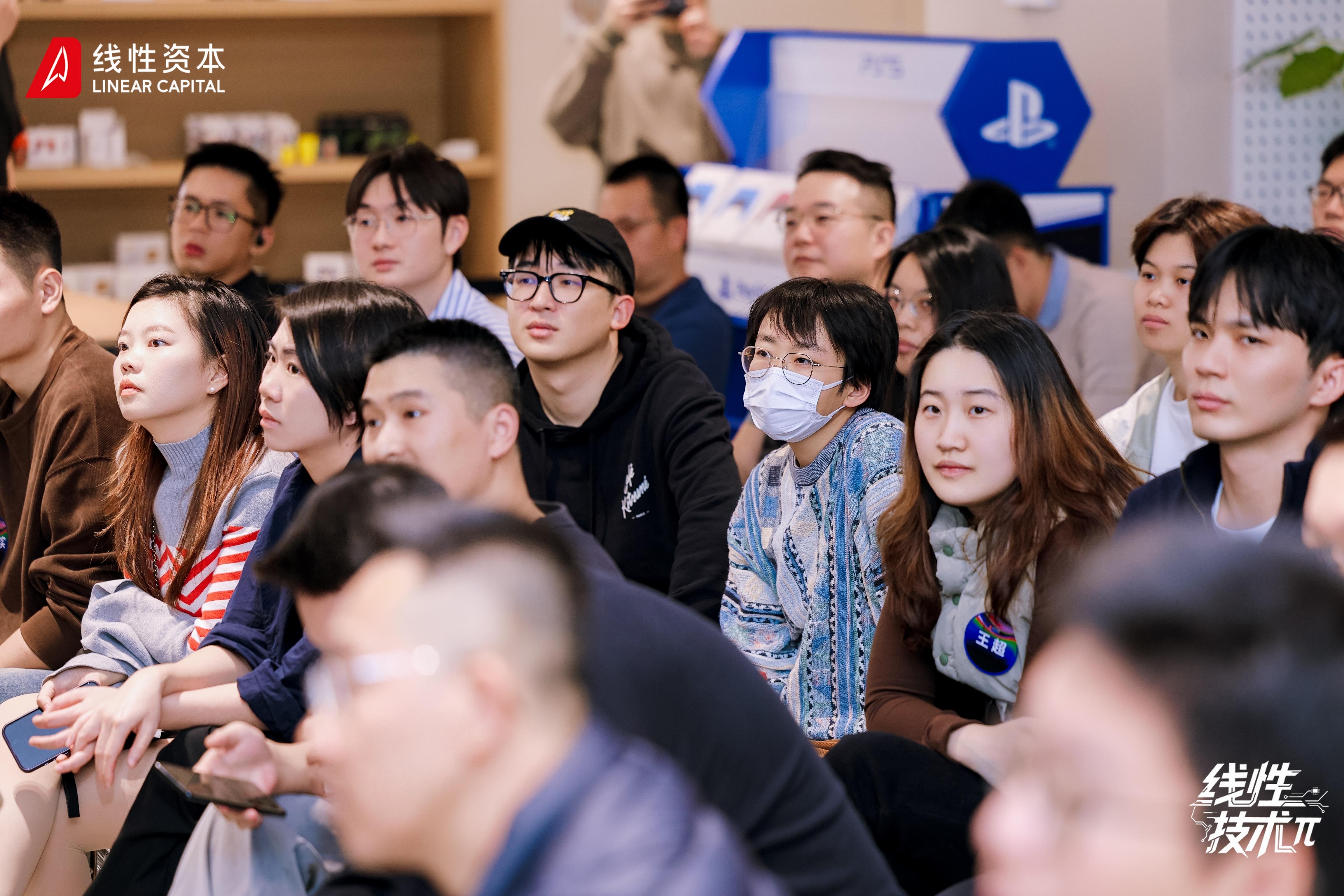
On - site participants include industry insiders such as investors and entrepreneurs
Zhao Weiqi, the global developer relations head of Rokid with 15 years of hardware startup experience, has observed that the hardware industry is evolving from PC and mobile Internet to spatial computing and AI. He believes that the future belongs to lightweight and wearable "Physical AI". Zhao Weiqi said in his speech, "Each person can carry at most 300 g - 500 g of hardware. Everyone will use this 300 g to connect with the world. So what can AI do? It is to make the hardware function like your senses and help you interact with the physical world. The product should find its own place within this 300 g."
Pan Yuyang, the founder of Odyss, started his business in 2025, and his AI necklace is about to be released. In his opinion, a real AI hardware should not only serve as an entry point for large models but should focus on solving specific life problems. "One hardware, one mission", just like Odyss' necklace, which focuses on diet and health monitoring. On the other hand, Pan Yuyang believes that truly outstanding hardware does not blend into the environment but becomes itself. "For example, Wifi is not actually a router. It is a state where we can access information at any time in the air."
Dong Dunmin, a senior director at Linear Capital, talked about AI hardware from an investor's perspective. He believes that excellent products need to meet three levels of logic: scenario, culture, and human nature. Products should be "easy to sell, smooth to use, and able to retain users", and attention should be paid to users' first - time experience and long - term dependence. Dong Dunmin mentioned the key question he would ask founders in the early stage: Are you creating a function or sculpting a scenario that can be accepted or impress users? "We believe that a good product must be truly applicable in specific life scenarios."
Dong Dunmin, senior director of Linear Capital
Similar to Dong Dunmin's view, Liu Yue, the ecological expansion director of Digua Robot, suggested that entrepreneurs should not overly pursue cutting - edge technologies (such as large models) and should prioritize refining the scenario experience. Everything should start from the scenario. After clarifying the requirements, then conduct technology selection and cost analysis. "Startups should act quickly, but the logic should be clear."
Qinglantu has served companies such as Plaud and Changyao Innovation. Zou Lin, the founder, divided startup companies into two models based on his past experience: the "kinetic energy route" and the "potential energy route". The former focuses on niche groups and gradually expands from the segmented market through high - frequency iterations; the latter targets the mass market, pursues a stunning product launch, and emphasizes brand potential. He emphasized the importance of product verification and advocated judging the product's potential through scientific research in the early stage to avoid resource waste.

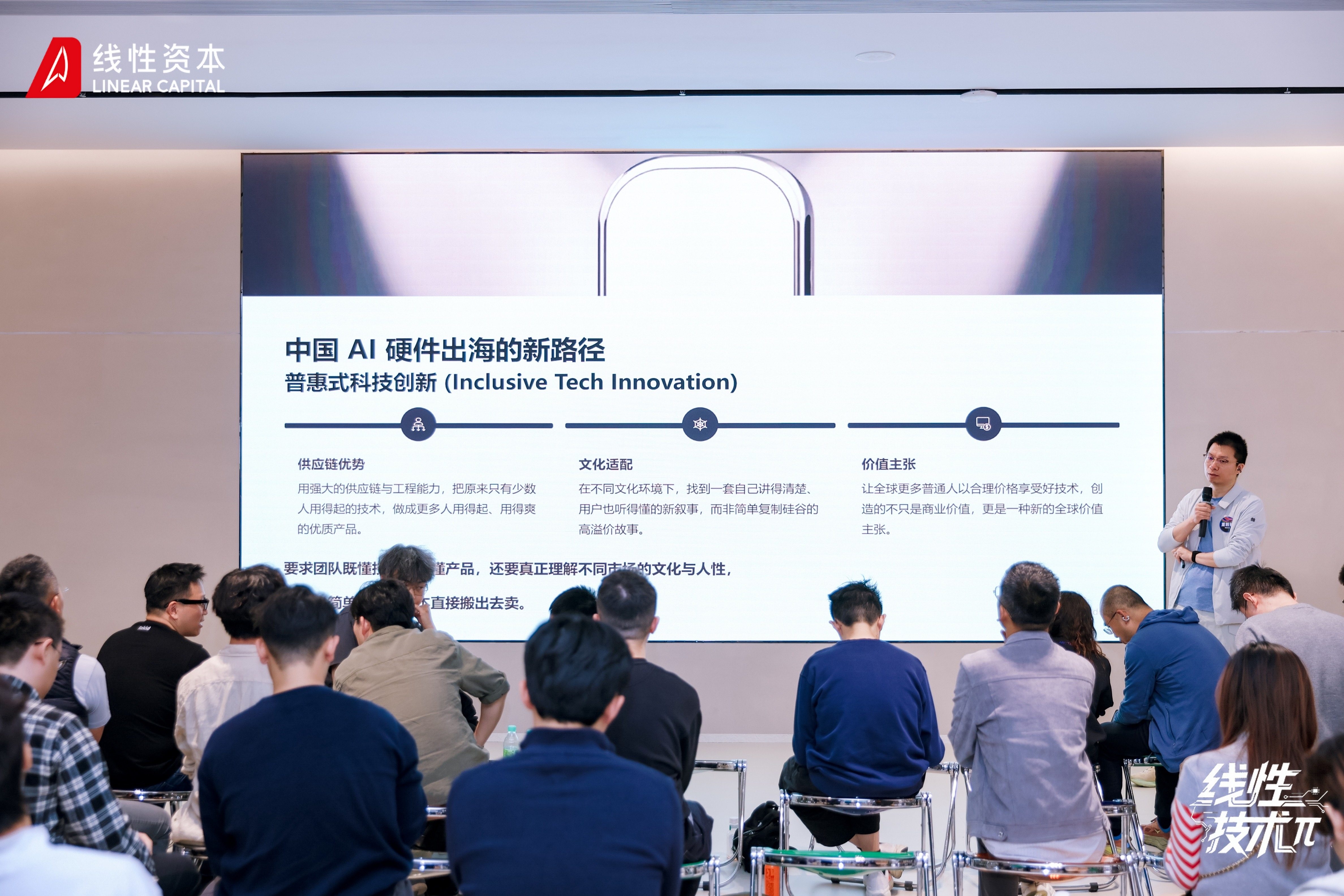
The on - site communication was enthusiastic
Fang Ling, the co - founder of CGL, which provides services for entrepreneurs, presented a portrait of intelligent hardware innovation and entrepreneurship practitioners to the audience: They are mostly under 30 years old, have a timely understanding of active consumer groups, but also lack experience in systematic organizational design, and some of them have a poor sense of commercial rhythm. She believes that with increasing transparency in financing, supply chain, and other aspects, the competition in AI hardware is similar to that of previous Internet companies, which is a competition for talent.