The battery industry is gearing up for its second leapfrog growth.
From November 11th to 13th, 2025, the 2025 World Power Battery Conference was held in Yibin, Sichuan. At the first Power Battery Conference in 2022, when the price of lithium carbonate was sky - high, the upstream and downstream of the industrial chain were arguing about who was making money. In the following two conferences, the industry went through a period of rapid capacity expansion and price wars, deeply trapped in the anxiety of "involution" and inventory reduction.
In 2025, the entire industry gradually emerged from the fog and entered a new stage of rational adjustment and in - depth technological exploration. This conference sent a clear signal: China's power battery industry has shifted from a simple scale competition to a quality competition. Around core issues such as application scenario expansion, high - speed growth of energy storage, industrialization of solid - state batteries, and compliance of the recycling system, the upstream and downstream of the battery industrial chain had a heated discussion at this conference.
01
Penetrating from the ground to the "sea, land, and air" in all domains
The application scenarios of batteries are breaking through from fields such as passenger cars, energy storage, and consumer electronics to the "all - domain". Zeng Yujun, the chairman of CATL, put forward the concept of the "all - domain incremental era". The dimension of industrial competition has expanded from the ground to all scenarios of sea, land, and air.
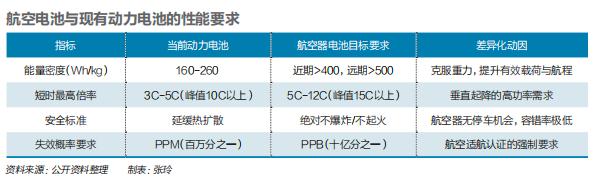
In the field of low - altitude economy, electric vertical take - off and landing vehicles (eVTOL) pose strict challenges to battery performance. The industry consensus is that eVTOL batteries must meet the "four highs and one fast" standard, namely high energy density, high power, high safety, high cycle life, and fast - charging ability.
The energy density of the current mainstream power batteries, which is 280 - 320Wh/kg, can only support short - distance flights. The industry generally regards 400Wh/kg as the commercialization threshold, and the long - term goal is set at 500Wh/kg. In addition, aviation airworthiness standards require the single - point failure probability to be controlled at the PPB (one in a billion) level. Moreover, during the take - off and landing stages, the power required by the aircraft is several times that of cruising in the air, which requires the battery to have an extremely high discharge rate. Especially during landing, thermal runaway must be avoided under the conditions of low battery power and high rate.
The electrification of ships is another incremental market. The high humidity and high salt in the water environment and the long - life characteristics of ships require batteries to have extreme environmental adaptability and durability. Enterprises such as CATL have established a corrosion acceleration model, established the IPX9 protection level, and implemented the "NP3.0" - level safety technology, achieving "no smoke, no open flame" when the battery cell is thermally out of control and maintaining a certain period of power output to ensure that the vehicle can leave the dangerous area. Given that large ships carry a huge number of battery cells, the manufacturing quality control standard must be raised to the PPB level to ensure reliability throughout the life cycle.
In the field of heavy - load land logistics, the battery - swapping model shows the optimal full - life - cycle cost in medium - and high - load scenarios. However, the "island effect" caused by the non - unified standards of battery - swapping stations hinders large - scale promotion. Currently, the industry is committed to promoting the standardization of battery pack size interfaces and communication protocols and building a national - level battery - swapping interconnection information platform, trying to break physical and commercial barriers through digital means and build a unified national energy - replenishment network for heavy - duty trucks.
02
Energy storage: from "supporting role" to "leading role"
At the 2025 World Power Battery Conference, energy - storage batteries became the absolute leading role. Dong Yang, the chairman of the China Automotive Power Battery Industry Innovation Alliance, said bluntly: "Energy - storage batteries may be more important than vehicle - used power batteries. In 2019, the Nobel Prize in Chemistry was awarded to the scientists of lithium - ion batteries. One sentence in the award speech was 'human beings have entered an era when electric energy can be stored'."
The current energy - storage battery market shows a distinct structural differentiation: on the one hand, large - capacity battery cells of 314Ah and above are in short supply because they can significantly reduce the system integration cost, and the order scheduling is extended; on the other hand, the old production capacity of small - capacity battery cells of 280Ah and below faces insufficient operating rates. Although high - end battery cells are in short supply, limited by the strong bargaining power of super buyers such as large central enterprises and overseas large customers, the winning bid price of energy - storage systems has increased but still remains at a low level. The economy brought by low cost has become the main driving force for the high - speed growth of energy storage.
With the adjustment of the mandatory energy - storage allocation policy and the improvement of the power price mechanism such as capacity tariffs, the revenue model of energy - storage power stations has changed from single - difference arbitrage to a comprehensive revenue of difference + capacity compensation + auxiliary services, reducing investment risks. Technologically, energy storage is evolving from the "grid - following type" that passively follows the grid frequency to the "grid - forming type" that actively establishes voltage and frequency references, enabling it to provide high - value auxiliary services such as black - start and inertia support, thus obtaining higher returns.
According to the calculations of many investment research institutions, currently in most provinces in China, the internal rate of return (IRR) of independent energy - storage investment has exceeded 6%, most are above 8%, a few regions with high subsidies exceed 10%, and the highest in Inner Mongolia is close to 20%. As more provinces implement policy mechanisms to support new - type energy storage, the IRR of independent energy - storage investment in China will stabilize between 8% - 12%, while the IRR of independent energy - storage in overseas markets generally exceeds 10%.
The current investment return rate of independent energy storage is clearly higher than the mainstream capital cost. Even without subsidies, investing in energy storage has clear commercial feasibility, which is the fundamental reason for the high - speed growth of energy storage.
03
The solid - state battery fever returns to rationality
At this power battery conference, many experts "poured cold water" on solid - state batteries. After being enthusiastically pursued by the capital market, the field of solid - state batteries began to return to rationality. Academician Ouyang Minggao of the Chinese Academy of Sciences and many industry experts generally believe that the large - scale commercialization of all - solid - state batteries is unlikely to be earlier than 2030. It is expected that there will only be small - batch testing and demonstration operations in 2027, mainly applied in high - end fields that are not sensitive to costs. Before that, as a practical transitional solution, the "solid - liquid hybrid" battery will achieve the goal of an energy density of more than 300Wh/kg in the next five to seven years.
The manufacturing of all - solid - state batteries is not simply a material replacement but involves a subversive change in the production process. In liquid batteries, the electrolyte can infiltrate the electrodes to achieve perfect interface contact. In all - solid - state batteries, the contact between the electrodes and the electrolyte is a rigid solid - solid contact. During the charging and discharging process, the positive and negative electrode materials will expand and contract in volume, causing the contact points to break and the interface impedance to increase sharply, ultimately leading to battery failure. Many of the currently announced solid - state battery materials can only achieve their excellent performance in a high - pressure environment, and solid - state battery materials with excellent performance under normal pressure are still rare.
In addition, there are also many difficulties in the manufacturing process. To adapt to solid - state electrolytes, the traditional wet - coating process must be abandoned, and the dry - electrode process must be adopted. However, the dry process still faces huge challenges in terms of uniformity, adhesion control, and equipment accuracy. Currently, there is no mature mass - production equipment that can meet the requirements of large - scale mass production. To eliminate the pores at the solid - solid interface, solid - state batteries require extremely high - pressure treatment. The current batch - type pressure equipment has low efficiency and cannot meet the needs of continuous large - scale production, and the equipment cost is high. In addition, the mainstream sulfide electrolytes are extremely sensitive to moisture. Once they absorb water, they will react to generate toxic hydrogen sulfide gas. This means that the production environment for sulfides must have extremely low humidity, which places strict requirements on the construction and operation costs of the factory building.
Although many battery enterprises have announced the mass - production and vehicle - installation time of all - solid - state batteries, slogans cannot replace engineering practice. At last year's power battery conference, Zeng Yujun, the chairman of CATL, said that if a score of 1 - 9 is given to solid - state batteries, the current score is at most 4. At this year's conference, more and more participants began to discuss the engineering challenges of solid - state batteries instead of imagining the future with experimental data. However, this is precisely an important sign that solid - state batteries are on the verge of a breakthrough.
04
The battery recycling industry urgently needs to be set right
The rapid growth of new - energy vehicles in China began in 2015. In that year, the sales volume of new - energy vehicles in China exceeded 300,000, surpassing the United States for the first time to become the world's largest new - energy vehicle market. In 2025, the power batteries of early new - energy vehicles will enter a large - scale retirement period. It is estimated that 370,000 tons will be retired in 2025, and it will exceed one million tons in 2030. The recycling industry is facing the "darkest moment before dawn". On the one hand, there is a definite expectation of a trillion - level market, and on the other hand, there is the cruel reality of "bad money driving out good money".
The 148 "whitelisted" regular recycling enterprises recognized by the Ministry of Industry and Information Technology have advanced environmental protection treatment facilities and safety management and control systems, but they bear high compliance costs, including taxes, environmental protection investment, and safety facilities. This results in their weak ability to bid when recycling waste batteries, facing the dilemma of "having no raw materials to work with".
Meanwhile, tens of thousands of irregular recyclers use a low - cost model of "one crowbar for the whole world", ignoring environmental protection and safety, and competing to buy retired batteries at high prices. A large number of waste batteries flow into small workshops, where they are violently disassembled or illegally assembled into products such as power banks and low - speed vehicle batteries, causing serious safety hazards and resource waste, resulting in the phenomenon of "the regular army cannot beat the guerrillas".
This deadlock is being broken by two internal and external forces. In September 2025, the Ministry of Commerce of China issued the "Decision on Amending the Implementation Rules for the Administration of Scrap Motor Vehicle Recycling (Draft for Comments)", which added requirements for battery integrity, power battery coding registration, and power battery recycling paths, cutting off the path for power batteries to flow into illegal recycling institutions at the source.
In addition, the implementation of the EU's "Batteries and Waste Batteries Regulation" has become a powerful external force forcing China's recycling industry to become compliant. The EU regulations clearly stipulate that in the future, batteries entering the EU market must declare their carbon footprint and meet the specified usage ratio of recycled materials (lithium, nickel, cobalt). Each battery exported to Europe must have a "digital passport" that details its carbon emissions and raw material sources throughout its life cycle.
Only "recycled materials" that are recycled through regular channels and have complete data traceability can be recognized by the international market. Battery enterprises or automobile enterprises must register in the EU and assume the financial and organizational responsibilities for waste battery recycling. This forces battery factories and vehicle manufacturers to deeply bind with regular recycling enterprises that have qualifications and can provide compliant data, thus squeezing illegal small workshops out of the supply chain.
Facing compliance pressure, leading recycling enterprises such as GEM have put forward a new concept of "Battery Recycling as a Service (BRaSS)". Recycling enterprises are no longer just buyers of waste materials but provide "responsibility - fulfilling services" for battery factories and vehicle manufacturers on a global scale. Through targeted recycling, compliant treatment, and carbon footprint certification, they help vehicle manufacturers meet the access requirements of overseas markets such as the EU.
In addition to compliance pressure, disassembly technology and recycling economy are still pain points in battery recycling. Integration technologies such as CTP (Cell - To - Pack) and CTC (Cell - To - Chassis) use a large amount of high - strength adhesives, making non - destructive disassembly extremely difficult. The industry urgently needs to break through intelligent flexible disassembly technology and environmentally friendly adhesive removers.
Moreover, as the market share of lithium iron phosphate batteries exceeds 70%, their recycling value (the main recyclable material is only lithium) is much lower than that of ternary batteries (the recyclable materials are nickel, cobalt, and lithium). Against the background of the fluctuating price of lithium carbonate, the recycling economy of lithium iron phosphate batteries has extremely high uncertainty. Developing technology for directly regenerating lithium iron phosphate cathode materials from waste batteries and exploring the high - value utilization of by - products are the keys to solving the economic problem. For example, the "direct regeneration" technology developed by the team of Academician Chen Zhongwei of the Chinese Academy of Sciences can directly produce lithium iron phosphate cathode materials, reducing the cost by 40%, providing a new path for solving the problem of recycling economy.
The 2025 World Power Battery Conference sent a clear signal: China's power battery industry is bidding farewell to the initial stage dominated by scale growth and entering a new stage where quality comes first.
Batteries will not only be components of automobiles but also power sources for low - altitude economy, stabilizers for the power grid, and hearts for ships. The energy - storage industry has realized value realization through the market mechanism and no longer relies on mandatory energy - storage allocation policies. The recycling industry is reshaping its commercial value through the "servitization" transformation and international compliance requirements. Solid - state batteries are returning to engineering rationality, and semi - solid batteries are becoming a practical transitional solution. Safety technology is shifting from passive defense to active early warning based on AI and physical perception.
The all - round upgrade of technology, market, application, and policy is putting the battery industry on the starting line for the second leap - forward growth.
This article is from the WeChat public account "Caixin Magazine". Author: Yin Lu, Editor: Mark. Republished by 36Kr with permission.