The mentor of Ultraman strongly supports the 19-year-old boy. It's four times faster than AlphaFold and only kills pests without harming humans.
A genius teenager screens billions of molecules daily with AI! The mentor of Altman offers advice: Don't sell models, sell licenses.
To consume fruits and vegetables, humans have dumped more and more pesticides on the land. The usage has doubled in thirty years, yet 40% of crops still die from pests and diseases every year.
Two just - adult founders have provided a completely different answer - treating pesticide R & D as "precision - targeted pest control".
Through an AI model, first identify the "unique targets" that only exist in pests from a vast amount of proteins. Then, use structure prediction and ligand screening technologies similar to AlphaFold to design exclusive "medicines" for these targets. This gives pesticides the opportunity for the first time to only kill pests without harming humans and beneficial organisms.
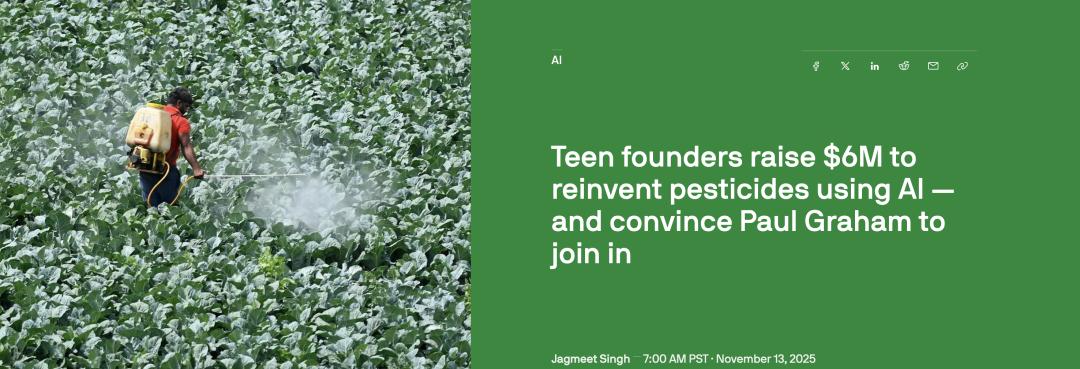
Finding medicines for plants and saving grains globally
An astonishing but little - known fact: To achieve the same agricultural results as in 2000, the global pesticide usage has actually doubled.
The problem doesn't lie with farmers. Instead, pests are evolving too fast, and their resistance is getting stronger and stronger, far exceeding the speed of pesticide R & D, resulting in the decreasing effectiveness of pesticides.
But we can't lose this race against evolution.
Regulatory agencies are also putting increasing regulatory pressure on pesticide manufacturers, but most agrochemical companies still rely on adjusting traditional compounds.
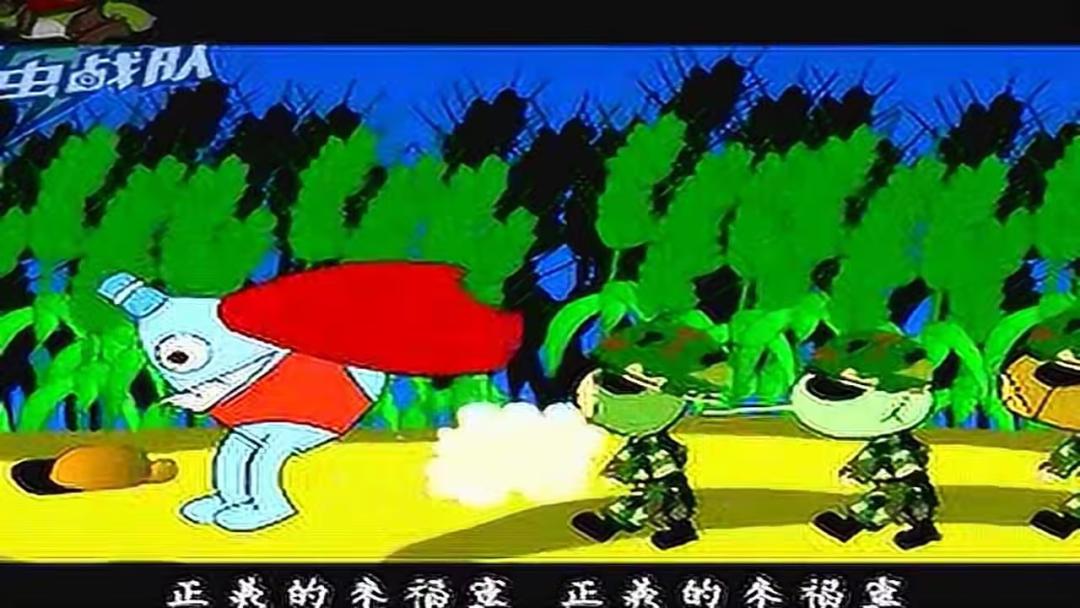
Specifically, most current insecticides are not developed based on specific targets. Instead, entomologists and chemists propose different compounds and then test them on insects. To check their effectiveness, thousands of chemical substances usually need to be synthesized and tested, which is very costly.
The two entrepreneurs firmly believe in the "bitter lesson" - that is, "the general method using computing resources ultimately works best and is often far better than other means". Therefore, they no longer use human knowledge to generate proteins and small molecules based on known or assumed properties. Instead, they use foundation models trained with massive data.
So, they decided to apply the AI methods that have been verified in drug R & D to pesticide molecular design, making it several orders of magnitude faster than traditional R & D, and also safer and more effective.
They have achieved the following milestones:
Built a foundation model that can uniformly handle protein - small molecule interactions and has general uncertainty assessment capabilities
Developed a protein folding model four times faster than AlphaFold, specifically for pesticide target analysis
Identified and verified the first proprietary pesticide candidate compound within three weeks after the completion of the laboratory in San Carlos, California
Teenagers start a business to create medicines for grains
In 2024, 18 - year - old Tyler Rose and 19 - year - old Navvye Anand co - founded Bindwell.

Bindwell applies AI - driven drug R & D technology to agriculture, aiming to speed up the screening and testing process of new pesticide molecules.
Initially, Bindwell originated in 2023. At that time, the two were participating in the Wolfram Summer Research Program, focusing on a drug R & D AI model called PLAPT, with the research direction of binding affinity prediction.
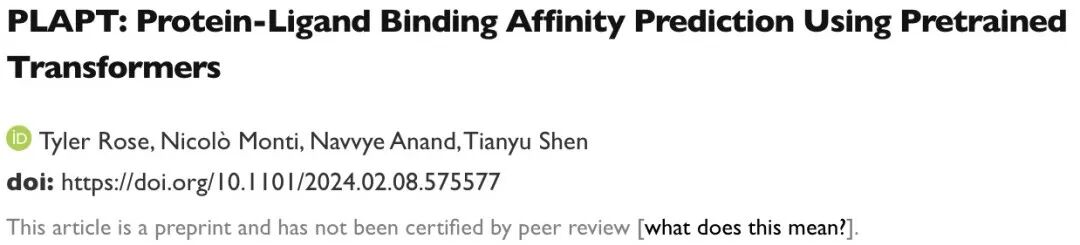
Preprint: https://www.biorxiv.org/content/10.1101/2024.02.08.575577v3
This work was later cited in a cancer treatment paper in "Nature Scientific Reports".
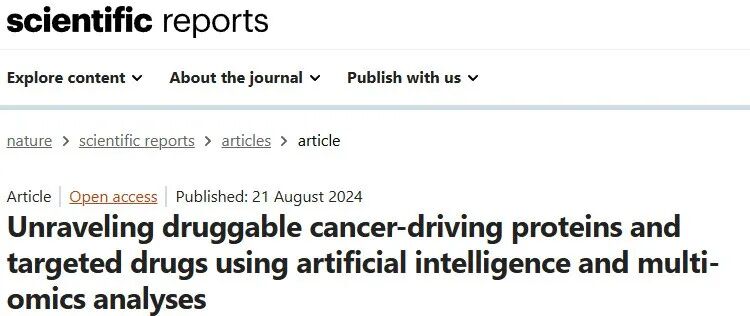
In 2024, they began to try to transfer this method to the field of pesticide R & D.
Both founders have personally experienced the pest control problems in agriculture. Rose learned about the challenges of pest control from his aunt who farms in China. Anand is from Punjab and has witnessed firsthand how limited pesticide options affect crop yields.
In 2024, 18 - year - old Rose and 19 - year - old Anand founded Bindwel.
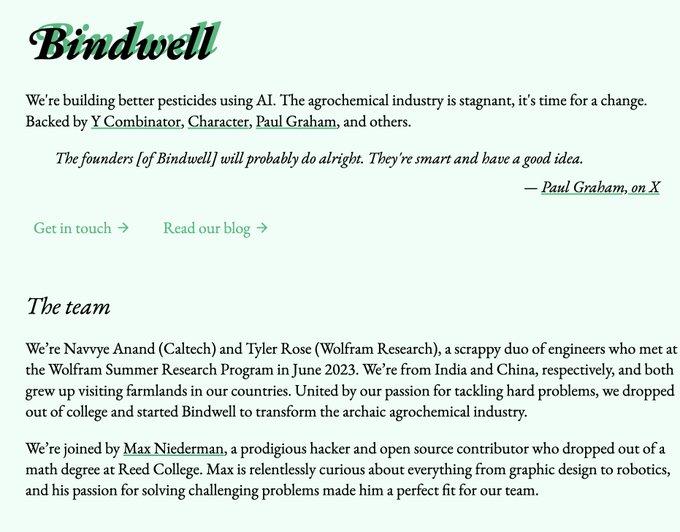
The company applies AI - driven drug discovery technology to agriculture, aiming to speed up the identification and testing of new pesticide molecules. Bindwell entered the Y Combinator Winter 2025 program, planning to build an AI model and sell access rights to major agrochemical companies.
But they didn't make much progress. Most practitioners in the insecticide industry are reluctant to use AI as the core part of pesticide discovery.
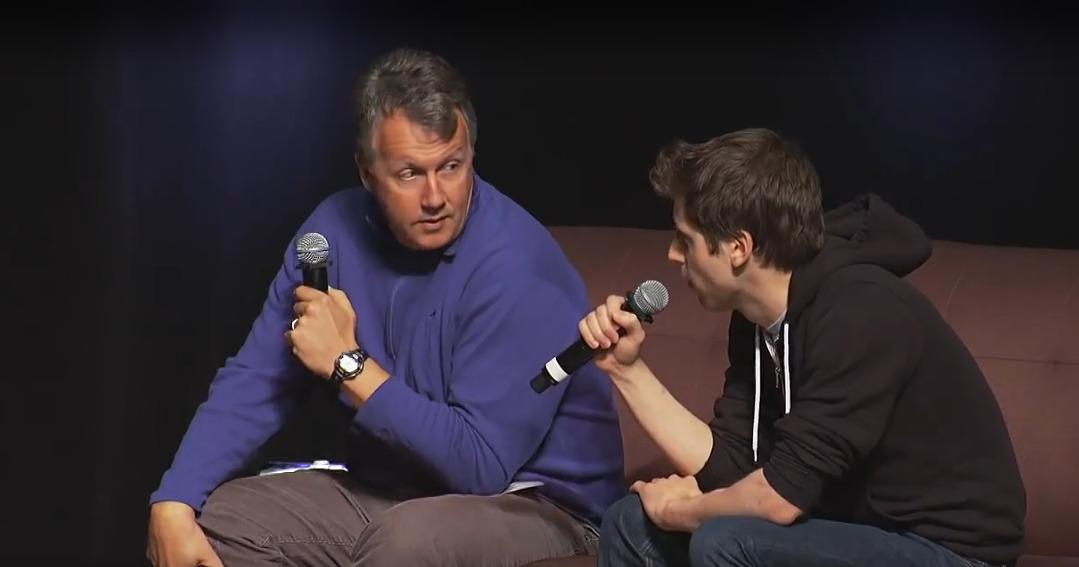
In the middle of the project, they were invited to the home of Y Combinator founder Paul Graham and had a conversation with him on the terrace for about 45 minutes.
After hearing their difficulties, Graham proposed a different approach: Instead of selling tools, they could use their models to discover new pesticide molecules themselves and directly license the intellectual property.
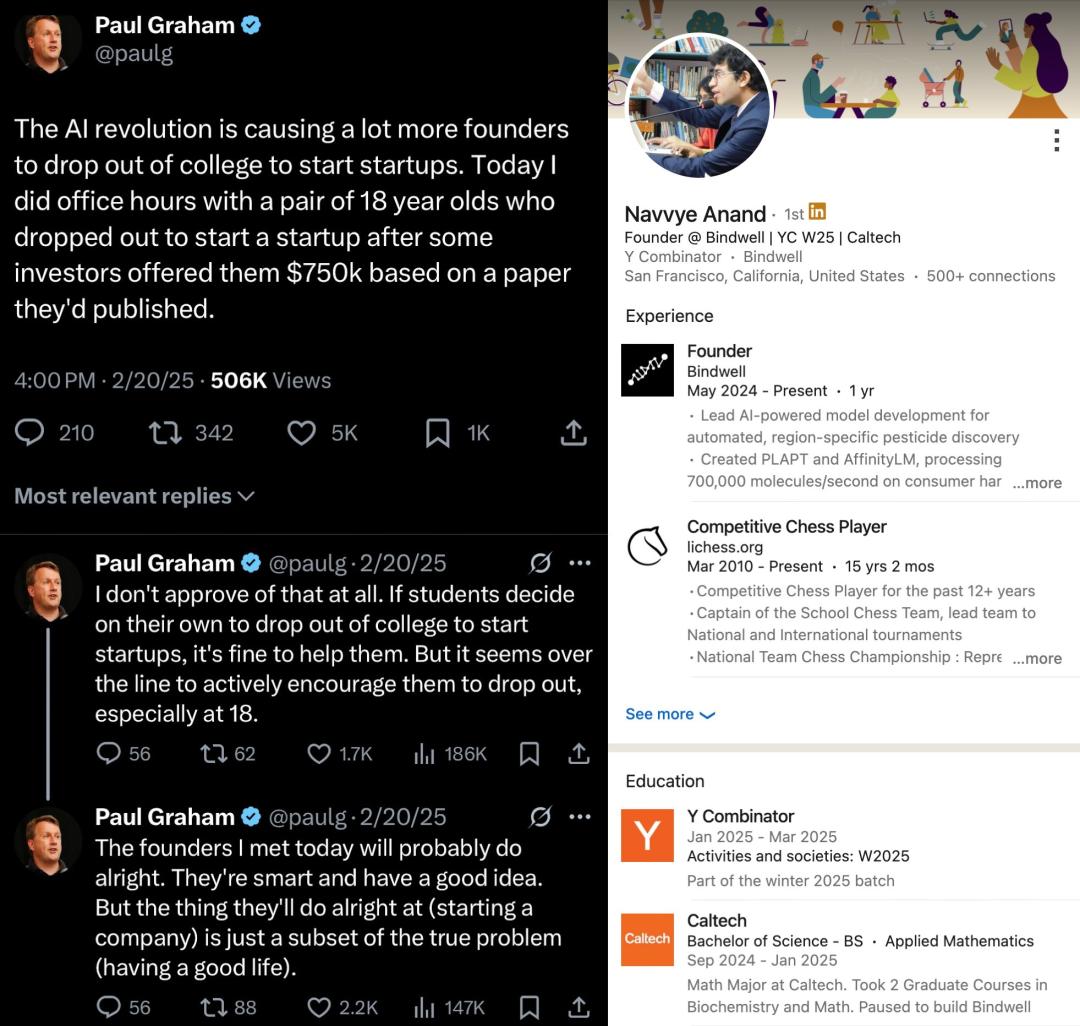
Subsequently, Graham posted on X: "The founders of Bindwell should do well. They are smart and have good ideas."
Accepting Graham's advice, Bindwel adjusted to the new business model and raised $6 million in the seed - round financing, co - led by General Catalyst and A Capital. Graham himself also made a personal investment.
By the way, Graham is the person who discovered Altman's talent. He once appointed Altman as an executive of Y Combinator and has supported Altman many times.
Protein AI: From the Nobel Prize to pesticides
Bindwell has developed its own AI suite for pesticide design, aiming to reduce hallucinations.
The software includes
The structure prediction model Foldwell, a customized diffusion model inspired by DeepMind's AlphaFold, used to identify the target protein structure;
APPT, a protein - protein interaction model for biopesticide screening.
The purpose of these two tools is to find target proteins that are unique to pests and closely interact with other proteins required by pests. Once these proteins are found, you can design something that can bind to them and prevent them from functioning.
And this is what PLAPT, an open - source protein - ligand interaction model, does.
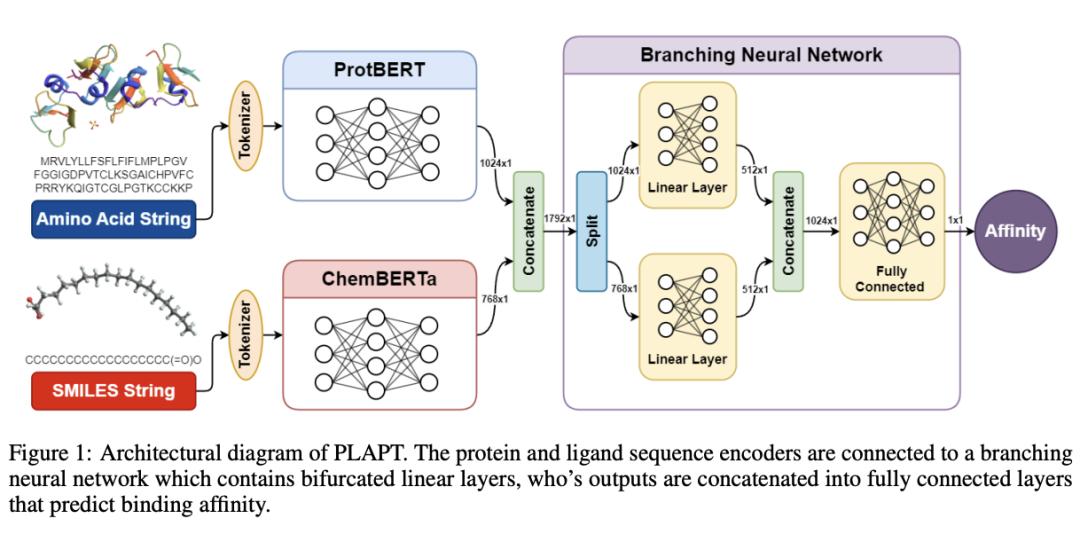
It can scan all known synthetic compounds within six hours to find suitable ligands for the target protein. The found ligands can be used as potential pesticide candidate molecules.
It is reported that on Affinity Benchmark v5.5, Bindwell's AI tools are 1.7 times better than existing tools. The tool can analyze "billions" of molecules at a time, and its performance is four times faster than DeepMind's AlphaFold - 3. In addition, the suite also integrates an uncertainty quantification system to mark when the results are credible and when more data is needed.
Currently, Bindwell is testing the effectiveness of the molecules generated by its AI in the laboratory. It is also collaborating with third - party partners to further validate the model.
It is also having early discussions with several global agrochemical companies, and the first cooperation is expected to be reached soon. Within a year, Bindwell hopes to start licensing agreements with some of these companies, authorizing pesticide manufacturers to use the pesticide molecules designed by AI as products.
In addition, Bindwell is also having discussions with relevant institutions in China and India for field tests.
Alternative AI entrepreneurship
Applying the AI model used in the biopharmaceutical field to pesticide design is feasible in principle and can be regarded as a dimensionality - reduction strike of the highly competitive industry on traditional industries.
If a new - style pesticide can really be designed, which is like a precision - treatment anti - tumor drug that only kills pests and is harmless to humans and beneficial insects, it will undoubtedly be a huge success.
However, pesticide design is different from drug manufacturing after all. There are many organisms in nature. If the insecticide designed by AI only retrieves a limited database, it may cause harm to some native species.
Before large - scale promotion, careful testing is still necessary.
AI has compressed the traditional ten - year - cycle pesticide R & D into a search problem that can be iterated with computing power - behind which is the direct collision between capital, computing power, and traditional farmland.
Reference materials:
https://techcrunch.com/2025/11/13/teen - founders - raise - 6m - to - reinvent - pesticides - using - ai - and - convince - paul - graham - to - join - in/
https://bindwell.ai/posts/defeating - pests - with - ai
https://x.com/deedydas/status/1989063077095162291
This article is from the WeChat official account "New Intelligence Yuan", author: New Intelligence Yuan, editor: peter Dong, KingHZ. Republished by 36Kr with authorization.