Li Auto Ends 11-Quarter Profit Streak with $600M Loss. Is Li Xiang Returning to Hard Times by Selling Old Phones?
Li Xiang and his wife selling old phones hit the trending list.
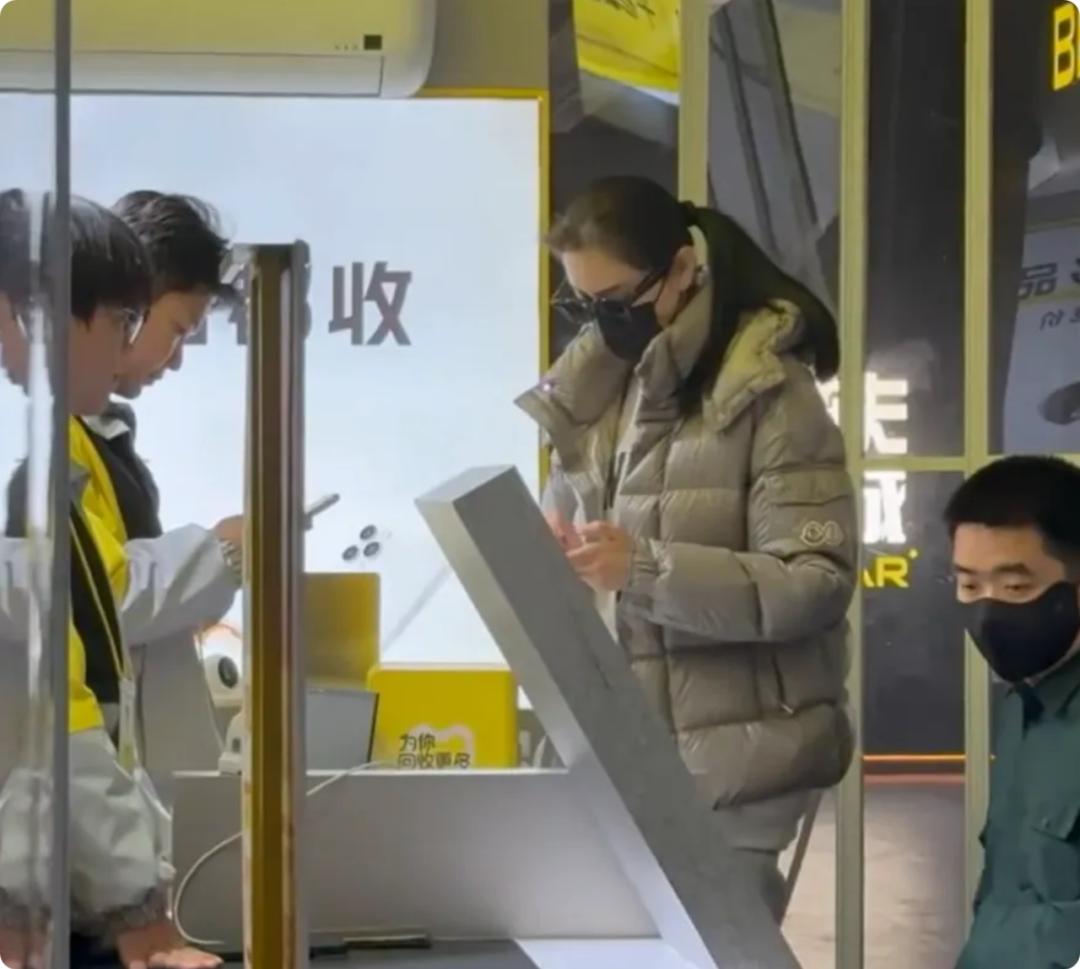
Recently, some netizens posted a video on social platforms showing an accidental encounter with Li Xiang and his wife selling second - hand phones. From the video, the couple quietly inquired about mobile phone recycling matters. There were no bodyguards or assistants, and they just waited quietly for the staff to handle it. This incident quickly became a hot topic on the internet.
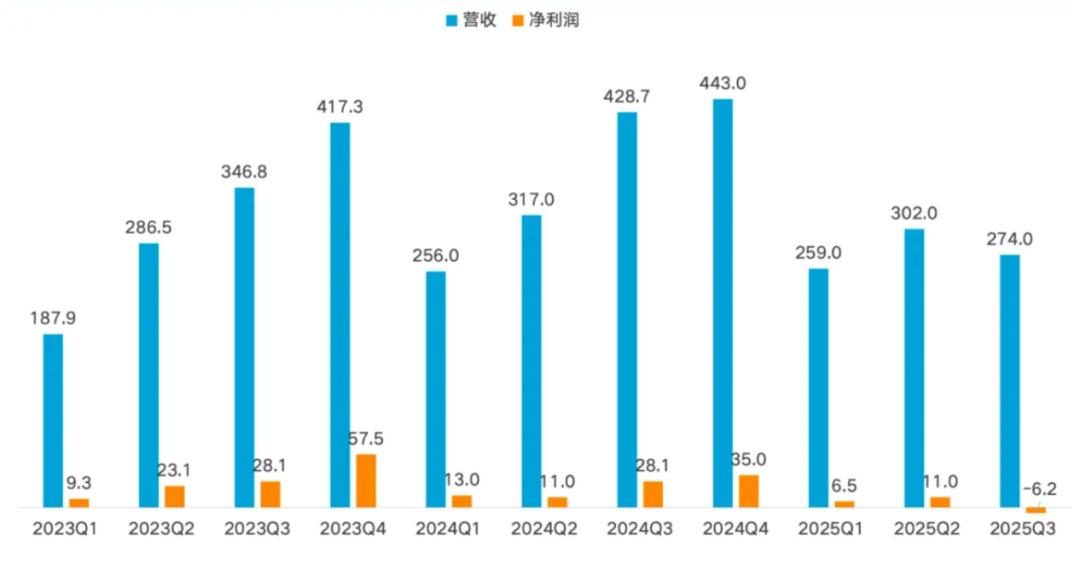
Another hot topic that emerged simultaneously with Li Xiang selling old phones was Li Auto's third - quarter report. According to the latest financial report, Li Auto, the first new - energy vehicle startup to turn a profit, unexpectedly shifted from profit to loss. After 11 consecutive quarters of profitability, it suffered a single - quarter loss of 625 million yuan.
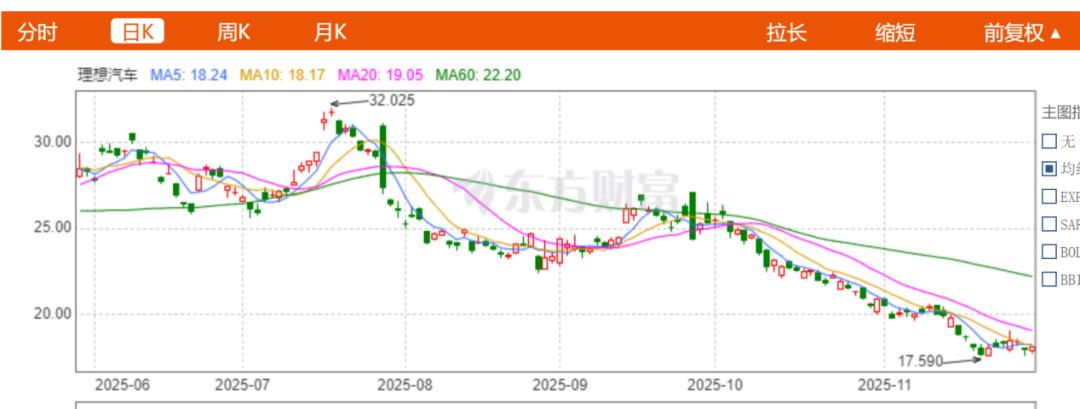
While NIO is determined to turn a profit, XPeng is on the verge of profitability, and Leapmotor has already achieved profitability, Li Auto has shifted from profit to loss. Among the four listed new - energy vehicle startups, only Li Auto has regressed, which has raised concerns in the capital market. Since July this year, its stock price has been on a downward trend. As of the close on December 2nd, Li Auto's US - listed stock price was $18.10, a 25.2% decline from the opening price of $24.21 on the first trading day of the year. The Hong Kong - listed stock price also dropped from the opening price of HK$92.95 at the beginning of the year to HK$72, a decline of 23%. Its latest US - listed market value is $19.37 billion, and the Hong Kong - listed market value is HK$154.1 billion.
During the same period, the US - listed market values of NIO and XPeng were $12.44 billion and $18.77 billion respectively. Li Auto's once - dominant market value is being gradually narrowed by its main competitors. Facing the shift from profit to loss, Li Auto's executives collectively reflected at the earnings conference, believing that they had underestimated the competitiveness and hit - making ability of new entrants such as Xiaomi in the past. They also pointed out that the platform development rhythm of "a major iteration every four years" could no longer keep up with market changes. Li Xiang himself frankly admitted that "in the past few years, I was my worst self" and said that he would return to the startup mode.
A net loss of 6,700 yuan per vehicle
According to the financial report, in the third quarter, Li Auto not only shifted from profit to loss but also saw a significant decline in its revenue. In the third quarter, Li Auto's revenue was 27.36 billion yuan, a year - on - year decline of 36.17%, and the net profit was - 625 million yuan, a year - on - year increase of - 122.21%. Both revenue and net profit declined.
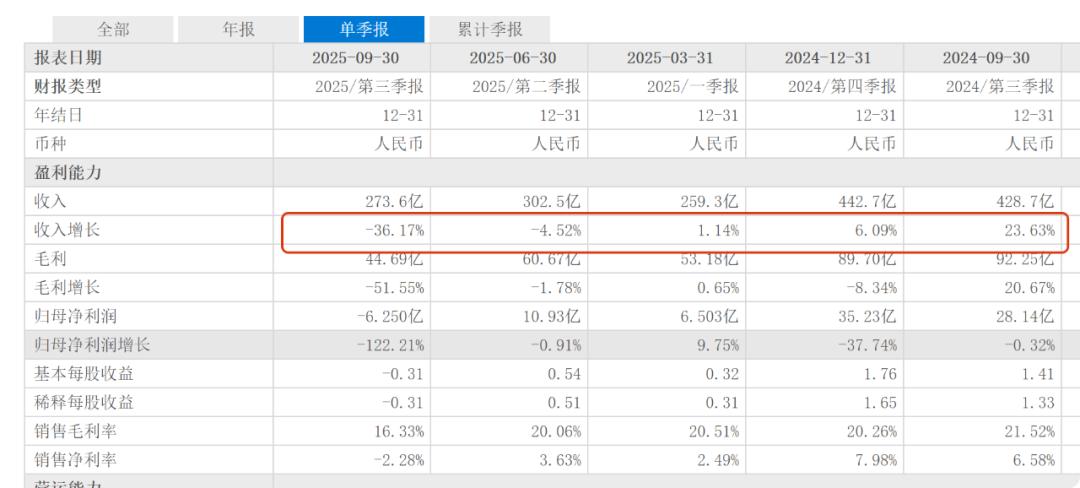
A careful analysis of Li Auto's performance in the past five quarters shows that since the third quarter of 2024, Li Auto's revenue has been on a continuous downward trend. The revenue growth rates in the previous four quarters were 23.63%, 6.09%, 1.14%, and - 4.52% respectively, until - 36.17% in the third quarter of this year. In terms of net profit, only in the first quarter of this year did it achieve positive growth, while the other four quarters had negative growth, just not as large as the negative growth rate in the third quarter of this year.
In terms of gross margin, Li Auto's gross margin declined from 21.52% in the third quarter of 2024 to 16.33%. The net profit margin also dropped from 6.58% in the third quarter of 2024 to - 2.28%.
During the entire third quarter, Li Auto delivered a total of 93,200 new vehicles, a 39.01% decrease from 152,800 vehicles in the same period last year. Calculated in this way, Li Auto loses 6,700 yuan for each vehicle sold. The sharp decline in delivery volume directly led to a significant drop in vehicle sales revenue. In this quarter, Li Auto's vehicle sales revenue was 25.9 billion yuan, a 37.4% decrease from 41.3 billion yuan in the third quarter of 2024. The contraction on the revenue side reduced the company's space to allocate fixed costs, directly affecting the profitability of each vehicle.
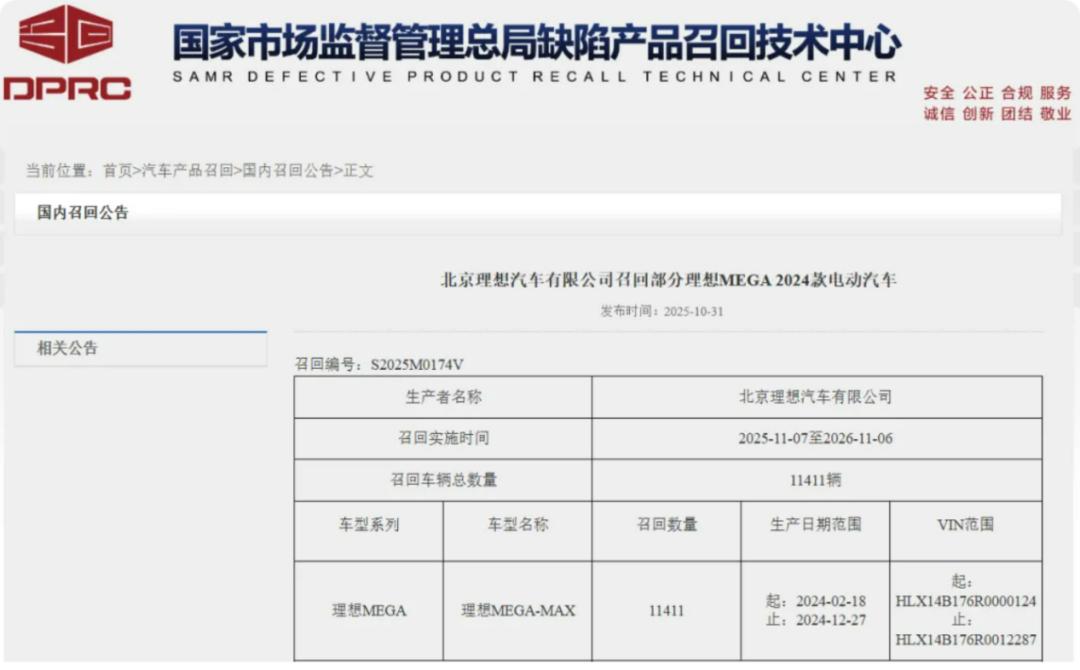
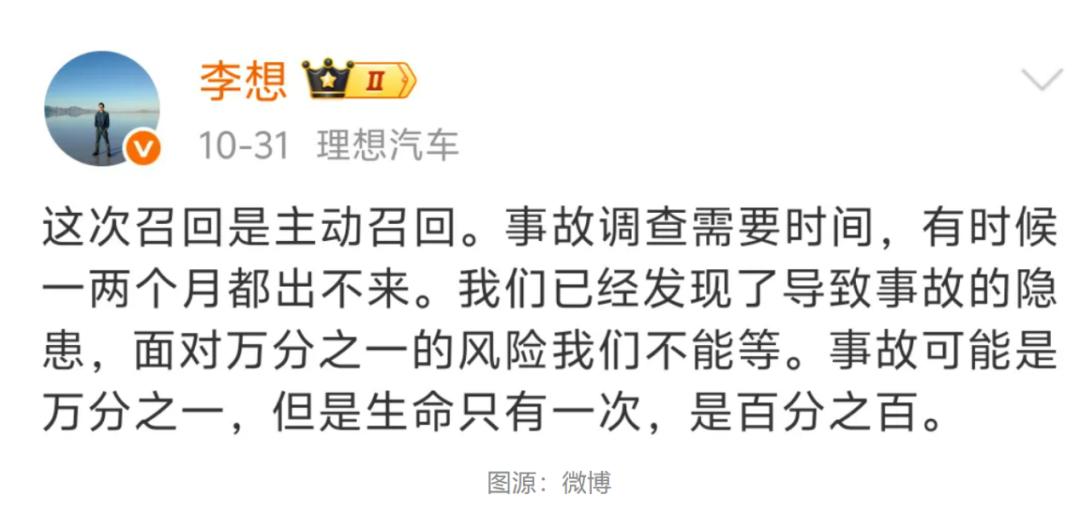
Of course, the recall event in October is generally considered the main factor contributing to Li Auto's loss. In October, due to insufficient anti - corrosion performance of the coolant, Li Auto recalled 11,411 units of the 2024 - model MEGA cars and included the relevant recall costs in the third - quarter financial report. After calculation, the estimated cost related to this recall is about 1.12 billion yuan, which directly pulled down the quarterly gross margin. In this quarter, Li Auto's overall gross margin dropped to 16.3%, and the vehicle gross margin was only 15.5%, a year - on - year decrease of 5.2 and 5.4 percentage points respectively. If the impact of the recall cost is excluded, the vehicle gross margin and the overall gross margin could rebound to 19.8% and 20.4% respectively, indicating that the recall cost may be one of the key factors leading to the quarterly loss.
Zhang Zhiyong, an automotive media person, said that there are many factors contributing to Li Auto's shift from profit to loss. The pure - electric models that Li Auto had high hopes for failed to smoothly take over the growth baton. Among them, the i6 model received a large number of orders, but due to problems such as the supply of 5C batteries and the running - in of new production lines, the production capacity could not keep up with the order demand. "The market performance of the Li Auto i8 model still faces challenges. The i6 adopted a price - cut strategy to boost sales and may be the product with the lowest gross profit among all Li Auto models. Even if the production capacity increases in the future, its profit contribution will be relatively limited, further affecting the profit performance of each vehicle."
Should the extended - range route take the blame?
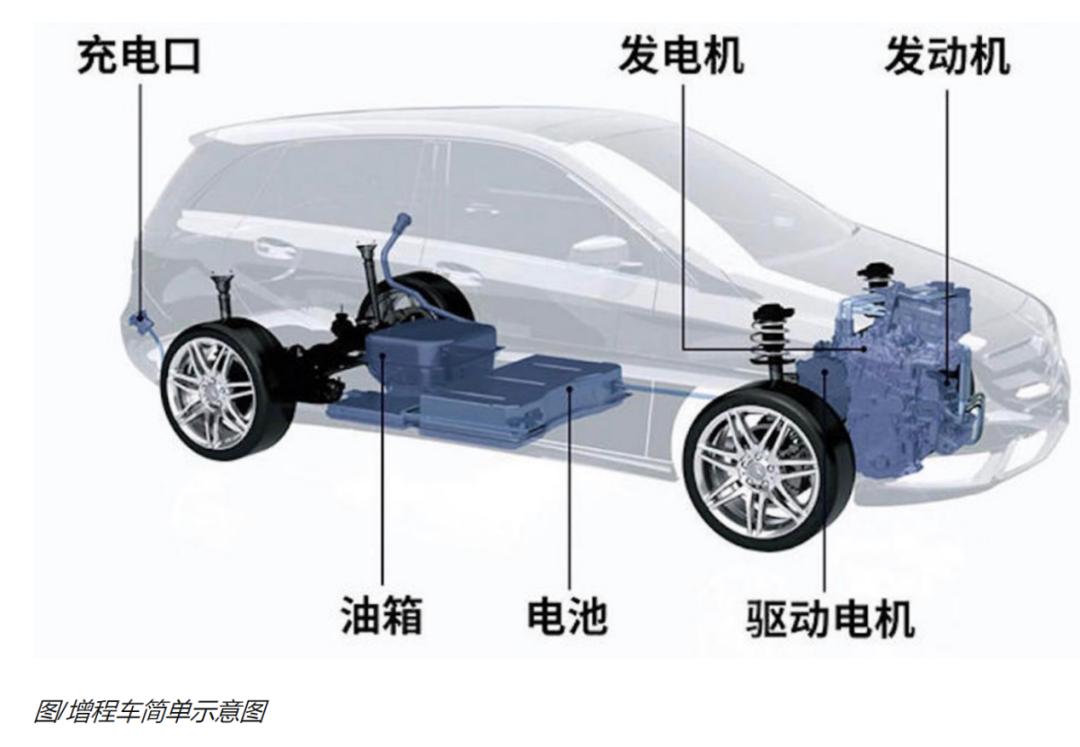
As a representative of extended - range vehicles, extended - range technology was once Li Auto's biggest selling point. Because the battery cost of extended - range vehicles is relatively low, the battery usage of extended - range models is only one - third of that of pure - electric vehicles. For example, the battery cost of the extended - range version of the Leapmotor C11 is 30% lower than that of the pure - electric version, and the selling price also decreases accordingly. This enables more consumers to afford new - energy vehicles and actually promotes the replacement process of fuel vehicles. In 2024, the sales volume of extended - range electric vehicles in China reached 1.167 million, a year - on - year increase of 78.7%. Brands such as Li Auto and AITO quickly opened up the market with their extended - range models, which is a sign of market recognition.
In the situation where the popularity of charging piles was not high, the national charging pile coverage rate was less than 20% before, and the charging facilities in third - and fourth - tier cities and below were even weaker. Range anxiety was still the primary reason for consumers to abandon new - energy vehicles. Extended - range vehicles can not only meet daily urban commuting like pure - electric vehicles but also solve the pain point of long - distance travel by relying on the range extender for energy replenishment.
It is worth noting that data shows that 80% of urban commuting by extended - range vehicle owners is powered by the battery, and the annual average startup time of the range extender is less than 15%.
According to authoritative data from the National Energy Administration, CCTV.com, IT Home, etc., as of the end of October 2025, China's new - energy vehicle charging infrastructure has achieved a very high coverage rate. The total number of charging piles nationwide has reached 18.645 million, a year - on - year increase of 54.0%. Among them, there are 4.533 million public charging piles, accounting for about 24.3%, and 14.112 million private charging piles, accounting for about 75.7%. It covers 97.08% of counties. Except for Tibet and Qinghai, all other provinces have achieved "full coverage of charging stations in every county", 80.02% of townships have charging piles, and 14 provinces have achieved "full coverage of charging piles in every township". Charging piles are fully covered on expressways, and 27,200 charging piles have been built on national expressways, basically solving the problem of range anxiety.
It is worth noting that the high - voltage hybrid technology is gradually changing the market pattern with its advantages such as long - range and advanced architecture. Extended - range models are no longer consumers' first choice.
Data from the first quarter of 2025 shows that the total sales volume of extended - range hybrid models was about 200,000, with an obvious year - on - year downward trend. Taking SERES as an example, its sales volume in the first quarter of 2025 decreased by 42.47% year - on - year. At the same time, the resale value of extended - range models is only 45.4%, a 1.6 - percentage - point decline from the previous period, and the number of complaints has soared by 280% year - on - year, mainly concentrated on range, fuel consumption, and battery problems.
Wang Chuanfu, the chairman of BYD, once said in public: "Extended - range vehicles are transitional products, and the real way to achieve electrification is through pure - electric vehicles." In Wang Chuanfu's view, with the improvement of solid - state battery technology, pure - electric vehicles will be more popular, and the market space for extended - range models will gradually shrink. Li Bin, the CEO of NIO, also believes that extended - range technology is not the future development direction of new - energy vehicles, and pure - electric vehicles are more promising.
According to Jiemian News, in an interview, Li Xiang also believes that extended - range vehicles are only transitional products with a life cycle of three to five years. As battery technology improves and costs decrease, pure - electric vehicles will become the mainstream.
Currently, Li Auto's models are still mainly extended - range models. Its currently available models are divided into the extended - range L series and the pure - electric series. The extended - range models cover four major series: L6, L7, L8, and L9, and each series also offers multiple configuration versions such as Pro and Max, covering the price range of 249,800 - 439,800 yuan, forming a complete extended - range product matrix. There are only three pure - electric models: MEGA, i6, and i8. Judging from the number of available models and product richness, extended - range models account for an absolute majority, and the pure - electric models are still in the early stage of product layout.
Li Auto has lowered its sales target for 2025 to 640,000 vehicles, of which the sales target for the extended - range L series is 520,000 vehicles, and the target for the pure - electric product line (including MEGA and the i series) is 120,000 vehicles. Roughly calculated, extended - range models account for about 81% of the annual sales target, and pure - electric models account for about 19%. This target setting also shows that extended - range models may still be the core force supporting Li Auto's sales at present, and although pure - electric models are highly anticipated, they still face challenges at this stage.
It's not easy to regain the "sales champion" title
Li Auto has topped the sales list among new - energy vehicle startups for many consecutive years.
According to the sales data released by Li Auto for October 2025, the sales volume in October was 31,800 vehicles, a year - on - year decrease of 38.25%. In the first ten months, it delivered 328,900 vehicles, a year - on - year decrease of 16.36%. Li Auto previously set an annual sales target of 700,000 vehicles for 2025 but later lowered it to 640,000 vehicles. Even with the annual sales target lowered to 640,000 vehicles, the total sales volume in the first ten months was 328,900 vehicles, completing 51.39% of the target. With less than two months left in the year, to achieve the sales volume of 311,100 vehicles, it needs to sell an average of 156,000 vehicles per month. In the first ten months, the highest monthly sales volume was 40,856 vehicles in May, and the sales volume in the other nine months was below 40,000 vehicles, with three months having sales volumes below 30,000 vehicles. It will be a challenge to achieve a monthly sales volume of 156,000 vehicles.
