Can you really make a profit of 50,000 yuan by reselling Zeekr orders on Xianyu? Has the trend of scarcity marketing finally reached the automotive industry?
In 2025, there are two shortcuts to getting rich overnight: one is written in the "Criminal Law", and the other is hidden in new energy vehicle orders.
The operation is very simple. You just need to grab an order when a new energy vehicle goes on sale, and you can easily earn over 50,000 yuan without any effort. It's not only legal but also costs nothing. This is not a cyber fairytale but a real thing happening right now.
Open Xianyu and search for Zeekr 9X, and you'll find many people transferring their orders. The lowest asking price is 50,000 yuan, and the highest is 90,000 yuan. Calculated based on the starting price of 465,900 yuan for this car, the premium rate exceeds 20%. If you can rally all your relatives to place orders and hold ten of them, you can easily get 900,000 yuan.
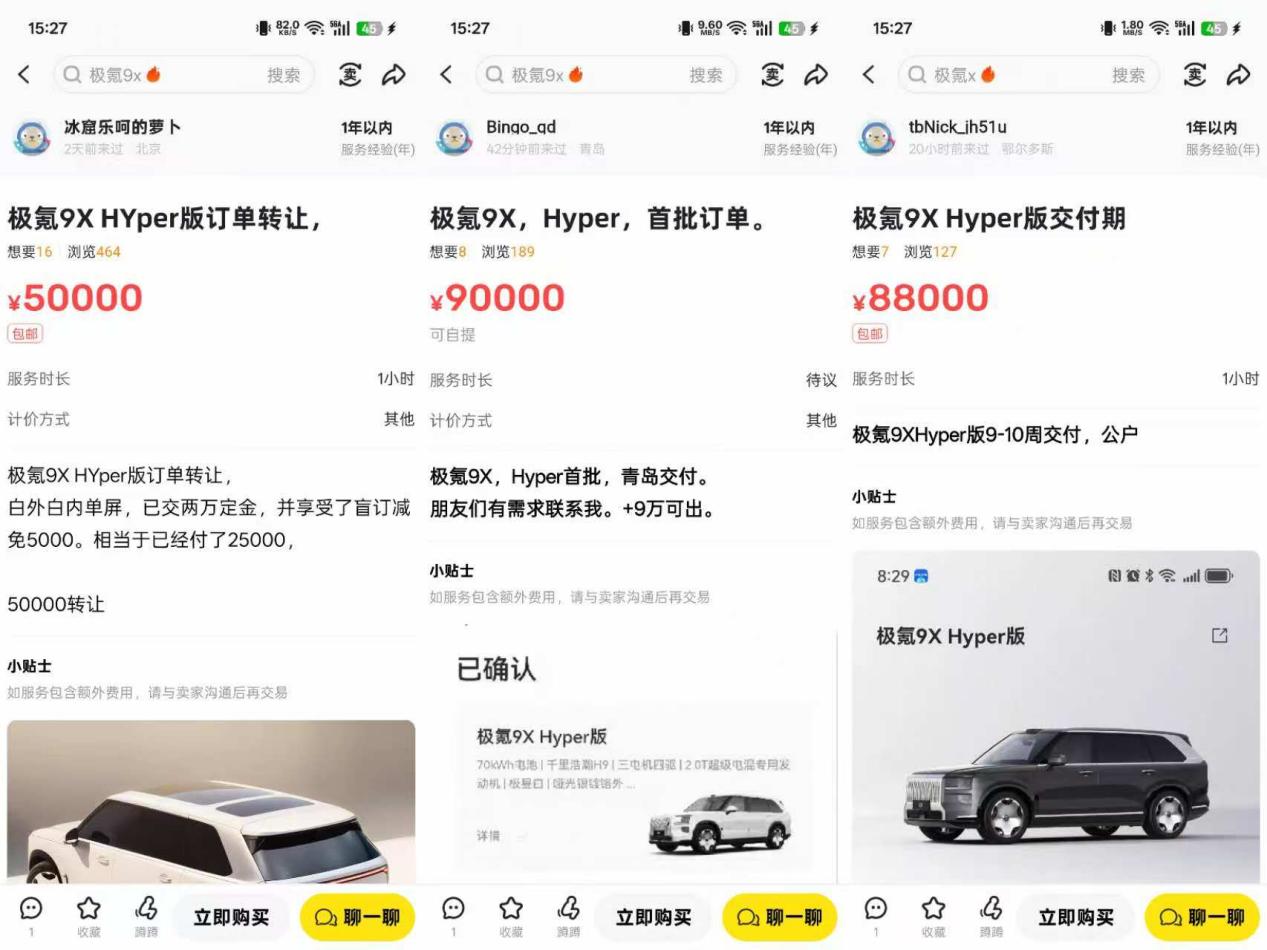
Image source: Xianyu
From Zeekr 9X to Xiaomi YU7, from AITO M9 to Li MEGA, orders for high - end new energy vehicles are starting a new "wealth - creating movement" in the second - hand market. Sellers get the premium, buyers save time, and car companies gain popularity. On the surface, it's a win - win - win situation, but in fact, a game of passing the parcel has quietly begun.
The practice of transferring orders at a premium has become a "unique moment" in the new energy era.
From "snatching mobile phones" to "speculating on car orders", the scarcity marketing has entered the automotive circle
More than a decade ago, Xiaomi started the era of scarcity marketing in the consumer electronics field with the "F - code + 1,999 yuan" model. Now, this logic has been replicated in the automotive field. The target has changed from a 2,000 - yuan mobile phone to a car worth hundreds of thousands of yuan, and the waiting period has extended from a one - week delivery to more than half a year for production and delivery.
Although car companies may not necessarily intend to implement scarcity marketing, at least from the consumers' perspective, the results are the same.
In the first half of this year, Xiaomi YU7 locked in 240,000 orders within 18 hours of its launch, setting a new industry record. What's even more eye - catching is that on the day after its release, hundreds of transfer posts appeared on Xianyu, with prices ranging from 1,000 yuan to 25,000 yuan. The core pricing logic is purely based on the delivery cycle. The closer the delivery cycle, the higher the transfer price.
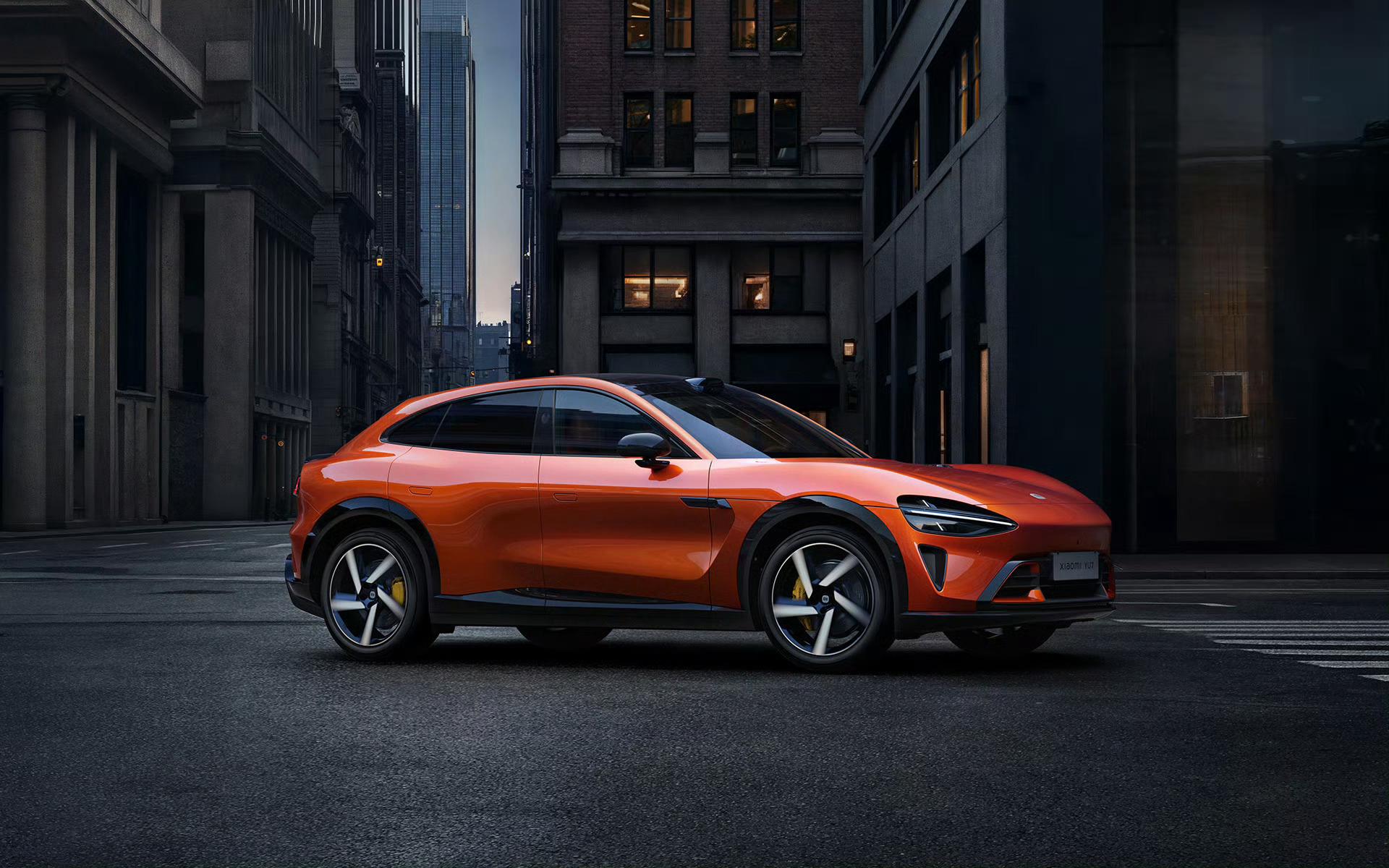
Image source: Xiaomi Auto
Orders with a 28 - week delivery only have a premium of 3,000 yuan, while "near - ready cars" that can arrive at the store in 1 - 5 weeks can be sold for 25,000 yuan. This precise price gradient is a basic feature of the futures market. The situation of Zeekr 9X is even more extreme. The orders for its Hyper version generally have a premium of 50,000 - 90,000 yuan.
Even more exaggerated is in the export channel. According to previous official news, the overseas version of Zeekr 9X will not be launched until next year. Many overseas fans have frequently urged the local launch time after learning about Zeekr 9X, which has indirectly led to the phenomenon of exporting at a premium.
According to Sina Auto, currently, the premium for each Zeekr 9X exported through ports such as Khorgos and Tianjin Port is maintained between 50,000 and 100,000 yuan, mainly flowing to the European and Middle Eastern markets.
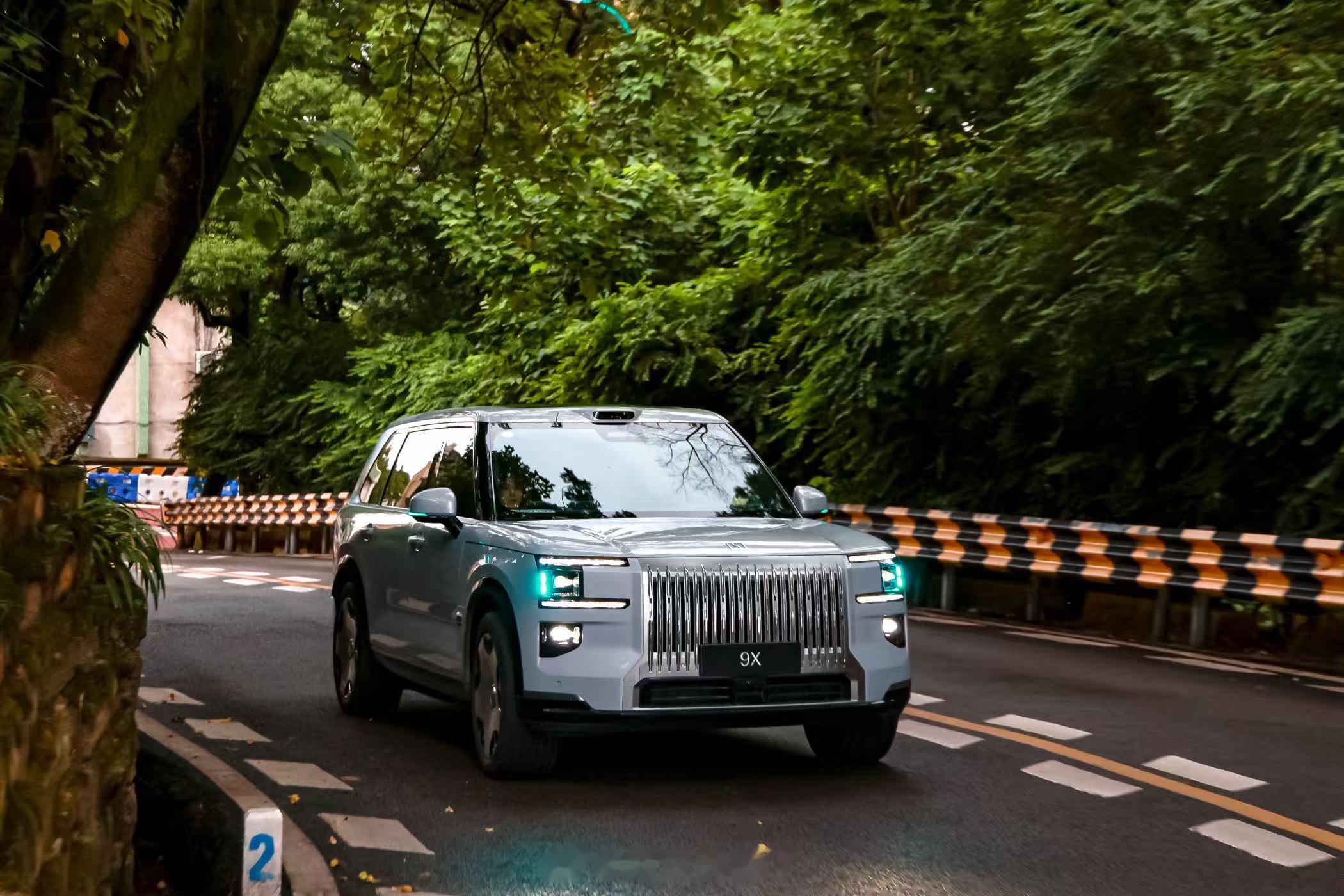
Image source: Zeekr
From the current new energy market, there are generally three types of models that require "paying a premium for early delivery". The first type is highly cost - effective, with many people buying and thus requiring queuing. The second type is popular luxury models, where rarity drives up the price. The third type is models with social value, such as Xiaomi YU7.
But the question is, why do consumers who pay a premium for early delivery willingly become "victims"?
To be honest, Dianchetong doesn't understand this behavior of paying a premium for early delivery. But a friend of mine once did it, and we interviewed him.
In 2021, BYD's DMI models suddenly emerged. At that time, BYD's production lines were not as diverse as they are now, and all factories were increasing their investment. As a result, after the DMI models became extremely popular, the production capacity couldn't keep up with the orders. The average delivery time for the Song and Qin models was more than half a year.
My friend took a fancy to BYD at that time, but he had to wait for half a year to pick up the car. So he proposed to the salesperson to pay extra to "jump the queue". Although it's a bit different from the current order transfer, in essence, it's all about paying a premium for early delivery. So his consumption psychology can be used as a reference.
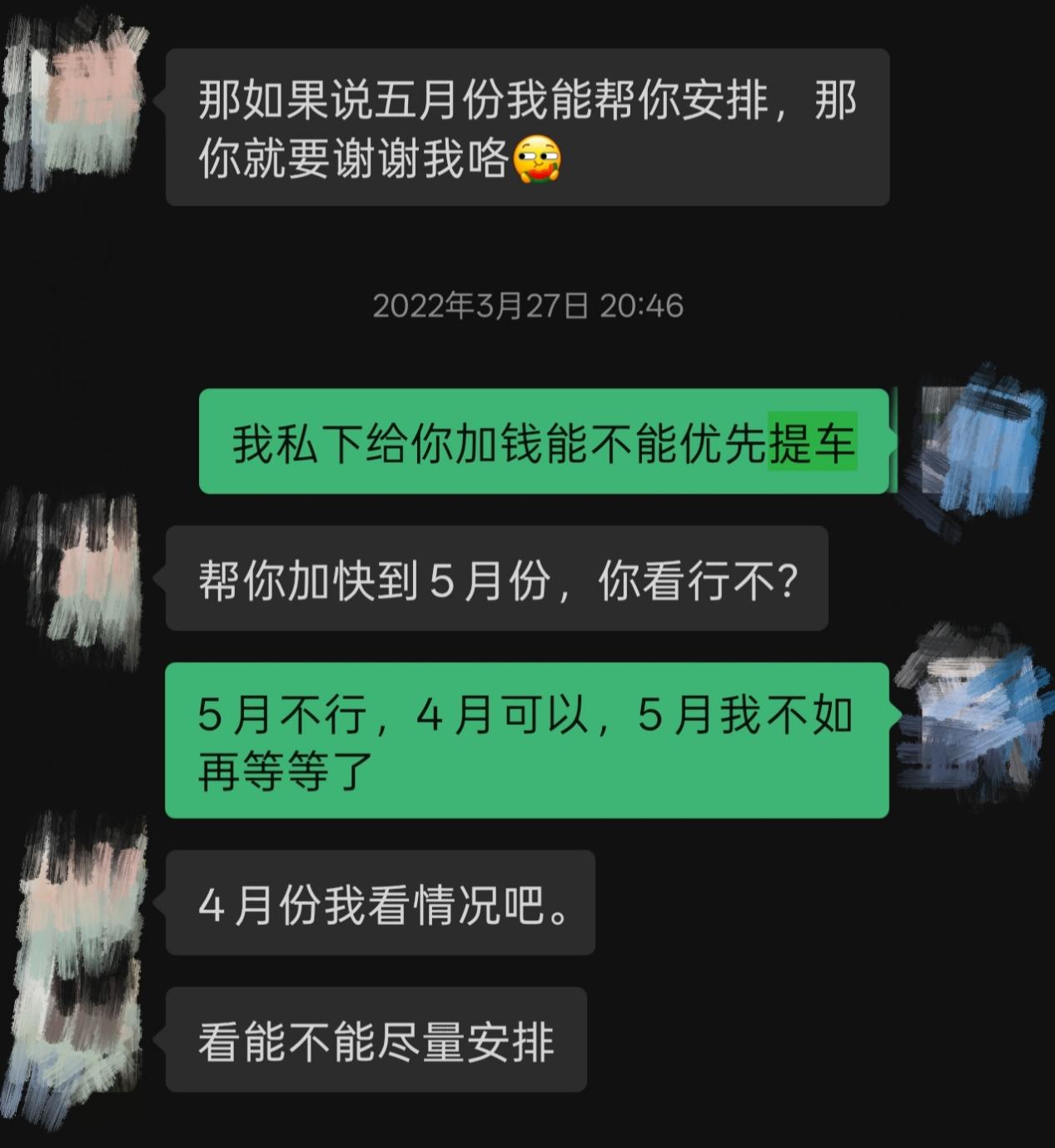
Image source: WeChat screenshot of the friend
This friend said that the reason he paid a premium for early delivery was that he couldn't wait: "I don't care about the premium of a few thousand yuan, but I can't stand waiting for half a year. For me, spending a few thousand yuan to save 3 - 4 months is more cost - effective than continuing to drive my old fuel - powered car."
In fact, they don't think there's anything wrong with paying a premium for early delivery. In the past, the practice of paying a premium for early delivery at traditional 4S stores was an industry unspoken rule. Everyone knew that it was normal to pay an extra 100,000 yuan for a Porsche or 500,000 yuan for a G - Class. So for them, paying a few thousand yuan to save time is actually a more transparent and efficient thing.
This group of "old victims" has a very high acceptance of the "new scythes" because they don't even think it's a scythe.
"Aren't you afraid of being called 'a fool with a lot of money'?"
"It depends on how you think about it. If you think it's paying extra for the product, then it does seem like a fool with a lot of money. But if paying 2,000 yuan can save you half a year, then this deal is very cost - effective."
I don't understand it, but I respect it. Maybe it's because my time isn't that valuable yet, and I haven't reached that level.
The phenomenon of order transfer persists. Is it because car companies are being two - faced?
Some netizens commented: In the practice of transferring orders at a premium, scalpers win, car companies win, and only consumers lose.
In the short term, car companies really won't suffer any losses. Instead, they can create an image of booming sales.
All car companies clearly state in their user agreements that "order transfer is prohibited", but in reality, they turn a blind eye as long as no one reports. Some car companies even use this as a promotional point for content distribution. In relevant reports, you can clearly smell the strong advertising flavor.
For example, an article starts by talking about scalpers transferring orders at a premium, and then suddenly switches to a praise - filled section. Let me quote a few paragraphs for you to feel:

Image source: Screenshot of an online article
Personally, I think a normal editor, when writing a normal topic, wouldn't draw a conclusion like "resetting the ceiling" from the phenomenon of premium circulation, unless it's a deliberate placement by car companies.
Why are car companies being two - faced? Subjectively speaking, it's because there are profits to be made.
In fact, the best creators of the "hard - to - get a car" situation are the scalpers and speculators in the order transfer market. They are the off - payroll marketing teams of car companies. The premium orders on Xianyu are more convincing than official advertisements.
Objectively speaking, they really help car companies boost the popularity. The word - of - mouth spread of the first - batch of car owners, combined with the price signals in the second - hand market, is more effective than car companies spending tens of millions on advertising.
In addition, order transfer actually helps car companies complete user segmentation: those who are willing to wait can pick up the car at the original price; those who are not willing to wait can go to the second - hand market to pay a premium. Car companies can achieve the goal of "raising prices" without directly increasing the price themselves. They can charge a premium from high - net - worth users who are sensitive to time and maintain the original - price reputation among price - sensitive users. It's a win - win situation.
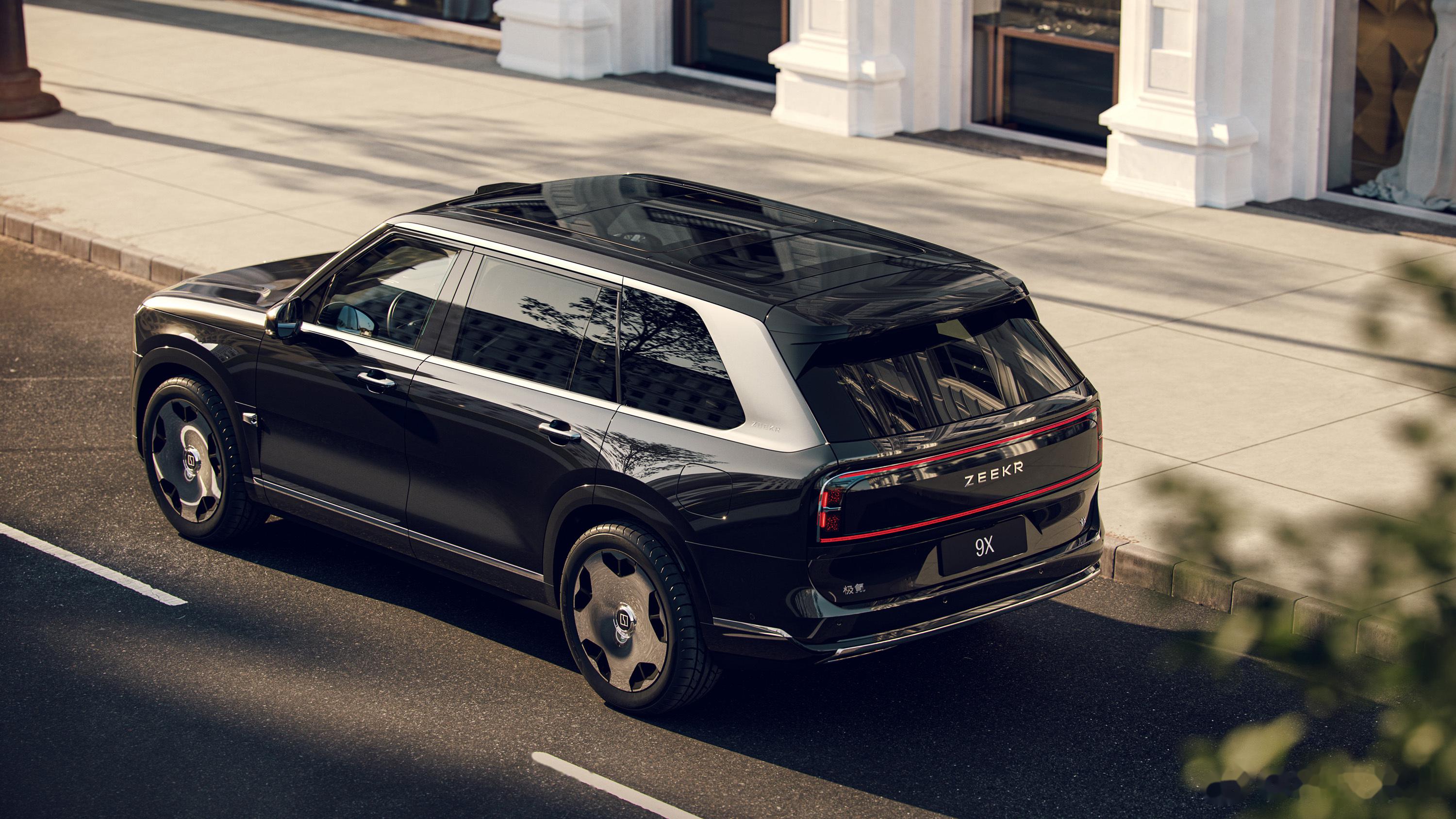
Image source: Zeekr
The best part is that all legal risks and user disputes in order transfer are borne by the buyers and sellers themselves. Theoretically, transferring an order requires providing a "proof of immediate family relationship". But how to prove it? Scalpers can forge materials such as household registers, marriage certificates, and even birth certificates.
In actual operation, as long as the materials are complete and the process is compliant, salespeople in direct - sales stores won't dig deeper. After all, delivery data is also part of the KPI, and it's impossible to go to the Civil Affairs Bureau to check the authenticity of marriage certificates.
Car companies can take offensive or defensive actions. If the market gets out of control, they can tighten the policy and cancel orders on the grounds of "violation"; if the market response is good, they can turn a blind eye and enjoy the popularity dividend.
A member of the Expert Committee of the China Automobile Dealers Association once pointed out: "Order transfer is essentially the transfer of contract rights and is protected by the 'Civil Code'. However, car companies prohibit it through standard terms but tacitly allow it through loose implementation. This behavior is suspected of abusing market dominance and infringing on consumers' freedom of contract."
But in reality, no one will sue car companies for this. Because both buyers and sellers are beneficiaries, and car companies are even happy to see it. This gray market is booming under the false appearance of "multiple wins".
The only drawback for car companies is that the "scarcity feeling" will backfire on the user experience. When users find that the delivery is still far away after waiting for three months and that they need to pay a premium to transfer an order on Xianyu, they will feel deceived and may eventually choose to switch to other brands. When this kind of emotion gradually spreads among car - owner communities and exceeds the psychological threshold, "scarcity" will turn from an attraction into a feeling of disgust.
As the price war continues, scalpers speculating on orders are taking big risks
This abnormal transaction of transferring orders at a premium must be based on two rigid preconditions: one is that the production capacity ramp - up speed can't keep up with the explosion of orders; the other is that the total market demand remains strong.
The good news is that both of these preconditions are disintegrating at a visible speed.
Car companies won't always turn a blind eye because when the production capacity is sufficient, scalpers are squeezing out real customers; consumers won't always pay the bill because waiting is no longer a necessity. Looking back in two years, the Zeekr 9X orders with a 50,000 - yuan premium now will just be a speck of dust in the era of the industry's rapid development.
The evidence is that after Xiaomi completed its production capacity ramp - up, the Xiaomi YU7 orders that were transferred at a 20,000 - yuan premium are now being sold at a loss on Xianyu, and no one wants them. Many users just want to get their deposits back, even if they have to bear some losses.
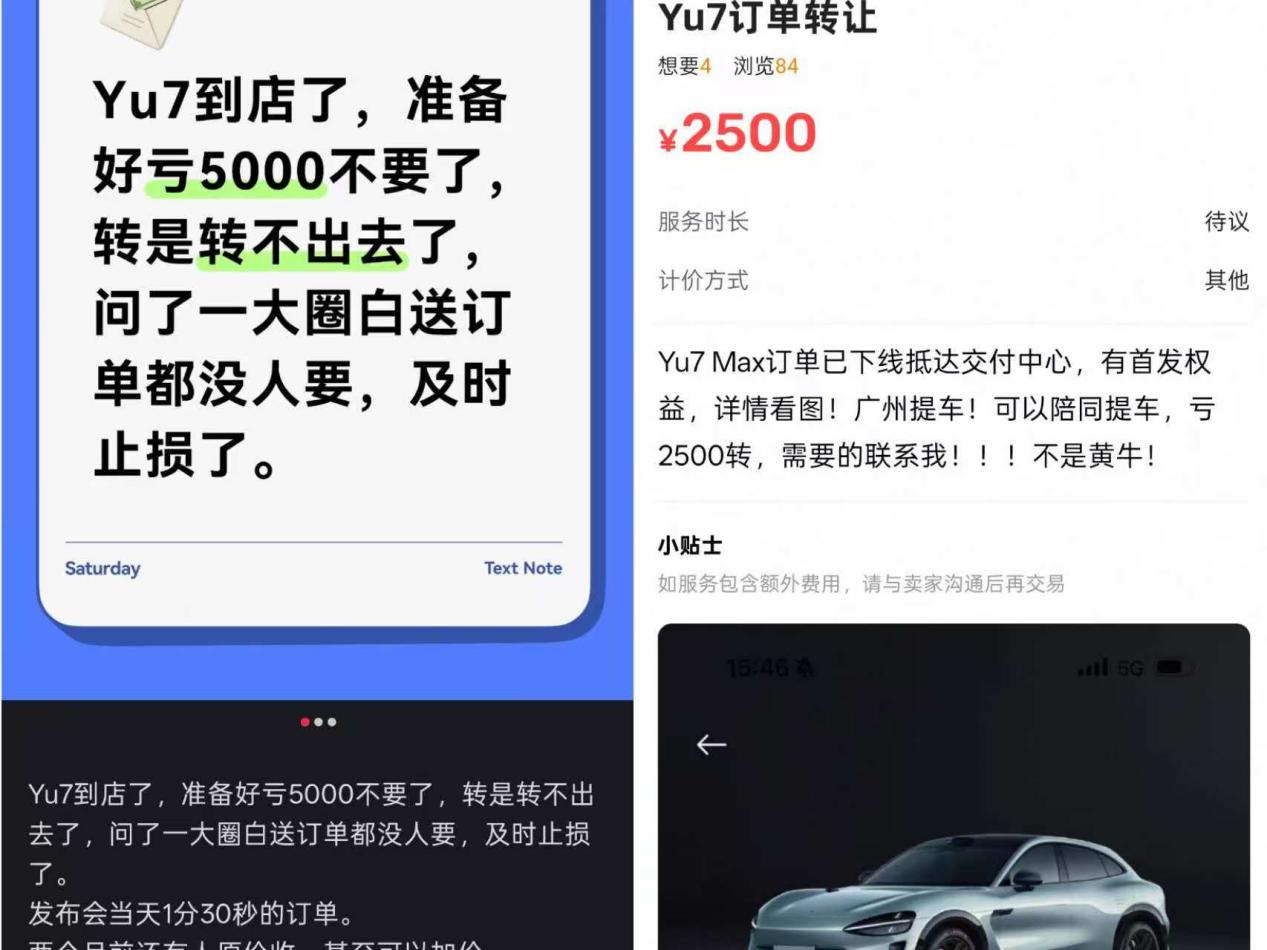
Image source: Screenshots from Xiaohongshu and Xianyu
Some Xiaohongshu users even said that "they asked around and no one wanted the orders even if they were given away for free". Those users who paid a premium for early delivery must be shocked when seeing this situation.
In addition to the production capacity ramp - up, another factor that can greatly avoid the phenomenon of paying a premium for early delivery is the "price war".
The reason why scalpers speculating on orders can form a scale mainly depends on three conditions: a long delivery cycle, a high premium space, and stable demand. The price war can break through all three points at the same time: the delivery will be faster, the price cuts of competing products will compress the premium, and consumers will tend to wait and see.
Moreover, in the price war, car companies may officially cut prices at any time, which will cause the last order - takers to face the risk of "the new car being cheaper than the order". At the same time, combined with the risk of principal loss, arbitrageurs will naturally leave the market.
Therefore, as long as the "price war" continues, this game will naturally end.
<