The established luxury car brands like BMW, Benz, and Audi no longer want to be associated with the "old - fashioned image" in the electric vehicle era.
At the end of October this year, Luo Yonghao, who successfully engaged in a public exchange with Xibei, turned his attention to Mercedes-Benz, BMW, and Audi, directly pointing out that the exterior designs of BBA vehicles have "deviated from the traditional aesthetic norms."
It's unclear whether Mr. Luo intends to rectify the luxury car market. However, in this era of coexistence between fuel-powered and electric vehicles, BBA's designs have indeed provided ample material for jokes among the public.
Whether it's the "million-dollar big mouse" design of the Mercedes-Benz EQS, the "Visionary Piggy" look of the BMW 7 Series, or the "catfish mouth" of Audi models, they all highlight the contradiction between the people's growing aesthetic needs for cars and the unbalanced and insufficient design.
Also this autumn, the design languages of the new-generation pure-electric models of BBA were officially unveiled, seemingly reflecting the cyclical nature of automotive design trends: The all-electric Mercedes-Benz GLC revives the shield-shaped grille from 60 years ago; the next-generation BMW iX3 modifies the vertical small double-kidney grille from 60 years ago; and Audi's Concept C draws inspiration from the vertical grille from 90 years ago.
So, why are BBA brands collectively adopting a new look with a touch of the old since 2025?
The Dilemma of Electric Vehicles: Radical Designs Don't Sell Well, and Conservative Ones Don't Make Money
In April last year, Lei Jun, when reviewing the product definition of the Xiaomi SU7, said, "Good looks are the key; a good-looking car comes first."
Although this statement later brought some trouble to Xiaomi, after witnessing the overwhelming success of the SU7 and YU7, the designers of BBA's previous-generation electric vehicles must have empathized. They understand the principle, but achieving success is not that easy.
In 2021, the Mercedes-Benz EQS, the flagship electric sedan, was launched to open a new chapter in its electrification transformation. In terms of design breakthroughs, Mercedes-Benz led the way among BBA brands in those years.
As industrial products, cars have always followed the principle of function defining form. In the era of fuel-powered cars, high horsepower was scarce, and a long engine compartment capable of accommodating a large-displacement longitudinal engine became a symbol of luxury cars. In the era of electric vehicles, with equalized horsepower, long-range has become the new scarce attribute. From a rational perspective, luxury electric vehicles should have a low-drag, high-tech appearance.
As the inventor of the automobile, Mercedes-Benz's approach to redefining luxury is to create an ultimate electric vehicle with a brand-new design called the "bow-shaped body" - a rounded and low-slung front end, a blacked-out closed grille, a steeply sloped A-pillar, and a large arc-shaped roof - which reduced the drag coefficient of the production vehicle to a record Cd 0.20 and increased the range of the flagship pure-electric sedan to over 700 kilometers.
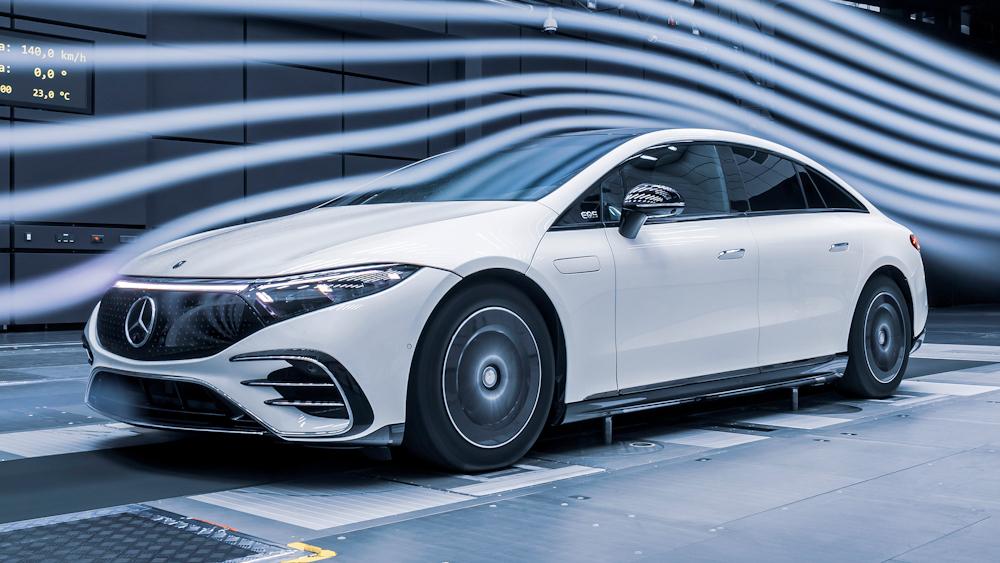
In the design optimized for aerodynamic drag, the EQS made a brave but poorly rewarded exploration.
However, those who have received nine years of compulsory education know that consciousness lags behind material development. Electric vehicle technology and products can be iterated every 18 months, but it takes more than three to five years for the collective aesthetic of luxury car users to change.
Just two years after the EQS set the record for the drag coefficient of production vehicles, Geely, Xiaomi, and even Dongfeng rushed in and brought the drag coefficient down to 0.19X. A range of over 700 kilometers has almost become the standard for luxury pure-electric sedans.
Meanwhile, those who are accustomed to the solemn and upright style of million-dollar luxury cars see a breakdown of traditional norms in Mercedes-Benz's pure-electric flagship. In their aesthetic view, the fuel-powered S-Class has distinct and three-dimensional features and an elegant and calm posture, while the EQS has its eyes and nose blurred together, with a hunched back and a lowered head.
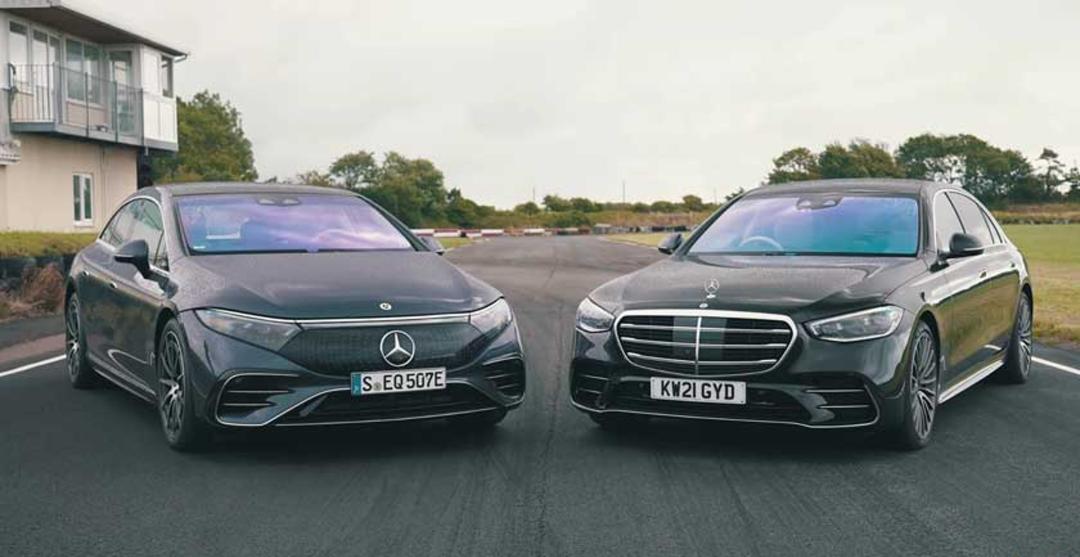
The fuel-powered S-Class and the EQS
Since the EQS established the design language for Mercedes-Benz's entire pure-electric lineup, the subsequent EQ series has been living under the shadow of the "big mouse" criticism, and Mercedes-Benz eventually abandoned the EQ naming.
Compared with the radical Mercedes-Benz, BMW, an early victim of disruptive electric vehicle designs, after paying a high price for the first-generation i3 and i8, adopted another strategy: trying to share the same exterior design style between electric and fuel-powered cars.
This approach saves resources and facilitates the transition of existing customers between electric and fuel-powered models. However, it also leads to internal competition between electric and fuel-powered models, and if the design language is not recognized by the market, products of both power types may fail simultaneously.
For example, in the current 3 Series and i3, as well as the X3 and iX3, when the main difference in appearance is the green license plate and the price of the electric model is lower than that of the fuel-powered one, the high-cost, low-priced i3 and iX3 continuously divert orders from the low-cost, high-priced fuel-powered models.
The same is true for the main models. The BMW i7, the pure-electric flagship, and the fuel-powered 7 Series are almost identical in appearance. While this preserves the posture and proportion of the i7 as an executive flagship, another problem remains unsolved:
BMW is deeply troubled by the "inflation" of the kidney grilles in its models. To establish the identity of the flagship, the i7 features large, illuminated kidney grilles on the front and split headlights to distinguish different levels within the brand. However, the combination gives it a nouveau riche look, lacking the former dignity and restraint, and the sales of both the 7 Series and the i7 have been sluggish.
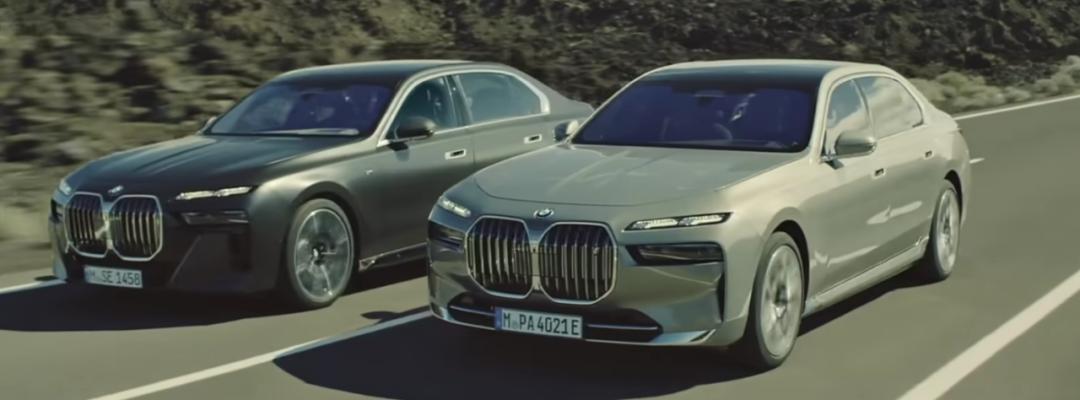
The BMW 7 Series and the i7
In contrast to Mercedes-Benz and BMW, Audi's designs for pure-electric models in recent years have been more conservative. It's difficult to tell the difference between its electric and fuel-powered models at a glance, whether in terms of the front-end elements or the side proportions. Coupled with the repeated delays of Volkswagen Group's new pure-electric platform and electronic and electrical architecture, Audi lacks a new product foundation for the replacement of its design language.
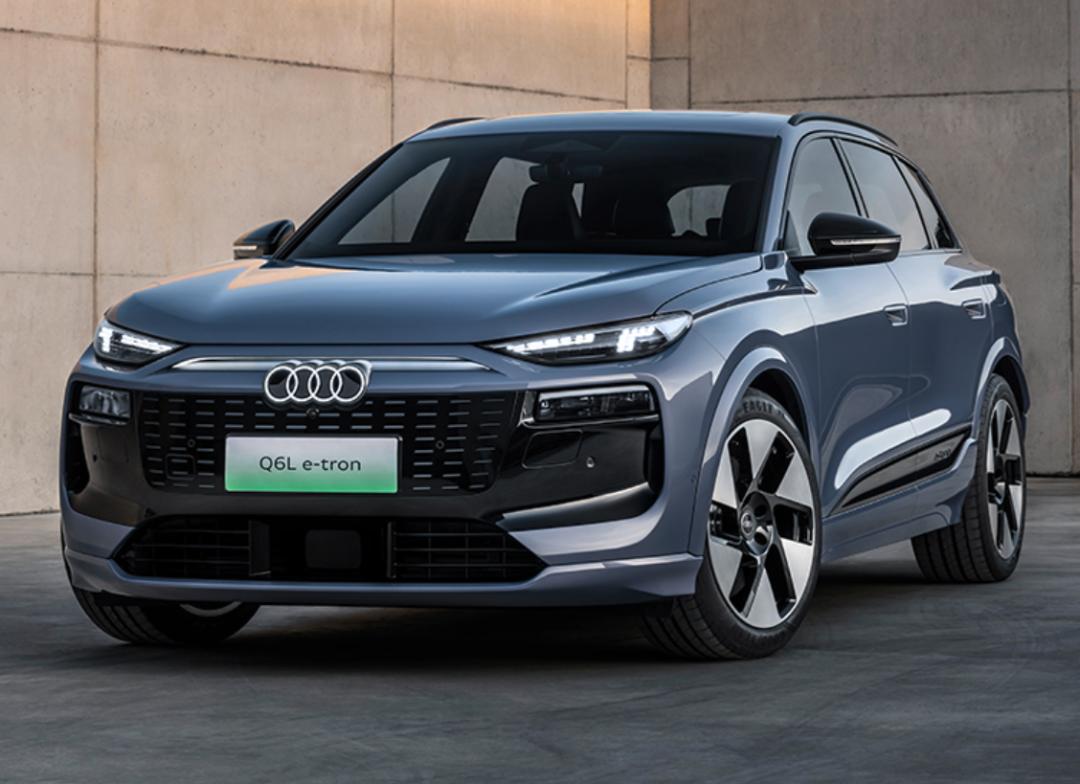
It's hard to tell whether it's an electric or fuel-powered car without the green license plate.
As a result, Audi's "fuel-car appearance" pure-electric cars have become invisible to the public. Although they haven't received much criticism in terms of design, few people know that "Audi also has pure-electric new energy vehicles."
In 2024, Mercedes-Benz's global pure-electric sales declined by 23%, and Audi's by 8%. Although BMW's pure-electric sales increased, it still reported a significant drop in profit.
After different attempts, the design teams of the three brands have once again reached the same crossroads: to use a new design language to "Make BBA Great Again."
Embrace the Future, but First, Revive the Past
The design languages of BBA's new-generation electric vehicles all belong to the same theme:
Retrofuturism - borrowing the classic design elements of BBA from the last century and reinterpreting them with contemporary technology to offer a design possibility beyond current pragmatism.
Mercedes-Benz's new concept car, the Vision Iconic, draws inspiration from the Mercedes-Benz S-Class of the 1960s. It abandons the previous short front end and bow-shaped body, featuring a longer engine compartment and L113 (the distance from the center of the front wheel to the brake pedal) than fuel-powered cars, as well as a more eye-catching LED grille, demonstrating an "ultra-classical aesthetic" even more prominent than its predecessors. This design language has been applied to the upcoming all-electric GLC.
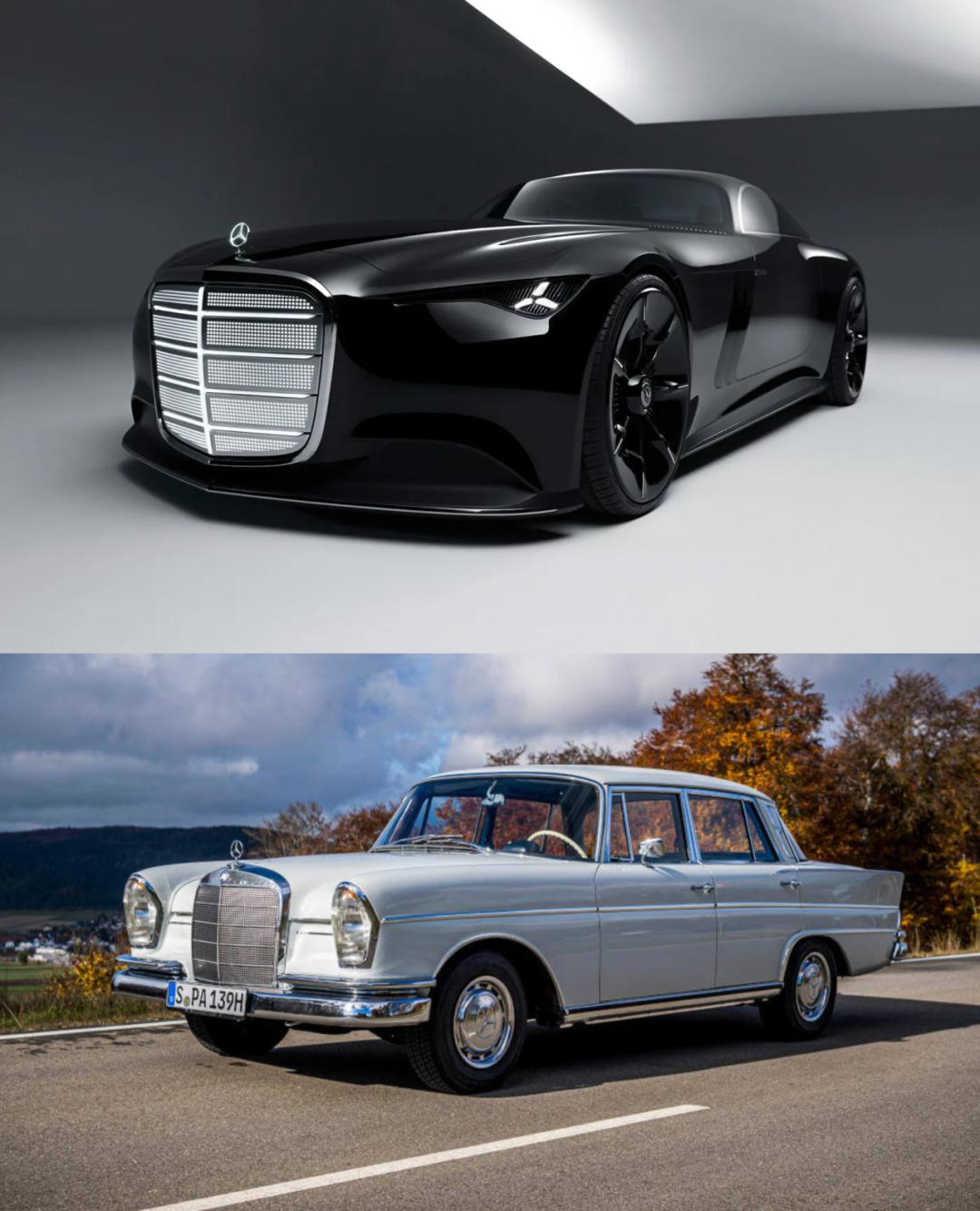
The family resemblance of the grille is obvious at a glance.
BMW's new-generation iX3, after struggling with the large kidney grilles, brings back the small vertical double-kidney grille used on the meritorious model Neue Klasse in the 1960s. However, it replaces the chrome strips with LED lights on the closed surface, simulating the depth of a physical grille with lighting effects. It also borrows the name of its predecessor, indicating its determination to start a new era for pure-electric products.
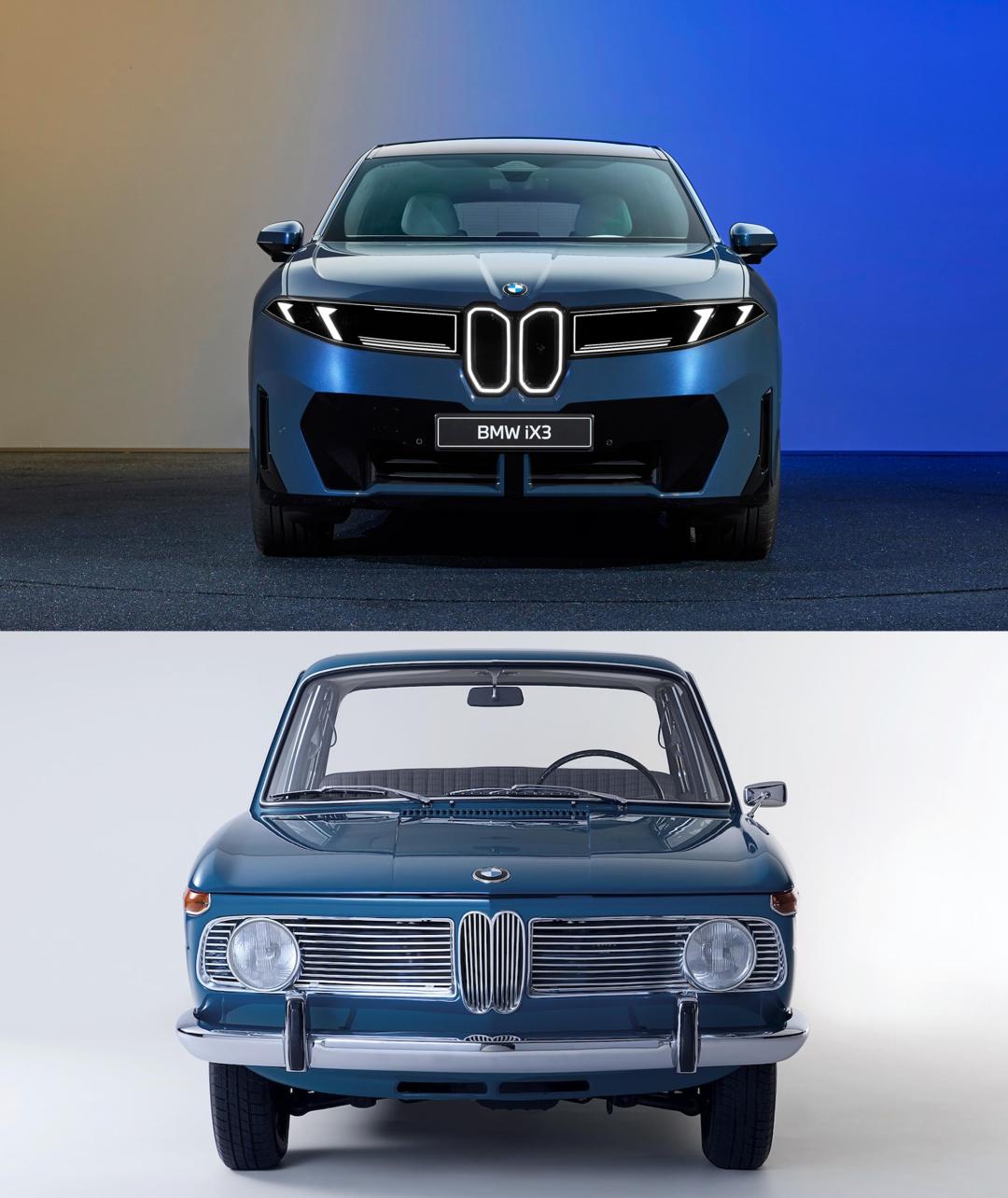
Two generations of the BMW Neue Klasse
Audi's Concept C concept car draws inspiration from the Audi Type C racing car in 1936 and the Audi A6 in 2004, making the long-used hexagonal grille of Audi's production cars vertical again to enhance the longitudinal sense of volume.
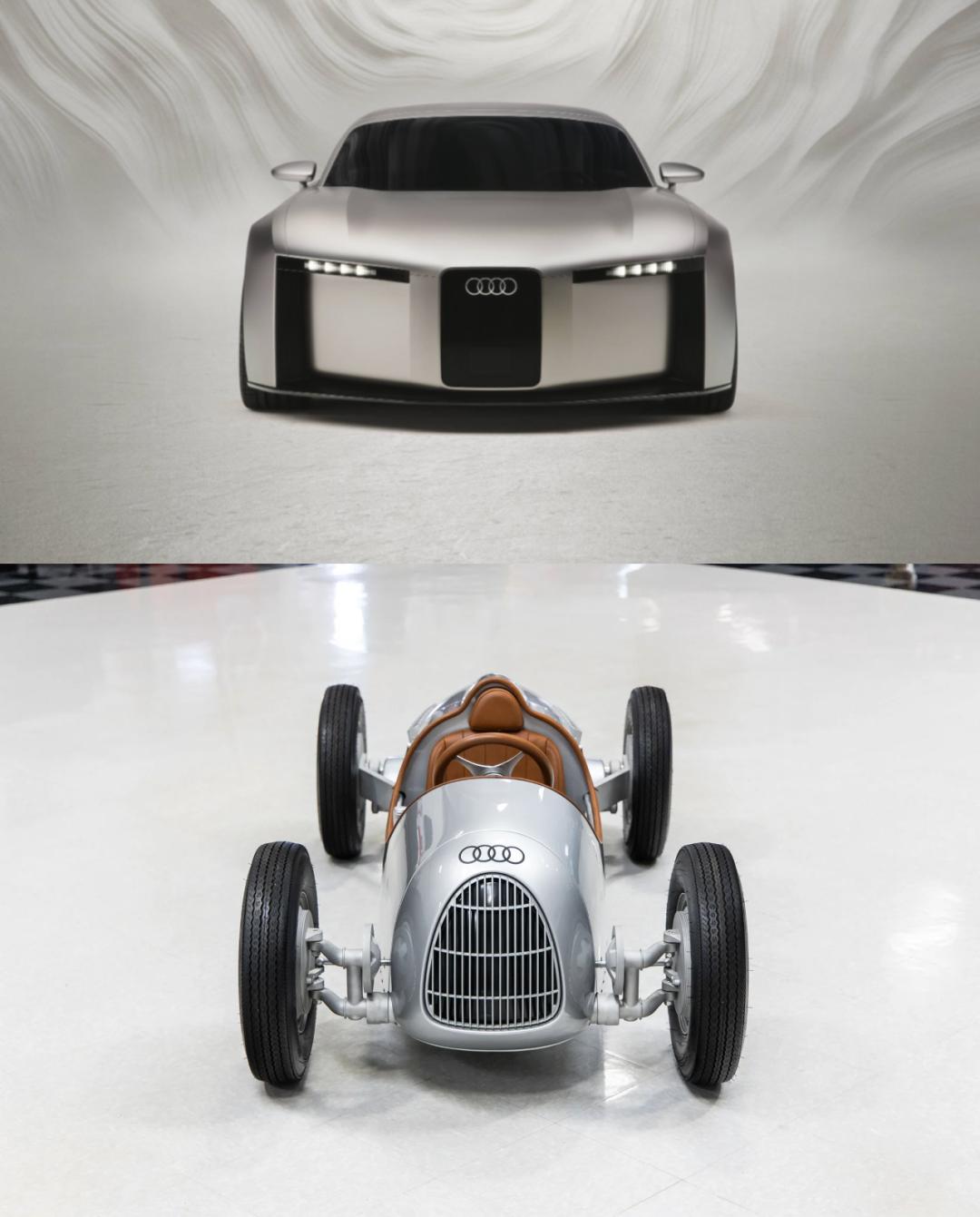
The Concept C makes a more thorough adaptation of classic elements.
Obviously, in the retrofuturism of BBA's new-generation designs, establishing a connection with the past is the top priority. The collective return to classic design elements can be seen as a convergent evolution in the face of common challenges.
In the era of fuel-powered cars, BBA each had distinct characteristics. Mercedes-Benz was like an art student, BMW resembled a sports student, and Audi was similar to a science student. There was a clear correspondence between their styles and design languages.
However, in the field of pure-electric vehicles, BBA is facing an open-book exam with standardized answer parameters. Physical constraints, industry competition, and rapidly converging expectations force participants to quickly find the optimal rational design solution.
After experiencing the hardships of an entire generation of pure-electric products, BBA has had an epiphany:
If they blindly choose the new optimal solution recognized by the industry in order to win the competition in functional value, it's uncertain whether they can outperform Tesla and new players without historical burdens. First of all, they will sacrifice the uniqueness of their brands and face product homogenization and a blurred brand image.
To make a difference in the pure-electric era, the aesthetic experiences and design elements accumulated in the history of fuel-powered cars may not be a burden but an asset.
Since 2024, the global penetration rate of electric vehicles has exceeded 17%, and the overall user profile has gradually shifted from early adopters to practical consumers. How can they evoke group identity and emotional connection among consumers with a 50 - 50 split between innovation and conservatism?
Searching for familiar elements from brand history and reprocessing them is a common methodology for BBA. "An electric car doesn't have to have a flat, low-drag front end" and "Lighting is the new chrome" are their new consensus.
Reconstruct the Coordinate System
The consensus only lies on the surface. Although the methods of reinterpreting classic elements are similar, BBA has diverged in design based on their existing brand concepts and future judgments.
If we take familiarity and novelty, as well as complexity and simplicity as two axes, BBA is actually moving in different directions.
Mercedes-Benz, which believes its previous-generation pure-electric design was ten years ahead of its time, is trying to evoke more familiarity. In the all-electric GLC, it no longer deliberately emphasizes its pure-electric identity. Instead, it uses a complex lattice composed of 942 light beads to simulate a dazzling grille, clearly indicating "I'm a Mercedes-Benz."
According to Ola Källenius, the CEO of Mercedes-Benz, in the face of competition from hundreds of Chinese companies, the new grille design will help Mercedes-Benz stand out.
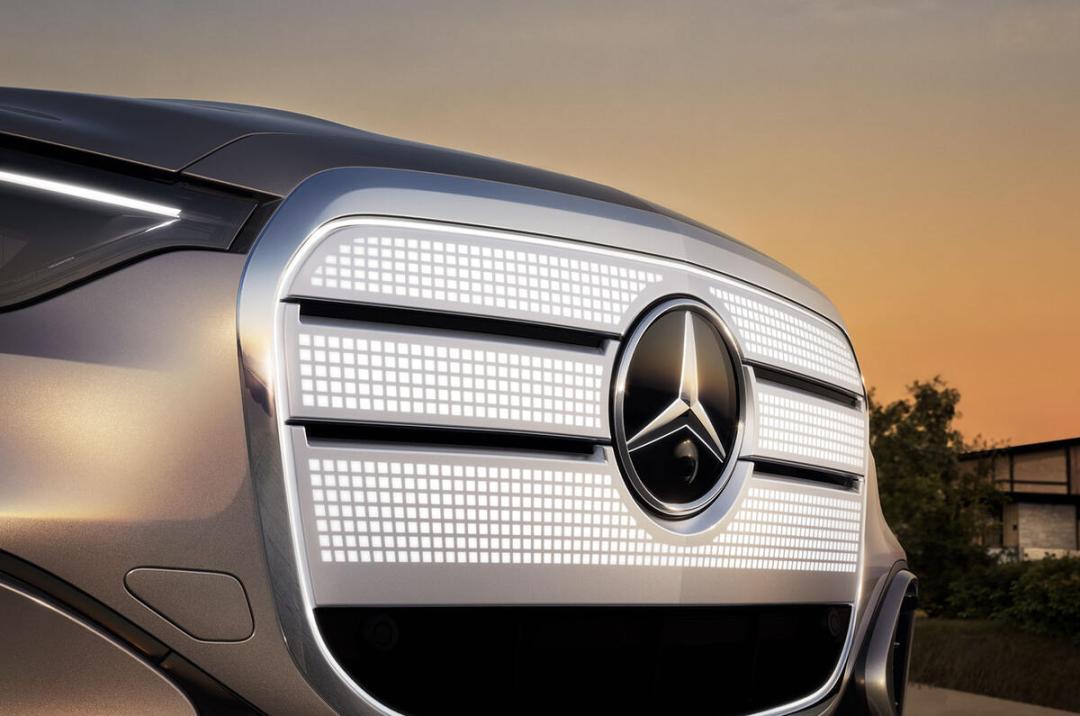
The LED grille of the GLC EV
BMW, which used the same design for electric and fuel-powered cars in the previous generation, is trying to create more novelty while paying tribute to the classics. With its large rectangular light clusters and sculptural body, it differentiates itself from its own fuel-powered models and other electric vehicles with narrow headlights and round shapes.
According to Domagoj Dukec, the vice president of BMW Design, he hopes the new design will make the car stand out in a noisy world.
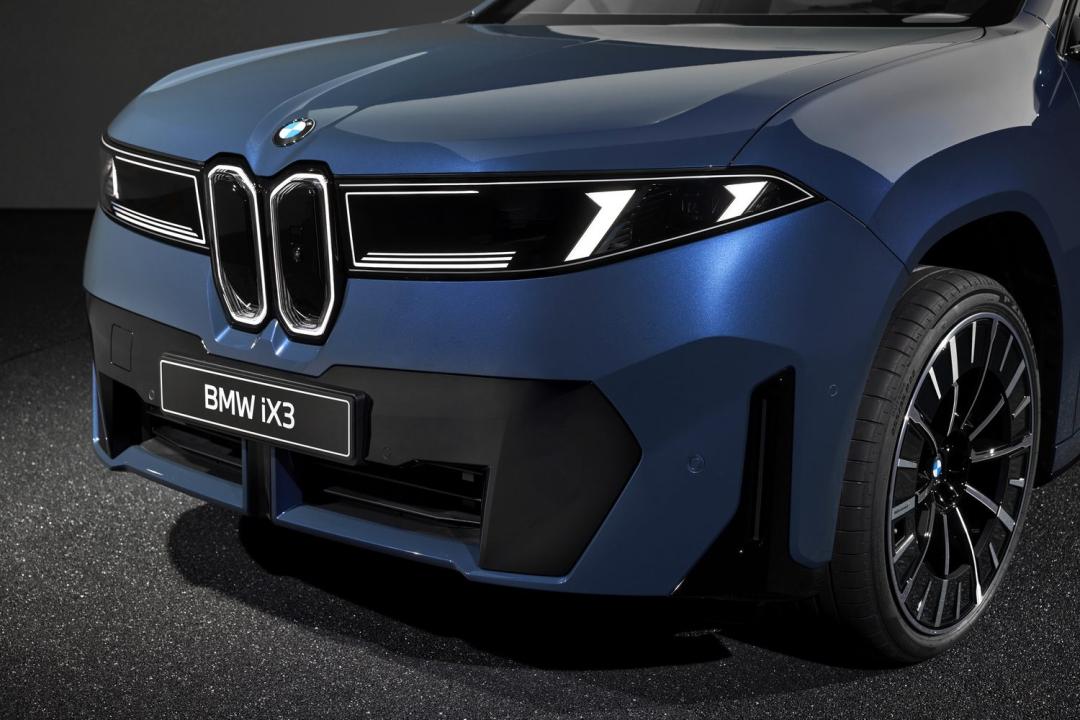
The front face of BMW's new-generation iX3
Audi, originally