"Overseas Chinese" See the Future: Why Has Shantou Become a New Gateway on the Digital Silk Road?
At the Chaoshan Historical and Cultural Expo Center, a red-headed ship is moored in the most prominent position.
The red-headed ship was once the only hope for the Chaoshan people to travel across the sea to Nanyang. During the reign of Emperor Kangxi in the Qing Dynasty, to facilitate management, the imperial court ordered the ships of each province to be painted according to the five - element directions. Guangdong is in the south, and the south belongs to fire, so the bows of the ships were painted red. This red on the bow was an identity mark left during the Kangxi era and later became a nostalgic birthmark for those who crossed the ocean.
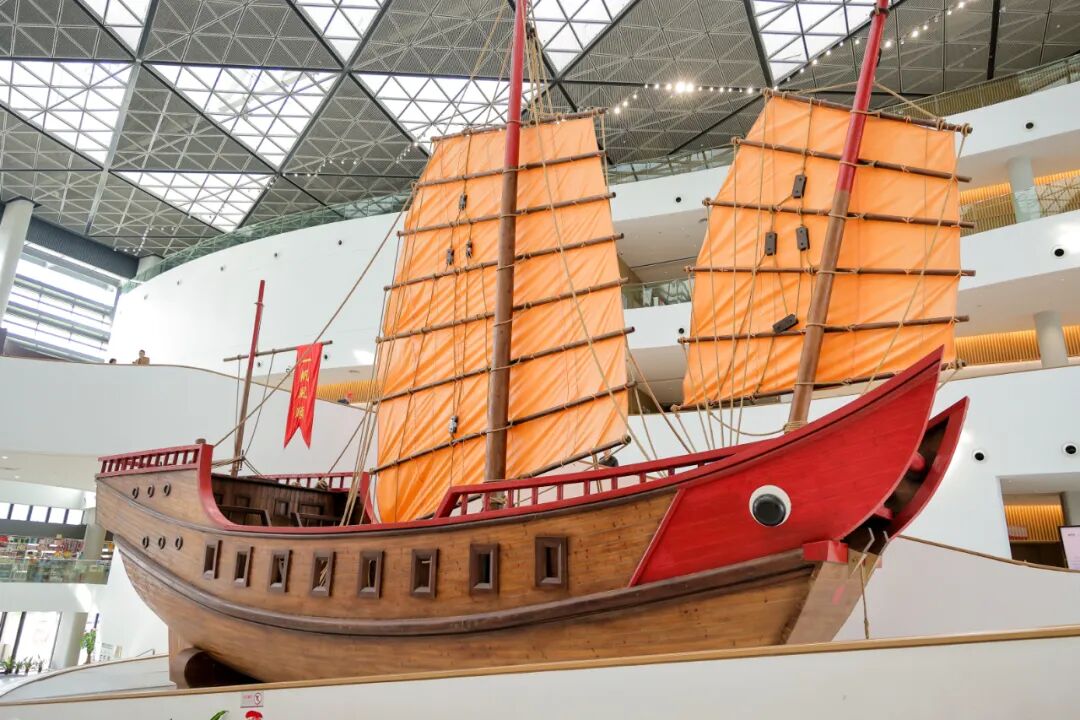
Today, more than three hundred years later, another red-headed ship is also quietly moored at the entrance of the 2025 China Digital Economy Innovation and Development Conference. The conference, themed "Gathering Data, Connecting Overseas Chinese, and Smarter Future", officially kicked off in Shantou on November 28.
Two red-headed ships, one is moored in the harbor of history, and the other is at the door of the future. Between them, there is the sea, the passage of time, and the whole story of the Chaoshan people from going abroad to returning home, from drifting to settling down.
Waiting for a letter takes 180 days
Recently, when the 2025 China Digital Economy Innovation and Development Conference was held in Shantou, the Cyberspace Affairs Office of the Shenzhen Municipal Party Committee organized a tour for online celebrities in Shenzhen and Shantou under the theme of "Gathering 'Shenzhen Energy' to Assist the 'Hundred - Thousand - Million Project'" to explore the development footprint of the special economic zone.
Following this footprint, our eyes first turn to the once - hard times.
From the middle of the Qing Dynasty to the Republic of China, the Chaoshan people gradually went overseas to make a living, which the locals called "going abroad". "Going abroad" was not an easy thing. Several local ballads at that time sang about the helplessness.
"Running out of firewood and rice, waiting to starve to death; having no choice but to sell oneself as a coolie (in Chaoshan dialect)."
"The steamship sails across the Qizhou Ocean; looking back, I can no longer see my hometown.
Whether it's good or bad depends entirely on fate; I don't know when I'll return to my humble abode."
A bath towel, a market basket, and an umbrella were all the belongings of the overseas Chinese. In the museum, there is a set of data: from 1869 to 1948, the number of overseas Chinese and ethnic Chinese leaving from the Shantou port to Southeast Asian countries reached 5.855 million.
According to the "Shantou Customs Annals", from 1869 to 1911, 2.94 million people in the Chaoshan area left their hometowns and traveled across the ocean.
Those who went to Nanyang said goodbye to their parents, wives, and children at the pier. The red - headed ships sailed south with the monsoon and arrived at the destination several weeks later. After finding a job, saving the first sum of money, and finding a familiar water carrier, they entrusted the carrier with the overseas Chinese remittance letter. One piece of paper, half of it was a remittance voucher, and the other half was a letter of greetings. The water carriers didn't sail often and always waited until they had a batch before setting off. After many twists and turns, the letter often arrived at home 180 days later.
It is estimated that there are more than 15 million overseas Chinese of Chaoshan origin living abroad, distributed in more than 100 countries and regions. Therefore, Chaoshan has become an area that produced the most overseas Chinese remittance letters and had the widest coverage since modern times. In the display cabinets of the museum, those yellowed pages record the most specific lives.
One of the letters is especially heavy. Yang Jie, an overseas Chinese in Thailand, enclosed more than 50,000 yuan in national currency in the overseas Chinese remittance letter to his wife and left a ten - character instruction: "Upon seeing this letter, redeem our daughter and bring her home at all costs." It turned out that in the chaos of war, his wife had to sell their daughter to make a living. After learning the news, the father overseas was heart - broken and tried his best to raise money, only hoping for family reunion.
The word "at all costs" shows the deep love of a father across the ocean. And the "at all costs" in the hearts of countless overseas Chinese extended from the family to the country.
As overseas Chinese businessmen gradually established a firm footing overseas, their enthusiasm for investing back home surged like a tide.
In 1903, the Chaoshan Railway, funded by overseas Chinese businessmen Zhang Yunan and Zhang Hongnan from Indonesia with more than 3 million silver dollars, was completed and became the first commercial railway invested by overseas Chinese in China. It was officially opened to traffic in 1906. By the 1930s, in the national industries in the Chaoshan area, overseas Chinese investment accounted for a very high proportion and covered a wide range, from daily necessities such as canned food, flour, matches, soap, and batteries to many industries such as shipbuilding, shipping, railways, electricity, and communication.
Waiting for an opportunity took two hundred years
The "specialness" of the special economic zone starts from its geographical location and is more related to the overseas Chinese.
In addition to the superior geographical location, the overseas Chinese are also an important factor for Shantou to become an economic special zone.
In the spring of 1979, in a meeting room in Beijing, a report that would determine the future of Guangdong was underway. The leaders of Guangdong went to Beijing with a bold idea: they hoped that the central government would give flexible policies to set aside areas in Shenzhen, Zhuhai, and Shantou, an important hometown of overseas Chinese, to attract investment from compatriots in Hong Kong, Macao, and overseas Chinese. It was initially named the "Trade Cooperation Zone".
This idea coincided with the opening - up strategy being brewed by the central government. The wheels of history began to turn.
On July 15 of the same year, Document No. 50 of the Central Committee in 1979 was officially issued. The document clearly stated that three export special zones, Shenzhen, Zhuhai, and Shantou, would be established on a trial basis. For Shantou, there was a cautious note in the document: "The export special zones can be first established on a trial basis in Shenzhen and Zhuhai. After gaining experience, the issue of setting up special zones in Shantou and Xiamen will be considered."
Many old overseas Chinese who read the newspaper felt a familiar uneasiness - just like when they sealed their hard - earned money and family letters in overseas Chinese remittance letters and entrusted them to an unknown voyage, waiting for a distant reply.
But this time, the reply came faster and louder than expected.
On August 26, 1980, the 15th meeting of the Standing Committee of the 5th National People's Congress reviewed and approved the establishment of the Shantou Special Economic Zone, covering an area of 1.6 square kilometers, which is today's Longhu District.
Overseas Chinese investment flowed back like a tide. It was no longer the dozens of silver dollars remitted in the overseas Chinese remittance letters, but millions or even tens of millions of dollars in factory - scale investments and complete sets of equipment. In the early 1980s, the Shantou Special Economic Zone started on a barren beach in Longhu. The first factories broke ground, and for the first time, the continuous roar of machines drowned out the sound of the waves.
The journey of a letter was shortened from hundreds of days to a few days; however, the change of a city took decades. Overseas Chinese built roads, schools, and hospitals in their hometowns as carefully as they sent overseas Chinese remittance letters: the money should be spent transparently, and things should be done effectively.
From 1980 to 2024, the city has approved the establishment of nearly 6,500 foreign - direct - investment projects; the contractual foreign investment amount reached 17.426 billion US dollars; the actual foreign investment absorbed was 10.033 billion US dollars, of which about 80% was from overseas Chinese.
With the development of industries, the GDP of Shantou increased from 1.079 billion yuan in 1980 to 316.797 billion yuan in 2024, more than 110 times the original amount. In 2024, the fiscal revenue reached nearly 14 billion yuan. So far, a modern industrial framework of "Three New, Two Special, and One Big" (led by new energy, new materials, new - generation electronic information, textile and clothing, toy innovation, and big health) has been established.
In Chaoyang, the Shantou International Textile City, with a total investment of 30.5 billion yuan and an initial area of more than 2,000 mu, has risen, becoming the largest textile park in the country;
At sea, the first - batch demonstration project of the National Ten - Million - Kilowatt - Level Eastern Guangdong Offshore Wind Power Base - the Huaneng Lemen Offshore Wind Power Project - was connected to the grid, and the huge blades created green energy;
In Chenghai, the toy industry is deeply integrated with cultural and creative industries and intelligence, opening up new imagination space.
The wave of the digital economy is also surging. The China Digital Economy Innovation and Development Conference has been continuously held in Shantou. Giants such as Huawei, Tencent, and Alibaba have all deployed here, and a digital industrial cluster with a scale of over 100 billion yuan is taking shape.
The changes have also penetrated into the local fabric. In the Donghu Community of Haojiang District, an overseas Chinese hometown, the old overseas Chinese houses have been carefully restored and transformed into an Overseas Chinese Memory Square and a cultural exhibition hall; the once - quiet village alleys have been transformed into a model of the integration of "overseas Chinese, agriculture, culture, and tourism" relying on special local cuisine and cultural tourism. The revitalization of the overseas Chinese villages is a tribute to history and an expectation for the future.

Waiting for a result now only takes one second
Today, the red - headed ship in the Chaoshan Expo Center has become the background. And the real "ship" is the submarine cable, diving into the deep sea.
The Shantou International Submarine Cable Landing Station is the largest of its kind in China - the main optical cables converge here, including several international submarine cable systems such as those connecting Asia - Europe, Asia - America, and Asia - Pacific, connecting 51 countries and regions around the world. More than half of the inbound and outbound information in the country passes through here.
It is not only the only landing point in China for the "BRICS Cable Project", but also positioned as an information hub for the "Belt and Road Initiative", and more importantly, a "new port" in the digital age. Thus, physical distance has been re - defined by technology, and the once - six - month - long communication has been compressed into data exchanges measured in milliseconds.
How fast is it? Tests show that the time delay from Shantou to Singapore is only 32.7 milliseconds, and the time delay to Hong Kong is about 20 milliseconds. Compared with the time delays from Shanghai and Guangzhou to Singapore, it is reduced by 27.6 milliseconds and 37.3 milliseconds respectively, and compared with the time delay from Shanghai to Hong Kong, it is reduced by 10 milliseconds.
This is not only an advantage in speed but also a strategic passage. In 2023, the national pilot project for cross - border dedicated channels was launched here; in 2025, Shantou was included in the pilot project for "processing incoming data" across borders, exploring the establishment of a system based on the principles of "specific regions, specific objects, special authorization, and special supervision". Shantou has become a pioneer in the national governance system for cross - border data flow.
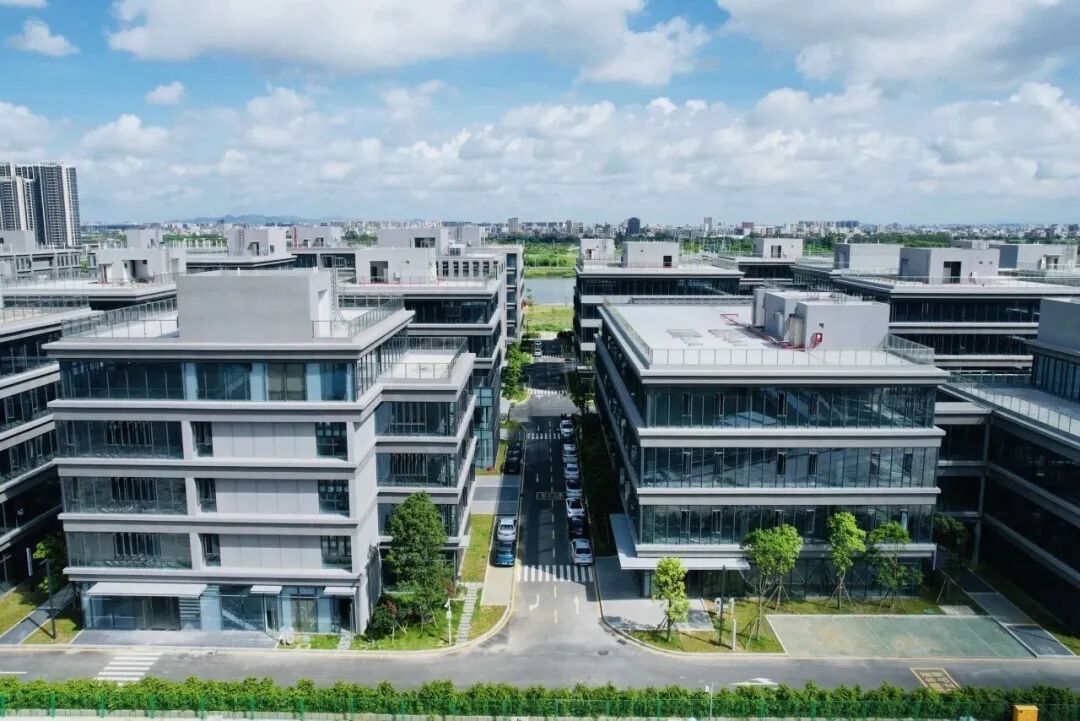
Source: Shantou Overseas Chinese Pilot Zone
Once the channel is opened, the hub is also completed simultaneously.
In 2014, the Shantou Overseas Chinese Economic and Cultural Cooperation Pilot Zone (hereinafter referred to as the Pilot Zone) was officially established. It is currently the only national - level development platform in China with the core concepts of "overseas Chinese" and "economic and cultural". It not only aims to gather the flood of data but also to build rules and incubate an ecosystem, closely connecting overseas Chinese of Chaoshan origin around the world.
Relying on this platform, Shantou has introduced targeted policies to activate overseas Chinese investment and strength: the "Overseas Chinese Board", the first equity trading market with the core concept of overseas Chinese in China, has registered and listed 689 enterprises in total, with financing exceeding 2.1 billion yuan; the new registration model for cross - border e - commerce clusters has removed the barriers in foreign trade services, making it more convenient for small and medium - sized enterprises to "go global"; the Pilot Zone has also organized business associations and enterprises to conduct economic and trade negotiations in Southeast Asia and the UAE, resulting in nearly 100 cooperation projects with a total amount of more than 30 billion yuan.
On this platform, an ecosystem is gradually taking shape.
In May this year, the first cross - border digital economy industrial park in Guangdong was officially launched in the Overseas Chinese Pilot Zone. Three projects, namely the Digital Science and Technology Innovation Base, the China Unicom 5G Innovation Operation Center, and the Shenzhen - Shantou Science and Technology Innovation Industrial Park, were launched here. As of now, the entire Pilot Zone has introduced more than 1,400 digital economy enterprises such as 360, Inspur Group, Venustech, and Hytera, and the industrial cluster effect continues to be prominent.
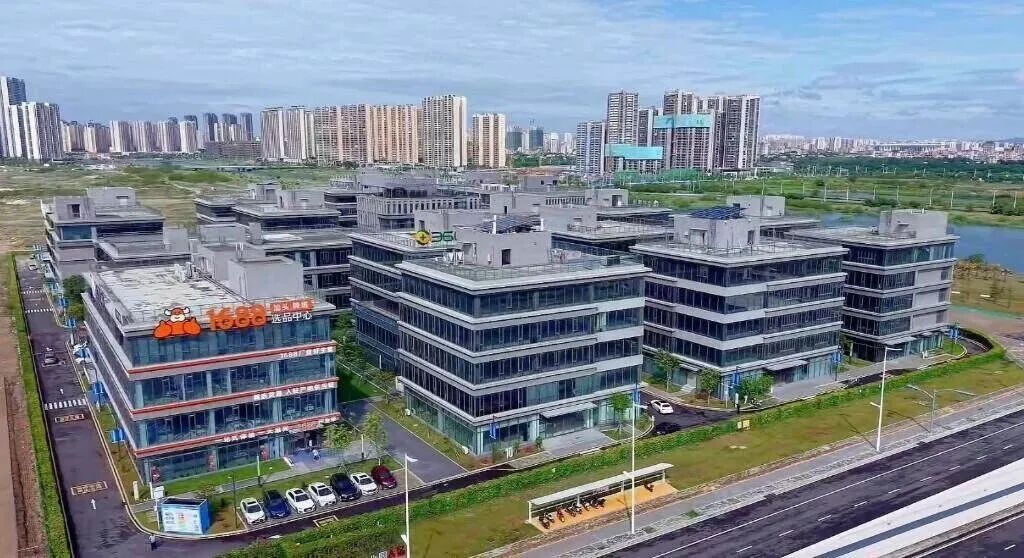
Source: Shantou Overseas Chinese Pilot Zone
The China Digital Economy Innovation and Development Conference has become an important window to present the exploration results of Shantou's digital economy every year.
This year, Shantou has launched five more initiatives: starting the first - stop action of "Cross - border Empowerment, Industrial Upgrade in Guangdong", announcing the launch of the "processing incoming data" business, launching the "International Artificial Intelligence Open - Source Community", promoting the construction of the "Key Green Computing Node for the Asia - Pacific Region", and unveiling the "Digital Silk Road Artificial Intelligence Training Base", drawing a blueprint for exploring new blue oceans in the cross - border digital industry.
In 45 years, from an overseas Chinese hometown to a special economic zone, from the red - headed ship to the data sea. The waiting time has been shortened from hundreds of days to an instant. The pace of development has accelerated from being measured in decades to changing with each passing day.
What remains unchanged is the line across the sea. It was once maintained by monsoons and sailing ships, then by policies and flights, and now by optical cables and screens.
Today, the red - headed ship hovers silently, but the route it charted still extends -
From the other side of the sea to this side of the sea.
From the