Yin Kuo, Founder of Sembiance: Reconstructing the Growth Logic of the Oral Care Market with a Tiered Catering Strategy | WISE 2025 Business King
The business world in 2025 stands at the crossroads of old and new transitions. Amid the reconstruction of business narratives and the sweeping technological wave, the WISE2025 Business King Conference, with the theme of "The Scenery Here is Particularly Charming", aims to anchor the definite future of Chinese business in the face of uncertainties. Here, we record the opening of this intellectual feast and capture the voices of those who still forge ahead firmly in the changing situation.
From November 27th to 28th, the 36Kr WISE2025 Business King Conference, hailed as the "annual technology and business trendsetter", was held at the Conduction Space in the 798 Art District in Beijing.
This year's WISE is no longer a traditional industry summit but an immersive experience in the form of "technology hit short dramas". From AI reshaping the boundaries of hardware to embodied intelligence knocking on the door of the real world; from the globalization of brands in the wave of going global to traditional industries equipping with "cyber prosthetics" - what we restore is not only the trends but also the true knowledge honed in numerous business practices.
In the following content, we will dissect the real logic behind these "hit dramas" frame by frame and witness the "particularly charming scenery" of business in 2025.
At the conference site, Yin Kuo, the chairman of Xiaokuo Group, the founder and CEO of Semi, shared the path to break through in the traditional oral care market. He pointed out that the toothpaste industry features high - frequency usage, low - frequency consumption, and low customer unit price, and the traditional positioning theory has become ineffective. Semi adopts a hierarchical and catering positioning strategy, creating differentiated products and innovative scenarios for different channels and consumer groups. Meanwhile, it builds a content - based organization and a flat structure, using a rapidly iterative supply chain and micro - innovations close to consumers to break the industry's growth bottleneck and achieve full coverage of national sales terminals.
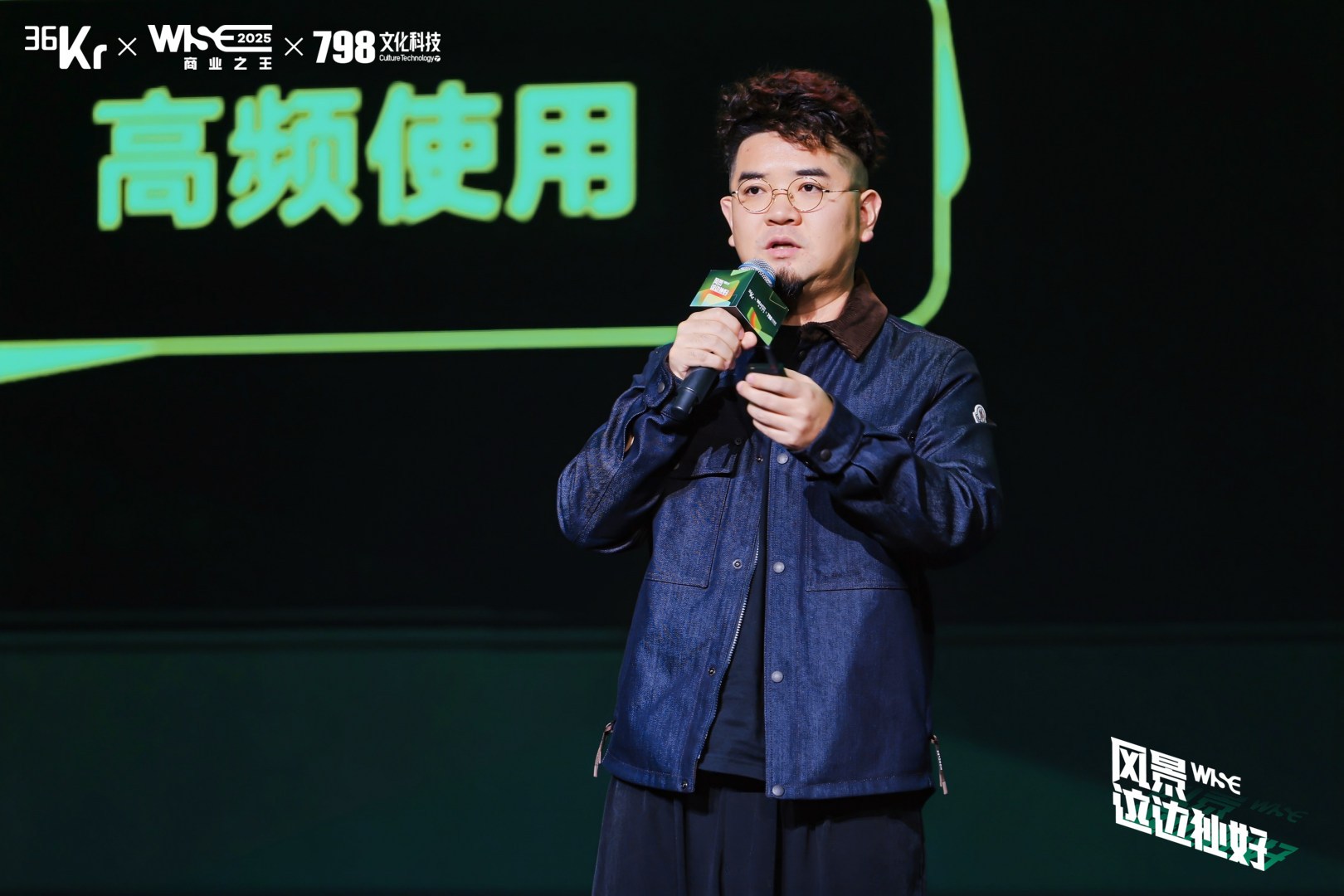
Yin Kuo, the chairman of Xiaokuo Group, the founder and CEO of Semi
The following is the edited transcript of the speech by Yin Kuo, the chairman of Xiaokuo Group, the founder and CEO of Semi:
Hello, everyone! I'm Yin Kuo, the founder of Semi. Thank you for the invitation from the WISE Conference. I'm glad to have the opportunity to communicate and share with you.
We are in a very traditional industry. If it were ten years ago, it might not have attracted much attention because our main business is toothpaste. In the past 20 years, there haven't been many changes in toothpaste brands. There may be some niche overseas imported brands that come and go, but the top ten in the market haven't changed much.
The oral care industry has several characteristics. First, the product life cycle is quite long. Second, the product covers a relatively wide range of people, from newborns to the elderly, so the overall product life cycle is extremely long. Third, the usage frequency is relatively high. Among daily chemical products, it should have the highest usage frequency. You can go three days without washing your hair, but it's quite uncomfortable not to brush your teeth for a day.
In such an ancient market, how can we find opportunities?
This year, our company has reached its tenth anniversary. It's not a very young company. In these ten years, we've made multiple attempts in the oral care field and failed many times. Later, we've been asking ourselves every day how big we really want to make this business. Is it enough to reach 500 million, 2 billion? Or do we want to reach 5 billion or even 10 billion? This question determines the future positioning of our products.
But I think the positioning theory doesn't work in our category with low customer unit price and the requirement of full - population coverage. Why did people like to talk about positioning before? Because there used to be advertising, a super weapon. Even if it was a hard - sell implant, you had to watch it and could remember it. But it doesn't work today. For products with a very high customer unit price, like a product that sells for 3,000 yuan, you can find a very precise positioning and summarize your product in one sentence or one scenario. Because in China, if a 3,000 - yuan product only covers 10 million people, you can still build a relatively good - sized business.
But it won't work in our market. If you only target 20 million or even 100 million people, it's still a small business. Especially for our single - type products, it's difficult to meet the desired market scale.
So after analyzing ourselves, our first decision is to target the full - population market. Second, since we want to target the full population, it's impossible to reach all types of consumers with a single product or one advertising medium.
When serving different customers, we can't just innovate for one type of people because different groups have different understandings of innovation, different aesthetic tastes, and different usage requirements for product innovation.
So we adopt a hierarchical and catering positioning strategy. Catering to whom? If you look at Semi today, the products we sell in new retail stores based in shopping malls are different from those in rural convenience stores in Henan and Hebei, different from those on Douyin, Xiaohongshu, or Pinduoduo. The difference may be smaller in Beijing because it's a first - tier city, and people are exposed to similar advertisements and have similar product usage cognitions. But in fact, among our numerous user profiles, if you pick out ten people who may have bought from different channels, their impressions of Semi are different.
For example, in KKV, we have many products with high - value appearance and relatively sweet taste, which are designed around the emotional value of the youth. After brushing teeth, your mouth feels like a flower has blossomed. In relatively lower - tier markets, we have products with high cost - effectiveness, like buying toothpaste and getting eggs for free. So in different scenarios, we've created a lot of scenario - based innovations that meet the different needs of consumers of different ages.
When we first designed product innovation plans, we thought about starting from scenarios and finding differences for different groups.
We have a 39 - degree lysozyme toothpaste. I wonder if you've used it? My hometown is in northern Anhui, where there's no heating. When it's cold, the indoor temperature can drop below zero and freeze. So it's very sensitive and uncomfortable to brush teeth in winter. I thought if I could make a toothpaste that gives a warm feeling of 39 degrees when it touches your teeth, it would be more comfortable to brush. So I developed this product based on my personal experience. This single product sells very well both online and offline.
So our product innovation comes from two aspects. One is the differential analysis of the population, and the other is the understanding of consumer categories and personal usage experiences. Our category is a rather subjective one. Just like a good shampoo, different people may have more than a dozen different evaluations of an international brand shampoo. It's hard to say that everyone will like it. But each era has its own bottom line of taste. Just like people wore flared pants in the 1980s but stopped in 2000. In our category, innovation seems simple but is actually very difficult because it involves a lot of subjective feelings.
After the hierarchical positioning, how do we achieve it? You can buy our products at any of our offline sales terminals, whether it's an OTC pharmacy, a convenience store, a supermarket, a beauty store, or even many hotels.
But implementation requires a high - level understanding of user profiles. So how to build an efficiently operating and decision - making organization is very important to us. To spread our hierarchically - positioned products to customers, we've been building a new content - based organization since 2018, which can handle all content from scriptwriting to shooting. We're a bit like a micro - film company, which is very different from traditional daily chemical companies.
Our offline retail stores are very complex. If you're in the northern region, you'll find that many clothing stores, bookstores, and accessory stores are selling our toothpaste. The profiles of these people are completely different from those we targeted in our previous content - based organization. How can we integrate them? So we've emulated the super - flat organizational structure of many technology companies, allowing everyone to quickly test and make mistakes, then quickly review and correct and iterate.
At the same time, we try our best to make our products understandable to consumers. So we use a lot of content to tell consumers where we've made innovations and what kind of help they can get.
The iteration speed of our entire supply chain is also relatively fast. We have more than 300 types of toothpaste sold in different channels, but each market has a different product mix. For example, the saffron toothpaste we launched specifically for the middle - aged and elderly market some time ago may not be well - known, but it has sold a lot. Today's China is a super information cocoon. Everyone has a different view of the consumer market, and everyone's Douyin feed is different. How to build your product structure and brand communication in the information cocoon has become an important topic in attracting consumers in the new era.
Our success in this market is due to our insight into consumers. Sometimes people are too radical about the word "innovation". They always think that only something extremely innovative is innovation. The daily chemical industry is a very inconspicuous industry. It's not as spectacular as the technology industry, where making a chip or launching a rocket is a great achievement. In our industry, even if we make a lot of efforts and innovations, they may not be immediately perceptible.
Like the Dyson hair dryer, when it changed from low - speed to high - speed, you could feel the innovation as soon as you used it. But for a tube of toothpaste, even if we've made a lot of innovations in abrasives, perfumes, and spices, many people still can't see or feel it. This is the current situation and truth of our industry. China has a diverse consumer hierarchy. So how to make micro - innovations for different people with different levels of understanding and make their lives a little better is the greatest innovation in our industry.
That's all for my sharing today. Thank you!