YANG Yi of Jin Yi Capital: Building on Technology, Sailing in Consumption - Charting a New Course for the Chinese Economy | WISE2025 Business King
In 2025, the business world stands at a crossroads of transformation. Amid the reconstruction of business narratives and the sweeping tides of technology, the WISE 2025 Business Titans Conference, themed "The Scenery Here is Uniquely Charming," aims to anchor the certain future of Chinese business amidst uncertainties. Here, we document the opening chapter of this intellectual feast and capture the voices of those who remain steadfast in the face of change.
From November 27th to 28th, the 36Kr WISE 2025 Business Titans Conference, hailed as the "annual barometer of technology and business," took place at the Conduction Space in the 798 Art District in Beijing.
This year, WISE is no longer just a traditional industry summit but an immersive experience presented in the form of "tech-infused short dramas." From AI reshaping the boundaries of hardware to embodied intelligence knocking on the door of the real world; from the globalization of brands in the wave of going global to traditional industries equipping with "cyber prosthetics" – what we restore is not only trends but also the insights gained from numerous business practices.
In the following content, we will dissect the real logic behind these "exciting dramas" frame by frame and explore the "uniquely charming scenery" of the 2025 business landscape.
Yang Yi, the founder and managing partner of Jinshi Capital, delivered a keynote speech titled "Laying the Foundation with Technology, Sailing with Consumption: Charting a New Course for the Chinese Economy." She stated that the positive cycle of "technology empowering consumption and consumption spurring technology" is a vibrant force driving China's development in the new era. She also shared that under the grand blueprint outlined in the 14th Five-Year Plan, as a new-generation local PE and industrial investment platform, Jinshi Capital is committed to the strategy of "technological innovation + better life," firmly optimistic about China's long-term prospects, deeply involved in the Chinese market, and investing in China.
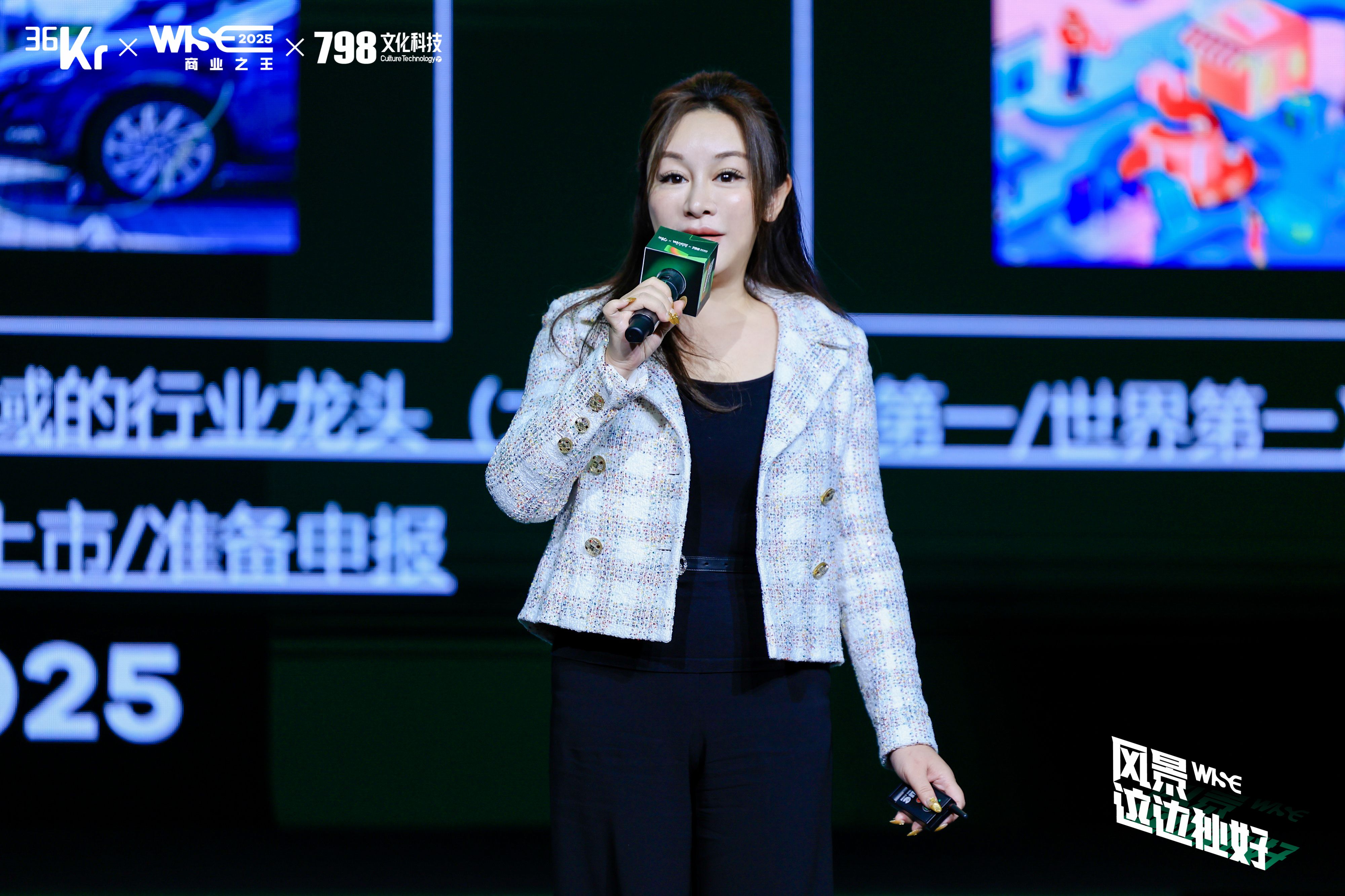
Yang Yi, Founder and Managing Partner of Jinshi Capital
The following are the highlights of the speech:
Hello, everyone! I'm Yang Yi, the founder and managing partner of Jinshi Capital. It's a great honor to participate in the 2025 36Kr Annual WISE Conference and share my insights. My speech topic is "Laying the Foundation with Technology, Sailing with Consumption: Charting a New Course for the Chinese Economy."
1. Introduction to Jinshi Capital
Jinshi Capital is a new-generation local PE institution and an industrial ecosystem platform, focusing on investing in China's technological innovation and better life, that is, new technologies that improve social efficiency and have a huge end-market, as well as people's livelihood industries that are transformed and empowered by new technologies for the common good.
We have a unique gene as a new-generation PE institution. Our team members in their forties are in their prime and are jointly planning for future industries. The Jinshi team has been investing in China for the past 20 years, responsible for investments worth 60 billion RMB. We have invested in some of the most representative leading enterprises in different eras in China, from Lenovo, Haier, and Li-Ning to Pacific Insurance, CICC, to United Family Healthcare, Sinovac Biotech, to Focus Media, JD Logistics, Tencent Music, SHEIN, and ByteDance, continuously creating stable returns that span economic cycles.
After the establishment of Jinshi Capital, adhering to the concept of "research-driven, value investment, and ecosystem empowerment," we systematically integrate industrial ecosystem resources and are committed to discovering and supporting Chinese industrial leaders to become world-class enterprises. We have invested in many excellent leading enterprises, most of which are the number one in China or even the world in their respective niches. Currently, more than 70% of our invested enterprises have gone public or are in the process of applying.
2. Laying the Foundation with Technology: Promoting the Development of New Qualitative Productivity on the Supply Side
Internally, with its world-class scientific research capabilities and abundant talent reserves, China has gathered the world's largest group of high-quality labor force (China has the largest number of R&D personnel in the world). It has long been a core force in the global technology race. On the one hand, in 2024, China accounted for 28% of the world's high-level scientific and technological talents, and as early as 2020, the number of STEM graduates in China accounted for 37% of the world's total, both ranking first in the world. On the other hand, China has cultivated more AI technology talents. Half of the world's top 20% AI researchers completed their undergraduate education in China, ranking first in the world, far exceeding the 18% in the United States. Externally, the restrictions imposed by Western countries such as the United States on China's technology industry have turned the "bottleneck list" into a "task list." Every link that we used to rely on foreign countries has become a milestone in the localization of technology that has been or will be achieved.
More importantly, the development of technology cannot be separated from the policy support of the national system. China attaches great importance to and continuously increases R&D investment. In 2024, the R&D expenditure reached 3.6 trillion RMB, ranking second in the world and accounting for 20% of the global total, exceeding China's share of the world's population and GDP. Remarkably, as a developing country, China has the highest R&D investment intensity among countries with a similar per capita GDP, comparable to that of developed countries in Europe and America. The 14th Five-Year Plan provides strong support, with the word "innovation" mentioned 61 times and the word "technology" appearing 46 times. Under the precise guidance and promotion of national policies, the direction of technological development is clearer and more confident.
China has an unprecedentedly strong industrial manufacturing capacity. Today, China's manufacturing output accounts for 30% of the world's total, the highest in modern human history. We have also gradually made breakthroughs in key technologies. According to the "Made in China 2025" Key Technology Breakthrough Map released by Bloomberg in October 2024, China leads the world in 5 technologies such as drones, photovoltaics, graphene, high-speed railways, new energy vehicles, and lithium batteries, and has global competitiveness in 7 technologies such as artificial intelligence, semiconductors, and robotics. China's technological development has reached a new historical stage, successfully transitioning from passive following to active keeping pace, and achieving milestone breakthroughs in leading some frontier fields globally.
Looking at the sub-sectors in the technology field, China has made remarkable breakthroughs, triggering technological storms in multiple areas. AI large models represented by DeepSeek have entered the world's first echelon with low cost and high performance. The sales volume of embodied intelligent robots ranks first in the world. The mass production of the domestic large aircraft "C919" has broken the deadlock. The "Artificial Sun EAST" has achieved a stable operation of 403 seconds, rewriting the world's nuclear fusion schedule. New energy, quantum computing, and photovoltaics are leading the way globally, stunning the world with their strong capabilities. These "world's only" and "world's first" achievements are not just slogans but trillion-level growth engines that are already in motion, creating unprecedented historical investment opportunities.
Looking ahead, the Party and the state have outlined a grand blueprint for technological innovation and development in the 14th Five-Year Plan. In building a modern industrial system, we need to optimize traditional industries such as mining and metallurgical chemicals, and at the same time, strengthen emerging future industries such as quantum technology, biological manufacturing, hydrogen energy, and nuclear fusion. We also need to build a modern infrastructure system, such as information and communication networks and a national integrated computing power network. In accelerating the process of high-level scientific and technological self-reliance, first, we need to tackle core technologies such as integrated circuits, industrial mother machines, and high-end instruments. At the same time, we need to promote the in-depth integration of science and technology and industry, and comprehensively implement the construction of a digital China, empowering all industries with "artificial intelligence +".
When the firm orientation of national strategy meets the surging momentum of technological breakthroughs, a group of technology benchmark enterprises that will change industries and influence the world will surely emerge in China in the future, bringing generous returns that resonate with the country's development to every investor involved.
3. Sailing with Consumption: Releasing the Vitality of the Unified Big Market on the Demand Side
China has the world's largest consumer market. In 2024, we completed 146 million outbound trips, sold 31.44 million cars, sent 175 billion express parcels, and had an average of more than 80 million daily takeaway orders. The surging consumption momentum has become the core engine of the global market. The root cause lies in the rapidly increasing consumption ability and purchasing power of residents. In 2024, the per capita disposable income in China reached 41,000 RMB, a 46-fold increase compared to 1990. The national total savings rate reached 43% in 2024, far higher than the world average of 20%.
Moreover, China's consumer market still has great potential in the future. Currently, the gap between the rich and the poor in China is still relatively large. Geographically, the per capita disposable income in the eastern region is 1.6 times that in the western region. In terms of urban and rural areas, the per capita disposable income in urban areas is 2.3 times that in rural areas. To address the issue of the domestic income gap, increasing the income of low- and middle-income groups and releasing their consumption potential is one of the important measures.
As early as 2020, the layout of the domestic cycle and the unified big market was initiated. A series of systematic policy combinations aimed at boosting people's livelihoods and consumption have launched a charge to increase income and stimulate domestic demand. In the 14th Five-Year Plan, words such as "consumption" and "domestic demand" appear frequently, directly setting "vigorously boosting consumption" as a top-level goal. The "Outline of the Strategy for Expanding Domestic Demand" has called for a "new breakthrough in the scale of domestic demand," and the "Special Action Plan for Boosting Consumption" aims to solve various pain points from "increasing people's income" to "stimulating consumption."
In the long run, China will not only become a technological powerhouse but also surpass the United States to become the world's largest consumer market. It is estimated that the total retail sales of consumer goods in 2025 will exceed 50 trillion RMB, ranking second in the world. The actual purchasing power of the Chinese market is already 1.6 times that of the United States. The consumption service industry is growing rapidly, with an average annual growth rate of 9.6% from 2020 to 2024. The consumer market is experiencing both "gradual recovery" and "strong differentiation," presenting significant structural opportunities.
4. Investment Strategy: Charting the Course of "Technological Innovation + Better Life"
In our view, technology and consumption are not mutually exclusive but a symbiotic entity, two sides of the same development logic. Consumption corresponds to the demand side, while technology is anchored to the supply side. Technological innovation on the supply side can give rise to new consumption demands, and the consumption demands on the demand side will in turn drive the iterative upgrading of technological supply. More importantly, the opportunities in these two fields are accelerating their integration.
Since its establishment, Jinshi Capital has accurately captured the wave of the integration of consumption and technology and has completed team building and ecosystem layout in advance. The market practices in the past few years have fully verified the foresight and accuracy of this judgment.
From the perspective of technological innovation empowering and integrating into consumption:
1) Consumer-grade technology hardware: It is the most direct entry point for technology to reach the general public. Technological innovation and iteration have enabled high-quality products to enter millions of households, meeting people's needs for a high-quality life. For example, it's hard to imagine life without smartphones and various wearable devices. Drones have also created a new way to observe the world and record life. Looking ahead, embodied intelligent robots are expected to gradually enter various consumption scenarios.
2) Retail industry: The long-standing pain point of "difficult management of thousands of stores" in the past has been solved with the support of digital and intelligent technologies. Chain stores with thousands of outlets are no longer a distant dream. For example, Miniso, the world's largest private-label lifestyle homeware retailer we invested in, efficiently manages over 8,000 stores globally through its intelligent supply chain platform. Another example is Shanghai Aunty, one of the top three (in terms of the number of stores) ready-to-drink tea brands in China. It was the first in the industry to use AI supervisors to ensure product quality and adopts digital store location selection and supply chain management methods, enabling fresh tea drinks to quickly penetrate the sinking market. The number of its global stores has exceeded 10,000.
3) Beauty and health: As "ingredient-conscious consumers" become the mainstream, a "molecular revolution" is reshaping the beauty and health field, driven by the cross - border application of biotechnology. We are firmly committed to investing in this field. The companies we invested in, such as Giant Biogene and Bloomage Biotechnology, have become global benchmarks in their respective niches and successfully gone public. Giant Biogene, the world's largest recombinant collagen company, has transformed "scientific anti - aging" from a niche demand into a national consensus. Bloomage Biotechnology, the world's largest hyaluronic acid company, has made once - expensive medical - grade ingredients accessible in skincare products, food, and even beverages. This transformation model of "medical - grade technology + consumer - grade products" not only ensures the core competitiveness of products but also opens up a trillion - level new consumer market, which is the best example of technology empowering consumption.
4) Food technology: Technological innovation in this field has upgraded people's diet from "simply filling the stomach" to a comprehensive improvement in terms of convenience, quality, and health. For example, Yuanqi Forest responded to health concerns by being the first to use natural sweeteners like erythritol, advocating the concept of "0 sugar, 0 calories, 0 fat," which aligns with the trend of healthy consumption. Enterprises represented by Yonghui Caishixian process ingredients safely, efficiently, and standardly through self - built central factories to serve the public. Technology has standardized taste, quantified health, and also made our investments more appealing in the daily life.
From the perspective of consumption serving as an application scenario and growth soil for technology, providing maximum practical value for technology:
1) 2C - oriented AI: In the wave of the AI industry, data is one of the three key competitive factors along with algorithms and computing power. Whether it is basic corpus data or intelligent interaction and personalized content generation services, the massive demands in the consumer market are providing a testing ground for technological iteration. Currently, China's AI industry has entered the global leading echelon. China has become the largest provider of open - source large models in the world. Several large models in China, such as Tongyi Qianwen and DeepSeek, rank among the top in global rankings. Enterprises are actively seeking killer 2C applications in the AI era.
2) 2B - oriented AI: Even in the enterprise - level AI field, the consumer industry remains the core battlefield. Fourth Paradigm, the largest enterprise - level decision - making AI platform in China that we invested in, has been listed on the Hong Kong Stock Exchange. Its core service scenarios include consumer retail, providing full - chain solutions from supply chain forecasting, intelligent store management to online precision marketing. The explosion of AI applications will inevitably drive the upgrading of computing power infrastructure. Yisw Computing, a company we invested in, is the world's largest RISC - V architecture chip enterprise. Its products are mainly targeted at intelligent terminals and embodied intelligence fields, which are the core carriers for the implementation of 2C scenarios, laying a solid hardware foundation for AI to move from technology to consumption.
3) Automation/Robotics: The massive demands in consumption scenarios are driving the full - chain upgrading of China's robotics industry from application to core components. China is already the world's largest producer and user of robots. Different from the overseas development path, China's robotics industry has been more focused on serving the light industry since its inception, especially in the consumer industry chain links such as 3C product assembly, food packaging, and clothing processing, achieving differentiated competition with overseas giants. Service robots are rapidly being implemented in daily life scenarios. Gaoxian Robotics, a company we invested in, has grown into the world's largest commercial cleaning robot enterprise. Its products cover consumption scenarios such as shopping malls, hotels, and office buildings, replacing manual cleaning with robots, which improves efficiency and reduces costs. In terms of core components, for example, Shanchuan Harmonic, a leading domestic reducer enterprise we invested in, has solved the "bottleneck" problem of the core components of robot joints, providing key support for the localization of the entire robotics industry.
4) New energy field: New energy vehicles are not only large - scale consumer goods but also mobile technology terminals. Their development perfectly interprets the two - way logic of "consumption driving technology" and "technology enabling