After the configuration becomes "transparent", how do current mobile phones save costs?
Not long ago, in our article "Why Has 'Getting Rid of the Prestige' Become the Political Correctness in the Smartphone Industry at the End of 2025?", we mentioned the trend in this year's smartphone market towards "getting rid of the old - fashioned style" in terms of design and product orientation.

On the one hand, this can of course be understood as a business strategy of smartphone manufacturers to "make money from whoever has money". On the other hand, when smartphone manufacturers decide to "cater to" young consumers, they will inevitably fall into a certain delicate "dilemma".
So what is this dilemma? Simply put, young consumers have a much higher level of understanding and pursuit of smartphone "configurations" than older consumers. Especially in today's era, even if some manufacturers are not very proactive in announcing configuration details, with the help of various "teardown media" and "comparative review media", it is basically difficult to hide this information.

However, consumers basically "want it all". That is, they want the configuration to be as comprehensive as possible without significant short - boards, and they also want the price to be cheap and the "cost - performance ratio" to be high. But from the perspective of smartphone manufacturers, they of course also want the products to "seem to have high - end configurations" and sell well, while also compressing costs as much as possible, because only in this way can they make a profit.

So the question arises. For those models that both feature "high - end configurations" and "high cost - performance", where exactly do the manufacturers save costs? Or, compared with the much more expensive "true flagships" with the same "top - level configurations", which parts have they "cut back"? Today, we at San Yi Life will discuss this issue in a simple and easy - to - understand way.
Hiding Detailed Parameters Is the Most Commonly Used Method
In today's smartphone market, "announcing configurations and parameters" has become an established "industry rule". Especially for "performance - oriented" models, manufacturers usually list details such as screen resolution, SoC model, storage capacity, battery size, and fast - charging configuration as selling points. So is it really impossible to "pass off inferior products as high - quality ones" in terms of configuration by "hiding" these details?

In fact, if you pay attention to the official websites of smartphone manufacturers, you will find that some parameters closely related to performance are generally never mentioned. For example, they will announce the size of the phone's memory, but hardly ever mention the specific memory frequency; also, manufacturers will announce the interface standard of the flash memory (such as UFS4.0/4.1), but will not inform consumers of the specific type of flash memory (TLC or QLC) used.
However, those who pay attention to technology probably know that the level of memory frequency has a crucial impact on the performance of the phone. And different types of flash memory not only affect performance but also have a huge difference in long - term service life.

Moreover, on some models, it is very obvious that manufacturers have created different versions of "differential treatment" in terms of memory and flash memory configurations to save costs. For example, only the top - end and most expensive versions have high - frequency memory; also, on the cheapest and smallest - capacity versions, UFS3.1 (instead of UFS4.0) flash memory is used.
The "cleverness" of this approach lies in that it can largely "deceive" even responsible review media, because usually the devices they get almost have no reason to be the low - end versions. So even if they measure good results or find good materials during teardowns, it may not represent the level of the entire product line.
Adjusting Suppliers Without Changing Parameters Is Also a Cost - Saving Trick
In addition to hiding some parameters and making "distinctions" based on price, some models also "put their minds to work" at the supply - chain level, which is a very commonly used method.
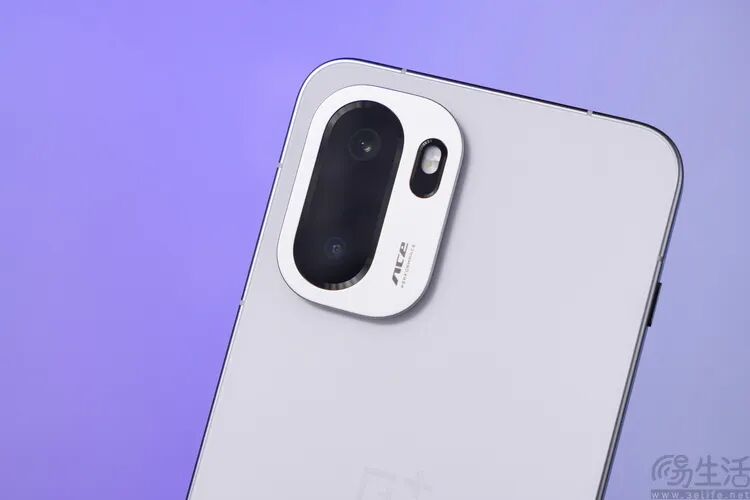
For example, relevant manufacturers may first use customized and high - end components from first - tier manufacturers on their top - level flagships and promote them vigorously. But then they will launch "sub - flagships" and "performance - oriented models" that "seem to have the same parameters" in these aspects but are cheaper, without actively claiming that their screens or CMOS come from the same suppliers. Some consumers are very likely to "mistakenly think" that the new models still use the same well - reputed and costly components as before.

The confusing part of this approach is that even from some detailed parameters, such as screen resolution, refresh rate, or the resolution and size of the image sensor, the components of the two different models before and after seem to be "exactly the same", but in fact, the specific configurations used in the cheaper models may be completely different.
"Scaling Down" Unused Functions Is Also an Art
In the examples mentioned above, smartphone manufacturers still apply their "cost - saving tricks" to some very superficial aspects, which may be detected through more detailed benchmark tests or some in - depth system information monitoring software. That is to say, there is still a "risk" in doing so.

So, on sub - flagships or performance - oriented models, is there a way to reduce hardware costs while not being noticed by target consumers at all, and even making some consumers applaud?
Actually, there is. To put it simply, this requires smartphone manufacturers to limit the "scaling down" to parts that their target users may also think are "completely useless". A very typical example is to reduce the number of 5G frequency bands supported on some models.
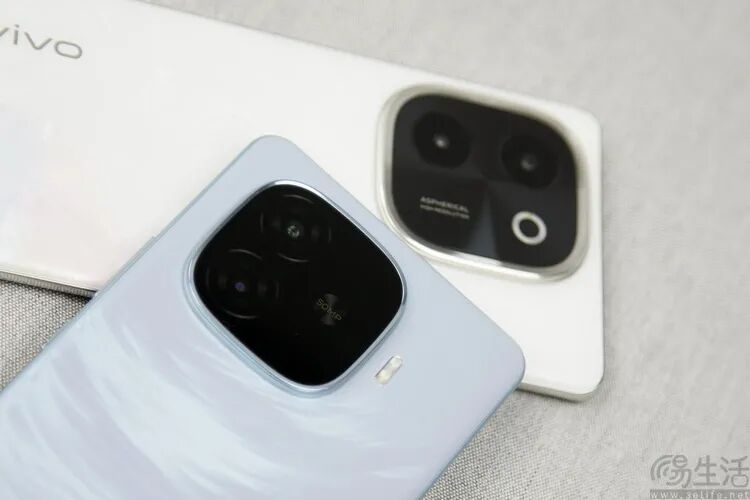
This approach can work based on two premises. First, although everyone may be using the same "mobile platform", by using different (grades) of radio - frequency chips, differences (in terms of cost and function) can be made in the number of 5G frequency bands. Second, for users who rarely travel on business or go abroad, many 5G frequency bands may indeed never be used. So even if the manufacturer "cuts back", consumers really won't have any objections.
Of course, examples like this are not limited to 5G radio - frequency chips. There are also many hardware details that never appear on the "configuration list". For example, cheaper fingerprint - recognition sensors, poor - performance speakers and vibration units, smaller - sized microphones, fewer light sensors, etc. Although people may not be completely "unaware" of the "simplification" of these components, even if they realize it, many people may completely "accept" it.
Who Says Cost Only Lies in Hardware? You Can Also Save Money on Software
Finally, let's take a look at the many ways that today's smartphones "save money" at the software level.
First of all, those who have paid attention to the new - product press conferences of major smartphone manufacturers may remember that whenever manufacturers introduce their new systems, or some important new software functions and algorithms, these things often "make their debut" with flagship phones.

This is not just to highlight the status of the "flagship". More importantly, it means that the development process of these software functions is actually included in the R & D costs of the flagship products in a disguised form. For the relatively cheaper models launched later, directly using the "same software achievements as the flagship" not only sounds good but also actually saves costs.
Secondly, although everyone may know that today's smartphones generally earn revenue through built - in app stores and various pre - installed software. In addition, there are now some newer ways to "make money" through built - in software.
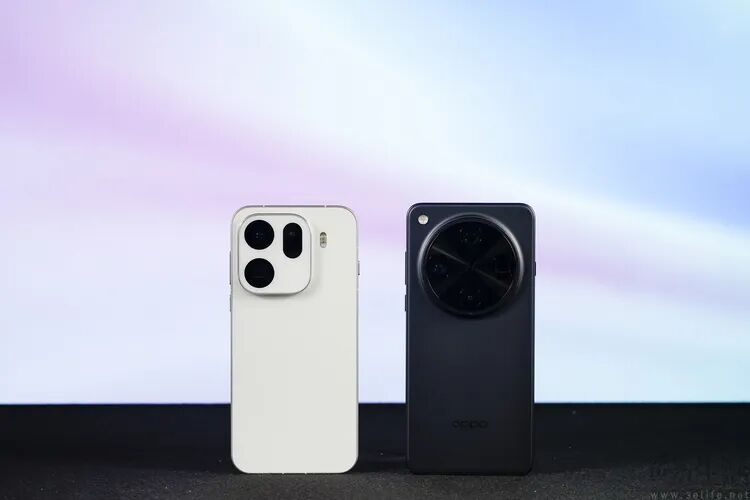
For example, the cost of various AI services in mobile phones is actually not low, so it seems quite normal to set up a "membership" for this purpose. In addition, in many performance - oriented and game - oriented models, you can sometimes see the built - in "game network acceleration" function. Of course, on flagship products, they usually offer several years of "time - limited free" service, but on relatively cheaper models, users have to pay for it themselves.

Finally, in addition to R & D costs and software - service revenues, in fact, long - term system updates for smartphones also mean potential later - stage human and material costs. This means that when some flagship phones can get a commitment of system updates for six or seven years, but "sub - flagships" only have three or four years of system - update service, it may not necessarily be due to differences in "hardware capabilities", but more likely that smartphone manufacturers simply want to save some long - term maintenance costs on "sub - flagships" and make a little more profit in a disguised form.
This article is from the WeChat official account "San Yi Life" (ID: IT - 3eLife), written by San Yi Jun, and is published by 36Kr with authorization.