French yogurt has been acquired by IDG.
Today (December 1st), Tiantu Investment issued an announcement stating that it intends to sell all the equity of Unimilk Co., Ltd. held by its subsidiary to Kunshan Nuoyuan Ruiyuan Management Consulting Co., Ltd. The final outcome will be subject to the actual signed contract.
The total value of this transaction is 1.8 billion RMB. According to public information queries by the investment community, the shareholder behind Kunshan Nuoyuan Ruiyuan Management Consulting Co., Ltd. is IDG Capital. Thus, Unimilk China has changed ownership again. In 2019, Tiantu Investment acquired Unimilk China and led it from losses to large - scale profitability. Now, IDG Capital has taken over.
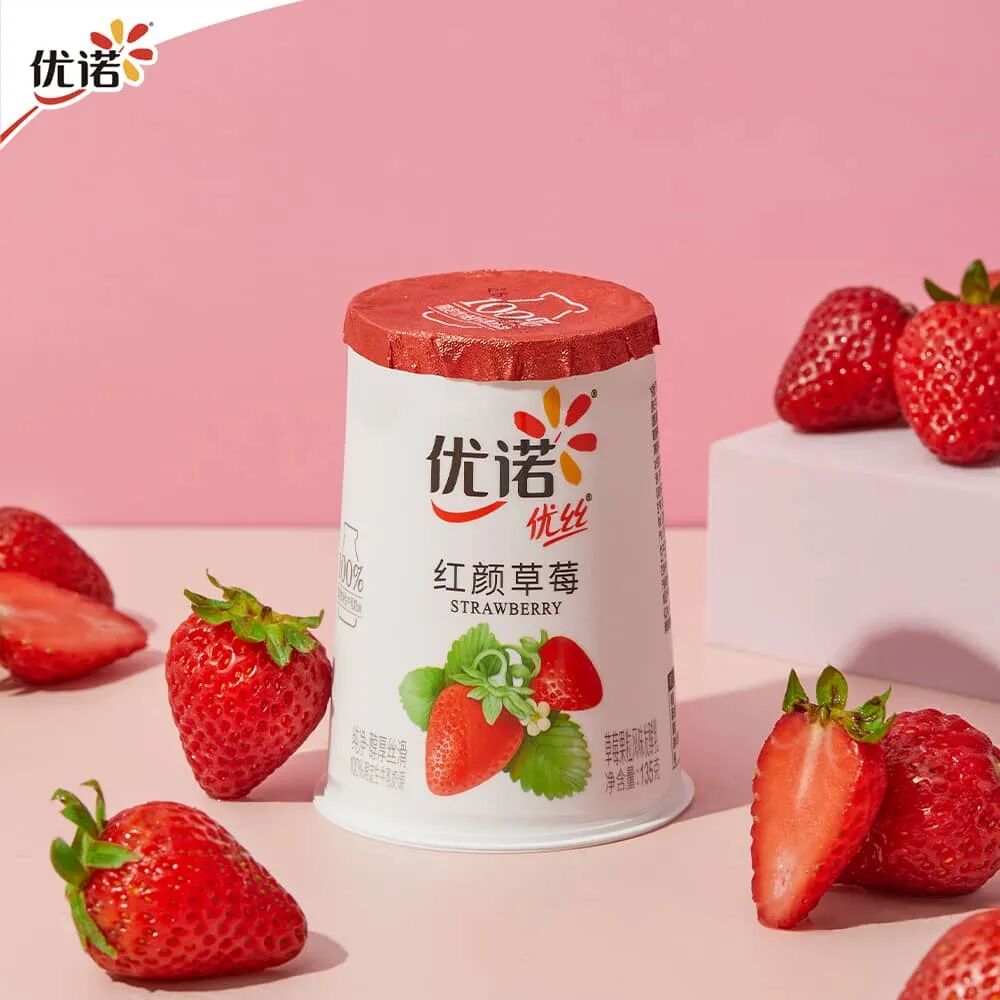
Tracing back, the Yoplait brand has a 60 - year history. Originating from France, it is now the world's second - largest yogurt brand and officially entered the Chinese mainland market in 2013. The iconic inverted - cup packaged yogurt and the world's first cup of fruit yogurt were both created by Yoplait. In recent years, it has been very popular in the Chinese market and is regarded as a "top - tier" brand in the yogurt industry.
When multinational brands sell their Chinese operations to funds with rich operational experience and resources, IDG Capital's acquisition of Unimilk China has undoubtedly become the latest iconic case.
IDG Just Bought It for 1.8 Billion
The investment community learned that the negotiation for this transaction lasted nearly a year. During this period, several funds participated in the competition, but IDG Capital had been tracking the deal for a longer time, and the two parties had already established a good foundation of trust and cooperation. Finally, IDG Capital, together with the company's management, acquired all the equity of Unimilk China at a transaction price of 1.8 billion RMB and became the controlling shareholder.
After the completion of the transaction, IDG Capital will retain the original management team of Unimilk China to maintain and enhance the brand's competitiveness, and further help Unimilk China achieve regional expansion and continuous product innovation. At the same time, the company will also leverage IDG Capital's operational experience and efficient decision - making mechanism to improve the overall decision - making and execution efficiency on the basis of giving the management sufficient operational space.
Actually, about two years ago, IDG Capital began to contact the Unimilk China team. At that time, Unimilk's business in China was in a stage of rapid growth, but its profitability had not been fully realized.
During this period, the IDG team continuously observed and evaluated the sustainability of high - growth and whether the rise of rapidly growing emerging channels could bring systematic opportunities. They had a basic judgment: With the improvement of China's cold - chain technology and channels, the trend of fresher and healthier low - temperature dairy products replacing room - temperature white milk/yogurt is obvious.
After long - term contact and investigation, IDG Capital has full confidence in the management ability of the Unimilk team. The company's main management team members all come from the founding team of General Mills in China. They have successfully created well - known brands such as Wanchai Ferry, Häagen - Dazs, and Unimilk, and established a complete professional management system. They not only helped Unimilk gain a foothold in the Yangtze River Delta but also enabled the brand to successfully enter the high - growth mainstream sales channels. In addition, Unimilk has continuously invested in brand building in the Chinese market, has good operational advantages, has billions of RMB in sales revenue, and is experiencing continuous high - speed growth with stable profits.
One of the common understandings behind IDG Capital's handling of this transaction is that as international brands split their Chinese operations and form an operational structure in the Chinese market, this is undoubtedly a rare window for brand value re - evaluation.
In the public's impression, IDG Capital has always heavily invested in the consumer sector. It is not only good at supporting start - up companies from scratch but also has the ability to promote established brands to a broader market. This is evidenced by its past investment cases. On the one hand, IDG has discovered and accompanied brands such as Heytea, Insta360, SHEIN, Tuozhu, Guanxia, and Anker Innovations from their early stages to large - scale development. On the other hand, it has maintained long - term attention to companies with long - term value such as Luckin Coffee and seized the opportunity to invest. At the same time, it has continuously helped mature international brands such as Moncler, Gentle Monster, and Acne Studios to further expand their market boundaries.
By taking over Unimilk China this time, IDG Capital will mobilize resources to support the brand's expansion into South and North China, accelerating its further layout in the Chinese market. In addition, IDG Capital also plans to assist the brand in expanding diversified sales channels. At the same time, Unimilk is also expected to explore cooperation opportunities in brand and supply chain with chain catering channels such as Luckin Coffee and Heytea through IDG Capital's investment ecosystem in the consumer sector. This means that Unimilk China will have greater room for imagination.
The Rise of a Yogurt Top - Tier Brand
The story of Yoplait began in France in the 1960s.
At that time, more than 100,000 dairy farmers from six regions in France formed a dairy farmers' alliance to break the limitations of decentralized management. In 1965, they officially established the brand name "Yoplait". Since then, inspired by the traditional European yogurt - fermenting clay pots, Yoplait launched the inverted - cup packaged yogurt, which has become the brand's iconic symbol.
The world's first cup of fruit yogurt was produced by Yoplait. In 1967, Yoplait incorporated real fruit particles into yogurt, redefining the form of modern fruit yogurt. Later, low - calorie yogurt, the Petits Filous series for children, and the Perle de Lait series for women were successively launched. While establishing a foothold through product innovation, Yoplait gradually expanded beyond France and finally grew into a dairy giant covering more than 70 countries and regions around the world.
Later, Yoplait was acquired by General Mills. General Mills was originally the franchisee of Yoplait in the United States since 1977. In 2011, their cooperation underwent a qualitative change. General Mills signed an exclusive agreement with Sodiaal, the then equity holder of Yoplait, and acquired 50% of Yoplait's global business at a price of $1.6 billion and obtained control of Yoplait's global trademarks.
Yoplait has a long - standing connection with China. As early as the 1990s, Yoplait briefly entered Shanghai, China. However, due to the nascent stage of the domestic yogurt market and the lack of public consumption awareness at that time, Yoplait eventually withdrew hastily.
After being controlled by General Mills, Yoplait quickly restarted its layout in China. At the end of 2013, it invested $120 million to lay the foundation for a Chinese factory in Kunshan, with a planned annual yogurt production capacity of 60,000 tons. In June 2015, Yoplait launched the Yosé series in China and officially entered the Chinese market. With its French slow - fermentation process and classic inverted - cup design, it quickly entered the mid - to high - end market segment and achieved the second - largest market share in Shanghai in just one year.
Ken Powell, the then CEO of General Mills, once said at an earnings meeting: "In the Chinese market, Yoplait is an excellent example of General Mills' long - term layout." However, the good times did not last long. Due to the inevitable constraints of cross - border operations, since the second half of 2017, Yoplait's yogurt business in China has continuously faced challenges.
In March 2019, General Mills sold its entire Chinese business of Yoplait to Tiantu Investment. Under Tiantu's "localization activation" plan, Yoplait gradually achieved large - scale profitability.
Now, the baton has been passed to IDG Capital.
The Most Exciting Scene This Year
IDG Capital's presence in mergers and acquisitions is not unfamiliar.
Remember this autumn, IDG Capital completed the acquisition of a majority stake in the Danish innovative confectionery brand Lakrids By Bülow and plans to promote the brand's development in the global market, including the Chinese market.
Looking back, IDG Capital's layout in the M&A field mainly focuses on two types of opportunities. Firstly, it seizes opportunities for high - quality investments and controlling - stake acquisitions globally. Secondly, through the MBO (Management Buy - Out) model in cooperation with management, it collaborates with professional management teams with rich experience to jointly promote the long - term development of enterprises.
IDG Capital's acquisition of control of Unimilk China is another key move in its systematic layout of brand investment portfolios and promotion of mature brands into a new stage of development.
Wu Fan, Managing Director and Head of Consumer Investment at IDG Capital, once shared that multinational companies' spin - off of their Chinese operations is mainly to cope with the intensifying competition in the Chinese market and continuous channel changes, and it is also an inevitable trend.
International consumer brands often have good brand reputations and strict production standards. However, due to the lack of a localized decision - making mechanism, they lag behind in responding to product innovation and channel changes. By divesting this part of the market business and spinning it off to investment institutions with rich operational experience and resources, establishing a more localized and flexible board governance system, and empowering local management through incentive mechanisms such as ESOP, the company's competitiveness can be effectively improved, which is a great opportunity for such institutions.
Following this trend, we have witnessed a series of transactions this year.
The most sensational one is Starbucks China. On November 4th, Starbucks announced a strategic cooperation with Boyu Capital, selling 60% of the controlling stake in its Chinese business for a total price of $4 billion. The two parties will jointly establish a new joint - venture company, and Starbucks will retain 40% of the shares and continue to hold the brand and intellectual property rights.
There is also Häagen - Dazs China. Earlier, the investment community confirmed from a well - known PE institution that General Mills is planning to sell its Chinese business of Häagen - Dazs. Later, more information emerged that the scope of this sale includes all Häagen - Dazs store operations in the Chinese mainland, with a potential transaction value of approximately $500 million - $800 million. Similarly, several well - known institutions participated in the bidding.
The choices of these consumer brands are a microcosm. They are all selling their assets at this time, and this trend reflects the intensifying competition in the Chinese and even global markets. At the trough of the cycle, these strategic adjustments are, to some extent, responses to the crisis.
In this way, controlling the Chinese operations of multinational companies has become the most prominent feature in this wave of consumer M&A.
The tides rise and fall, and the cycles change. We are witnessing the birth of more big deals.
This article is from the WeChat official account "Investment Community" (ID: pedaily2012). Author: Yang Jiyun, Zhou Jiali. Republished by 36Kr with permission.