Alibaba and ByteDance have entered the arena one after another. Is this sector about to witness a significant change?
Alibaba released AI glasses, and ByteDance joined hands with ZTE to launch an AI phone. Tech giants are all betting on hardware, aiming to seize the next - generation human - machine interaction entry point.
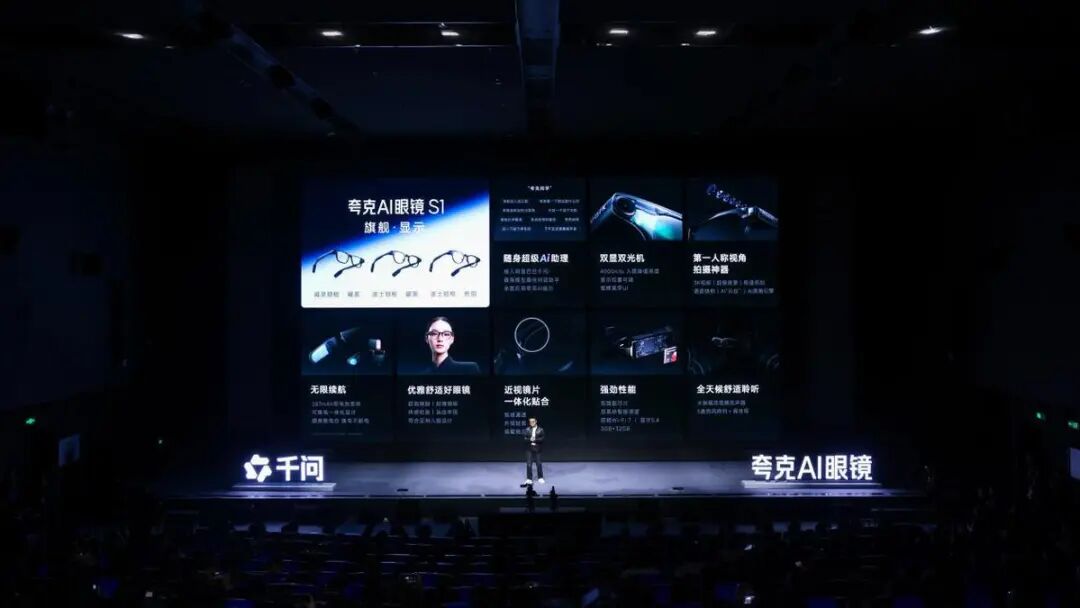
"AI glasses are the next - generation personal mobile entry point and the center of the human - machine interaction revolution." At the launch event of Quark AI glasses on November 27th, Song Gang, the person in charge of Alibaba's intelligent terminal business, told the media including Phoenix Tech when defining the strategic significance of AI hardware.
Three days later, the AI phone jointly developed by ByteDance and ZTE was officially unveiled - the first engineering prototype equipped with the technical preview version of Doubao Mobile Assistant, the nubia M153, started limited - edition sales. It is equipped with the Snapdragon 8 Extreme Edition processor, a 6.78 - inch screen, 16GB of RAM + 512GB of ROM, and is priced at 3,499 yuan.
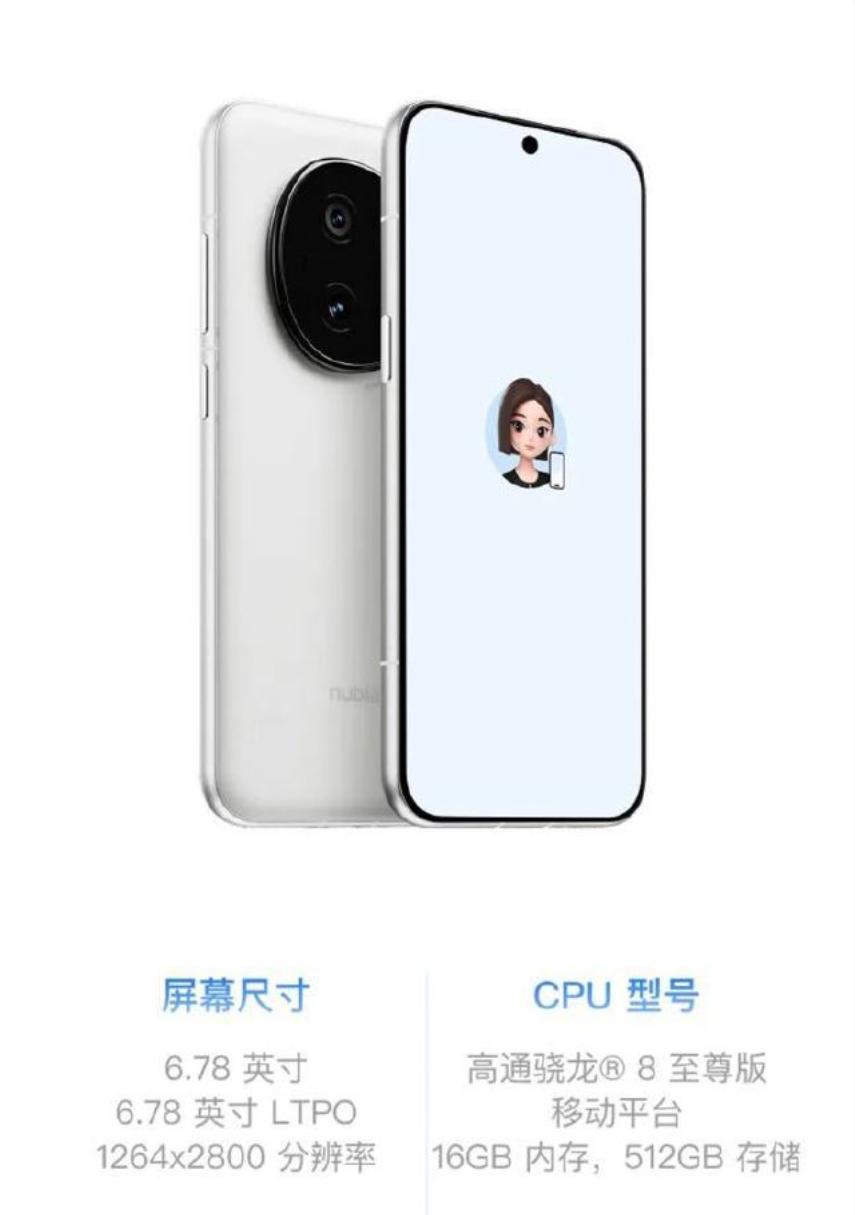
Phoenix Tech learned that the cooperation product is mainly to test the new interaction logic between the capabilities of the Doubao large - model and the system authorization of the manufacturer.
These two almost simultaneous events represent the common choice of Alibaba and ByteDance in the AI era, moving from the competition of cloud - based models to the implementation of hardware.
01
AI Giants Rush into Hardware
In 2025, the competitive landscape of the technology industry is undergoing profound changes. As the update and iteration of large - models slow down, the focus of AI competition is shifting from the quality of models to user reach.
For large companies, when the model capabilities gradually converge, the one who can get closer to users will gain the initiative in the ecosystem.
Hardware terminals are undoubtedly the products closest to users.
In May, OpenAI acquired the hardware company IO founded by former Apple chief design officer Ive for nearly $6.5 billion. Altman said when previewing new product information recently, "By integrating intelligent and reliable AI in the long - term, it can deeply understand users' life scenarios, take over tasks for a long time, filter out irrelevant information and present information at the right time. This full - scenario perception ability cannot be achieved by existing AI technologies or existing devices."
This time, the joint efforts of Alibaba and ByteDance also reflect the further steps of Chinese tech giants in seizing the AI entry - point rights.
Song Gang told us at the Quark AI glasses communication meeting: "It is the device most likely to challenge mobile phones in the future. In Alibaba's strategy, it plays a very important role."
More importantly, "All the data for large - model training depends on the business data generated at the edge. Many models collect data from scenarios where mobile phones, tablets, and computers are used and then serve these scenarios," said Jin Xian, the person in charge of Alibaba's intelligent terminal products.
ByteDance has chosen another path. Phoenix Tech learned that the engineering prototype equipped with the technical preview version of Doubao Mobile Assistant is a product that needs to be jointly developed with mobile phone manufacturers. "Doubao is currently in talks with multiple mobile phone manufacturers about assistant cooperation and has no plan to develop its own mobile phones. More progress will be announced later."
Currently, in addition to Alibaba and ByteDance, Xiaomi and Li Auto, which have also invested heavily in large - language models, have also entered the field of AI glasses.
According to 36Kr, Google launched two AI glasses projects at the end of last year. Currently, both projects have entered the POC (small - batch trial production) stage and are intensively promoting model selection and ID design. The earliest release time may be Q4 of 2026.
The collective investment of large companies has reignited the hardware track represented by AI glasses and AI phones.
Right after the official announcement of Doubao today, ZTE's stock price continued to rise after the opening and finally hit the daily limit, with the latest stock price at 46.3 yuan per share.
02
Two Different Paths
In exploring the form of AI hardware, Internet giants are following different paths in parallel.
Alibaba regards AI glasses as "the next - generation personal mobile entry point."
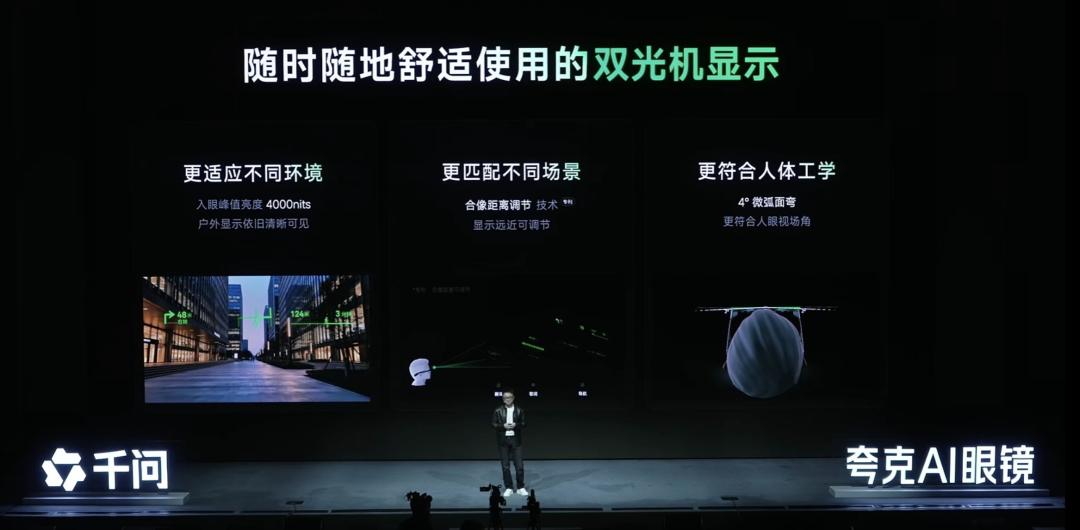
"I don't know how you feel after watching today's press conference. It's definitely not a small investment. No company has ever launched six models at once. I think Alibaba has a clear idea about this." Alibaba's heavy investment in AI glasses also means that it has entrusted the important task of ecosystem competition to AI glasses.
After reviewing the product information, an industry chain practitioner told Phoenix Tech that the product features a distinct pragmatist design, with functionality taking precedence. That is, it serves interaction in all aspects. "For example, compared with Rayban Meta, Ray - Ban won't compromise on design, forcing Meta to find engineering solutions. These are two different approaches."
Song Gang believes that "glasses will definitely be the main player." Especially with the arrival of the Agent trend, in the past, when using an app, users had to go through the processes of downloading, opening, searching, and using. But with glasses, it can all be done with just one sentence. "In fact, it's beneficial for the scenarios of glasses. I think this is the main direction of technological development." Song Gang believes that glasses may be equipped with more sensors in the future, enabling a deeper understanding of people and the environment.
In addition, Jin Xian also admitted that currently, glasses cannot immediately replace mobile phones but will gradually penetrate into mobile - phone scenarios. "The average daily usage time of mobile phones has decreased from 6 hours to 5 hours. Where did that extra hour go? It went to your glasses." In terms of significance, currently, Alibaba's AI capabilities are more developed in the cloud, and it is now using edge - side engineering capabilities to improve AI performance at the edge.
ByteDance's hardware layout is more diversified, and it has made multiple acquisitions. In 2018, ByteDance acquired the Nut Pro mobile - phone team of Smartisan Technology and partial patent usage rights. In 2021, ByteDance acquired the VR manufacturer PICO for billions of yuan and made adjustments in 2023. The latest news is that PICO will launch a new - generation product in 2026, which will be equipped with a self - developed headset - specific chip for the first time.
Entering the AI era, ByteDance's enthusiasm for hardware has been further boosted. In early 2024, ByteDance acquired the headphone manufacturer Oladance and launched AI headphones that year.
Currently, all these relevant AI hardware teams within ByteDance are unified under the Ocean department, headed by Liu Chengcheng, the founder of 36Kr, and report to Zhu Jun, the head of Flow, indicating a high priority.
It can be seen that Doubao is also accelerating its lightweight cooperation with terminal products this year. First, it has been intensively integrated into cars. Recently, Doubao has reached cooperation agreements with Seres and Mercedes - Benz.
From the AI phone prototype launched on December 1st, it can be seen that Doubao intends to place the important task of integrating large - models, super - apps, and terminals on the AI phone. This also means heavier investment and deeper cooperation with its own large - model.
Currently, in the field of AI applications, Doubao and Quark are both in the first echelon. The AI product list shows that in October this year, the MAU of both Doubao and Quark exceeded 150 million. DeepSeek and Yuanbao, with MAUs of 73 million and 72 million respectively, are in the second echelon.
This article is from the WeChat official account "Phoenix Tech", author: Dale, editor: Dong Yuqing. Republished by 36Kr with permission.