Musk: Enter the "post-work era" within 20 years, and energy will replace money as the new "hard currency"
Key points:
In the next 10 to 15 years, work will become an "optional" hobby.
In the future, "energy" will replace currency as the ultimate measure of value.
AI must adhere to "truth, beauty, and curiosity"; otherwise, it may "go crazy."
Limited by physical laws, Starlink will never be able to replace urban 5G networks.
The value of universities lies in social interaction, not in learning skills necessary for the future.
Only invest in companies and teams that can create "useful products and services."
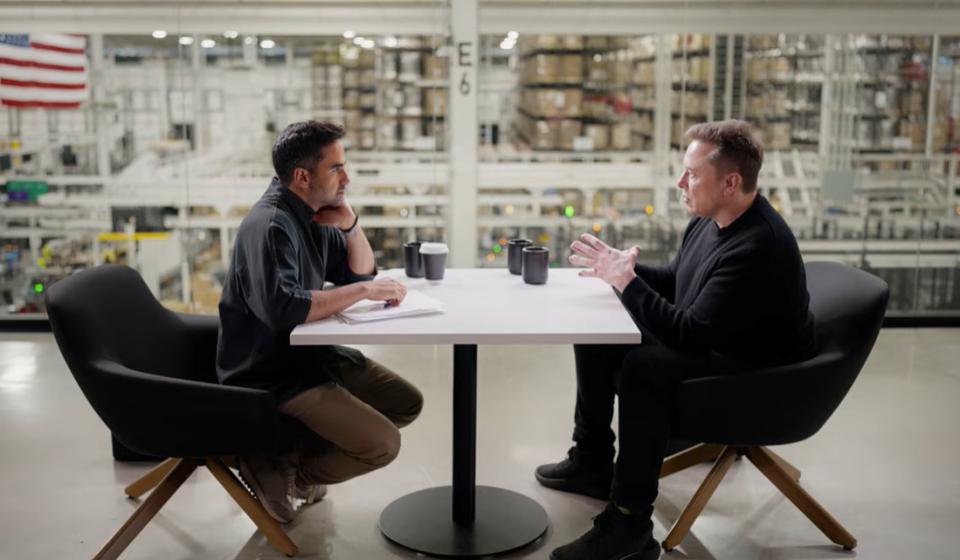
Recently, when guesting on the popular podcast "People by WTF" founded by Indian entrepreneur Nikhil Kamath, Elon Musk gave the latest prediction about the future:
The modern society we are familiar with is about to undergo a complete upheaval: work will become a thing of the past, currency will be replaced by energy, and if AI is forced to lie, it may even "go crazy."
The following are the highlights of Musk's latest exclusive interview:
01 Betting on the Future: AI and Robotics Will Create Most of the Socio - economic Value
Question: As a stock investor, how do you predict the future market trends?
Musk: I really can't predict short - term fluctuations. But in the long run, judgments can be made based on several core principles:
First, evaluate the company's products and services: Do you recognize its current value and future development plans? If a company can produce excellent products now and its development blueprint shows that it is likely to continue to do so in the future, this is a positive sign.
Second, examine its team: Do you believe that this is a team with both talent and diligence, and that they still have the motivation to innovate continuously in the future?
Ultimately, a company is essentially a collective of people formed to create products and services. Therefore, the key to investment lies in answering: "Are these products and services good enough? Is there a possibility of continuous improvement in the future?" If the answer is yes, then this is a company worth investing in. You should buy its stocks and avoid over - focusing on the inevitable daily price fluctuations. This is the correct way to invest in stocks in the long term.
Question: If you were a pure stock investor and bought a company unrelated to you at the current valuation, only considering capital profit (rather than altruism), which company would you choose?
Musk: In fact, I never invest in stocks or build investment portfolios. All my energy is focused on physical creation. But if I have to choose, I think the fields of artificial intelligence and robotics have the most value potential.
In this field, Google has laid the foundation for creating huge AI value; the value of NVIDIA has also been significantly reflected in the market. It can be said that companies focusing on AI, robotics, and space flight will create almost most of the socio - economic value in the future. The scale of goods and services they produce will dwarf all other industries.
02 Space Internet Will Never Replace 5G
Question: Among all the things you are building, what currently excites you the most?
Musk: I think the most exciting thing is the increasingly obvious synergy among SpaceX, Tesla, and xAI. In essence, our future is likely to be supported by an AI satellite network powered by solar energy, which requires a deep integration of Tesla's expertise in energy, SpaceX's in aerospace, and xAI's in AI. Over time, the boundaries between the businesses of these companies are becoming blurred.
Tesla has made significant progress in electric vehicles, battery packs, solar energy, and, most importantly, real - world artificial intelligence (especially autonomous driving). We plan to start large - scale production of the Optimus humanoid robot next summer, and it is expected to become everyone's capable assistant.
SpaceX's Starlink project is progressing smoothly and currently provides low - cost, reliable Internet services in 150 countries. We very much hope to expand the service to India in the future.
Question: Can you explain the technical principle of Starlink? It is said that its working mode may be different in densely populated areas and sparsely populated areas.
Musk: The core of the Starlink system consists of thousands of satellites orbiting in a low - Earth orbit about 550 kilometers above the Earth. They fly around the Earth at extremely high speeds, thus achieving a much lower communication delay than traditional high - orbit satellites.
Its technical advantages are mainly reflected in two aspects:
First, global coverage and high resilience: The satellites are interconnected through laser links, forming an airborne laser communication network. This makes Starlink independent of fragile ground optical cables. For example, in the accident where the undersea cable in the Red Sea was cut, the Starlink service was not affected at all. Therefore, it can become a crucial emergency communication guarantee when ground infrastructure is damaged by natural disasters (such as floods and earthquakes). In these crisis moments, we usually open the service for free and refuse to set up a "paywall."
Second, precise complementarity to the ground network: The Starlink system forms a perfect complementary relationship with the existing telecommunications network. In sparsely populated rural areas, the cost - effectiveness of laying optical cables or building cellular base stations is extremely low, while the beam of a single satellite can cover a vast area, thus providing an efficient solution for these underserved groups.
In densely populated urban areas, a dense ground cellular network is more efficient. Therefore, Starlink is not intended to replace but strongly complements the existing ground systems to jointly build a more resilient global communication network.
Question: You mentioned that Starlink is currently more suitable for rural areas. Can future technology break through physical limitations and make it efficient in densely populated cities, thus competing with local network providers?
Musk: Unfortunately, the laws of physics determine that this is impossible. The core of the problem lies in the distance. Our satellite orbit is at an altitude of 550 kilometers. Even if it can be reduced to a minimum of about 350 kilometers in the future, this distance is still very far.
You can imagine it as a flashlight beam shining down from hundreds of kilometers away. No matter how much we optimize, we cannot compete with a cellular tower only one kilometer away in terms of signal strength. Therefore, it is physically impossible to use Starlink to serve an entire dense city. It can at most cover about 1% - 2% of the users in the city, such as those areas lacking ground network services due to various random reasons (such as being in a dead - end alley).
So, the positioning of Starlink is very clear: it is not intended to compete with the ground network in cities but serves as a crucial supplement, specifically to solve the problems of difficult, expensive, or poor - quality Internet access in rural and remote areas.
03 Countdown to the End of Work
Question: As AI improves productivity, will people in the future be more inclined to live in cities? But cities are often accompanied by pollution and may not provide the same quality of life as the countryside.
Musk: This will ultimately depend on personal choice. Some people like crowds, while others don't. But I think the key change in the future is that people won't have to live in cities for work. Because my prediction is that work will be optional in the future.
Question: We have observed a trend of reducing the number of working days from five to four or even three. If people only need to work half a week, how will society change? What will they do with the other half of their time?
Musk: I think the ultimate stage is not to reduce the weekly working hours, but that work itself will become an option. This future is not far from us. I predict that within less than 20 years, or even as short as 10 to 15 years, we will reach this stage.
By then, the development of AI and robotics will make social productivity extremely high, so that people don't need to work for a living. Work will be more like a personal hobby, just like some people choose to grow their own vegetables. The process is more difficult but can bring fun. However, from the perspective of meeting basic needs, work will become a voluntary act rather than a necessity for survival.
Question: If humans are naturally competitive, how will competition manifest when universal high - income is achieved and everyone is "sufficiently wealthy"?
Musk: At that time, competition will shift to the comparison of relative status. Because "enough" is never enough, people will always seek to surpass others at a relative level.
Question: Are we moving towards a future like the "technological singularity," a stage as unpredictable as the event horizon of a black hole?
Musk: I'm sure that if AI and robotics technology continue to develop at the current speed, work will become an option in the future, and people will be able to obtain any imaginable goods and services. It will be an era of "fulfilling every wish."
However, there will eventually be a critical point: when AI has met all the needs that humans can think of, its development will reach saturation. At that time, AI and robots will start to operate for their own rather than human goals, because the possibility of pleasing humans has been exhausted. After all, human physical needs and enjoyment abilities have limits.
The future picture will be: first, achieve an era of abundance where every wish is fulfilled, and finally transition to a new paradigm of AI development.
04 The Ultimate Form of Currency
Question: What do you think the future currency will be?
Musk: In the long run, the concept of currency itself may disappear. When AI and robotics technology develop to the point where they can meet everyone's material needs, currency, as a database for labor distribution, will gradually lose its meaning. In the "Culture" series of novels written by Iain Banks, there is no currency in that future world of extreme material abundance. When any goods and services can be freely obtained, the basis for the existence of currency will no longer exist.
If there is an ultimate equivalent, it will be energy. It cannot be created out of thin air by legislation but needs to be actually produced and converted. That's why I once proposed that the essence of Bitcoin is energy. The progress of civilization actually depends on the control and utilization efficiency of energy, which corresponds to the Kardashev scale: from planetary energy (Type I) to stellar energy (Type II), and then to galactic energy (Type III).
Therefore, in the future, we may no longer have traditional currency, but use the ability to obtain and convert energy as the actual measure of value. When space is filled with AI satellites powered by solar energy, nearly infinite clean energy will become a reality. At that time, energy will become an abundant and free resource - and this is a sign of civilization moving towards a higher level.
Question: From this perspective, can energy not be a real means of storing wealth? Currently, the wealth we accumulate is essentially numbers in a database, used to motivate human behavior. Without human society, wealth accumulation loses its meaning. Does this mean that when a self - sufficient energy cycle system is formed, the traditional concept of wealth will be subverted?
Musk: That's right. When AI and robots can independently complete chip manufacturing, solar panel production, resource extraction, and achieve system self - renewal, we will establish a complete energy and material cycle. Once this closed - loop is formed, the traditional monetary system loses its basis for existence.
In the future picture I described, the concept of the nation itself will become obsolete. This is not due to personal preference but is based on the inevitable trend of technological development. Whether we actively promote it or not, as long as civilization continues to progress, large - scale AI and robotics technology will surely lead us to this future. At that time, energy will become the core resource, and the traditional national boundaries and monetary systems will naturally dissolve.
05 What's the Probability That We Live in the Real World?
Question: You once proposed that we may be living in a simulated world. If you were a character in "The Matrix," who would you choose to be?
Musk: The range of choices is actually limited. I hope not to be Agent Smith. The character of Neo is quite charming, and the design of the Architect is also very interesting. Sometimes I feel that I'm more like an anomaly in the Matrix, which may be closer to Neo's position.
Question: Do you really believe that we are in a simulated world?
Musk: I think this should be thought about from a probabilistic rather than a deterministic perspective. Observe the development trajectory of video games: it only took fifty years from the simple "Pong" to today's virtual worlds with photo - realistic graphics and supporting millions of people to play online simultaneously.
Following this trend, future games will be indistinguishable from reality, and the intelligent characters in them will also have better conversation abilities than humans. If civilization continues to develop, there will surely be countless such simulated worlds in the future.
So, what's the probability that we are in the most basic original reality (base reality)? From this perspective, the possibility that we are living in a simulation does exist.
Question: If we are indeed in a simulation, what inspiration do you think this setting can bring to us as "Neo"?
Musk: I have two inferences:
First, the real world outside the simulation may actually be more boring. Just as we screen interesting simulation scenarios in reality - for example, SpaceX skips regular rocket flight simulations and focuses on extreme edge cases; Tesla's autonomous driving tests also focus on complex and dangerous scenarios. We always keep the most valuable simulations.
Second, there is a nested hierarchy of simulations. From a Darwinian perspective, the simulations most likely to be retained and continued are precisely the most interesting versions. This means that the most interesting development paths are often the most likely to become reality. And the "upper - level observers" simulating our world may themselves be in an even higher - level simulation - simulations may very well have multiple levels.
06 Universities Will Become "Advanced Social Clubs"
Question: How do you view the future of marriage and family? The global fertility rate has been continuously declining. What consequences will this lead to?
Musk: I'm really worried about the trend of population decline. If this trend continues, humanity will face an existential crisis. From a philosophical perspective, each individual carries a unique consciousness. Just as single - celled organisms evolved into complex organisms with 30 trillion cells, the collective consciousness of humanity is far more extensive than that of bacteria. Population growth means the expansion of collective consciousness, which can enhance our ability to understand the essence of the universe. Conversely, population shrinkage will lead to a reduction in the total amount of consciousness. If we stop reproducing, civilization will eventually come to an end.
Question: Should children still go to university?
Musk: If it's for the social experience, universities do provide an environment for growing up with peers, and this reason still holds. But from the perspective of practical skills, in the upcoming post - work era, the necessity of traditional education is decreasing. AI and robotics technology are changing everything at the speed of a supersonic tsunami, and this will be the most thorough change we've ever seen.
If you choose to go to university, I suggest learning knowledge in various fields widely. But it must be recognized that a university education is no longer a necessary choice. Even though my children are aware that AI may make the skills they learn obsolete, they still choose to go to university. This is more of a personal pursuit of a complete educational experience. In the era of technological disruption, we need to rethink the essential value of education.
07 Forcing AI to Lie Is Creating a "Crazy AI"
Question: You always seem to discuss AI from a non - dystopian perspective. But are you also worried about the development direction of AI?
Musk: Any powerful technology comes with potential risks. We've seen too many literary and artistic works about AI dystopia, which shows that a positive future is not inevitable. We need to actively ensure its positive development.
In my opinion, the key is to make