Starting next year, your brakes will undergo an epic upgrade.
Guys who haven't bought a car yet are in luck. Starting next year, the braking system might undergo an epic upgrade.
That's because the national standard has finally given the green light to the "brake-by-wire" technology.
Do you still remember that for a while, many car manufacturers were vigorously promoting the by-wire chassis?
Such as BYD's Yun Nian, Huawei's Tu Ling, IM Motors' Ling Xi, Li Auto's Magic Carpet, etc. There are so many names that I can hardly list them all. Anyway, they stuffed technologies like electronically controlled shock absorbers, electronically controlled air suspension, and rear-wheel steering into cars.
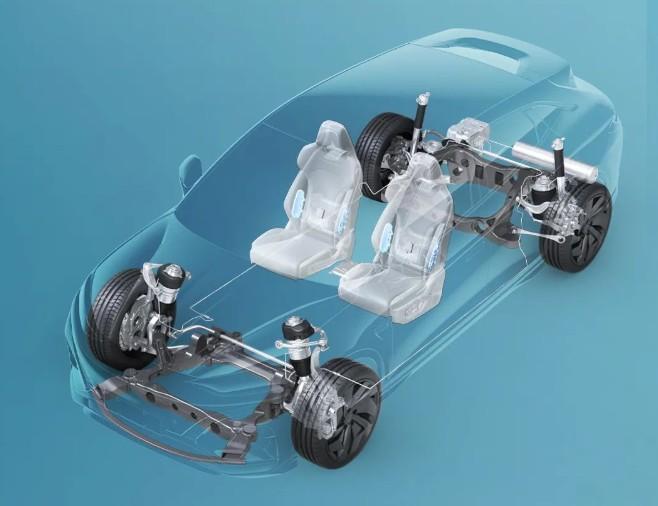
However, there has been little movement in the braking system.
Whether it's the NIO ET9 with a full by-wire chassis or the Cybertruck with all-wheel by-wire steering, they all use similar technology, namely EHB (Electro-Hydraulic Braking).
Simply put, EHB uses a bunch of electronic components to separate your brake pedal from the brake calipers. But when you actually step on the brake, you still need to transmit the electrical signal to the hydraulic system. The hydraulic pump squeezes the liquid to apply pressure to the brake pads.
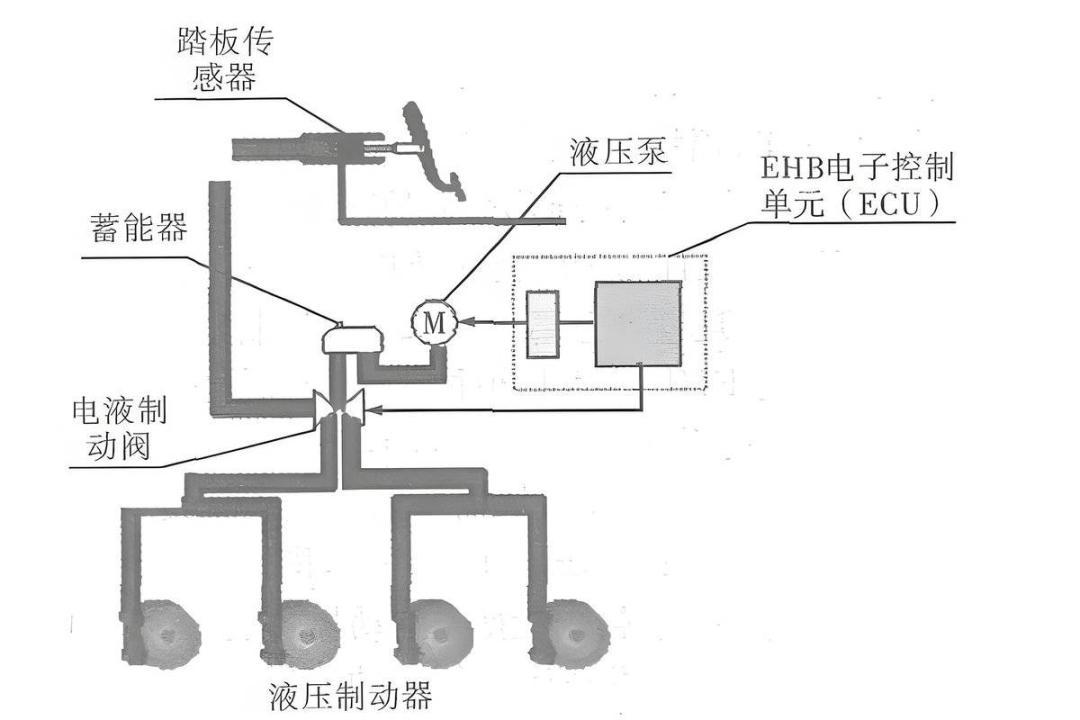
Although EHB is also a form of by-wire technology, it only does half the job. As the saying goes, if you do a job halfway, ____ is half as short...
Let's take an example. Retaining the hydraulic system in by-wire technology is like buying a wireless charger to save a charging cable, but the charger still needs to be charged with a cable. It's really annoying.
So many manufacturers have started to frantically research the real full-blooded brake-by-wire EMB (Electro-Mechanical Braking). This technology eliminates the final hydraulic system and directly installs a motor on each wheel to control the calipers.
What are its advantages? I can summarize them in three words: Fast, Accurate, and Economical.
First of all, it's fast. As we all know, a car doesn't stop immediately when you step on the brake. It's not only because of inertia, but also because both humans and machines need a reaction time. If it's a traditional hydraulic braking system, the machine's response time is at least 300ms.
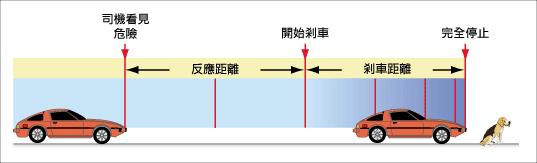
What does that mean? If you're driving at a speed of 100km/h, the braking distance caused by hardware delay could reach 8.3 meters. On the high-speed lane where every second counts, what if that's the difference between you and an accident?
Currently, after some high-end models use EHB, this time can be reduced to about 200ms, which means reducing the braking distance by 2.8 meters. But this is still not as good as the real king of brake-by-wire, EMB. It can further reduce the time from 200ms to less than 100ms, reducing the braking distance by another 2.8 meters.
That's amazing. You might think that you don't need to save that 100ms when you're driving.
But for intelligent driving, whether it's AEB or urban NOA, shortening the reaction time is actually quite necessary. For example, the basic requirement for L4 intelligent driving is a response time of less than 100ms. Without this hardware level, it's really hard to do a good job in intelligent driving.
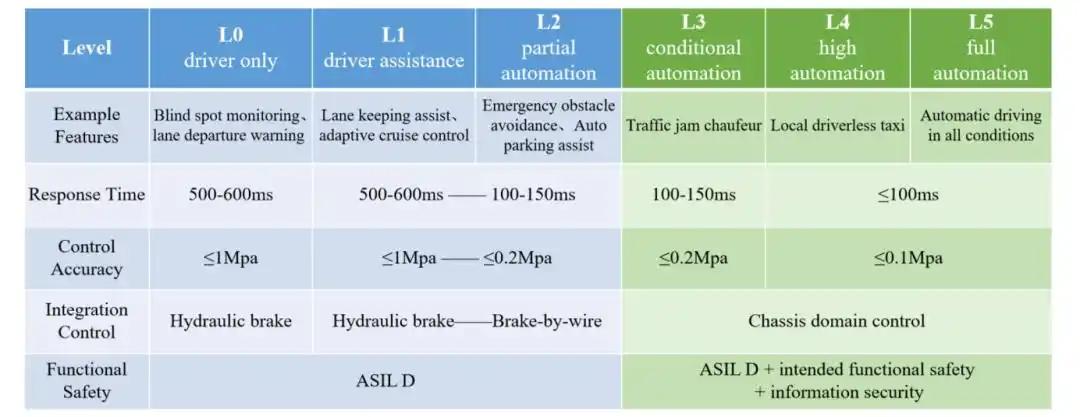
In addition, EMB also has the advantage of being accurate. Since electronic signals replace hydraulic pressure, it can control the braking force of the calipers with an accuracy of 0.1MPa, which is five times that of the hydraulic system.
More importantly, it can precisely control the braking of each wheel.
BYD's e-Quad system is no longer a novelty. Each of the four wheels has its own "mind".
But for the e-Quad system, it can only individually control the energy recovery of each wheel. When it comes to the brake pads, it's still the same as traditional models. If you want to control each wheel separately, you can only rely on functions like AEB and ESP to control the hydraulic pressure, which still lacks flexibility.
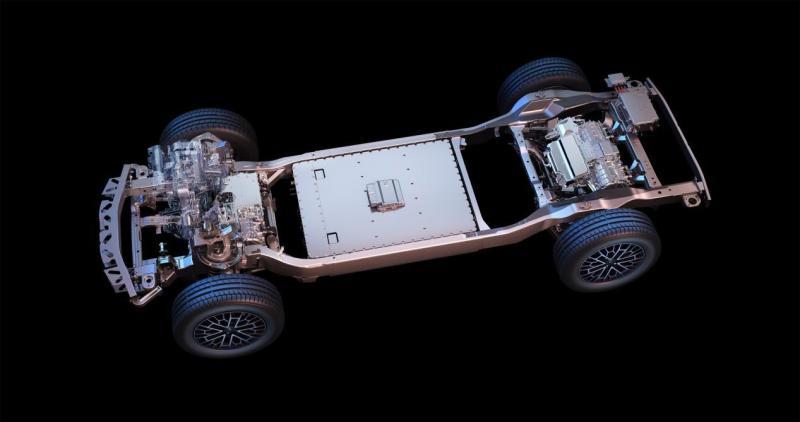
The advantage of EMB is that it installs a motor on each wheel, which allows for more flexible control. If you're driving on a slippery road, you can make individual tires perform a spot brake to prevent local slippage. It opens up a new world for chassis tuning.
Finally, EMB is also very economical.
The most important thing is that it eliminates an entire hydraulic system, which might weigh about 10kg. This is not only beneficial for fuel and electricity consumption but also saves space.
Moreover, electrical components have a longer lifespan and don't require maintenance costs. It has many advantages.
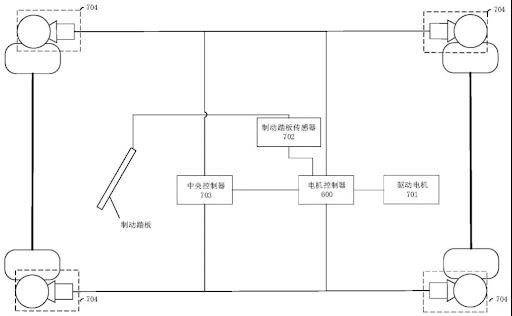
So far, EMB is more talked about than implemented in the industry.
Both Huawei's DriveONE and BYD's e-Platform 3.0 EVO claim to adopt the EMB system, but there has been no further news yet.
So EMB is really rare on the road. It was only installed on the Audi R8 e-tron before, and only on the rear wheels. Among domestic brands, the model equipped with EMB is the Dongfeng Fengxing Xinghai V9, a model you may have never even heard of.
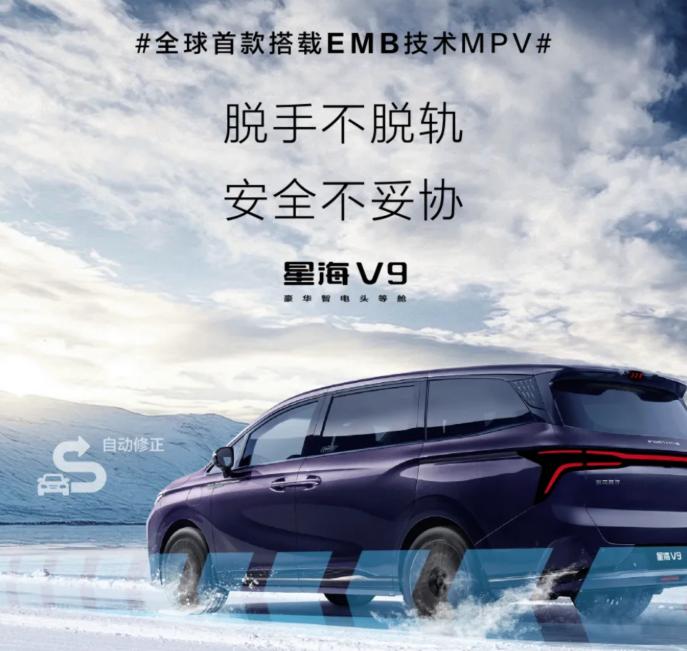
Why do few people implement it? First of all, people still have a lot of doubts about its safety.
Although the EMB technology has long been used in the military field, even the F-15 fighter jet uses it. But braking is the core of vehicle safety. By-wire technology definitely doesn't give us the same sense of security as mechanical systems.
For example, when you brake, the temperature of the brake pads is definitely very high. So if you put a motor next to it, will it lose its magnetism? In case of an accident, is it possible that the brakes might fail, just like a door that won't open?
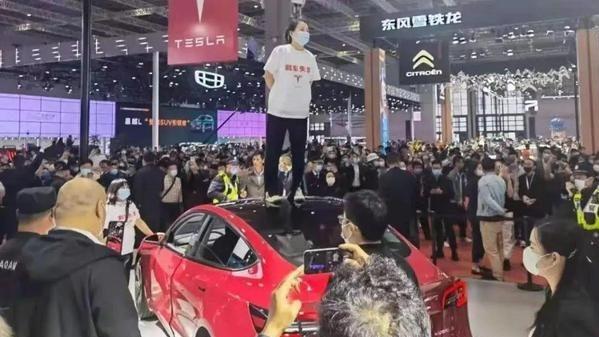
It might cause public relations crises like Tesla did back then. So for a long time, EMB was only secretly researched by companies, waiting for the national standard to be issued.
Now, the national standard GB 21670 - 2025 has finally arrived. It is indeed very strict about the safety of EMB (defined as ETBS in the standard).
For example, this system must have safety redundancy. Even if there is a failure, it should be able to quickly switch to a second system to ensure driving safety.
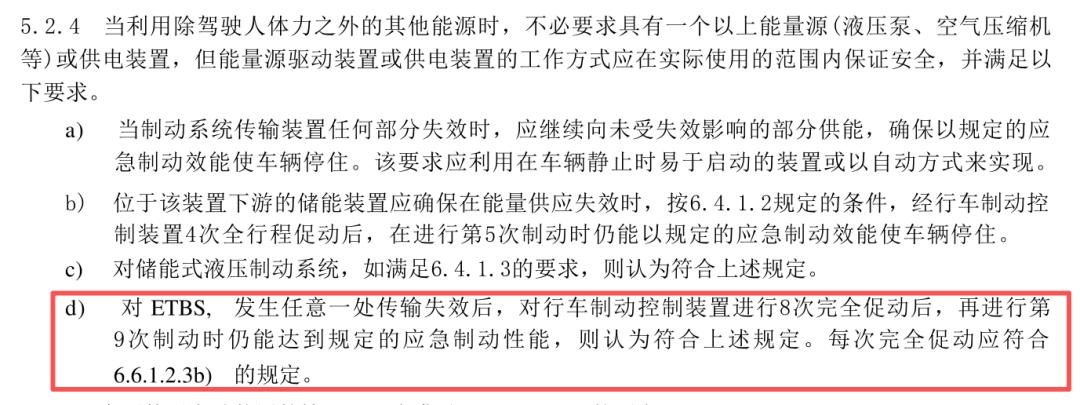
If the power supply fails, the backup power supply should be activated within 5 seconds. If the system fails, an audible and visual alarm must be issued within 60 seconds, etc.
However, when it comes to actual mass production in cars, this system might be 30% - 50% more expensive than EHB. Because if you want to implement EMB, you need to have a backup system. You need two batteries and two sets of motors to control the brakes, which immediately increases the cost.
However, just like how EHB gradually replaced traditional hydraulic braking systems, the path of EMB is definitely the right one. In the future, there might be a transitional period to gradually develop the industry.
When electric cars first emerged, many car manufacturers started with range - extended and hybrid models. EMB can also start halfway. For example, like the Audi R8 e - tron before, you can first install EMB on the rear wheels and keep EHB on the front wheels.
Although the market has not fully opened up yet, technologically, major manufacturers are actually ready. Now is the critical moment for the explosion of EMB technology.
Overseas, established suppliers like Bosch, Continental, and ZF are gearing up to seize the opportunity. It is expected that they will launch EMB products by the end of this year or next year.
Domestic suppliers are also not far behind. Currently, there are suppliers such as Jingxi Group, Coordinate System, Jiongyi Technology, and Mouhang Technology. The EMB on the Xinghai V9 is from Coordinate System.
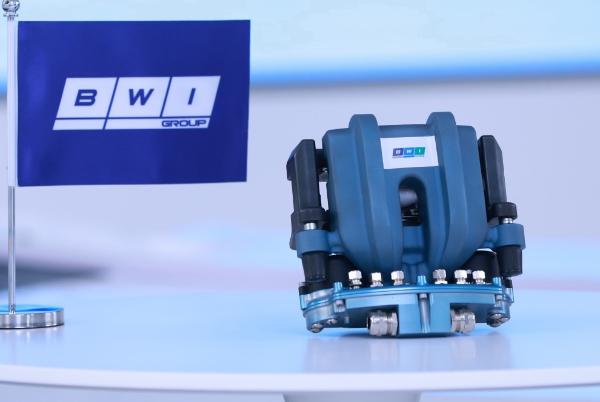
So in terms of this technology, both domestic and foreign manufacturers are at a similar level. EMB is also the key for us to catch up with and surpass Europe in the chassis field.
Meanwhile, Europe is also intensively formulating EMB regulations. For example, UNECE R13/R13H is about to be introduced. So we must also keep up. This new national standard is like a timely rain for the brake - by - wire field.
It is estimated that next year, major car manufacturers will start to follow the trend and launch new models. To be honest, I'm quite looking forward to this technology.
But finally, we have to say that EMB still has a long way to go before it becomes truly mature. If you want to try it, there's really no need to rush to place an order. You can wait and see with me.
Source of pictures and materials:
"Technical Requirements and Test Methods for Passenger Vehicle Braking Systems" GB 21670 - 2025
Automobile Driving Circle | Why is EMB the "ultimate solution" for automobile braking?
Behind the "braking revolution" of BYD, Xiaomi, and Tesla, brake - by - wire technology is quietly replacing traditional brake pads!
This article is from the WeChat official account "Cha Ping X.PIN". Author: TC, Editor: Neck Right Twist & Mian Xian. Republished by 36Kr with permission.