A female investor born after 1985 rolled up her sleeves to work on the front line, and the company she's involved with reached a valuation of 3 billion yuan in four years.
When "China Entrepreneur" met Liu Na, Xingchen New Energy had just completed a Series A financing of over 300 million yuan. The investors included CSC Financial Capital, Sichuan Green and Low - Carbon Industry Fund, Changshi Investment, and Shaoxing Xinghui Fund.
In the current "winter period" of capital in the new energy industry, Xingchen New Energy, founded four years ago, has made significant progress and become a big dark horse this year.
It is in the emerging technical branch of the energy storage industry - the flow battery for long - term energy storage. For a long time in the past, the most attention in the energy storage industry was undoubtedly on lithium - battery products, and flow batteries have only been taken seriously in recent years.
Liu Na is the founder of Xingchen New Energy, and this is also her first media interview. For a long time, the most typical label on Xingchen New Energy was a "luxurious shareholder lineup" - it received investments from PetroChina, SPIC Industry Fund, Minmetals Venture Capital, CRRC Capital, Guoke Capital, and Changzhou Industry Fund in the first round.
Most new energy entrepreneurs are good at telling technology startup stories, but her experience is somewhat "atypical". Before founding Xingchen New Energy, she was a "finance person". She founded a PE company before the age of 30, focusing on investment and mergers and acquisitions in hard - tech.
She embarked on the entrepreneurial path because the finance industry entered a cycle, and she didn't want to "lie flat". She chose the new energy industry because it is one of the few industries that still have continuous R & D investment, and the market scale is huge.
Source: Interviewee
She started almost from scratch and groped as she went. Her methodology is also unique in the new energy industry, still retaining a strong investor background - pricing resources. She is well - versed in the logic of accounting. From the selection of technical routes to factory management, everything is deduced from cost prices. In her eyes, all things are resources and need to be priced.
Liu Na's entrepreneurship is like "building blocks". "I'm very clear about the matter of 'cost - performance'. Figure out the core logic, and then do it myself with one - tenth of the money." In her opinion, the supply chain in the domestic market is very developed. As long as a company does well, there will be a bunch of imitators. So, one must keep innovating, either leading in technology, or in scale, or having cost advantages.
In the first two years of entrepreneurship, she didn't pursue the "big and comprehensive" in technology and product application scenarios. Instead, she focused on cost, starting from the first product.
In 2022, the unit cost of all - vanadium flow batteries was about 4 yuan/Wh (watt - hour). Liu Na proposed internally to "cut it in half". This far exceeded the industry's perception at that time. Although this price was a rough estimate, she took it as the core goal to break down.
Later, this goal was actually achieved. As a result, Xingchen New Energy's new goal is to "cut the cost in half" again. Chen Peiyi, the co - founder of the company, said: "In about three years, the cost of the all - vanadium flow battery energy storage system is expected to drop below 1.5 yuan/Wh. At this cost, its full - cycle cost per kilowatt - hour can basically be on par with that of lithium - battery energy storage systems." According to him, the ultimate goal of the team is below 1 yuan/Wh.
Liu Na admitted that she doesn't understand technology, but she believes that only by reducing the product price can the industrial scale be expanded.
She said she used a "stupid method" in entrepreneurship, investing enough time and money to train the team and learning from mistakes with money. "Before the financing, all the money burned was my own, estimated to be about 60 million yuan." But this actually allowed her to achieve results the fastest. In 2023, Xingchen New Energy built a project base with a total production capacity of 4GW in Changzhou. At the same time, other flow - battery companies had not reached the shipment stage yet.
The cost was also rapidly compressed. Liu Na announced price cuts every once in a while, so the whole industry regarded her as a "public enemy". During that period, she worked in all front - line positions. "I did everything myself. When no one believed in you, you had to explore the market and solicit customers on your own."
It was also in this process that she realized that this is a more asset - heavy market than expected and deduced, and the capital demand for scale - up is a "bottomless pit". In 2023, Liu Na contacted investors one after another, but she cared a lot about their understanding of the company. Therefore, most of the investors she finally chose were central state - owned enterprises and state - owned funds with a demand for the products.
She is a "tough person". In order to pursue the ultimate allocation of resources, the company moved three times in four years: from Beijing to Changsha, then to Changzhou, and finally to Zhejiang. She said the team is like a "nomadic people", always looking for the most fertile pastures.
Liu Na has a unique "mountain - climbing theory": It doesn't matter which path you choose. What matters is to reach the top of the mountain as fast as possible. Because only when standing at a high place will you face more resources and be able to turn around at the smallest cost.
In 2023, Xingchen New Energy rose rapidly due to the popularity of the energy storage track. As of now, the cumulative shipment volume of the all - vanadium flow battery energy storage system has reached 500MWh (megawatt - hour), with a revenue of nearly 1 billion yuan, and the shipment volume of lithium - iron phosphate energy storage has also exceeded the 4GWh (gigawatt - hour) mark.
She finally got a seat at the "card table". Just as the business was just getting on track, she immediately started to deploy the next growth curve - new energy operation services.
"Entrepreneurship is about falling into pits and climbing out. The core competitiveness is not avoiding pits, but being able to get up and run immediately after falling into a pit." Liu Na said.
The Fastest Path
Becoming a factory director by opening a factory was something Liu Na didn't expect herself.
Before 2019, she had some achievements in the financial circle. At that time, new energy was one of the tracks she focused on, but for the manufacturing industry, she was more like an "outsider".
The idea of starting a business emerged in 2019, which was recognized as an inflection point in the financial industry, and then it entered an adjustment period.
At that time, the general view in the industry was to "make fewer changes during the cycle". Liu Na also deeply felt the change in the environment and had anxiety, but the idea of "starting a career" in her heart never changed. "Are we of this generation going to 'lie flat' in the economic cycle? When the next cycle comes, I may be 60 years old."
She set a new direction for herself - to engage in the real economy. Even though she didn't have a specific entrepreneurial direction at that time, her past experience in the investment industry made her clear about one thing: Direction is the most important thing. It's better not to do small businesses, but the opportunities for big businesses are few.
Liu Na first turned her attention to the most familiar new energy track. At that time, the power - generation costs of wind and solar power were constantly decreasing. However, due to the intermittency and volatility of new - energy power generation, there was still the phenomenon of "abandoning solar and wind power" - a lot of generated electricity could not be effectively converted and connected to the grid and was wasted in vain. The industry had intensively discussed the market value of energy storage, and there was a certain consensus that the increase in new - energy installed capacity would stimulate the growth of energy - storage demand.
Source: Interviewee
She realized that this might be an opportunity. At that stage, energy storage in China had not been scaled up, especially long - term energy storage. Multiple technical routes such as compressed air, flywheels, and flow batteries coexisted, and there was no clear development schedule.
Liu Na was an "outsider" in terms of technical feasibility, but from an investment perspective, she saw no problem with the market - scale prospects. The early stage of the market gave her enough time to verify her judgment. It took her two years from the emergence of the idea to the actual determination of the direction.
She reorganized her old team with entrepreneurship as the goal and then used the old methods from her investment days to start a national survey. The team visited relevant laboratories and companies at home and abroad. The core goal was to find a product that could be industrialized, not just a product for scientific research.
"We even saw the prototype machines still running experimental data in university laboratories. We just wanted to figure out the possibilities and differences of the technology." Liu Na said.
When visiting Professor Liu Suqin from Central South University, a major turning point occurred. Professor Liu was presiding over a major project on flow batteries in the "973 Program" of the Ministry of Science and Technology. Liu Na learned that this team had overcome industrialization bottlenecks such as stack efficiency and electrolyte utilization, which was extremely rare at that time.
At that stage, she also investigated many more mainstream and mature lithium - ion batteries and sodium - ion batteries on the market, but gave them up due to various factors such as safety, energy - storage duration, and industrial scale. Especially for the later - popular lithium - battery technology, she predicted what would happen later - as the cost decreased, the market became extremely competitive.
"If we chose lithium - ion batteries, we couldn't survive. We couldn't raise funds or get customers." Finally, she chose flow batteries - high safety, large capacity, and long service life. In her opinion, this was the fastest path to reach the "top of the mountain".
"The development of the power market will make the value of long - term energy storage more prominent. The safety and industrialization of flow batteries are one of the best solutions." In 2021, without a mature product, she "made a bold decision" and founded Xingchen New Energy.
Sticking to Scaling - up
"A wealth - free investor going to the manufacturing industry to tighten screws is simply crazy." This was the most common thing she heard during that period.
She required herself to be fully engaged in the product R & D process to quickly verify whether a scalable product could be made. This process was very abstract. The market for long - term energy storage was relatively blank, and there were no actual projects. Product design could only be deduced from the cost perspective.
She wasn't worried about funds. The bigger challenges were talent, technology, and products. She calculated at that time that her own money was enough to last for a while. "Work secretly. If it succeeds, then talk about it. If it fails, just act as if I never did it." So in the initial stage of the startup, she didn't consider financing at all.
In 2021, to cooperate with the technology R & D team, Liu Na built a laboratory in Changsha and rented the venue of the National Energy Storage Materials Laboratory.
She recruited people at the same time. At that time, there was a blank in the "factory - style" production of flow batteries in China, and there was no ready - made talent. She had to poach people at all costs from lithium - battery, fuel - cell, and even 3C manufacturing enterprises, from management to front - line employees. "Many people thought my team structure was a mess and that I couldn't hold on." She said.
But in hindsight, the challenges at this stage were not that big. Based on the achievements accumulated by Professor Liu, the R & D soon made progress. Instead, there were continuous problems in the mass - production stage, especially the high cost. Liu Na was very decisive and decided to change the location. In 2022, she moved the company to Changzhou.
Changzhou is known as the "Huaqiangbei" of new energy. At that time, many new - energy - related companies were located there, and a relatively complete supply - chain system and price advantage were formed locally. "Machining, containers, and major raw materials could all be solved locally, and the cost immediately came down." She thought that she really started her entrepreneurship after arriving in Changzhou.
With the addition of the production link, the team began to have frictions. "People from different industries gathered together and needed to get used to each other. Some people were not adaptable when they came." Internal employees even secretly laughed at her as an "outsider", but as a first - time factory manager, she could only bite the bullet and make mistakes.
She joked that she adopted a very "ruthless" management mode - continuously training and continuously weeding out. As long as an employee resigned, she would immediately approve it, and no non - compete agreement was set. Compared with stability, she cared more about the team values and the talent iteration speed in the early stage of the startup.
It was a tough stage. For nearly a year, Liu Na was constantly involved in meetings of all sizes, staying in the factory. She was still online when debugging equipment at two or three o'clock in the morning.
"I thought I was well - informed as an investor, but when I really got involved, I found I knew nothing. I was 'deceived' and didn't understand." After being repeatedly troubled by the same problems and having to spend time replacing people and training the team, as she gained more experience, she developed her own methodology and learned to cross - verify information to confirm her judgment.
"We chose the wrong technical route and made many mistakes. During that period, almost half of my hair turned white. Now I have to use hair dye once every half - month." But even so, she described herself as "bold and determined".
Source: Interviewee
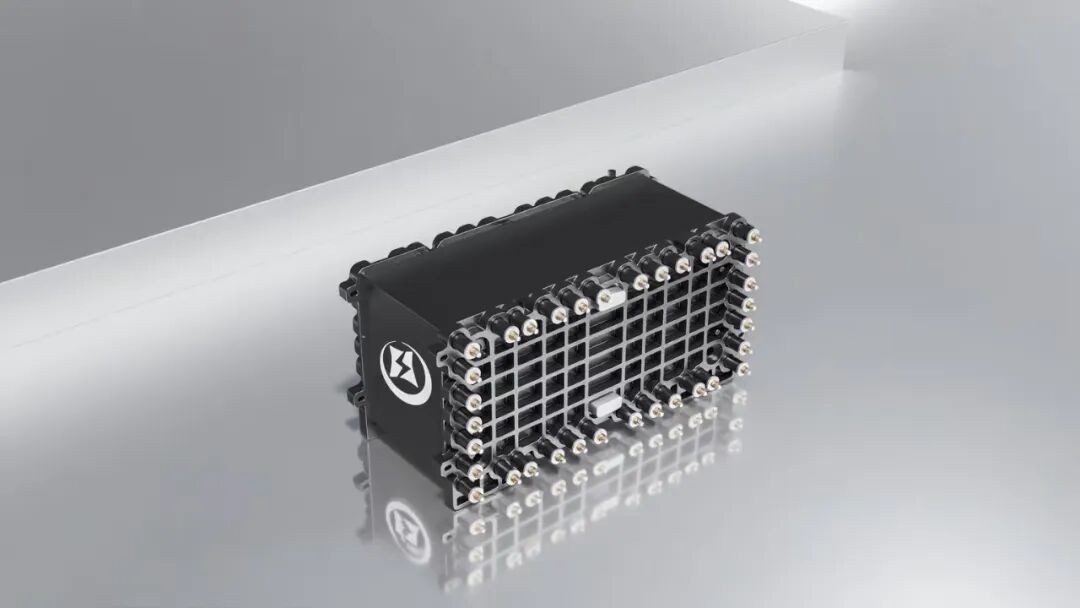
At the stage when the industry's products were mainly 32 - kilowatt small stacks and small systems, she clearly stated that the company should aim to produce large - scale products with competitive prices, which many people didn't understand.
"But the cost of small - scale products can't be reduced, and there is no scale effect." In her words, she was always thinking about the optimal solution for resource allocation, even if it was not easy to achieve.
This was also reflected in the construction of the factory. Liu Na overruled the objections and chose to build a large - scale factory. Without any financing, this was not a common practice for a startup. But in her logic, without scale, the cost she wanted could never be achieved.
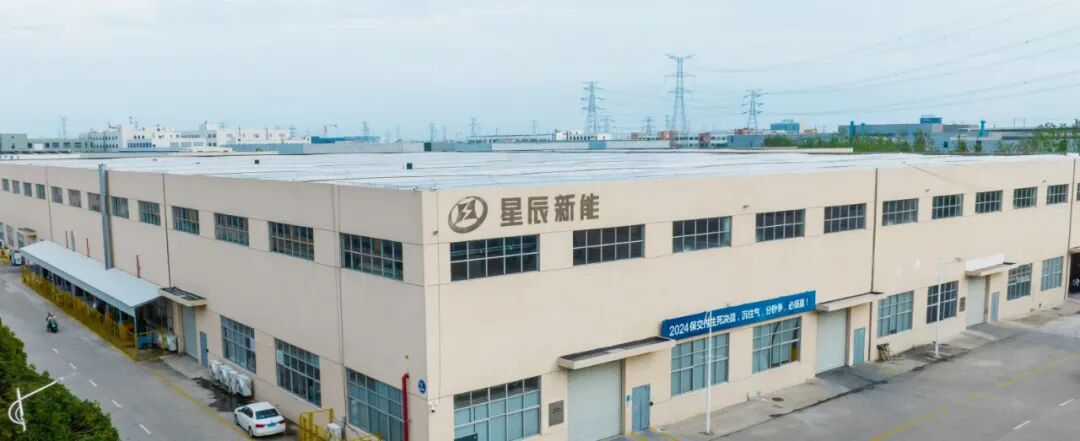
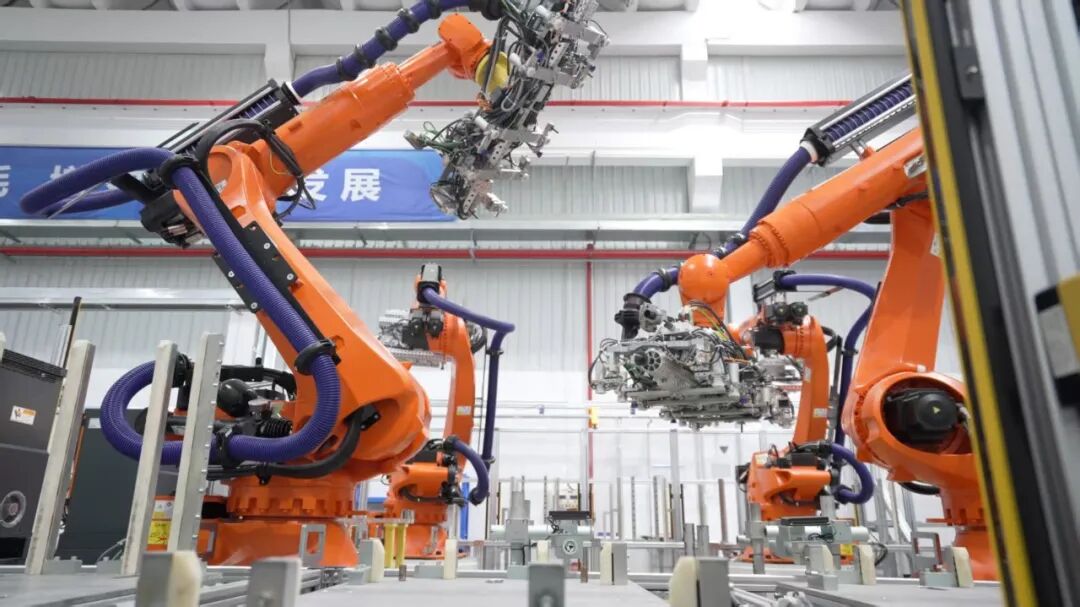
In 2023, in less than a year, Xingchen New Energy completed the construction of the Changzhou base - covering 160 mu with a building area of 60,000 square meters, becoming the largest flow - battery production and integration base in China at that time.
After going through this stage, Liu Na seemed like a different person: from only focusing on financial data to evaluating technology implementation and organizational structure; from only being responsible for investment results to being responsible for the entire life cycle of the company and employees.
Going to a Larger Market
As soon as the production base was completed, Liu Na immediately promoted large - scale mass production of the team.
Production management was also an unfamiliar area for her. She still used her familiar way to set work tasks and put forward extremely strict requirements for two indicators: cash flow and inventory. "There should be no inventory in the manufacturing industry. Products sitting in the warehouse are just garbage." She stared at the inventory indicator every day and didn't allow any idle raw materials.
She also put the importance