Eine weibliche Investorin aus der Generation der Nach - 1985 setzt sich selbst an die Arbeit ("schraubt an der Werkbank"), und das Startup hat einen Marktwert von 3 Milliarden Yuan nach 4 Jahren.
When "China Entrepreneur" met Liu Na, the Series A financing of Xingchen New Energy of over 300 million yuan had just been completed. The investors included CSC Financial Capital, the Green and Low - Carbon Industry Fund of Sichuan Province, Changshi Investment, and the Shaoxing Xinghui Fund.
During the current capital "winter" in the new energy industry, Xingchen New Energy, founded four years ago, has made significant progress and become a big dark horse this year.
The business field it is engaged in is a rising technological branch in the energy storage industry - the long - term energy storage liquid flow battery. For a long time, it was undoubtedly lithium battery products that received the most attention in the energy storage industry. The liquid flow battery has only come into the spotlight in recent years.
Liu Na is the founder of Xingchen New Energy. This is also her first interview with the media. For a long time, the most typical feature of Xingchen New Energy was the "luxurious shareholder group" - in the first round alone, it received investments from China National Petroleum, the industrial fund of SPIC, Minmetals Venture Capital, CRRC Capital, Guoke Capital, and the industrial fund of Changzhou City.
Most entrepreneurs in the new energy industry are good at telling stories about technological startups, but her experience is a bit "atypical". Before founding Xingchen New Energy, she was a "finance professional" and founded a private - equity firm before the age of 30, which specialized in investments and mergers in hard technology.
Her path to entrepreneurship was based on the fact that the financial industry entered a cyclical phase and she didn't want to "laze around". She chose the new energy industry because it is one of the few industries where continuous investment is made in research and development and the market is huge.
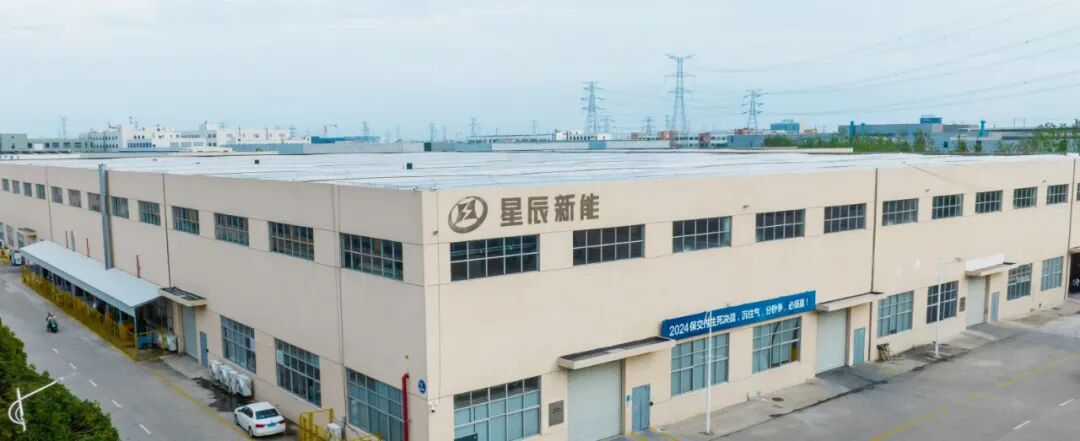
Source: Interviewee
She started almost from scratch and explored things as she went. Her methodology is also unique in the new energy industry and still retains strong characteristics of an investor - the evaluation of resources. She understands the logic of accounting very well. From the selection of the technology route to factory management, all decisions are derived backwards from costs and prices. In her eyes, all things are resources and must all be evaluated.
Liu Na's entrepreneurship is like building with building blocks. "I'm very clear about the 'cost - performance ratio'. I understand the core logic and then do it myself with one - tenth of the money." In her view, the supply chain in the domestic market is very developed. If a company performs well, there will be a lot of imitators. So one must constantly innovate, either be technologically ahead, or be leading in scale, or have cost advantages.
In the first two years of her entrepreneurship, she didn't strive for a "comprehensive and complete" technology and product application fields, but focused on costs, even with the first product.
In 2022, the unit cost of the all - vanadium liquid flow battery was about 4 yuan/Wh (watt - hour). Liu Na internally demanded that these costs be "halved". This far exceeded the industry expectations at that time. Although this price was set rather spontaneously, she took it as the core goal and broke it down.
Later, this goal was actually achieved, so the new goal of Xingchen New Energy is to "halve the costs" again. The co - founder of the company, Chen Peiyi, said: "Within about three years, it will be possible to reduce the cost of the all - vanadium liquid flow battery energy storage system to less than 1.5 yuan/Wh. At these costs, the electricity cost per kilowatt - hour over the entire life cycle can essentially match that of lithium battery energy storage systems." According to him, the ultimate goal of the team is less than 1 yuan/Wh.
Liu Na admits that she has no technical knowledge, but she is convinced that only when product prices are reduced can industrial scaling be increased.
She says that in her entrepreneurship, she uses the "stupid method" by investing enough time and money in team adjustment and paying for mistakes. "Before the financing, all the money spent was mine, estimated at about 60 million yuan." But this has brought her results the fastest. In 2023, Xingchen New Energy built a project center in Changzhou with a total capacity of 4 GW. At the same time, other liquid flow battery companies hadn't even entered the supply phase.
The costs were quickly reduced. Liu Na regularly announced price cuts, so the entire industry regarded her as a "rival". At that time, she worked in all front - line positions. "I did everything myself. If no one believes in you, you have to develop the market yourself and attract customers yourself."
Also in this process, she realized that it was an even more capital - intensive market than she originally thought. The capital requirements for scaling are like an "endless pit". In 2023, Liu Na successively contacted investors, but she attached great importance to investors' understanding of the company. So in the end, she mainly chose state - owned enterprises and state - owned funds that had a demand for the products.
She is a "tough nut". To achieve optimal resource allocation, the company has changed its location three times within four years: from Beijing through Changsha and Changzhou to Zhejiang. She says that her team is like a "nomadic people" and is always looking for the richest pasture.
Liu Na has a unique "mountain - climbing theory": It doesn't matter which path you choose, the important thing is to reach the summit as quickly as possible. Because only from the top can you access more resources and change the direction with minimal effort.
In 2023, Xingchen New Energy rose rapidly due to the boom in the energy storage industry. So far, the all - vanadium liquid flow battery energy storage system has achieved a cumulative delivery volume of 500 MWh (megawatt - hour) and achieved a sales revenue of nearly one billion yuan. The delivery volume of lithium iron phosphate energy storage has also exceeded the 4 GWh (gigawatt - hour) mark.
Finally, she has taken a seat at the "table". Once the business got on track, she began tirelessly planning the next growth curve - operational services in the new energy industry.
"Entrepreneurship means falling into holes and climbing out again. The core competitiveness doesn't lie in avoiding the holes, but in standing up immediately and moving on when you fall into a hole." said Liu Na.
The Fastest Way
Liu Na herself never imagined that she would open a factory and become the factory director.
Before 2019, she had already achieved some success in the financial industry. At that time, the new energy industry was one of the core areas she observed. In terms of the manufacturing industry, she was more of an "outsider".
The idea of entrepreneurship came up in 2019, which was a recognized turning point in the financial industry. After that, this industry entered an adjustment phase.
The general opinion in the industry at that time was, "do little during the cycle". Liu Na also felt the changes in the environment and was once anxious, but the desire to achieve something great still remained in her. "Should our generation 'laze around' during the economic cycle? When the next cycle comes, I might be 60 years old."
She set herself a new goal - to engage in the real economy. Even though she didn't have a specific business idea at that time, her experience in the investment industry made one thing clear to her: Direction is the most important thing. Small businesses aren't worth it, but the chances for big businesses are very limited.
Liu Na first turned her attention to the industry she was most familiar with - the new energy industry. At that time, the power generation costs of wind and solar power were constantly decreasing. But due to the intermittency and fluctuation of renewable energy generation, there was still the phenomenon of "rejecting solar and wind power" - a lot of generated electricity couldn't be effectively converted and fed into the grid and was simply wasted. The industry has intensively discussed the market value of energy storage, and there is a certain consensus that increasing the installed capacity of renewable energy will stimulate the demand for energy storage.
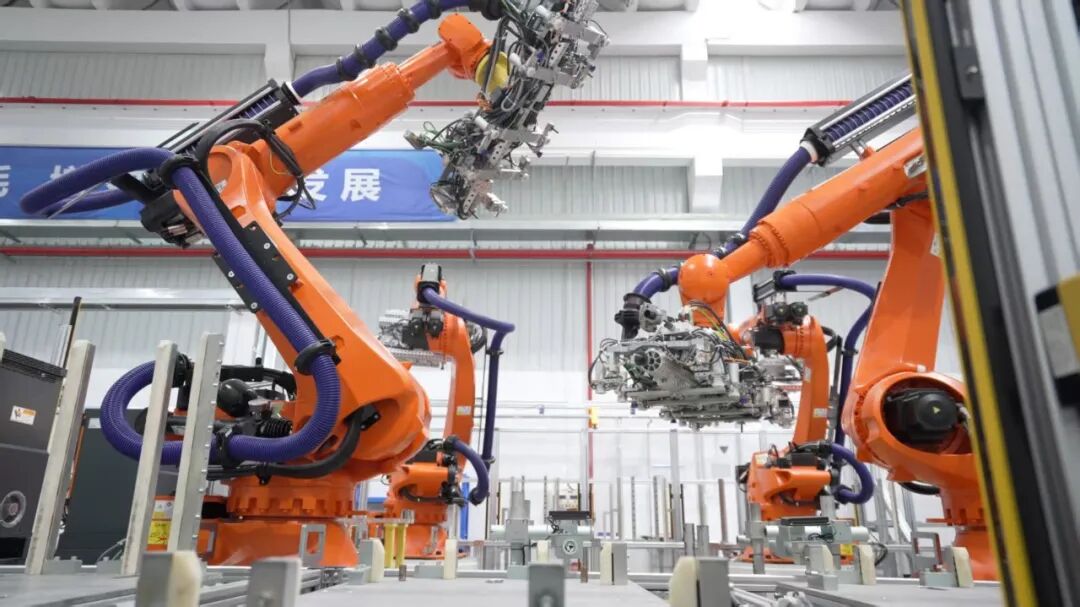
Source: Interviewee
She realized that this might be a chance. At that stage, energy storage in China hadn't been scaled up yet, especially long - term energy storage. There were several technologies such as compressed air storage, flywheel storage, and liquid flow batteries coexisting, and there was no clear development timeline.
In terms of technical feasibility, Liu Na was a "layman", but in terms of market size prediction, she saw no problems from the investment side. Since the market was still in its initial stage, she had enough time to verify her assessment. It took two years from the emergence of the idea to the final determination of the direction.
She founded a new team with the goal of starting a company and then began using the old method from her investment days to conduct a nationwide research. The team visited laboratories and companies at home and abroad. The core goal was to find a producible product, not just a purely scientific one.
"We even saw prototypes in university laboratories that were still in the experimental phase. We just wanted to understand the technical possibilities and differences." said Liu Na.
When she visited Professor Liu Suqin from Central South University, an important turning point occurred. Professor Liu led an important project on liquid flow batteries under the "973 Program" of the Ministry of Science and Technology. Liu Na learned that this team had overcome industrial bottlenecks such as the efficiency of the electrode stack and electrolyte utilization, which was extremely rare at that time.
At that stage, she also investigated many of the more common and developed lithium and sodium batteries on the market, but rejected them all for various reasons such as safety, storage time, and industrial scaling. In particular, she had foreseen the later booming lithium battery technology - with falling costs, the market became extremely competitive.
"If I had chosen the lithium battery, I wouldn't have survived. I wouldn't have been able to raise capital or win customers." Finally, she chose the liquid flow battery - highly safe, with large capacity and long lifespan. In her view, this is the fastest way to the "summit".
"The development of the power market will make the value of long - term energy storage clearer and clearer. The safety and industrializability of the liquid flow battery are one of the best solutions." In 2021, she founded Xingchen New Energy on a whim, without a finished product.
Consistent Scaling
"A financially independent investor who turns screws in the manufacturing industry is just crazy." This was what she heard most often at that time.
She challenged herself to fully focus on product development and quickly verify whether a scalable product could be produced. This process was very abstract. The market for long - term energy storage was relatively empty, and there were no practical projects. One could only infer the product design from the costs.
She didn't worry about finances. The biggest challenges were in terms of personnel, technology, and product. She had thought at that time that her money would last for a while. "Do it quietly. If it works, it's good. If not, as if I had never tried." So she didn't even think about financing at first.
In 2021, Liu Na built a laboratory in Changsha to match the technology development team and also rented the space of the national energy storage material laboratory.
She began recruiting personnel at the same time. At that time, the "manufacturing" of liquid flow batteries in China wasn't established yet, and there was no ready - made personnel. So she had to recruit personnel at all costs from the lithium battery industry, the fuel cell industry, and even the 3C manufacturing industry, from management to front - line workers. "Many people thought that the team structure was in a mess and that I wouldn't make it." she said.
But in hindsight, the challenges in this phase weren't too great. Due to the results achieved by Professor Liu, there were soon progress in research and development. Instead, problems constantly arose in mass production, especially the high costs. Liu Na was determined and decided to change the location. In 2022, she moved the company to Changzhou.
Changzhou is known as the "Huaqiangbei" of the new energy industry. At that time, many new energy companies had their headquarters here, and a relatively complete supply chain and price advantages had developed. "Milling technology, containers, and the most important raw materials can be sourced locally. As a result, the costs suddenly dropped." She believes that her entrepreneurship really took off in Changzhou.
With the addition of the production phase, there were conflicts in the team. "People from different industries had to get used to each other. A...