The once most powerful Apple computer, the Mac Pro, has been abandoned by the times.
Unexpectedly, the next piece of news about Apple's Mac Pro turned out to be a bad one:
According to Mark Gurman of Bloomberg, Apple has internally canceled the development of the new Mac Pro desktop computer. The M4 Ultra processor that was supposed to be installed in it has also been axed, and the next - generation high - end desktop chip will be the M5 Ultra.
Apple has basically abandoned the Mac Pro project internally and believes that the Mac Studio is the future.
The Bumpy Life of Mac Pro
If we start counting from the Power Macintosh released in 1994, it has been 31 years since the release of the Mac Pro, and it has witnessed two major transitions of Apple's chips.
For Apple, building an ordinary high - performance computer has never been the ultimate goal of the product. Creating an elegant and powerful computer to define the future was the ambition of Steve Jobs and Jony Ive - sometimes, "elegance" took precedence over "power".
Back then, when the semiconductor industry was not yet highly developed, it was difficult to achieve both design and performance. The contradiction between the two has haunted the 30 - plus - year history of the Power Mac and Mac Pro, predestining the ill - fated fate of this product line.
The first - generation Power Macintosh adopted a very classic tower - style chassis. As the first Apple computer equipped with a PowerPC processor at that time, it was a show of strength, falling into the "professional" and "desktop" quadrants of Apple's classic product matrix.

From then on, the Power Macintosh series (later renamed Power Mac) became synonymous with the highest performance of Apple computers, mainly targeting high - end business and creative users.
Another "rule" set by the Power Macintosh was its extremely high expandability - it was equipped with 6 PCI slots and 7 internal hard - drive bays, and users had to add a discrete graphics card themselves. It was truly a product for professional geeks.
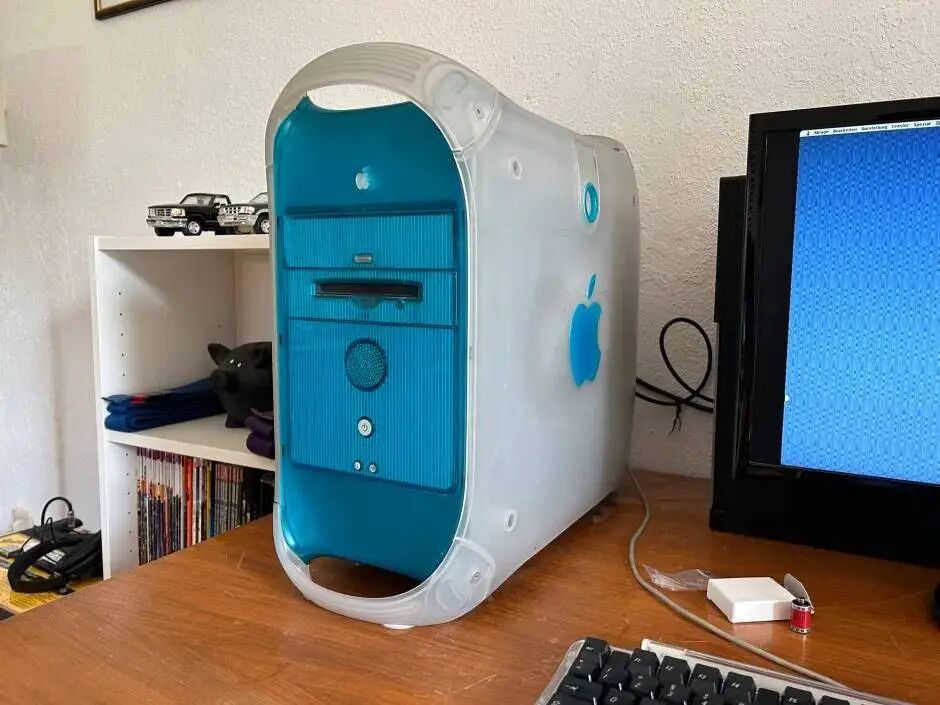
After Steve Jobs returned to Apple and Jony Ive took charge of the design department, the two collaborated to create the colorful, plastic Power Mac G3, which well balanced product design and performance.
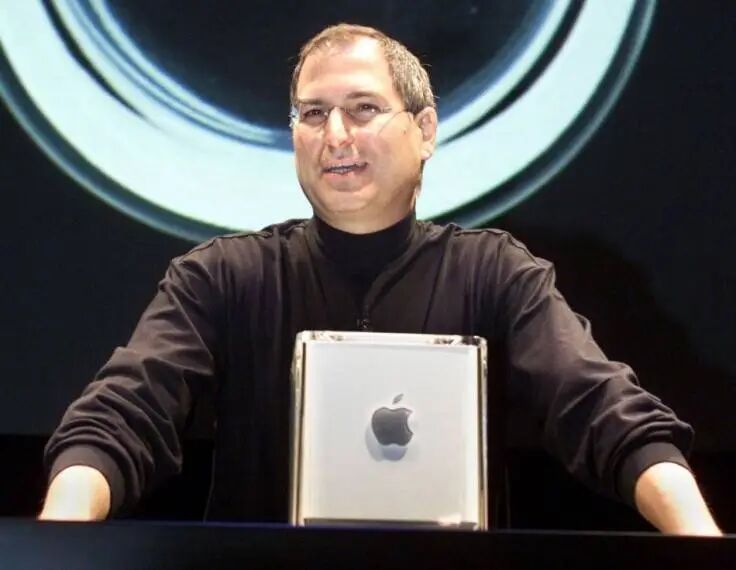
Not content with this, the Power Mac G4 Cube was born out of further visions for future computers.
With an all - glass and metal exterior, no visible buttons or CD slots, and even the interior of the chassis was designed with a sense of Zen - there wasn't even a cooling fan. Steve Jobs was very satisfied with the Power Mac G4 Cube:
We make progress by simplifying and removing the unnecessary.
The Power Mac G4 Cube found its way into the exhibition hall of the Museum of Modern Art, but it was also "branded" on the "pillory" of Apple products: the ultra - small chassis and fanless design led to poor heat - dissipation, limiting its performance. Eventually, this design was only used for one generation.
The same story would play out again in the Mac Pro product line.
In 2006, the Mac Pro took over from the Power Mac, also emerging at the time when Apple switched to Intel, and was equipped with Intel's Xeon series of processors.
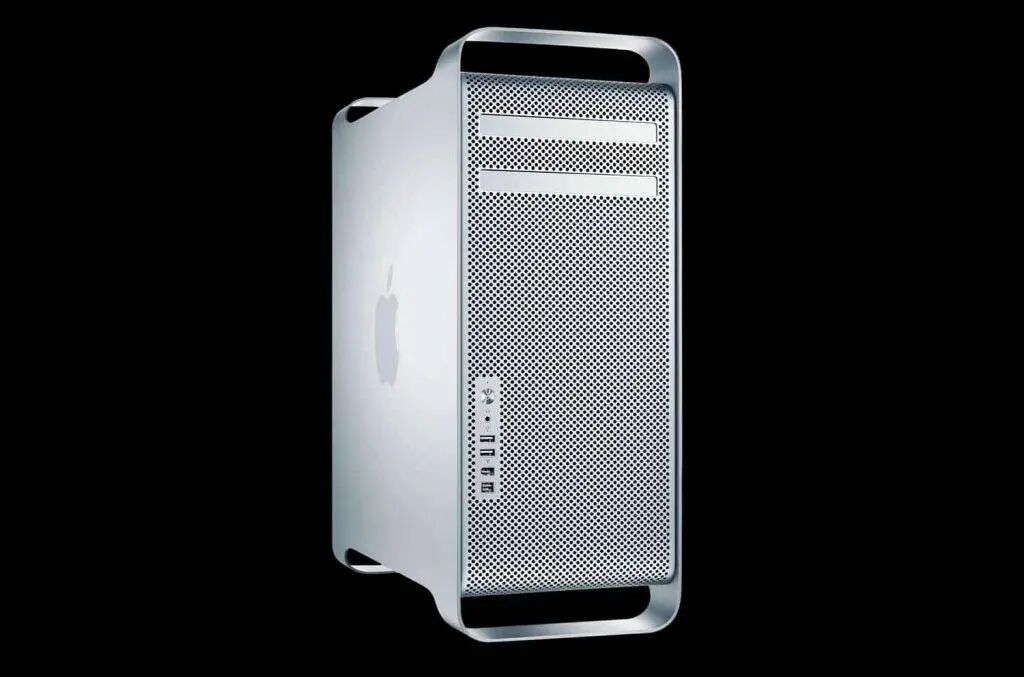
The Mac Pro continued the industrial aluminum - alloy chassis of the Power Mac G5. Although it had excellent craftsmanship and a "Pro" feel, the shape and size of this behemoth were clearly not the optimal form in Apple's mind.
So in 2013, Apple gave Jony Ive a chance to design a Mac Pro different from the previous ones. The final product was truly extraordinary and became a very prominent chapter in Apple's product design history -

This design is still talked about today, but the cost was obvious: this "trash can", which was only 1/8 the size of its predecessor and had only a single fan, easily hit performance bottlenecks due to heat - dissipation issues, which was a big no - no for a computer targeting professional users.
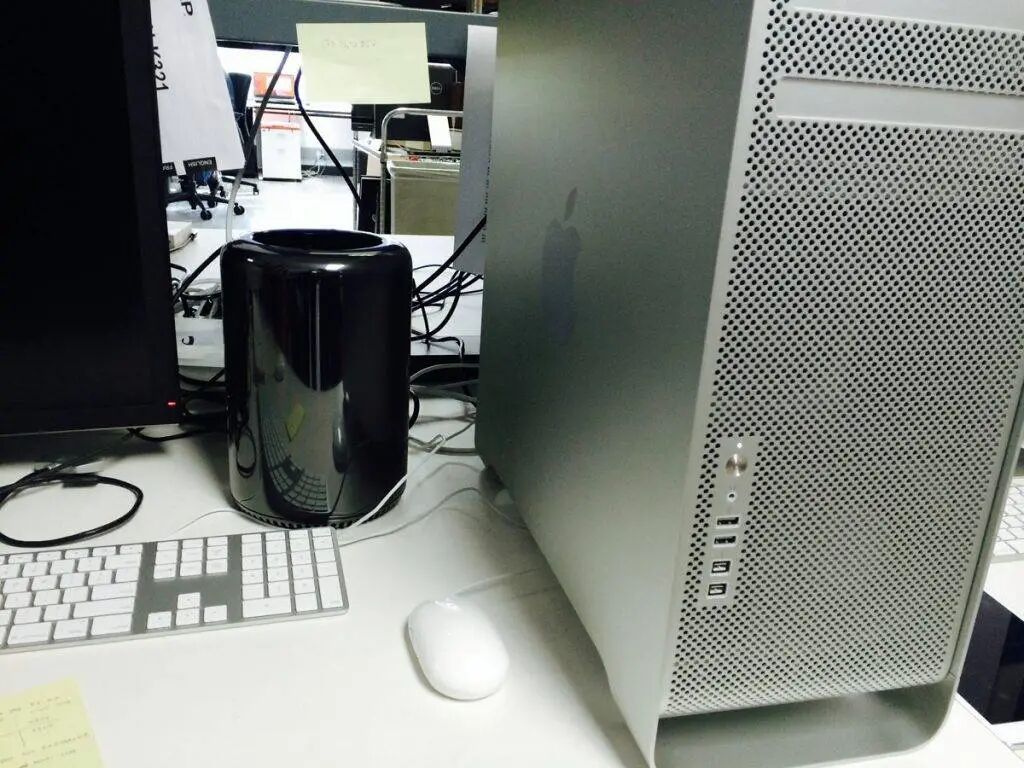
Volume comparison between two generations of Mac Pro
Moreover, Apple only allows users to replace the memory and storage space of the Mac Pro on their own and warns that forcibly replacing the graphics card will carry a high risk of failure.
This was not the Mac Pro that professional users were expecting. Two or three years after its release, there were complaints about this "trash can" everywhere, along with doubts about whether Apple had abandoned professional users.
To save its reputation, Apple rarely admitted the failure of the "trash can" Mac Pro at a media event in 2017. Later, it launched the iMac Pro to calm the anger of professional users and promised that the next Mac Pro would be "more modular".
The new Mac Pro was finally released 2182 days after the release of the "trash can" - during this period, the design of the iPhone was significantly changed twice.
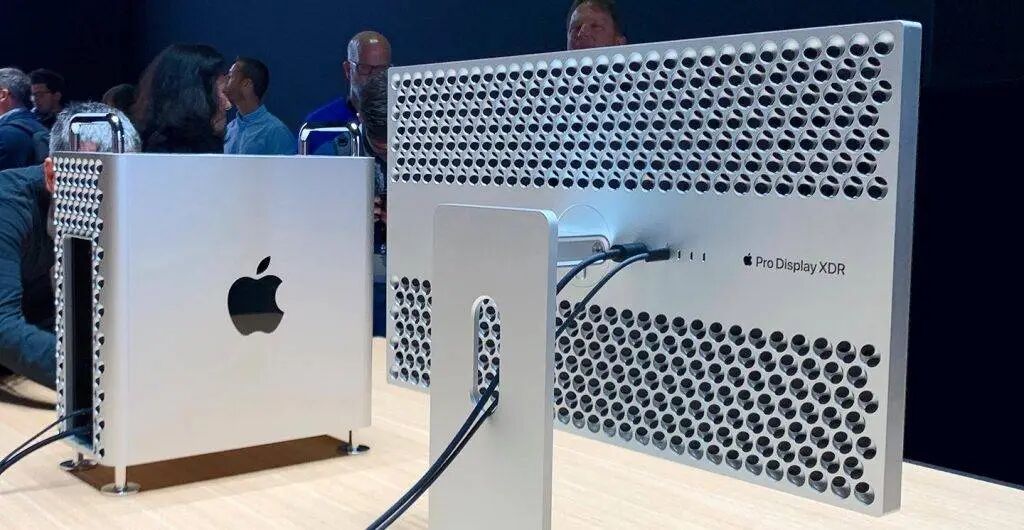
Ironically, Apple's reflection on the "trash can" led it to dust off the blueprints of the first - generation tower - style Mac Pro from 2006, and the aluminum - alloy chassis was replaced with the famous "grater" design.
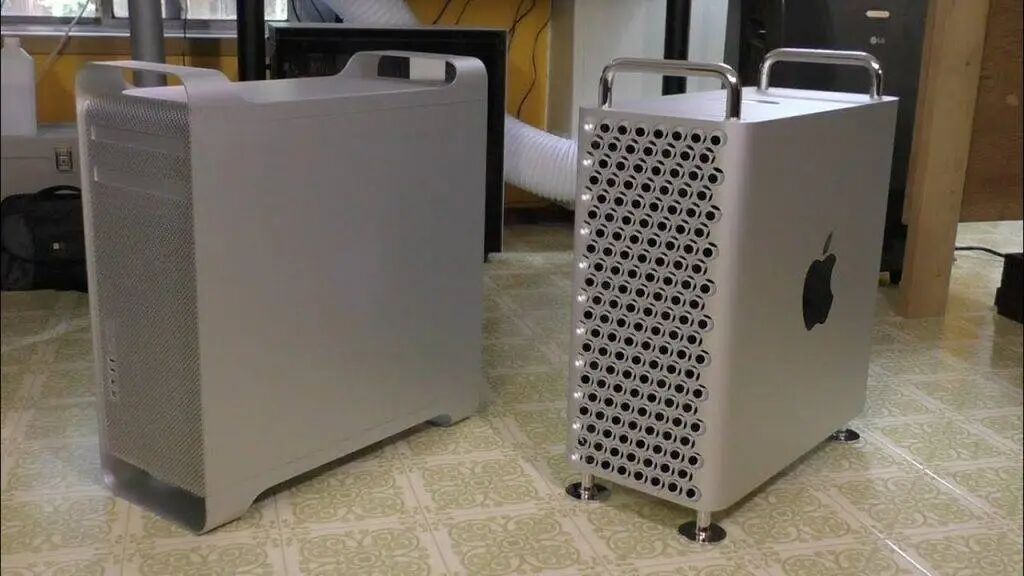
Image source: YouTube@Ryan Gehret
At least, Apple finally presented a high - performance and expandable computer. People readily accepted this new Mac Pro, and this product eventually gained a good reputation.

However, no one could have predicted at that time that this new starting point for the Mac Pro would also be the end of this product line.
A year later, Apple Silicon emerged, becoming the most important turning point in Mac history.
But this time, the Mac Pro did not lead the transformation as it did before. Instead, in this exciting new era, it became an out - of - place oddity.
The Mac Pro was even the last model in the entire product line to be refreshed with Apple Silicon. In 2023, the Mac Pro equipped with the M2 Ultra arrived late.
Although it used the well - received new chassis from the previous generation, the highly integrated Apple Silicon ecosystem limited its expandability. It could only install some special expansion cards and was unable to upgrade the memory or insert a graphics card.
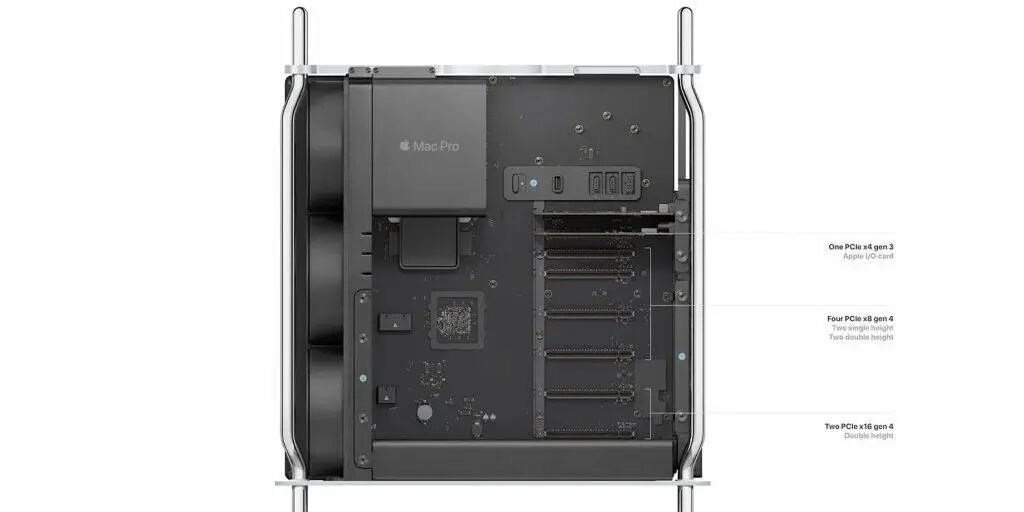
Meanwhile, the energy - efficient Apple Silicon finally allowed Apple to "revive" the Power Mac G4 Cube.
The Mac Studio is small, delicate, with no redundant design on the exterior, and highly integrated internally with no room for expansion. Apple finally fulfilled Steve Jobs' long - cherished wish 20 years later and created a truly future - oriented computer.
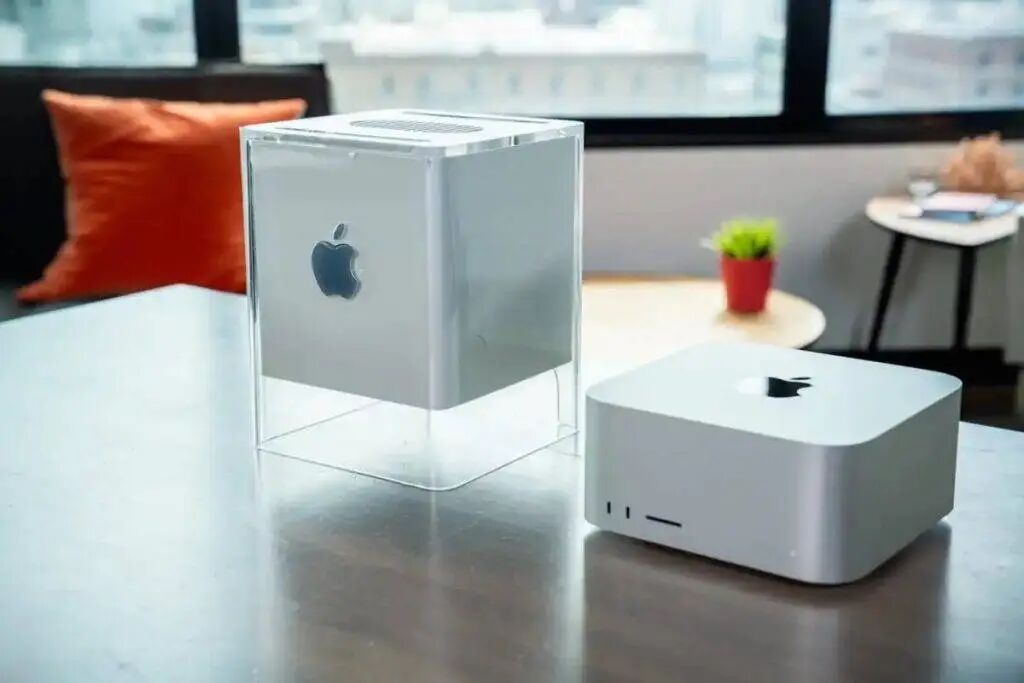
Power Mac G4 Cube and Mac Studio, Image source: Macworld
For users, the Mac Pro is larger, heavier, and more expensive, but it doesn't offer significantly better performance, only a little more expandability. There is no place for it in the new era.
Perhaps it can be said that the Mac Pro wasn't axed but was reborn as the Mac Studio.

No Place for Mac Pro in the New Era
Compared with the iMac, Mac mini, and various MacBook models with seamless designs, the Mac Pro with a tower - style chassis and internal modular design is more like a Windows PC, but it runs the officially supported macOS.

Looking back at the history of the Power Mac and Mac Pro, or the entire computer history, there used to seem to be only one solution for high - performance computers - a large tower - style chassis filled with slots waiting for users to customize.
After the birth of Apple Silicon, which shocked the world with its performance and energy efficiency, Apple no longer had to follow the rules of high - performance PC hosts. It could use its own chip ecosystem to replace the previous approach of constantly adding and replacing computer modules.
After the release of the M4 Mac mini, there have been many interesting explorations. For example, running multiple Mac minis together to form a disk array or an AI training cluster. In the past, this would have required more graphics cards and would have consumed more power.
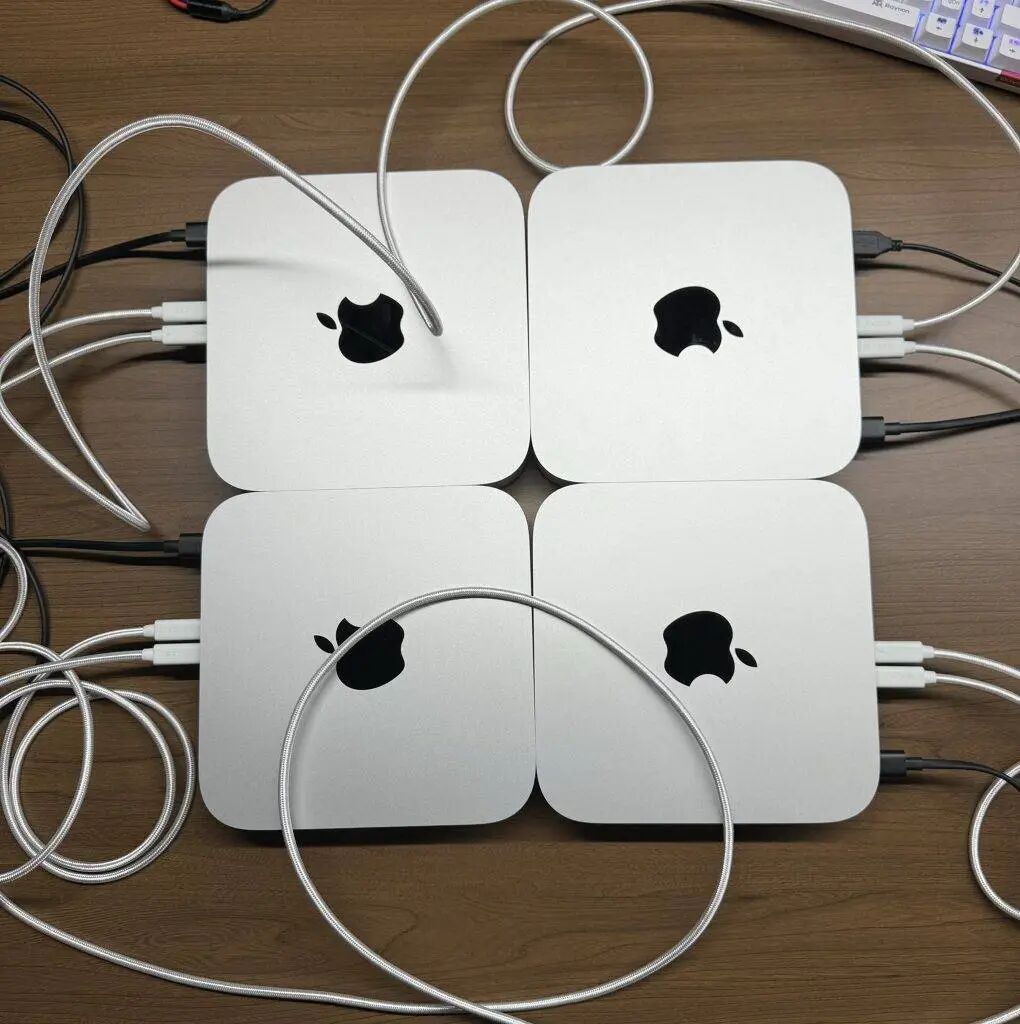
Image source: X@ Alex Cheema
Compared with the modular design where users can replace components on their own, this highly integrated design makes it impossible to upgrade the product after it leaves the factory. However, the high - performance miniaturization achieved through high integration has also created new value.
Traditional large - chassis computers are basically immobile. We used to create and produce in a fixed "studio" mode. If we needed to work on the go, we had to use an external hard drive and a high - performance laptop, which undoubtedly reduced efficiency.
Thanks to the emergence of high - performance and portable computers, the work environment can be more flexibly deployed. For example, in the film and television industry, DIT workers can now take the entire Mac Studio with them to work - this would have been impossible with the 16 - kilogram Mac Pro in the past.

Taking the Mac Studio with you is a very common solution. Image source: ProVideo Coalition
Apple isn't the only one exploring this direction. NVIDIA's DGX Spark is about the same size as the old - style Mac mini, but it's an AI supercomputer with a performance of 1 Petaflop. The computing power that used to require large cabinets and a large number of graphics cards can now be placed directly on the table.
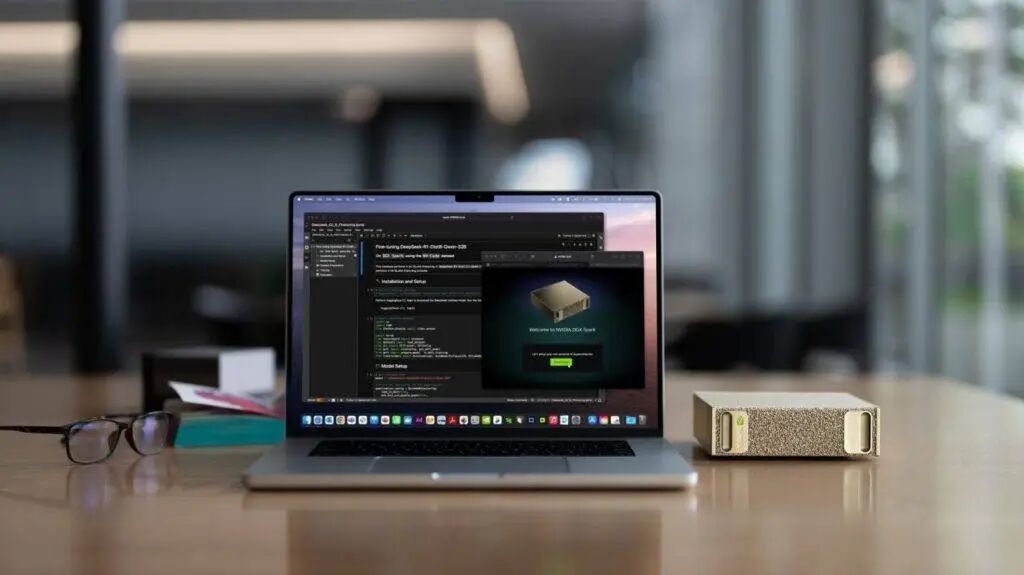
The chip technology and design have reached a peak, with high performance and low energy consumption becoming the norm. Now is the time to realize those dream designs, and miniaturization has always been the trend for the