Amidst crowdfunding delivery delays and tight funds, Changyao Innovation's "battle for survival"
Author | Huang Nan
Editor | Yuan Silai
In the summer of 2025, Hu Yue, the founder of Changyao Innovation, was about to hit the financial warning line.
Everything happened within just a few months.
A year ago, his company, Changyao Innovation, with its AIRSEEKERS TRON series of lawn mowing robots, targeted the high - end market with flagship models priced over $2,000. It achieved pre - sales of over $2.2 million in the first month on Kickstarter and secured three rounds of over 100 million yuan in financing within the first two years of its establishment.
The cruel rules of the hardware industry soon became apparent. The speed at which funds were consumed during the R & D and delivery process of the lawn mowing robot industry far exceeded Hu Yue's expectations.
At that time, although the crowdfunding funds were recovered, due to the relatively low pricing of the crowdfunding products, there was little left after deducting nearly 10 million yuan in mold - opening and marketing expenses. The company had to pay for production out of its own pocket. Coupled with expenses such as labor, certification, and patents during product R & D and mass production, the previous financing was constantly being depleted.
The high early - stage hardware costs, rapid capital consumption, and difficulties in fund allocation, combined with the need to build the production line from scratch, led to delivery delays.
A crisis of user trust was on the verge of breaking out. This young team was almost gasping for breath under the heavy pressure of the supply chain, funds, and delivery.
Hu Yue had to make a difficult decision. He sent an open letter titled "Delayed Delivery" to the crowdfunding users, stating that under the pressure of production and finance, before the full delivery of the crowdfunding orders, Changyao would commercialize the products in advance through global retail platforms and offline channels. The company would use the revenue from commercial orders to keep the company running healthily and ensure the continuous delivery of crowdfunding orders.
At the moment when he clicked the send button, Hu Yue was already prepared to face a storm of criticism.
"We had to be honest. The money from overseas business doesn't last as long as we thought. We encountered many difficulties, and at that time, our funds were indeed quite tight. If we were to deliver all the thousands of crowdfunding orders at once, we would need to pay tens of millions of yuan in goods. Coupled with continuous R & D investment, the pressure on the company's operation would be extremely high," Hu Yue recalled to Yingke.
He had no choice but to make this decision and bear all the pressure himself. Moreover, the whole process should be presented to the users because they have the right to know where every cent of the crowdfunding money goes. "This decision is the best way I could think of under the premise of 'having it all'," Hu Yue said.
During this trough period, Hu Yue led the team to ensure delivery while looking for a way out in the market. Things took a turn for the better.
Yingke learned that Changyao Innovation has completed a Series A financing of tens of millions of yuan. The strategic investor is Hangzhou Shenhao Technology, a leading listed robot company. Meanwhile, old shareholders such as Professor Gao Bingqiang, Brizan Ventures, and Gaofeng Patient Capital have continued to increase their investment.
As of November, Changyao Innovation has shipped nearly 10,000 lawn mowing robots, with an expected annual revenue of nearly 100 million yuan. The company is continuously expanding its sales and marketing teams to accelerate the product's launch in the global market and channel layout. The crowdfunding orders are almost fully delivered.
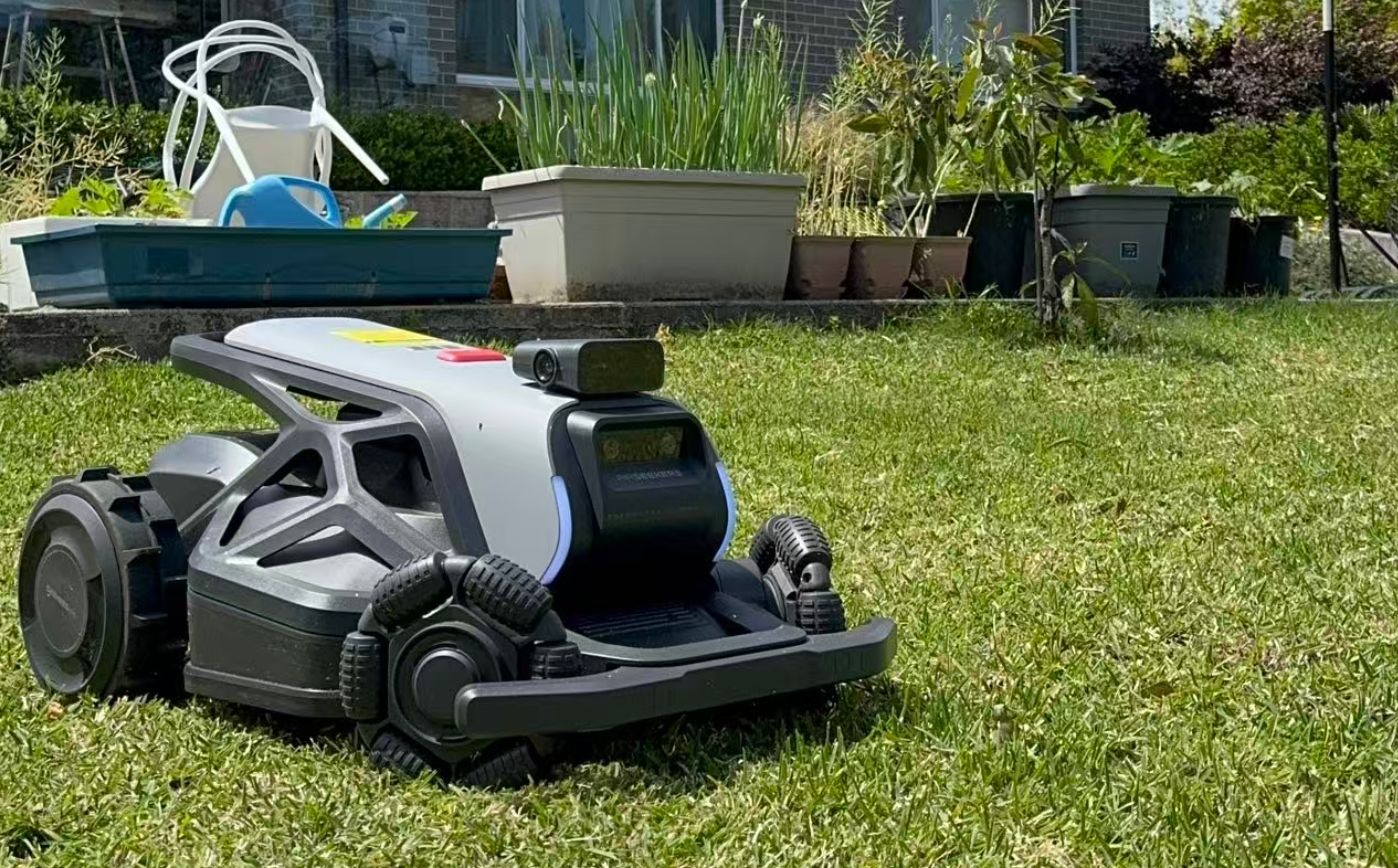
Changyao Innovation's first product, AIRSEEKERS TRON (Source/Enterprise)
The current smart hardware overseas market may seem like a blue ocean, but in fact, there are hidden undercurrents. Products need to adapt to complex and changeable usage environments and face strict certification standards and user expectations in the European and American markets. Although the crowdfunding model can quickly test the market, it is inadequate in the face of large - scale mass production. Once entering the mass - production stage, the pressure on the capital chain, supply chain, and quality control often increases exponentially, which is an unavoidable issue for all Chinese hardware companies.
Amidst the ups and downs and turning points, all startups are groping for their own survival rules in an increasingly difficult era.
Recently, Yingke had a conversation with Hu Yue, the founder of Changyao Innovation. This is his first public statement after experiencing the difficulties of mass production and capital. This conversation focuses on the company's crisis reflection, product iteration, and future planning.
The following is the transcript of the conversation between Yingke and Hu Yue, edited for clarity:
"Now I think 200 million yuan is just enough."
Yingke: Looking back at the delivery crisis in the middle of the year, what was the most crucial factor that led to the problem?
Hu Yue: In fact, Changyao didn't encounter any substantial bottlenecks in the mass - production process. The shipping efficiency and product quality met the standards. We were one of the startups with the smoothest mass - production process. We hardly made any modifications to the molds after opening them, and the yield rate of the first mass - production batch was relatively high. The core issue was the cash - flow pressure.
At the end of 2024, although the crowdfunding funds were recovered, due to the low pricing, there was little left after deducting nearly 10 million yuan in mold - opening costs. As a result, the company had to pay for subsequent shipments on its own. During this period, labor costs, the establishment of an overseas team, certification, and patents a series of rigid expenditures gradually consumed our early - stage financing reserves. In addition, at the initial stage of mass production, the inevitable high inventory costs and manufacturing labor costs increased some expenses.
The money from overseas business doesn't last as long as we thought. The turnover of the supply chain and the overseas logistics cycle are not in sync. Funds need to be invested in advance for product inventory, and the normal overseas transportation cycle is about one to two months. This means that tens of millions of yuan worth of goods will be in transit for a long time.
I once said that one needs to prepare 100 million yuan to mass - produce lawn mowing robots. Looking back now, this figure may hold true in an ideal state, but in reality, there will be various bottlenecks during the verification process.
Yingke: Has the cash - flow problem been solved?
Hu Yue: In terms of cash flow, after this round of financing, relying on the endorsement of the listed company, we can get support for a longer payment period at the supply - chain end. We can "take the goods for sale first and pay for the goods later", which reduces the pressure on inventory funds through the supply - chain leverage. The financing funds will be mainly invested in R & D innovation, marketing, and a certain reserve will be retained.
Compared with the traditional model that relies on fund investment, inventory funds are advanced through the supply - chain payment period and settled after the sales revenue is received. This can also maximize the efficiency of capital use and avoid high - cost losses of financing funds.
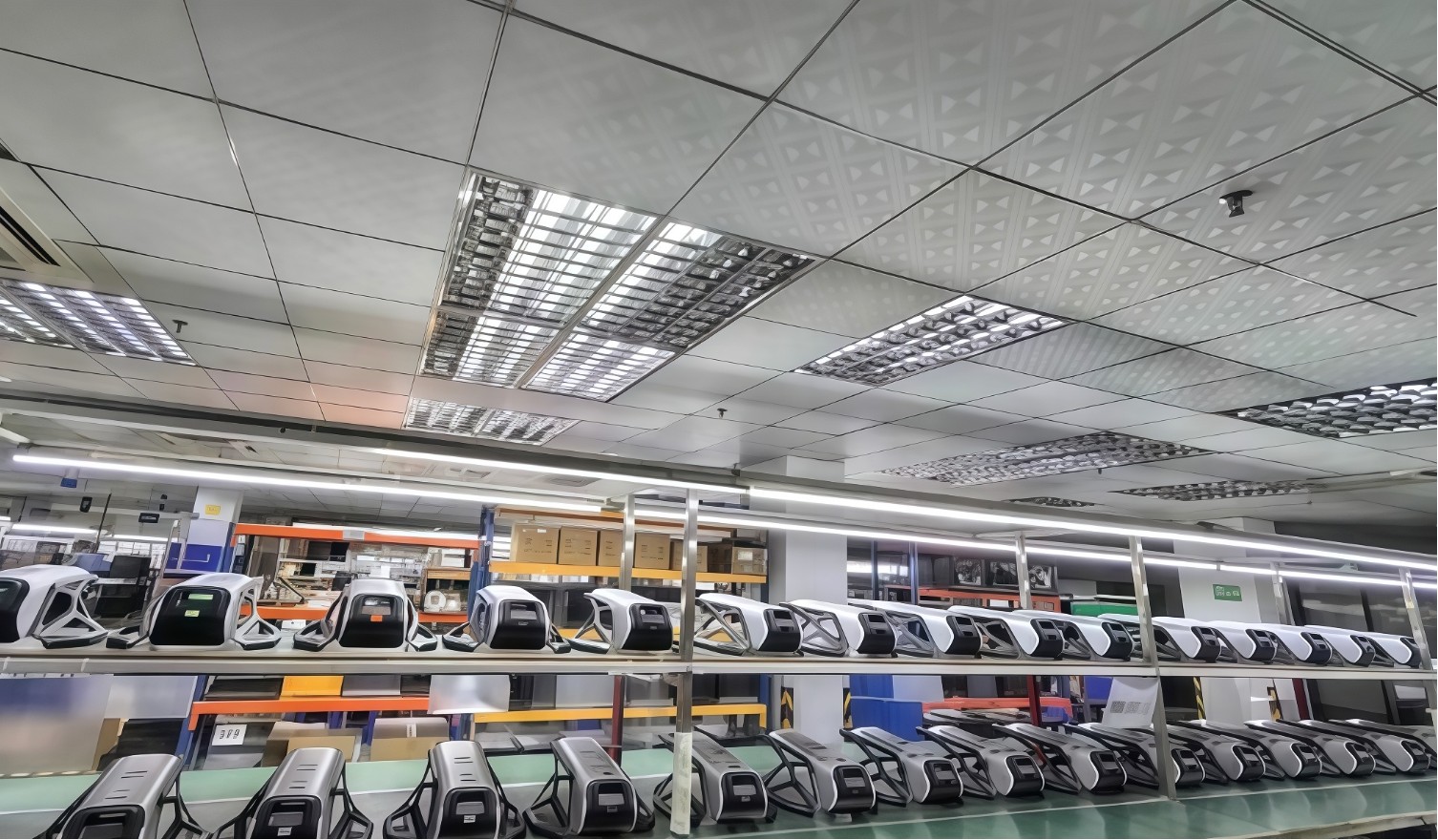
Changyao Innovation's production workshop (Source/Enterprise)
Yingke: According to the data from the supply - chain end, your early shipping strategy was more aggressive compared to similar hardware manufacturers.
Hu Yue: Undoubtedly, the company was relatively aggressive internally before. The scale of the first DVT trial production reached hundreds of units, which is generally considered to be a high - risk move in the industry. However, this "aggressiveness" was not about operating on the edge of compliance but was reflected in decision - making efficiency and production scheduling, which we were always very clear about. The final result also proved that there were no quality problems with the first - batch products. We seized the order rhythm of overseas customers during the lawn - mowing season through this super - aggressive delivery. Subsequently, we received several times more re - orders.
I believe that for startups, on the basis of compliance and safety regulations, moderate aggressiveness and risk - taking are necessary choices to break through the development bottleneck.
So far, the company has shipped nearly 10,000 devices this year and has started planning for next year's orders. The expected revenue in 2025 is nearly 100 million yuan, and the revenue target for 2026 is 300 million yuan, corresponding to a shipment volume of about 20,000 - 30,000 units. Now, everyone is more cautious and has stabilized the delivery rhythm.
Yingke: Will this "caution" affect your business layout? What is the current internal focus?
Hu Yue: At present, Changyao's main focus is on after - sales service. A professional after - sales team of more than a dozen people has been established in China, and exclusive FAE (Field Application Engineers) are provided for support. In the overseas market, we have set up branches in Australia, Germany, and the United States and configured the necessary operation and after - sales teams in each region. Through the model of "domestic support + overseas local response", we have built an after - sales service network covering the core markets.
For many companies, getting orders may be difficult, but for Changyao, getting orders is not the problem. The key is how to fulfill the orders. The "after - sales guarantee" link is related to whether the company can respond promptly to user needs after large - scale order delivery.
Yingke: From the overall market situation, is there still an opportunity for startups to enter the market?
Hu Yue: For ourselves, Changyao still has great opportunities. After three years, we have developed our first - generation flagship product, Tron, from scratch. Now it is mature and stable, and we have also accumulated a certain number of users. Next, we will also stabilize the overall rhythm. The team will not expand too quickly, and the scale will be controlled within 100 people to ensure more stable organizational efficiency and management quality.
At the same time, we are already developing the second - generation product, which will be launched next summer. In addition to being technologically advanced, it will also lay the foundation for a complete product matrix. So, there will definitely be a place for Changyao at the future market table.
However, for new startups that are just entering the market now, the opportunity window has basically closed.
Yingke: Do you think 100 million yuan is enough now?
Hu Yue: Haha, no, 200 million yuan.
Don't get involved in price wars
Yingke: Back to the industry itself, the market generally believes that Europe is a red ocean for lawn mowing robots with many giants. As one of the few startups focusing on small and medium - sized lawn scenarios, how do you view the current competitive landscape and your own market opportunities?
Hu Yue: Our definition of "large - scale scenarios" refers to orchards, pastures, etc. with an area of more than 5,000 square meters or one acre. Lawns of several thousand square meters belong to medium - sized scenarios. There is a market for such scenarios, but the ceiling is obvious, and it takes more effort and cost to educate users. In Europe and America, lawns of less than 1,000 square meters account for more than 80% of the total lawn area, which is the largest in quantity, and there are already many players in this field.
In contrast, Changyao has targeted the relatively untapped market of "small and medium - sized lawns with complex terrains", including scenarios with many trees, slopes, and mountains. These scenarios cannot be covered and met by the current mainstream low - price models within $1,000 or €1,000.
Many lawns in Europe and America are not as simple as we think. Currently, most robots priced below €1,000 or $1,000 can only meet the needs of flat and simple gardens. In slightly more complex scenarios, there is an extremely high return rate of about 30%.
Therefore, the remaining large number of users still bring more opportunities for mid - to high - end and user - friendly models. There are very few products in this price range. When most models cannot meet the scenario needs of the general market users, this is Changyao's opportunity. At this stage, it is far from the "life - and - death" stage of price competition. It is more about competing with "ourselves".
Yingke: Is there a big difference in the user profiles of the two?
Hu Yue: Changyao's core users are the same as the mainstream in the industry, mainly middle - aged men aged 35 - 45, and the proportion of elderly men aged 50 - 60 is also relatively high, all of whom are from the middle class.
These users live close to the city center. Most of them are office workers and have no time to take care of their lawns themselves. Due to social and competitive needs, small - apartment owners have a much greater pursuit of lawn aesthetics than large - lawn owners. Moreover, a messy lawn can affect the housing prices in the entire street. So, for small - and medium - sized apartment users, lawn mowing is a real necessity.
In the current early stage of the industry, when these users choose a lawn mowing robot, the decision - making priority is not brand awareness or price but "whether the product can adapt to their own scenarios". It is far from the stage where price is the king.
A very representative situation often occurs. Users often take the initiative to send photos of their lawns to our customer service to confirm the adaptability, showing a clear understanding of the robot's performance in complex terrains.
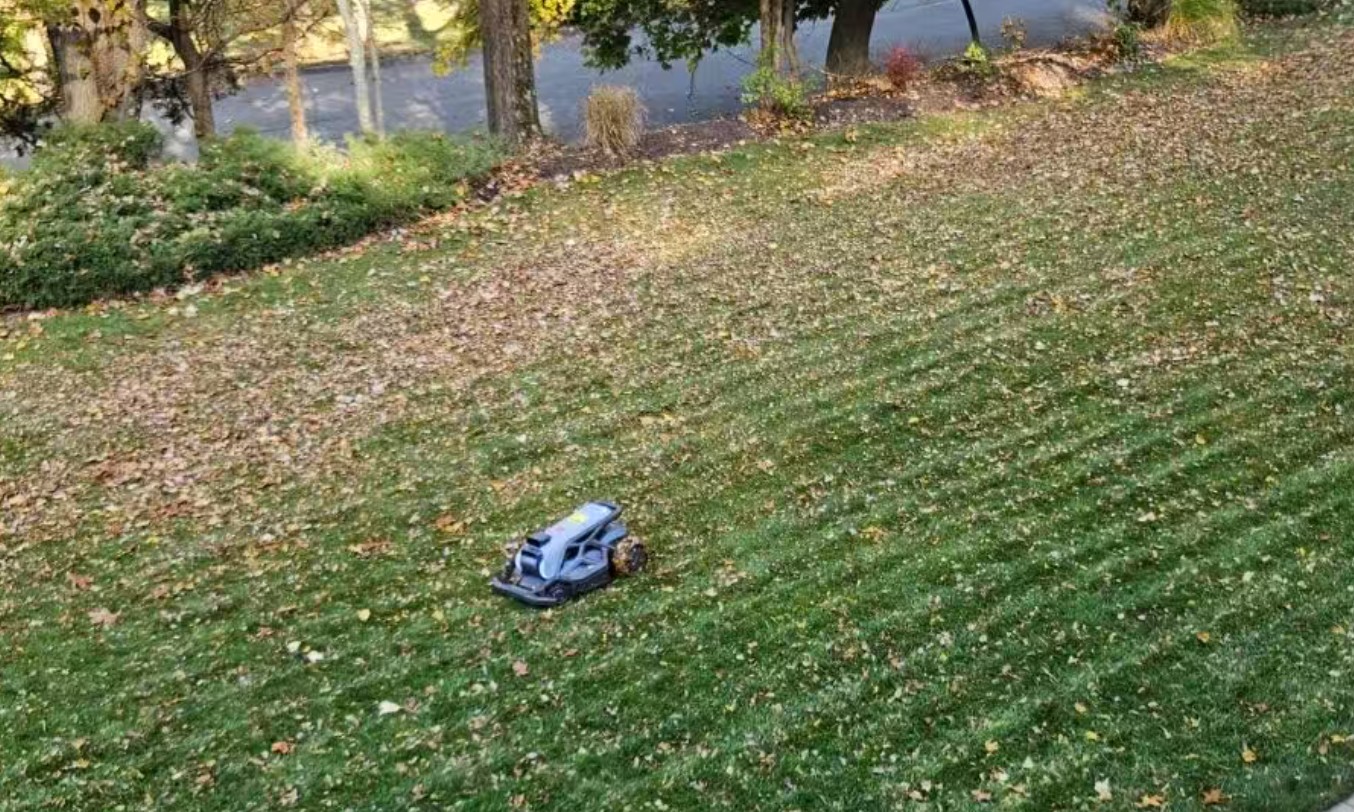
Targeting small and medium - sized lawns with complex terrains (Source/Enterprise)
Yingke: How does Changyao's product show its differential advantages in this process?
Hu Yue: The differences are mainly concentrated in three aspects. Firstly, it has the ability to adapt to all terrains in complex scenarios. Through the design of appearance and structure, it improves off - road and obstacle - crossing capabilities, enhances terrain adaptability, and meets the needs of complex courtyards that low - price models cannot cover. Currently, most manufacturers regard their "algorithm" capabilities as the key to breaking through the market, but they haven't conducted research on the structure for complex scenarios.
Secondly, it creates a unique selling point by upgrading "lawn mowing" to "lawn maintenance". Through functions such as grass shredding and discharging, it conducts refined management of the lawn, strengthening the user - recognition label.
Thirdly, it has strong after - sales service capabilities. Overseas users have less knowledge of Chinese brands, and the brand influence gap is small. Through timely response services, the brand gap can be narrowed.
At this stage, price is not the core decision - making factor for European and American users. Users are more concerned about "whether the machine can solve the problem". As long as the product can meet their needs, even if the price is slightly higher than that of competitors, users are still willing to pay. Only when all products can meet the basic needs and the industry growth slows down will price become a consideration factor.
Yingke: Where does the opportunity for the incremental market come from?
Hu Yue: