Li Xiang's confusion, Li Bin has the answer
In the third - quarter earnings report this year, Li Auto reported a net loss of 624 million yuan. This is the first loss for Li Auto after 11 consecutive quarters of profitability.
During the earnings conference call, Li Xiang conducted his most profound self - reflection ever, almost negating Li Auto's attempt to transform into a "professional manager" governance system over the past three years.
Li Xiang said, "Over the past three years, my startup team and I have been striving to learn the management system of professional managers and forcing ourselves to accept various changes. However, we have become a worse version of ourselves."
Li Xiang pointed out that NVIDIA and Tesla still manage their companies in the way of startups. "If the world's most powerful companies all adopt the startup management model, what reason does Li Auto have to abandon its most proficient approach?"
Learning from Tesla and reverting to the startup management style will mean a significant change in the company's governance model. At least in management, Li Xiang will take back some of the powers that were previously delegated. He will hold the decision - making power himself and be responsible for it.
In the past year or so, Li Xiang made job adjustments for several executives with Huawei backgrounds. This is generally interpreted by the outside world as an organizational move by Li Xiang to regain power and adjust the strategic direction after facing performance pressure.
For the revenue guidance in the fourth quarter of this year, Li Auto set the maximum revenue at 29.2 billion yuan. This figure is not bad, but when compared with NIO's maximum guidance of 34.07 billion yuan in the same period, the perception may be quite different.
Just over a year ago, the situation was completely reversed. Li Auto was the top performer with a monthly sales volume of 50,000 vehicles, while NIO was regarded by some as a company in need of rescue. Now, NIO and XPeng have monthly delivery volumes of over 40,000 vehicles, while Li Auto's sales have dropped back to the range of over 30,000 vehicles.
Li Xiang mentioned NVIDIA and Tesla in his self - reflection. These two companies are the "dream destinations" in the automotive industry. However, Li Auto's most pressing problem is how to boost sales and win a battle. Fortunately, Li Bin, his peer, has already provided a ready - made answer.
A
Li Xiang is faced with the following figures: In the third quarter of 2025, Li Auto delivered 93,200 vehicles, a year - on - year decline of 39.0%. In contrast, NIO and XPeng's delivery volumes increased by 40.8% and 149.3% year - on - year respectively.
Li Auto, which once dominated the new - energy vehicle startups with its extended - range technology, is now the only player in the top tier with a declining sales volume.
More importantly, in the third - quarter earnings report this year, Li Auto reported its first loss of 624 million yuan after 11 consecutive quarters of profitability.

Li Auto explained that the voluntary recall of some 2024 - model MEGA vehicles at the end of October and the provision for related costs directly dragged down the gross profit margin and profits for the current period. If this one - time impact is excluded, the company's overall gross profit margin was 20.4%, maintaining a healthy level.
Although Li Auto emphasized the impact of the recall on the third - quarter loss, the declining sales volume is also one of the non - negligible reasons. "Boosting sales" has become the most urgent problem for Li Auto at this stage.
Li Xiang admitted in the earnings conference that the third quarter marked the beginning of Li Auto's second decade. During this period, the company faced multiple challenges such as product cycles, public opinion pressure, supply - chain capacity ramping up, and changes in industry policies. These factors jointly affected the quarterly deliveries and overall business performance.
Li Auto's sales pillar, the L series, is facing "pressure from both sides". The AITO M8 delivered over 80,000 vehicles within four months of its launch, directly diverting the target customers of Li Auto's L8 and L9.
Brands such as Deepal and Leapmotor, positioning themselves as alternatives to Li Auto, have captured the low - end market, causing the monthly sales of Li Auto's L6 to decline from its peak.
More seriously, the overall growth rate of the extended - range market has dropped sharply to 3.5%, while the pure - electric market still maintains a high growth rate of 53.6%.
Transitioning to pure - electric vehicles is an inevitable choice for Li Auto, but the failure of its first pure - electric model, the MEGA, has made this step particularly difficult. The subsequent pure - electric SUV, the i8, with a starting price of 339,800 yuan, failed to create a differentiated appeal due to its highly overlapping price with the extended - range model L8.
After the launch of the Li Auto i8, the order performance was mediocre, in contrast to the LeDao L90's monthly delivery of 11,000 vehicles.
In the fourth quarter of this year, Li Auto's delivery guidance is between 100,000 and 110,000 vehicles, a year - on - year decline of 30.7% - 37.0%. This is also lower than NIO's guidance of 120,000 - 125,000 vehicles and XPeng's guidance of 125,000 - 132,000 vehicles.
Behind this figure lies the problem that Li Auto must face directly: when the path of pursuing both sales volume and gross profit margin starts to conflict, which one should Li Auto prioritize?
Li Xiang admitted in the third - quarter earnings conference call that he was "at his worst" in the past period and pointed out that Li Auto currently needs to redefine its products and the direction of its technology development.
B
Li Bin's actions in the past year had a very clear goal: everything was for the sake of boosting sales. Not only did NIO reduce the prices of its entire vehicle lineup, but it also launched the more affordable LeDao brand. When the LeDao L60 failed to sell well, Ai Tiecheng, the person in charge, was replaced.
Li Bin's willingness to cut prices had an immediate effect, and NIO managed to get through its most difficult period.
At this time, Li Auto is still hesitant about pricing. The starting price of the Li Auto i8 was set at 349,800 yuan. Although the configuration options were later streamlined and the price was uniformly reduced by 10,000 yuan, the i8 still does not have an obvious advantage compared with other competitors in the market.
Meanwhile, NIO is implementing a multi - brand strategy to target lower - end markets. The main brand, NIO, has reduced the prices of its entire vehicle lineup, with the starting price of the new ES8 lowered by about 80,000 yuan. The sub - brand, LeDao, launched the L90 with a pre - sale price of 279,900 yuan to target the family market, and the rental - battery model is priced as low as 193,900 yuan. The Firefly brand targets the 100,000 - 200,000 - yuan price range, covering a more price - sensitive customer group.
In the third quarter of 2025, the sales volume of the LeDao brand reached 37,700 vehicles, exceeding the 36,900 vehicles of the NIO main brand. This strategy of having the main brand maintain a high - end position and the sub - brand drive sales not only ensures scale growth but also avoids diluting the brand value.
Li Xiang is not unaware of the problem. However, since Li Auto's sales volume was not in a critical situation in the first half of the year, Li Xiang did not have the same determination as Li Bin to take bold actions. As a result, the pricing of the new model i8 was a bit conservative.
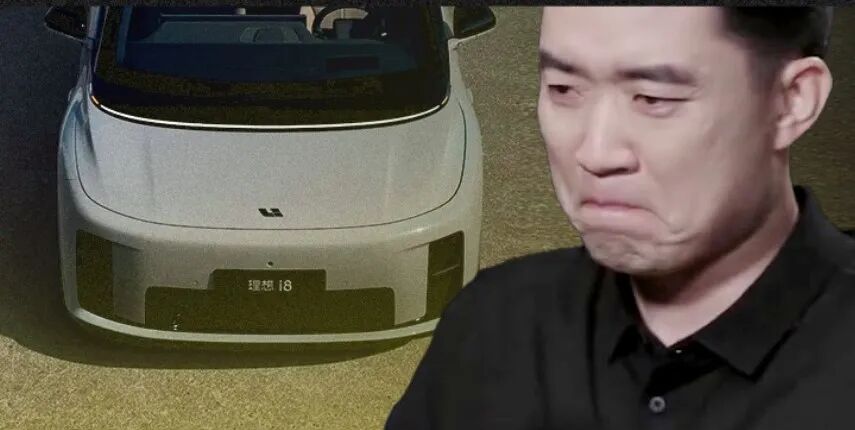
After the sales of the i8 fell short of expectations, Li Xiang began to make urgent adjustments. The starting price of the Li Auto i6 was lowered to 239,800 yuan, with standard dual - chamber air suspension and 5C super - charging, aiming to enter the market with a "low - price, high - configuration" strategy.
However, a simple price - cutting strategy is a double - edged sword. The price of the i6 highly overlaps with that of the extended - range model L6. With the same brand and similar prices, the pure - electric i6 with higher - end configurations is likely to cause internal customer diversion.
More importantly, Li Auto has long relied on the market above 300,000 yuan to build its brand image. Now that it is entering the 200,000 - yuan price range, it is questionable whether it can maintain its "high - end" label.
On the other hand, Li Auto's reputation for pure - electric technology has not been fully established. Leaving aside whether the recall of the MEGA had a negative impact, compared with NIO's global network of 8,386 charging and battery - swapping stations, Li Auto's 3,000 super - charging stations have weakened its differentiation advantage in the energy - replenishment system.
When the MEGA failed for the first time, Li Xiang attributed it to the negative public opinion caused by "negative public relations". However, when the i8 also failed to sell well, Li Xiang should re - evaluate the design aesthetics of the i series. In the third quarter of 2025, Li Auto delivered 93,200 vehicles, a year - on - year decline of 39.0%. The sales volume after the launch of the i series is even lower than that of last year's single extended - range L series.
Li Auto, which once dominated the new - energy vehicle startups with its "copy - cat" design, is now facing a crisis of design recognition in the pure - electric vehicle market.
As the most expensive vehicle in Li Auto's history, the MEGA was launched with a starting price of 559,800 yuan, a price that can buy a Mercedes - Benz E. In the eyes of Li Auto's team, it is a cross - era design. However, once the vehicle was launched, it failed to meet expectations, and the whole network mocked its ugly design. Li Xiang later said that the design team was very sad, and many people suggested an immediate redesign.
Judging from the subsequent i - series models, Li Xiang himself does not seem to have given up his obsession with the bullet - shaped design to reduce wind resistance. The i8 and i6 still follow the design concept of the MEGA, with only some improvements to the rear of the vehicle. It was not until the i8 also faced poor sales that Li Xiang truly realized the core of the problem.
In contrast, NIO's vehicle designs do not have obvious advantages but do not challenge public aesthetics. Although the LeDao L60 shares the design platform with NIO, its short front end, rounded lines, and function - oriented design set it apart from NIO's main - brand flagship models.
Not long ago, Li Xiang conducted an internal review. In the future, in terms of design and R & D, Li Auto decided to increase the differentiation between models. Instead of relying solely on configuration differences, the company will focus on design differentiation. This means that Li Auto's future models will follow one platform, one style, and there will be obvious differences in the appearance of different models.
This indicates that Li Xiang has let go of his obsession with the bullet - shaped design.
C
For an enterprise, the founder is the soul of the company. Their focus of energy largely determines the company's direction. Especially for car companies targeting C - end users, the founder's activity and image have a huge impact on sales.
In the past year, due to the sales problems, Li Bin conducted several internal self - reflections and carried out organizational reforms. Subsequently, the frequency and style of Li Bin's public appearances changed significantly. He became more approachable and frequently appeared in live - streaming rooms, user meetings, and technology press conferences. He even personally tested the battery life of a 150 - degree battery.
In promoting the company, Li Bin spared no effort. Not only did he save a lot of marketing expenses for NIO, but he also greatly enhanced user trust. Li Bin has maximized the marketing value of the boss.
This high - frequency exposure is similar to Lei Jun's support for Xiaomi cars and Jensen Huang's role as NVIDIA's "best salesperson". The goal is to build market confidence and increase brand attention.
Li Xiang initially attracted a large number of fans with his product - manager thinking and sharp views on social media. However, after the MEGA incident, Li Xiang became more cautious in his public statements. Especially after the marketing stunt of the i8 colliding with a truck at its launch, Li Xiang's content output on social platforms significantly decreased.
During the third - quarter earnings conference call, Li Xiang's speech focused more on the company's strategy and internal management. His attention has shifted from the front line of marketing to the company's internal affairs. His personal input in the car - making business has greatly decreased, and he has instead focused on AI technology and top - level strategy. This shift in personal energy has inevitably reduced his influence in the automotive industry.

However, the situation has changed. For Li Auto at its peak, public - opinion control was the top priority. But at this stage, Li Auto needs all employees, especially Li Xiang himself, to focus on selling cars.
Li Bin once said in an internal speech that "the golden age of extended - range three - row SUVs is passing". At the same time, many competitors, such as AITO and Leapmotor, have entered the extended - range market. Li Auto's first - mover advantages, such as the "refrigerator, color TV, and big sofa" configuration, have lost much of their appeal.
Facing these challenges, Li Auto has been wavering in its strategy and organization. It first publicly announced that it would "fully learn from Huawei" in terms of management, but recently announced that it would abandon Huawei's PBC system and return to the OKR management model of startups. This has led to the departure of some Huawei - affiliated executives, which reflects the adjustment of management thinking. Frequent adjustments inevitably bring internal strife.
Li Auto's current weakness is a concentrated manifestation of multiple problems in product, marketing, market, and brand. Now, in addition to improving its products, Li Auto also needs to make the most of its boss's influence.
At the meeting, Li Xiang set the adjustment goal for Li Auto: to transform cars into "robot - shaped vehicles". The company plans to invest 12 billion yuan in R & D in 2025, with 50% specifically allocated to the AI field. This is a long - term battle with high investment, and it is difficult to directly boost sales in the short term.
The long - term vision is clear, but Li Xiang still has not provided a clear answer on how to revive sales in the short term. Moreover, the AI strategy also requires Li Auto to rely on its main business of car sales for continuous financial support.
Although Li Auto's sales volume has declined, it still remains above 30,000 vehicles. By re - adjusting its models and learning from Li Bin and He Xiaopeng, who have emerged from difficult times, Li Auto is expected to return to its peak monthly sales of 50,000 vehicles in the first half of next year. Moreover, Li Auto has nearly 100 billion yuan in cash on its balance sheet, which means it is more capable of waging a long - term war than NIO and XPeng.
As the technological - route dividends in the automotive industry fade, companies like Li Auto must strike a balance between scale and profit margin, as well as between