Is it considered a "successful breakthrough" when the cash flow turns positive? No, NIO's recovery has just begun.
A financial report that achieved the best gross profit margin in three years, turned operating cash flow positive, and saw a sharp increase in delivery volume has brought NIO back into the spotlight after a long absence.
At the performance conference that evening, Li Bin, the founder, chairman, and CEO of NIO, said, "The strong growth momentum in performance is attributed to the comprehensive competitiveness of the products under the NIO, LeDao, and Firefly brands. These products have continued to be favored by users in their respective niche markets."

Image source: Internet
Looking back at NIO's eleven - year development history, "loss" has always been its most prominent label. Among all the new Chinese car - making forces, NIO has also suffered the most severe cumulative losses.
Public data shows that from 2016 to 2024, NIO's net losses were 2.573 billion yuan, 5.021 billion yuan, 9.639 billion yuan, 11.295 billion yuan, 5.304 billion yuan, 4.020 billion yuan, 14.437 billion yuan, 5.593 billion yuan, and 22.4 billion yuan respectively. In total over nine years, this figure has reached a staggering 80.282 billion yuan, like a heavy mountain.
Amid the market's excitement, a core question has emerged: Has this new car - making force, which has been mired in losses for years, really reached a turning point in its fate?
A closer look at the financial report reveals that beneath the surface, NIO is still walking on a precarious ridge. On the left is the emerging dawn of efficiency improvement and cost optimization, while on the right is the bottomless pit of net losses and the scale dilemma that has not been fully tested.
Image source: Internet
The "efficiency revolution" led by Li Bin has bought NIO some time to survive, but the journey to final profitability is still long and arduous.
Efficiency dividends are realized, but the foundation is still shallow
The most core highlight of this financial report is that a series of key indicators prove that Li Bin's "efficiency revolution" has begun to yield results. This is not a superficial adjustment but a fundamental reform.
Record - high sales and revenue: In the third quarter, NIO delivered 87,071 vehicles, a year - on - year increase of 40.8% and a quarter - on - quarter increase of 20.8%. Revenue reached 21.79 billion yuan, a year - on - year increase of 16.7% and a quarter - on - quarter increase of 14.7%. Both figures set new records since the company's establishment.
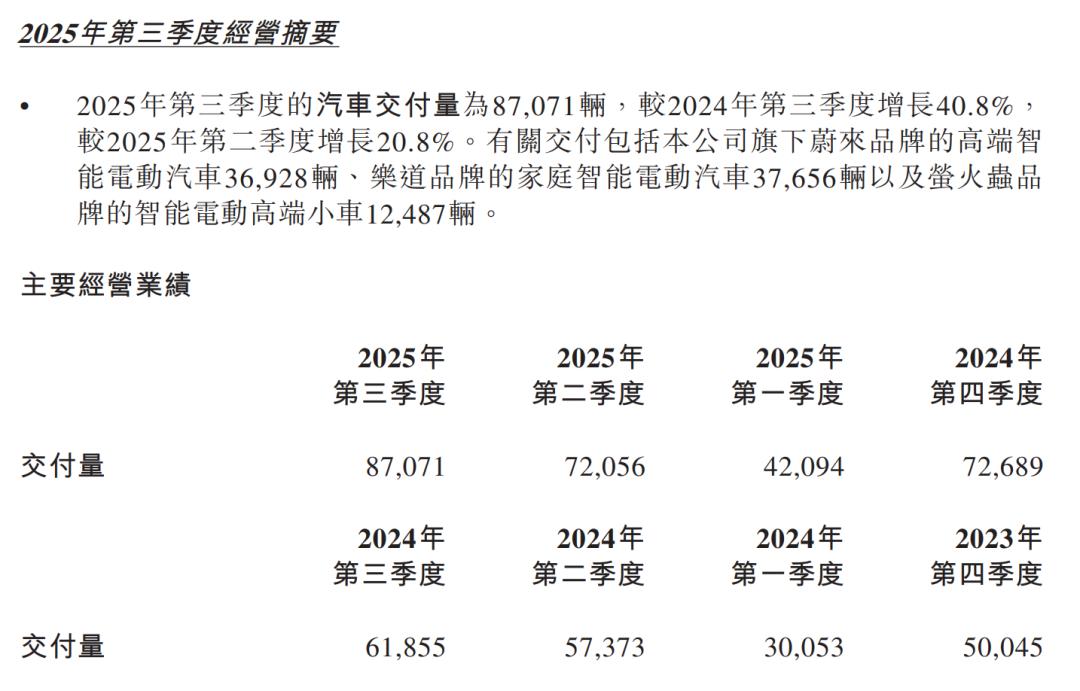
Image source: NIO's Q3 2025 report
The multi - brand strategy has formed a synergistic effect: In terms of brand composition, the NIO brand delivered approximately 36,900 vehicles, the LeDao brand about 37,700 vehicles, and the Firefly brand about 12,500 vehicles. The three brands cover a price range from 100,000 to 800,000 yuan, forming a complete product matrix.
Looking at the long - term trend, NIO's growth momentum has been strong this year. In October this year, NIO delivered 40,397 new vehicles, a year - on - year increase of 92.6%. The cumulative sales from January to October have reached 241,500 vehicles, exceeding the full - year performance in 2024. It is expected that the full - year delivery in 2025 will exceed 320,000 vehicles, setting a new historical record.
The reversal of the gross profit margin is the most crucial. The comprehensive gross profit margin in the third quarter was 13.9%, and the gross profit margin for vehicles was 14.7%, both reaching new highs in the past three years.
Behind this are three overlapping factors: First, the optimization of the supply chain and the implementation of the self - developed Shenji NX9031 chip have led to a decrease in the cost per vehicle. Second, the product structure has been optimized, and the proportion of high - margin models has increased. Among them, the gross profit margin of the new ES8 exceeded 20%, that of the ES6 and EC6 reached or exceeded 25%, and that of the LeDao L60 remained in the range of 15% - 20%. Third, management measures such as organizational streamlining and strict cost control have started to take effect.

Image source: NIO's official website
Secondly, the positive operating cash flow is of more practical significance. For a company that has long relied on external "blood transfusions", this is a landmark step towards "self - blood - making".
It not only benefits from the cash inflow brought by the increase in delivery volume but also reflects the company's progress in working capital management - the efficiency of inventory control and capital turnover is improving. The cash reserve in the third quarter was 36.7 billion yuan, a significant quarter - on - quarter increase of nearly 10 billion yuan, achieving positive operating cash flow and free cash flow.
However, this interim victory still has many hidden concerns.
Currently, NIO's gross profit margin level heavily depends on the vehicle model structure and pricing. If competition drives down the premium or the upstream material/transportation costs rise, the gross profit may quickly decline.
Similarly, whether the positive operating cash flow can be sustained or is just a flash in the pan during the peak delivery period still needs to be observed.
The dividends of efficiency improvement will eventually reach a ceiling. NIO's situation has only "improved in indicators" and is far from being "fully recovered".
Three steps to profitability, only halfway there
If we compare NIO's path to profitability to climbing three steps - "turning the gross profit positive", "turning the operating cash flow positive", and "turning the net profit positive" - then NIO is currently standing on the second step, catching its breath.
It has just managed to cross the threshold of positive operating cash flow, but looking up, the steepest third step, "turning the net profit positive", is still shrouded in clouds and seems far away.
Although the loss is narrowing - the net loss in the third quarter of 2025 was 3.48 billion yuan, a year - on - year decrease of 31.2%; the adjusted net loss under non - GAAP was 2.735 billion yuan, a year - on - year narrowing of 38.0% - the existence of the huge loss itself mercilessly reveals a reality: Under the "efficiency revolution" vigorously promoted by Li Bin, the company's large fixed cost and expense structure is still a "beast" devouring profits.
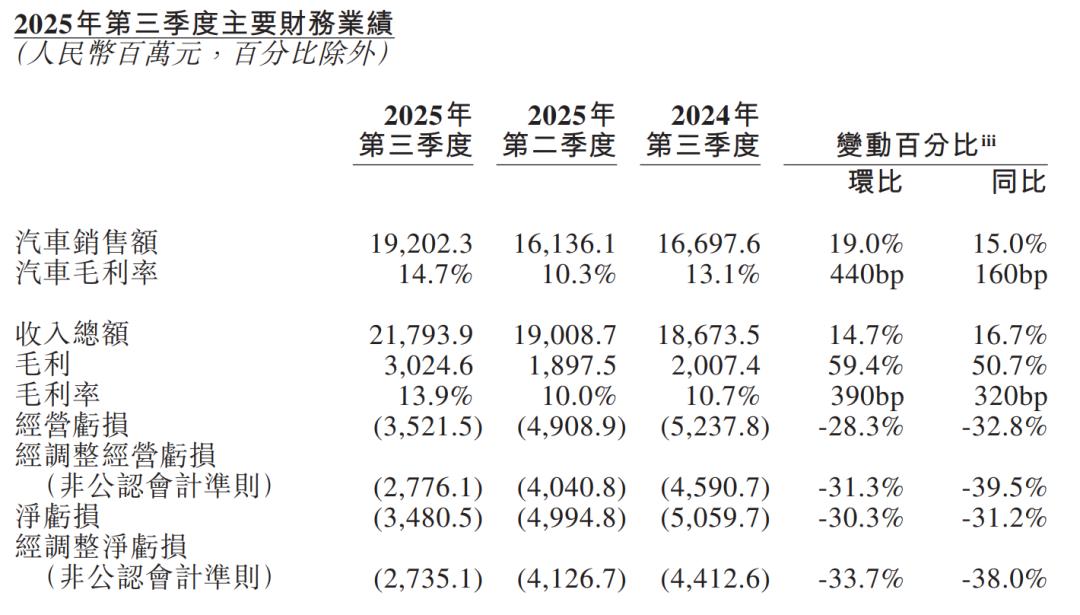
Image source: NIO's Q3 2025 report
This "beast" consists of two parts: First, it is the heavy burden brought by the heavy - asset layout. As of October 31, NIO has built 3,614 battery - swapping stations, 4,801 charging stations, and 27,396 charging piles globally. This large - scale energy network completed its 90 millionth battery - swapping service on October 26, with an average of one vehicle "setting off fully charged" every 0.86 seconds.
Battery swapping is indeed NIO's most unique moat, providing users with an irreplaceable experience. However, from a business perspective, each battery - swapping station is a continuous cost center - the high construction investment, ongoing land rent, equipment depreciation, battery reserves, and operating labor costs are all continuously consuming the company's cash flow. Before achieving sufficient network effects and large - scale revenue, this proud energy system will continue to "bleed".
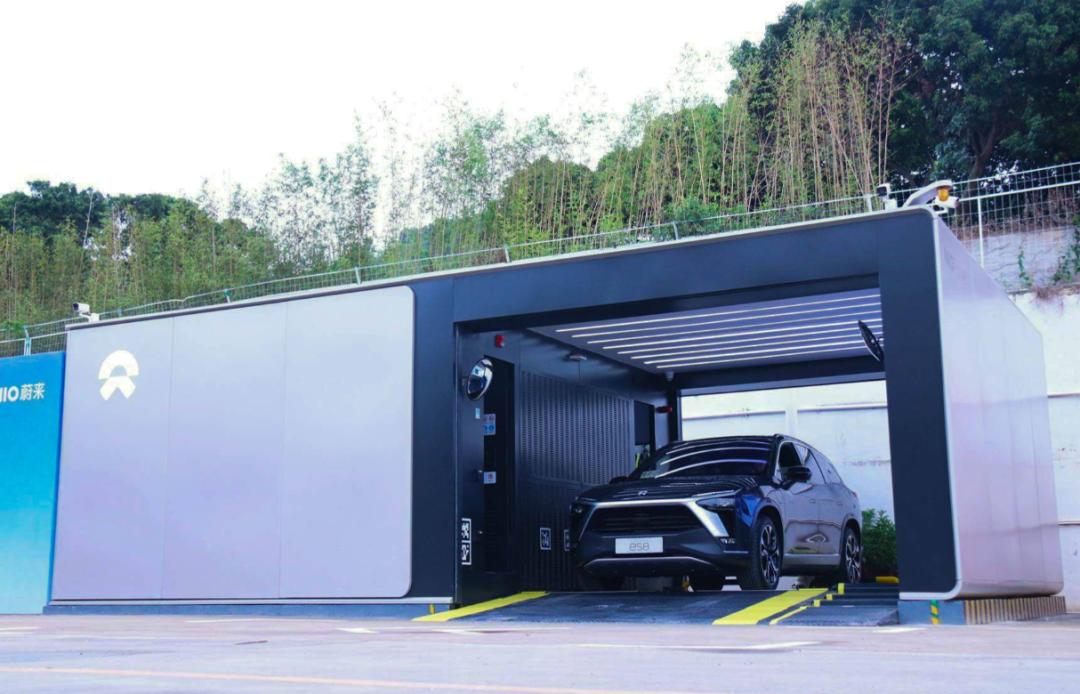
Image source: Internet
Charging stations and piles are also engaged in price wars with other charging networks. The author once charged at a NIO charging station, and the unit price was indeed relatively favorable, but it also means that they cannot contribute much profit in the short term and may even require financial support.
Second, the three major expenses are still high. Although Li Bin has vigorously promoted cost - reduction and efficiency - improvement measures, the R & D investment necessary to maintain the technological leading position and the high - end brand image, as well as the maintenance costs of the sales and service channels across the country, are still substantial.
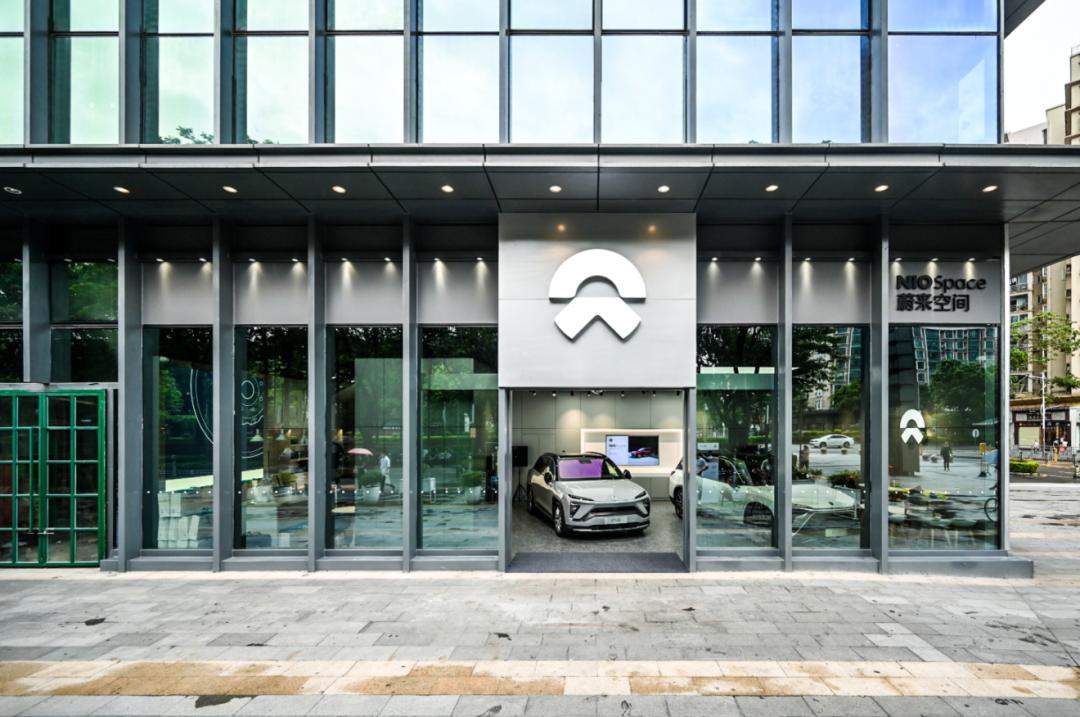
Image source: Internet
This means that Li Bin's "efficiency revolution" has not yet touched these deepest - seated structural costs. His current efforts are more like a strategist's well - calculated "trading space for time" - winning a precious breathing period by improving operational efficiency and stockpiling ammunition for the upcoming ultimate battle.
The real outcome is still in the distance.
The ultimate gamble: Only the scale formed by technological advantages is the only "life - saving pill"
Ultimately, efficiency improvement is just a "life - sustaining pill" for NIO, while the real "life - saving pill" always lies in achieving large - scale profitability. In this industry where scale determines survival, without large - scale deliveries, any achievements in refined operations will ultimately be like water without a source.
NIO's future depends on three interlocking strategic gambles:
The technology gamble is fundamental
NIO bets that full - stack self - development can establish long - term technological barriers and achieve continuous cost reduction. However, this path requires continuous huge R & D investment and is a race against time. The core lies in whether its self - developed achievements can truly be transformed into irreplaceable product advantages and continuously decreasing marginal costs before the window period closes.
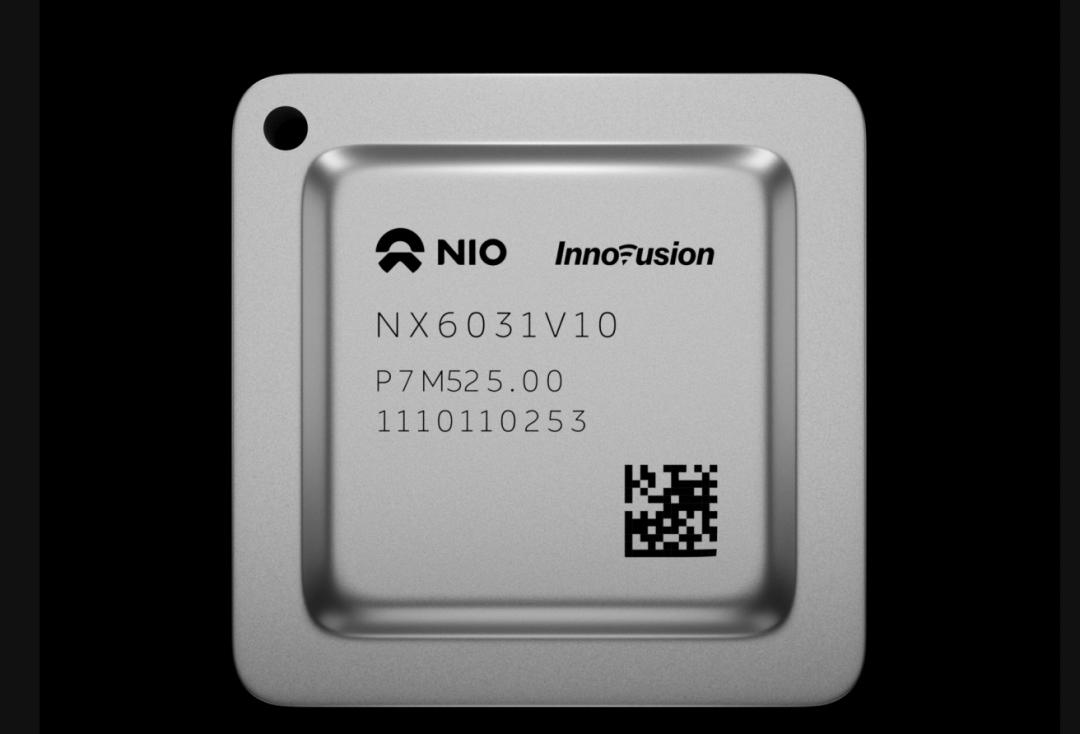
Image source: NIO's official website
The ecological gamble is the most burdensome
NIO firmly believes that the battery - swapping network will create high user stickiness and energy service revenue, enabling it to stand out in the competition. However, this "moat" requires continuous investment. The key lies in whether this heavy - asset system can transform from the current "cost black hole" into a value - creating engine capable of self - sustaining.
The brand gamble determines survival
Sub - brands such as LeDao and Firefly carry the mission of NIO's scale breakthrough. The main brand builds a high - end image, while the sub - brands are responsible for increasing sales volume to share costs. Whether this strategy can continue to be effective will directly determine NIO's survival space.

Image source: Internet
These three gambles are interdependent and mutually restrictive:
Technological advantages need scale to spread R & D costs; the value of the battery - swapping network needs a large enough user base to support it; and the success of sub - brands depends on strict cost control and scale. But can the profits after affordable large - scale production offset the investment in technology and battery swapping?
The pricing dilemma has presented challenges
NIO's average selling price in the third quarter dropped to 220,500 yuan, a year - on - year decrease of 49,000 yuan, mainly due to the increased sales proportion of the low - priced Firefly brand. While the multi - brand strategy expands market coverage, it inevitably dilutes the brand's premium ability. How to balance sales growth and brand positioning has become a long - term issue that NIO must face.
External threats cannot be underestimated either. Next year, many extended - range models equipped with large - capacity batteries will be launched, and their pure - electric range will be significantly increased, even approaching that of the same - class pure - electric vehicles. This may pose new market pressure on NIO, which adheres to the pure - electric route.
Internal challenges are also severe. The new ES8 needs to achieve a monthly delivery target of 15,000 units in December, and the pressure to ramp up production capacity is huge. There are reports that NIO has submitted a request to the Hefei government to urgently recruit 1,000 people by the end of October to increase production capacity.
As Li Bin said at the earnings conference, the decline in replacement subsidies has had a significant impact on the market, and it is difficult for the entire industry to reproduce last year's end - of - year surge effect. Among them, mid - and low -