A global wave of "founder returns" is taking place.
On the evening of November 26th, during Li Auto's earnings conference call, Li Xiang's opening remarks hardly resembled the standard speech of a CEO of a rapidly growing car company. Instead of starting with figures like revenue and profit, which could either be impressive or disappointing, he first admitted a judgment that would almost be considered "ungraceful" in the context of a large company - over the past three years, Li Auto had strenuously adopted the management system of professional managers, only to become an increasingly inferior version of itself.
In the third quarter of 2025, Li Auto released its least - favored quarterly report since its establishment. Revenue declined by more than 30% year - on - year, ending 11 consecutive quarters of profitability. The delivery volume was overtaken by competitors, and the stock price dropped by 30% in just two months.
Standing at the threshold of the company's second decade, Li Xiang decided to overhaul the organization. Starting from the fourth quarter of this year, Li Auto will firmly return to the management model of a startup, bidding farewell to the governance system of professional managers.
Meanwhile, he mentioned two names: NVIDIA and Tesla.
In Li Xiang's view, these two companies, regarded as the world's most powerful technology companies at present, still manage in a typical "startup way." Their founders firmly hold the steering wheel and are willing to take personal responsibility for high - risk long - term bets. "If the world's most powerful companies can use the management method of startups, what reason do we have to abandon our most proficient way?"
Looking beyond Li Auto's timeline, this scenario is not an isolated case. In the past two years, many leading Chinese companies have taken similar actions: founders or veterans have returned to the forefront, redefined the company's problems, and retracted the power center from processes and positions to those who have the most personal stake in the company's fate.
Earlier, on the other side of the Pacific, well - known American investor Paul Graham wrote "Founder Mode" in the autumn of 2024, putting the "founder mode" and the "professional manager mode" on the two ends of a scale, triggering a global debate on "who is more suitable to hold the steering wheel in an era of high uncertainty."
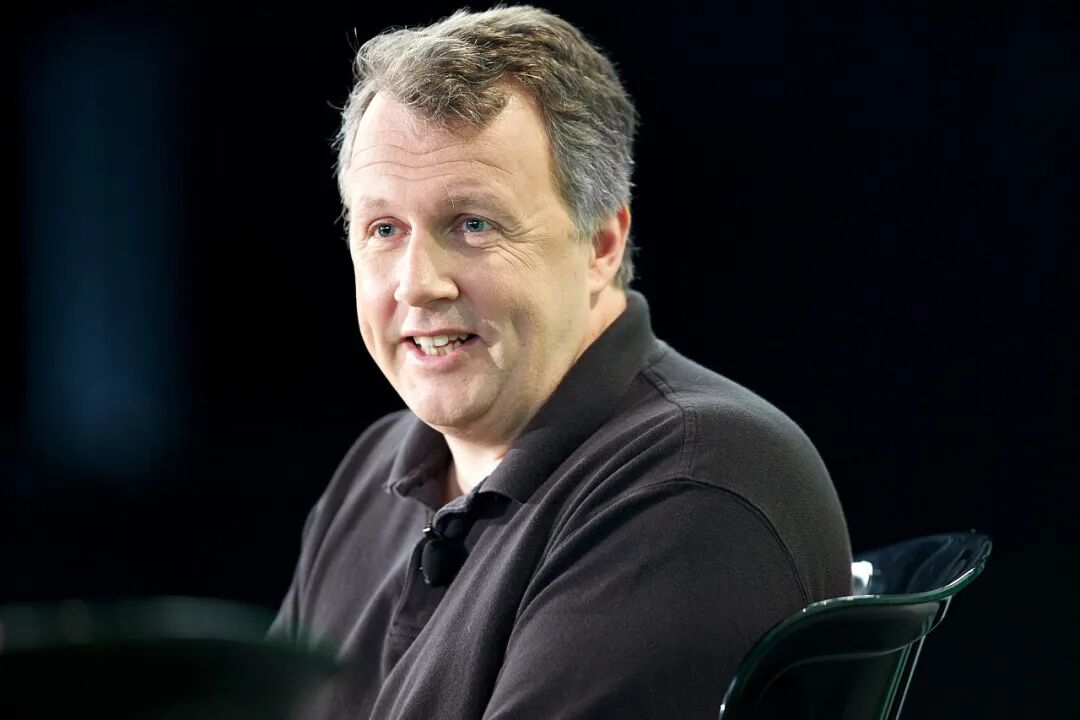
Paul Graham, a designer, venture capitalist, blogger, and technical writer. He is well - known for his work in Lisp and is one of the founders of the earliest web application, Viaweb, which was later acquired by Yahoo for more than $50 million and became Yahoo! Store. He co - founded the influential startup accelerator and seed capital firm, Y Combinator.
When Li Xiang announced at the earnings conference that Li Auto would "return to the management model of a startup," it seemed like a choice for the next decade of a new - energy vehicle company. In essence, he brought a bigger question to the fore: in an era when technological paradigms are constantly rewritten and the business environment is highly unstable, the professional manager model, once regarded as the standard answer by business schools, is being collectively re - examined by founders, boards of directors, and the capital market.
This article attempts to start from the specific example of Li Auto to sort out the domestic and overseas context of this "resurgence of the founder mode" and also tries to answer a more difficult question - what kind of "center" does a company really need to survive longer in an uncertain era?
Li Xiang Decides to Drive Himself
In the past three years, Li Auto has gradually grown into a "big company," and it has also been a process in which the founder distanced himself from the company and then pulled himself back.
In the early years, Li Auto was a latecomer among new car - making forces. Li Xiang often talked about products, energy replenishment, and family travel in public. Many people in the car owners' groups could feel the presence of the "boss in person." As the company grew, Li Auto began to follow the rhythm of a standard large - scale enterprise: thicker management report PPTs, more complex process abbreviations, and more frequent business meetings. The founder gradually retreated to a more distant position, and the organizational structure became like the "professional manager governance system" in textbooks.
Around 2022, Li Auto seriously learned how to be a mature large - scale company. They invited a group of managers with backgrounds in large companies, especially those from the "Huawei system," established the IPD process, and introduced the PBC performance system, trying to make the business more stable and controllable through more precise goal decomposition and cross - departmental collaboration. The management hierarchy increased, and many things required writing emails first, then having meetings, and finally scheduling. The decision - making chain gradually lengthened.
In those years, Li Auto was like changing its framework: from "the founder makes decisions + a small team charges forward" to "the professional manager system + process - based management." Until the earnings conference in the autumn of 2025, Li Xiang simply admitted on the phone that this attempt had made Li Auto "become an increasingly inferior version of itself."
The data magnified this "discomfort" to a level that everyone could see. In the third quarter of 2025, Li Auto's revenue was 27.4 billion yuan, a year - on - year decline of 36%. The net profit turned from profit to loss, and the delivery volume was overtaken by competitors. For the first time in three years, the company took a step back collectively in the financial report.
A large part of the loss in the third quarter came from the provision for the recall cost of MEGA. Although this can be explained financially, it is hard to be overlooked psychologically. For a company that has always emphasized "rational expansion" and "not wasting bullets," this quarterly report is more symbolic than the numbers themselves.
Immediately afterwards, he announced that he would completely turn the steering wheel back. Li Xiang said at the conference call that starting from the fourth quarter of this year, Li Auto would firmly abandon the professional manager governance system and fully return to the "startup management model," regarding this as the underlying choice for entering the second decade.
In his description, the so - called startup management model does not mean that the company's scale becomes smaller, but rather a complete reversal of the management logic: replacing layer - by - layer reporting with in - depth conversations, replacing task completion with user value, replacing resource occupation with efficiency improvement, and replacing creating information asymmetry with identifying key problems.
He also put it very personally, "I love cars, products, and artificial intelligence. My work is my greatest hobby. Why not use my most proficient abilities and methods to manage Li Auto?"
In the context of Chinese business, such a statement easily resonates in a simple yet powerful way.
Many comments pointed out directly when interpreting Li Auto's turn: it is "a bit early" for the founder to fade out of front - line management when the company is only ten years old in the current environment.
The Domestic Resurgence
Looking at a broader perspective, Li Auto is not the only Chinese example that is "turning back."
In the past two years, Alibaba has undergone a long and drastic shift: in September 2023, the second round of "baton - passing" after Jack Ma was completed. Joe Tsai took over as the chairman of the board of the group, and Wu Yongming, an early technical partner, became the CEO. This combination was interpreted by many observers as "veteran Alibaba employees + engineer - type veterans" returning to the forefront.
In the following two years, Wu Yongming promoted multiple rounds of organizational structure adjustments, retracted the "1 + 6+N" split strategy that was once prominently written in PPTs, and re - organized the business into four major sectors: domestic e - commerce, international e - commerce, cloud intelligence, and "all others." He also publicly set the three major priorities for the next decade as "technology - driven internet platforms, AI - driven technology businesses, and global business networks."
On the surface, this is a strategic adjustment from a "diversified group" to "focusing on the main business." Looking deeper, it is more like an action of "the return of the power center."
During Zhang Yong's era, Alibaba tried to delegate more power and responsibility to business groups, encouraging subsidiaries to fight independently, like an investment portfolio. After Joe Tsai and Wu Yongming took over, they brought e - commerce and cloud, the two historical foundations, back to the same table, included AI in the group - level priorities, and emphasized unified command and high - intensity investment.
Many people noticed a detail. Jack Ma repeatedly mentioned in internal meetings, "Return to Taobao, return to users, return to the internet." These words are typical of a founder's tone, using simple directional slogans to pull a company back to where it started from a complex strategic narrative. Alibaba even rebuilt an office in the style of "Room 202, Unit 1, Building 16, Huban Garden" in the park, making people who enter it immediately understand that the company is deliberately pulling itself back to the starting point dominated by the founder's spirit.
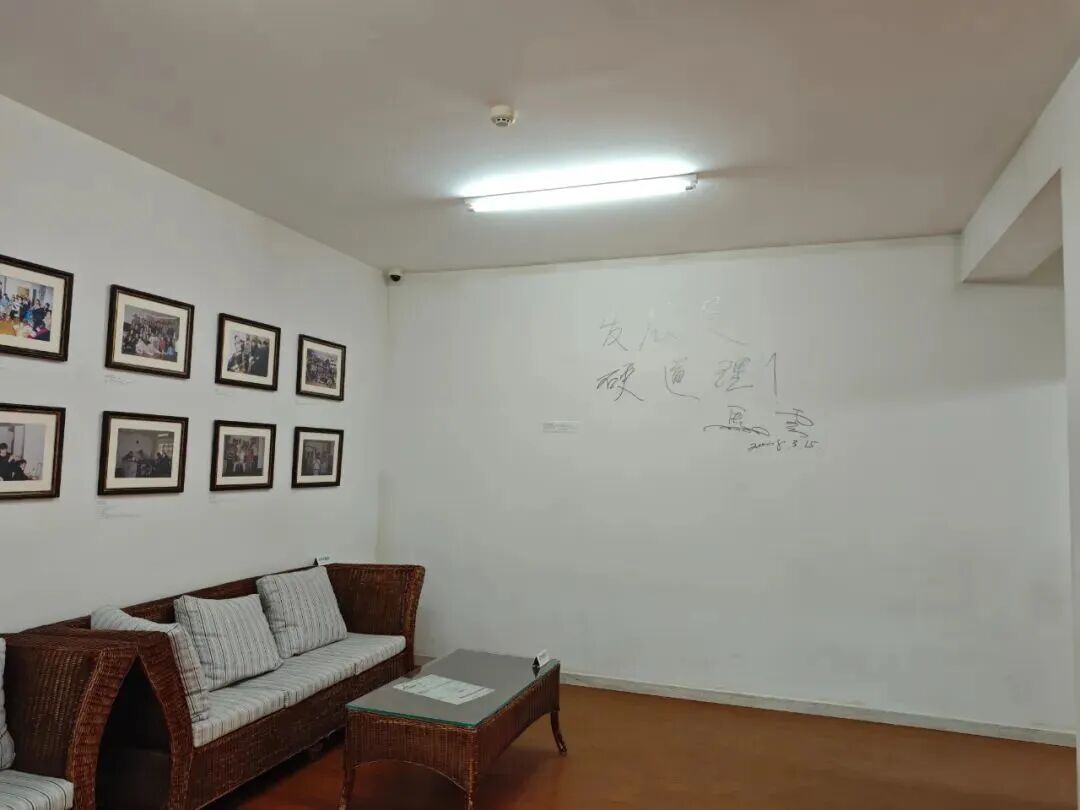
On the white wall inside the Huban Cottage, it is written, "Development is the absolute principle."
Similar situations are also quietly happening in some seemingly lower - profile companies. After pushing professional managers to the forefront for a few years, some private manufacturing enterprises have invited family members or the founding team back to the top position; some medium - sized internet companies have tried to let "air - dropped CEOs" take over completely, but in the end, the founders have to step in to clean up the mess and pull the direction back to the path they are familiar with.
The return of founders of technology giants is more mysterious. They may not all resume the title of CEO, but they have substantially regained control of the company through internal speeches, setting up new projects, or even "virtual avatars" to deal with fierce competition in the existing market.
Moreover, there are also founder returns in the consumer field. For example, Chen Xianbao of Qiaqia Foods returned to the front - line in the second half of 2024, specifically in charge of products, sales, and e - commerce. There are also Zhou Chengjian of Metersbonwe and Yang Hongchun of Liangpin Puzi.
These stories may not all make it to the hot search, but in the narratives of many industry insiders, they have gradually formed an unspoken consensus: in the new technological and industrial cycles, the person who can truly take full responsibility for a company's fate is still the one who signed at the beginning.
Putting these pieces together, we can find that the "return of founders" in China in the past two years mostly occurred under the same circumstances.
On the industry side, sectors such as new - energy vehicles, platform e - commerce, cloud computing, and large - scale models are all experiencing technological changes that almost rewrite the rules of the game. The existing profit models and valuation logics may be overthrown at any time; on the company side, many enterprises have entered the confused stage of the "second curve" from the high - growth period. Growth has slowed down, the stories have become old, and the organization has become bloated. They are promoting processes internally and talking about transformation externally; on the governance side, the previous enthusiasm for "professional management" has made many companies add more levels, more detailed KPIs, and heavier reporting mechanisms in a short period, but they have not developed the corresponding long - term vision and risk - taking ability.
At this node where these three pressures overlap, the "return of the founder" is often not a heroic personal return but a governance correction forced by reality. When the environment is no longer stable and the technological path is no longer clear, the board of directors, shareholders, and employees will tend to push the person who is most representative of the company back to the forefront to answer the questions that cannot be answered by processes and professional resumes.
For the founder himself, this is not necessarily a glorious moment. It is more of a mixture of exhaustion and responsibility, like "being dragged back to run another round after retreating to the back row." For employees, seeing more internal letters from the founder, all - staff meetings, and product reviews means that the situation is about to change, and it also brings a sense of security that "someone is coming out to take the responsibility."
Therefore, when we place Li Auto in this timeline, it is no longer just a self - rescue story of a car company under business pressure, but an answer to a question collectively faced by Chinese companies in the new round of technological and industrial reconstruction: when the standard solutions of the professional manager era are increasingly difficult to apply in the new environment, the founder mode is brought back, not for nostalgia, but because many key decisions have returned to the origin where "only the person who bears all the consequences can make them."
Silicon Valley Also Brings Back the Old Drivers
The most prominent feature of the "return of founders" in the US technology circle is their direct involvement in the most cutting - edge AI battles. They have realized that professional managers are good at maintaining the status quo but cannot make radical and life - and - death decisions during periods of major technological disruptions.
Mark Zuckerberg, the founder of Meta, launched the "Year of Efficiency" in 2022 and took charge of strategy and execution again. In the same year, after Elon Musk acquired Twitter (now renamed X), he became the CEO himself. In 2023, Sergey Brin, the founder of Google, made a deep return and directly promoted the merger of the two core AI teams, DeepMind and Brain, and oversaw the entire process of the launch of the Gemini large - scale model.
In 2025, Roman Arnold, the founder of the German bicycle brand Canyon, became the executive chairman in September. At that time, Canyon was in a critical stage of brand expansion and globalization. After Arnold's return, he led the formulation of long - term strategies, strengthened the direct - sales model and product innovation, and connected brand inheritance with global expansion.
The person who first concretized this trend was Paul Graham. In September 2024, he wrote a long article on his personal website titled "Founder Mode."
The reason for him to write this article was very simple. He listened to an internal sharing by Brian Chesky, the co - founder and CEO of Airbnb, at an event of the investment institution YC. There was a group of successful founders sitting on the spot. After the sharing, almost everyone said that it was the best sharing by an entrepreneur they had ever heard, and they all admitted that they had been trapped by the same set of "correct postures for managers."
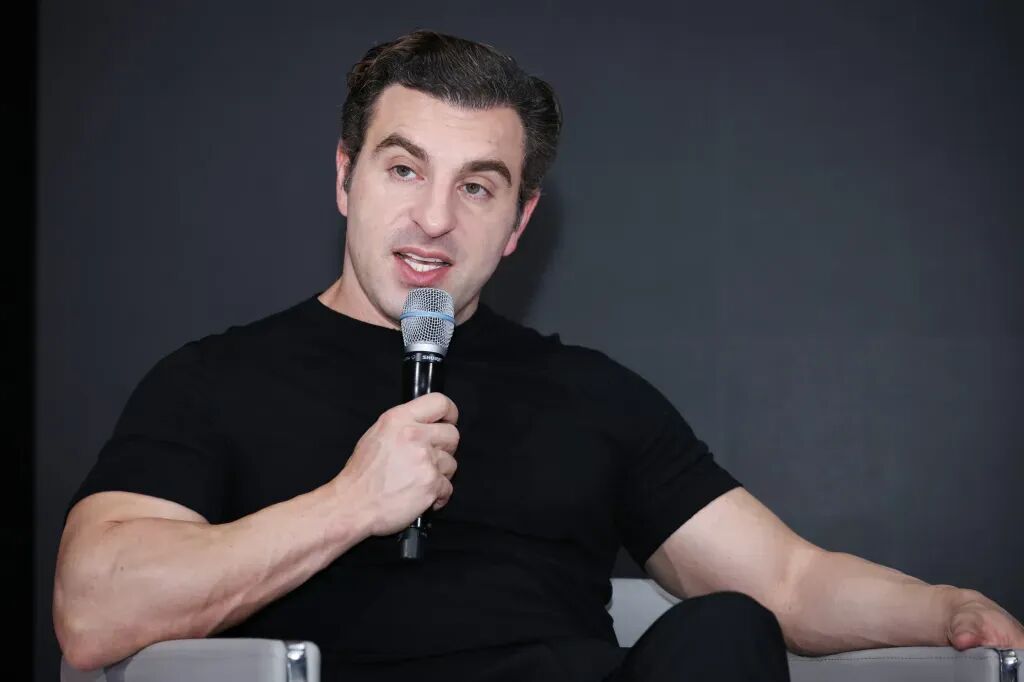
Brian Chesky, CEO of Airbnb
This set of "correct postures" is very familiar. After founders scale up their startups through the "founder mode," they need to learn the "manager mode" - recruit more professional managers, delegate power to them, not do everything personally, and not engage in "micro - management." The CEO should be like a high - level designer, only focusing on key indicators and a few top - level executives.
Brian Chesky initially followed this advice completely. When Airbnb really grew into a global company, he found that he had been led astray by this logic. With more professional managers, complex hierarchies, and thickened information barriers, many "good - looking" management actions damaged the user experience. After 2020, the number of orders almost halved, and the loss reached about $4.6 billion. The company's founder himself became more and more distant from the product and the front - line, and the company was on the verge of survival.
Later, he learned from Steve Jobs, the founder of Apple. He laid off about 25% of the employees, cut a bunch of side - businesses such as airline ticket services and film and television content production, and only focused on "accommodation." He personally supervised functions, design, and key - position recruitment, and once regarded dozens of people as his "direct subordinates," returning to a state of high - level involvement and "making cross - level phone calls everywhere." In 2022, the company achieved its first large - scale profit in history, with a net profit of about $1.89 billion.
Brian Chesky never left the company; he just