A 46-year-old Hubei entrepreneur is eyeing the Hong Kong stock market again after selling one million units of baby hardware products in the US last year.
Author: Ou Xue
Editor: Yuan Silai
A baby monitor that doesn't rely on WiFi and has no complex app has sold over one million units on Amazon in a year, accounting for 97% of a company's revenue.
Now, this company also hopes to support an IPO through its baby monitors.
In mid - 2025, Juzhi Technology submitted its prospectus to the Hong Kong Stock Exchange again. This is its second attempt after the expiration of its first submission in January this year.
According to a report by Frost & Sullivan, in terms of market position, Juzhi Technology has firmly ranked among the first echelon in the Chinese baby monitor export market to the United States. In terms of total export volume, the company ranks among the top three in the industry. In the online export market, its performance is even more outstanding, leading the industry with a 38.7% share.
Juzhi Technology's IPO story is a typical microcosm of the development of Chinese cross - border e - commerce enterprises.
It precisely illustrates how a company can rapidly rise with the model of "niche best - selling products + platform dividends", but also clearly reveals the growth bottlenecks and structural risks it encounters after scale expansion.
From 2022 to 2024, Juzhi Technology's revenue increased from 190 million yuan to 462 million yuan, and its net profit soared from 34.82 million yuan to 94.69 million yuan. However, in the first four months of 2025, the company experienced a situation of "increasing revenue but not profit" - revenue increased by 6.4%, while net profit decreased by 13.7%.
After Chinese enterprises successfully enter the market with a single product, how should they build the ability of continuous innovation and a more robust business structure?
For Juzhi Technology, which is waiting for the test of the capital market, this question also determines whether it can gain the long - term trust of investors.
(Image source: Company official website)

How can baby monitors support an IPO?
Juzhi Technology was founded in 2005 and is headquartered in Huanggang, Hubei. Its predecessor was Shenzhen Binate. The company's founder, Liu Qiang, is 46 years old this year and has been deeply involved in the electronics industry for over 24 years.
Juzhi Technology is a typical "single - product - driven" enterprise. Its success lies in precisely seizing a niche market and achieving explosive growth with the help of cross - border e - commerce dividends.
Since the company launched the "HelloBaby" brand in 2016, it has been focusing on the baby monitor field. By the end of 2024, the sales volume of its baby monitors had reached 1.138 million units, almost tripling compared to two years ago.
Its revenue also increased from 190 million yuan in 2022 to 462 million yuan in 2024, with a compound annual growth rate of up to 56%. The net profit increased from 34.82 million yuan to 94.69 million yuan. In 2024, the gross profit margin reached 52.69%.
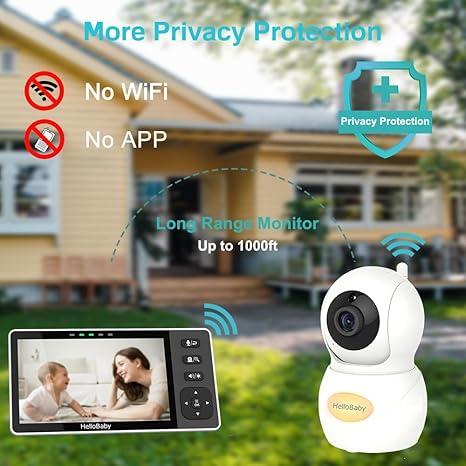
Juzhi Technology's product positioning is also quite distinctive - it doesn't rely on WiFi connection and has no supporting app. Instead, it uses its self - developed 2.4GHz wireless audio - video transmission technology to achieve a direct connection between the monitor and the display.
This design has become its core selling point, simplifying the usage process and eliminating the concerns of American parents about privacy leakage.
In terms of pricing strategy, the prices of the three most representative HelloBaby products are all around $60, far lower than overseas competitors.
Take the American brand Nanit as an example. Its product is priced at over $300, almost five times that of HelloBaby. This affordable pricing has enabled it to successfully enter the American mass market.
From 2022 to 2024, the revenue share of its core product, the baby monitor, climbed from 91.5% to 97%, almost becoming the company's entire source of income.
Juzhi Technology precisely seized the window of opportunity for the global baby monitor market to explode.
According to Frost & Sullivan data, the global baby monitor market sales volume reached 18.7 million units in 2023 and is expected to soar to 27.6 million units by 2028, with the North American market accounting for 40% of this growth.
At the same time, Juzhi Technology has taken the lead in product iteration and channel positioning. Since the company launched its first "HelloBaby" baby monitor in 2016, it has been continuously expanding its product matrix. From 2022 to 2024, it launched a total of 98 new models of monitors, with the number doubling in 2023. This rapid iteration ability has enabled it to maintain a certain product leadership in the competition.
In terms of channels, Juzhi Technology entered Amazon in 2016, laying out cross - border e - commerce in advance. With its first - mover advantage, the company quickly occupied the American online market, with an online export market share of 38.7% in 2024, ranking first in the industry.

The growth bottleneck of single - product dependence
Although Juzhi Technology has performed well in the baby monitor field, the problem of single - product dependence in its business structure is becoming a key risk restricting its long - term development.
The first challenge the company faces is the single - product structure. The proportion of baby monitors in the company's revenue climbed from 91.5% in 2022 to 97% in 2024, almost becoming the company's entire source of income. This extremely concentrated product structure makes the company's risk - resistance ability extremely fragile.
What's even more worrying is that the continuous decline in the global birth rate constitutes a potential industry ceiling. According to World Bank data, the global birth rate dropped from 17.1‰ in 2020 to 16.3‰ in 2023 and is expected to further drop to 15.6‰ in 2030.
In the United States, Juzhi Technology's largest market, the birth rate also dropped from 10.9‰ in 2020 to 10.7‰ in 2023. In the long run, the shrinking of the potential customer base will inevitably affect the industry's growth space.
Regional market concentration is another major risk point. The company's overseas revenue accounts for over 88%, and the revenue from the US market climbed from 56.8% in 2022 to 75.5% in 2024. This high dependence on a single national market exposes the company to geopolitical and trade policy risks.
The prospectus once pointed out the risks. Trade restrictions, trade barriers, and protection policies implemented by the United States against the company's products may have a significant adverse impact on the company's gross profit margin, business, prospects, operating performance, and financial condition.
The problem of sales channel dependence is also prominent. From 2022 to 2024, the proportion of the company's revenue from Amazon increased from 85.4% to 95.6%. Although it dropped to 86.6% in the first four months of 2025, the dependence is still extremely high.
This excessive dependence on a single platform brings triple risks: frequent adjustments to platform policies directly affect sellers' profits; intense competition within the platform leads to continuous increases in marketing investment; and platform fees continuously erode the company's profit margin.
These single - product dependence risks have initially manifested in the performance. In 2025, Juzhi Technology showed signs of growth fatigue, and transformation is imminent.
From January to April 2025, Juzhi Technology's revenue increased by 6.4% year - on - year, but its net profit decreased by 13.7% year - on - year, showing a situation of "increasing revenue but not profit".
Analysis of the prospectus data shows that this is due to the dual squeeze of the decline in the average product price and the increase in marketing costs. The average product price dropped from 433.6 yuan in 2022 to 389.2 yuan in 2025. During the same period, marketing and advertising expenses soared from 17 million yuan to 35.7 million yuan (in the first nine months of 2024).
What's even more serious is that the company's return amount increased from 17.2 million yuan in 2022 to 45.2 million yuan in 2024, and problems with product quality and stability began to emerge.
From an industry perspective, although the baby monitor market is still growing, the competition pattern is becoming increasingly fierce. Traditional home appliance giants and emerging technology companies have entered the market, and the problem of product homogenization is becoming increasingly serious. In the future, the focus of industry competition will shift from hardware functions to software algorithms, data services, and ecosystem construction.
For Juzhi Technology, an IPO may be both a milestone and a life - and - death line.
The capital market will not be satisfied with a single story for a long time. The company urgently needs to prove to investors its ability to diversify its business and its clear plan for a second growth curve. Otherwise, even if it goes public successfully, it will be difficult to maintain a long - term valuation in the volatile capital market.