Five years after Google AI became a legend, AlphaFold won the Nobel Prize and predicted all 200 million protein structures.
A 50-year protein structure puzzle has been solved by AI in just a few minutes! The latest review in Nature shows that AlphaFold has been used by 3.3 million researchers. In Turkey, two undergraduate students completed 15 structural studies with the help of this free tool, cracking the barrier of scientific research. For the first time, the scientific research world is advancing at "digital speed".
Have you ever stayed in the laboratory until 2 a.m.?
Performing enzyme digestion, purification, running samples on the machine, adjusting parameters, and finally staring at a faint band, repeating in your mind: If this doesn't yield results, I'll have wasted a whole year.
On the other side of the world, two Turkish undergraduate students are also staring at the screen.
But what they're waiting for is not the result from an instrument, but the structural diagram generated by an AI model called AlphaFold.
Later, they compiled these structures into 15 research papers.
Without the support of top experts and without a list of luxurious equipment, their "core tool" is just a free web page.
This is not only a revolution in efficiency, but also like a "super tool manual" for scientific researchers in the new era.
A 50-year puzzle gets a speed boost from AI
What exactly does a protein look like? This question has puzzled humanity for a full half - century.
You can think of proteins as "miniature complex machines" in cells, the most precise gears of life.
They are just "strings" made up of a series of amino acids, yet they have to fold themselves into precise 3D structures within cells.
A slight mis - fold can cause them to lose their function, or even turn into toxic deposits and trigger diseases.
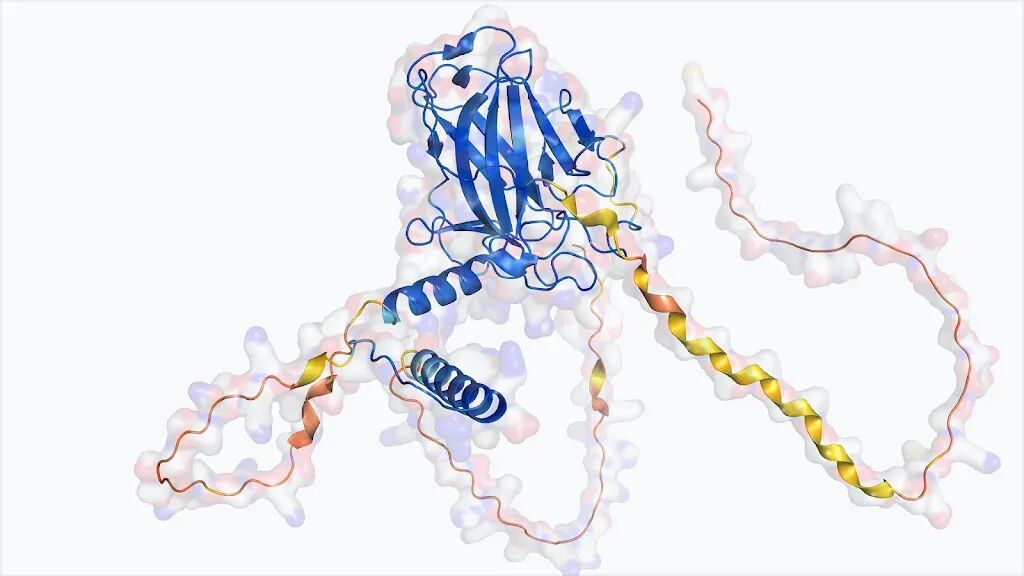
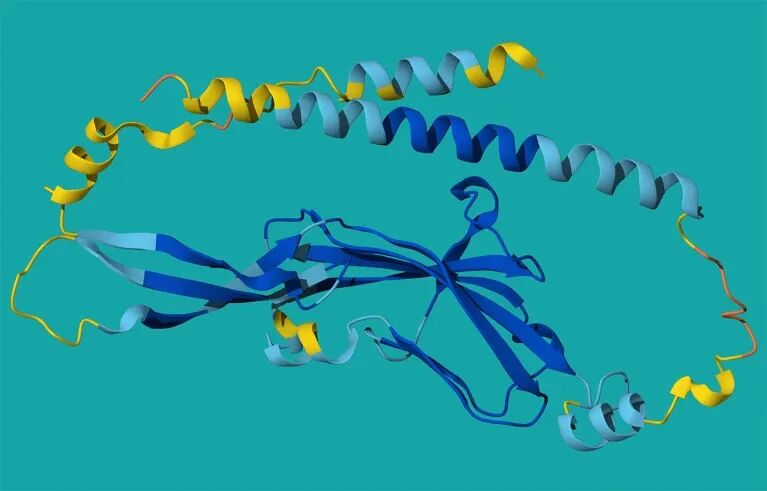
A schematic diagram of the AlphaFold model structure of p53. It is one of the most popular proteins in the AlphaFold Protein Database.
In the past, it often took a year or even longer to figure out the 3D structure of a single protein, with millions of dollars in experimental costs, and waiting in line to use X - ray crystallography or cryo - electron microscopy.
The timeline of scientific research was stuck at this step for decades.
Until 2020, AlphaFold 2 made its debut at the CASP14 competition - it can calculate the spatial structure of a protein just based on its amino acid sequence, and many of its prediction results are almost identical to experimental images.
For the first time, structural biologists realized that the barrier that had blocked them for 50 years could be broken through by AI in just a few minutes.
From that day on, experiments were no longer the only way forward.
A free web page helps two undergraduates break into the "black box"
What changed the game was DeepMind's second move: they made the code of AlphaFold2 and its predicted structures freely available online.
Now, the AlphaFold Protein Database contains over 200 million structural predictions.
It would take millions of years to accumulate this amount of data through traditional experiments.
More importantly, anyone can use it.
Statistics from Nature show that the AlphaFold database has been used by about 3.3 million people worldwide, with users in over 190 countries, more than 1 million of whom are from low - and middle - income regions.
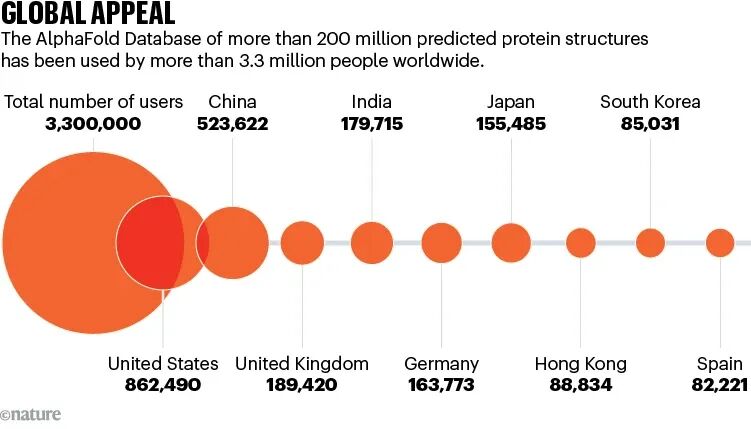
Structural biology, a discipline that once relied heavily on expensive equipment and a few top experts, now has "global users" in the true sense for the first time.
For those two Turkish undergraduate students, this means that they can directly access the "atomic - level details" of the protein world without entering a top - tier laboratory.
What they did was simple yet risky.
They fed membrane proteins, which are the most difficult to study using traditional methods, into AlphaFold one by one to see if they could get a clear view.
One of their research subjects was EAAT1 - a protein that transports neurotransmitters on the brain cell membrane.
It's like a submarine lying across the lipid bilayer, almost elusive in traditional experiments, and its structure is very difficult to clarify.
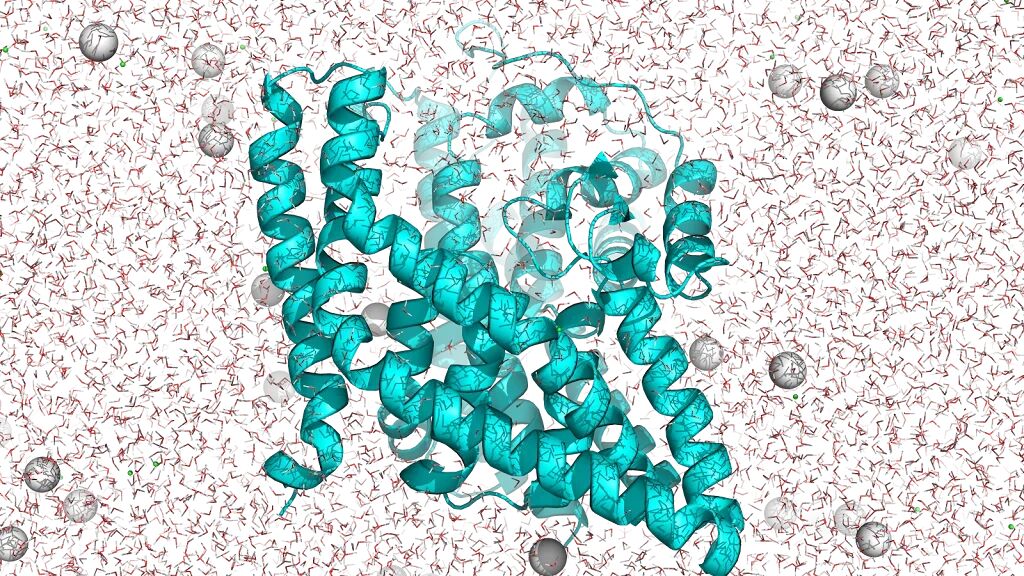
A schematic diagram of the AlphaFold model of EAAT1 or a similar membrane protein structure
With the help of the structure provided by AlphaFold, the two students directly disassembled and reassembled the 3D model.
They referred to the QTY method in membrane protein redesign, replacing the insoluble hydrophobic amino acids with more soluble versions to make this "submarine" more manageable in experiments.
In the past, this was a project that only top - tier molecular biology laboratories could tackle, and it would take years of trial and error.
Now, it's more like an efficient computational and analytical task.
They are not alone. In Vienna, the Pauli team had been stuck on a problem for years:
How does the protein Bouncer on the surface of zebrafish eggs "recognize" sperm?
Nature reported their encounter with AlphaFold.
The model predicted a protein called Tmem81 that had been largely overlooked before. It acts like a clamp, stabilizing two sperm proteins and creating a precise binding pocket for Bouncer.
A schematic diagram of the Bouncer - Tmem81 complex
Subsequent experiments gradually verified this binding mode. The seemingly romantic question of "how sperm find eggs" has been broken down into a clear structural story.
Pauli said something very straightforward in a later interview:
We use AlphaFold in almost all our projects now. It allows us to see things that were invisible before.
From picking fruits to finding seeds: The scientific research track has really changed
As structural prediction becomes easily accessible, the research topics of scientists are starting to shift.
AlphaFold helped scientists decipher the structure of apoB100, a large and complex protein, for the first time.
It plays a key role in atherosclerosis and has long been described as "a tangled protein cage".
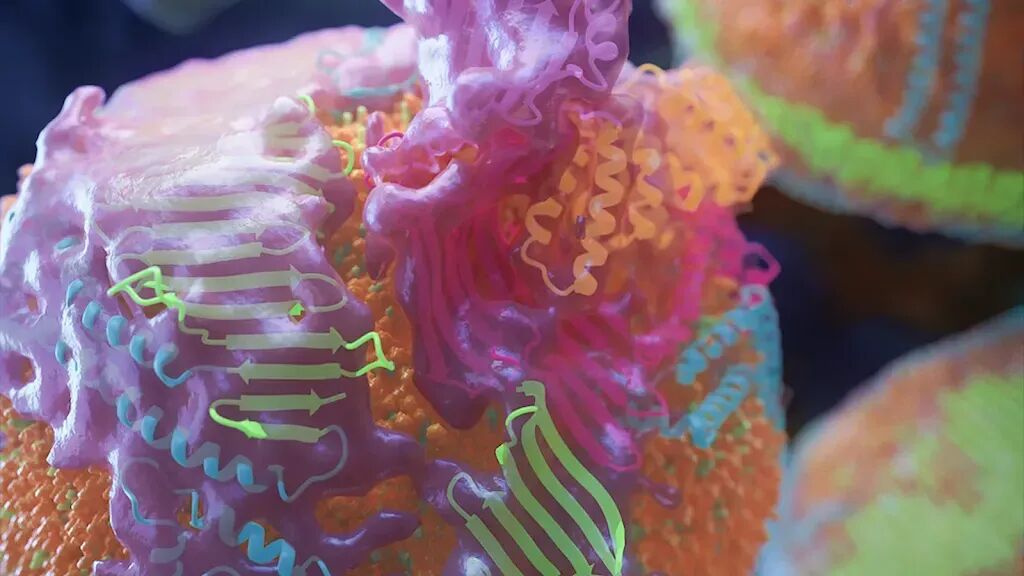
A schematic diagram of the apoB100 structure
Similarly, there are tumor - related proteins like p53. The structures of these targets are crucial for drug design and disease mechanism research.
The really interesting changes are hidden behind the data.
After summarizing a large number of scientific research records, Nature found that researchers using AlphaFold submitted about 40% more novel protein structures than the control group.
If we only look at the experimental structures deposited in the Protein Data Bank, the gap is even more obvious:
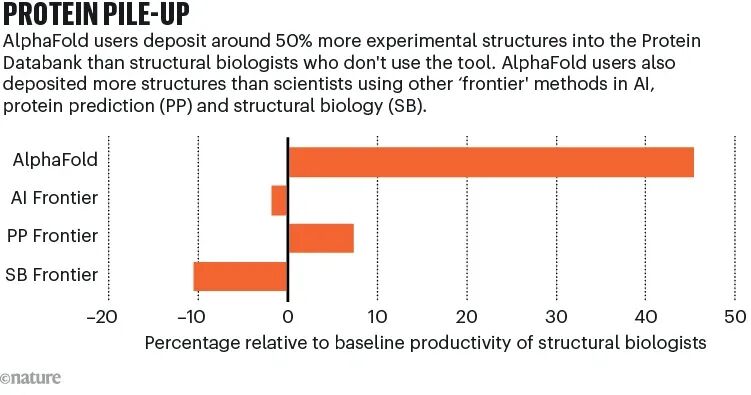
The teams using AlphaFold submitted about 50% more structures than those who didn't, and they also significantly outperformed researchers using other "cutting - edge methods".
This means that AI not only makes scientific research faster, but also enables more people to tackle the most difficult, complex, and uncertain structures.
Nature described this trend in a poetic way:
Structural biology is moving from the "verification zone" to the "exploration zone".
What's even more unusual is that the citation curve of AlphaFold's 2021 paper has not declined.
Generally, highly cited papers in the life sciences field enter a plateau or decline one or two years after publication.
But the AlphaFold2 paper in Nature has seen a continuous increase in citations, with the rolling average exceeding 800.
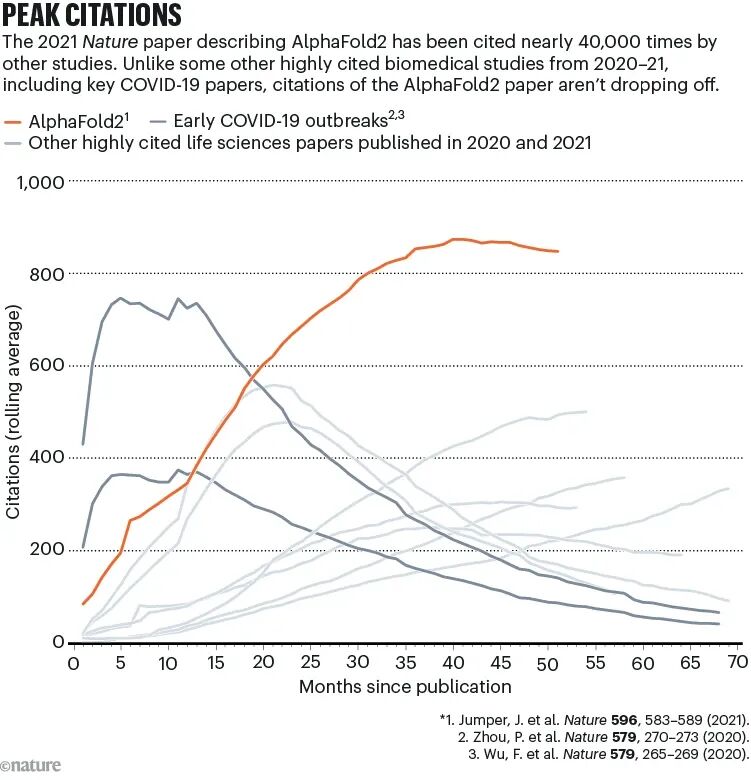
This is not just a one - time "topic fad". The tool is constantly being reused in new projects.
Statistics show that research related to AlphaFold2 is about twice as likely to be cited in clinical papers as ordinary structural biology work, and it is also significantly more likely to be cited in patents.
For many people in drug development and translational research, AlphaFold is no longer just a tool for "viewing a structural diagram", but a real productivity tool.
AlphaFold 3: Mapping the entire life interaction diagram
If AlphaFold2 solved the problem of "what a folded protein looks like", then AlphaFold3 aims to solve the problem of "how these molecules entangle with each other".
Nature's evaluation is straightforward:
This is a crucial turning point from "structural prediction" to "life system modeling".
In AlphaFold3, the same model can simultaneously observe the interactions between proteins, DNA, RNA, and small - molecule ligands.
Researchers can see how a candidate drug fits into the pocket of a target protein in 3D, how the spike protein of a virus is wrapped in sugar chains, and how it is recognized by antibodies.
The structural prediction of AlphaFold 3 for the interaction between the spike protein (blue) of the common cold virus, antibodies (turquoise), and monosaccharides (yellow) is highly consistent with the real structure (gray).
This atomic - level "panoramic view" is being directly integrated into the drug design process.
Isomorphic Labs, co - founded by the DeepMind team, is using AlphaFold3 for AI - driven drug discovery, translating these predictions into real - world candidate drugs.
More subtle applications are emerging in places we don't usually notice.
Some people are using AlphaFold to analyze the key immune protein Vitellogenin in bees to guide AI - assisted breeding and cultivate more disease - resistant bee colonies;

Some are using it to accelerate research on proteins related to plants' perception of environmental changes, compressing what used to take years of hypothesis verification into a few weeks of initial screening.
From the laboratory to the farmland, from the microscope to the beekeeping yard, AlphaFold, this "structural engine", is gradually eliminating those time - consuming and labor - intensive steps.
Let's go back to the initial scenario:
One is a graduate student in the laboratory, repeatedly making trial - and - error attempts, hoping that the experiment will "work".
The other is an undergraduate student who opens the browser and feeds a difficult - to - study protein structure into AlphaFold.
Both are giving their all, but some are already using AI to make the most of their time, while others are still sticking to the old process, hoping to achieve a breakthrough through late - night work.
The success of AlphaFold actually sends a clear signal - science no longer only rewards those with the most equipment or those who work the longest hours. Instead, it is quietly favoring those who are best at leveraging tools and most daring to ask questions.
For ordinary scientific researchers, this is both a pressure and a rare opportunity.
Maybe you don't have the resources to build a cryo - electron microscope or join a laboratory like DeepMind.
But you can open the AlphaFold database, type in the name of the protein you're most familiar with, and take a look at the "atomic - level blueprint" that this era has made freely available.
You'll find that some walls are really starting to crumble.
It's just that this time, what determines which side of the wall you're on is not your background or luck, but whether you're willing to reach out and press the "Run" button.
References:
https://deepmind.google/blog/alphafold-five-years-of-impact/
https://www.nature.com/articles/d41586-025-03886-9
This article is from the WeChat public account "New Intelligence Yuan". Author: New Intelligence Yuan. Republished by 3