Former Yunjing co-founder makes lawn mowing robots, raises funds in four rounds in a year, aims for 100,000 units next year | Exclusive interview by Yingke
Author | Huang Nan
Editor | Yuan Silai
Lymow might be the new company that has raised funds most frequently in the lawn mowing robot track this year.
36Kr exclusively learned that Lymow Technology recently completed tens of millions of yuan in Series A+ financing. This round was led by Jiuhua Venture Capital, with Qingbo Fund, Xingfu Capital, and Zhengjing Capital following. This is also the fourth round of financing the company has completed since 2025, with a cumulative amount reaching hundreds of millions of yuan. Maple Pledge Capital has long served as the exclusive financial advisor.
It has all the elements that investors favor: the founder is a former co-founder of Yunjing, a serial entrepreneur, and an engineer by background; the product has a high technological threshold; and it targets the overseas market.
It entered the market a bit late but at just the right time. When Lymow was founded in 2022, the lawn mowing robot track began to heat up. Latecomer leading brands like Mammotion and Weilan Continent had just started small - batch shipments. Lymow avoided the European battlefield and seized the time window to make initial progress in the United States.
Currently, the leading brands are mainly competing for the European market. Gao Wangshu, the CEO of Lymow Technology, told 36Kr that in the garden category, the penetration rate of existing lawn mowing robots in Europe is five times that in the United States. This phenomenon is completely contrary to the normal situation where "the scale of the US market exceeds that of Europe in other categories."
Behind this misaligned data might be the most crucial incremental code for the intelligent lawn mower track. North America, a market with over 80 million private gardens, has just begun its growth journey.
The penetration rate of robotic lawn mowers in North America has always been very low because: the lawn areas here vary, the vegetation is diverse, and the environment is complex. So, many lawns are still being mowed by gasoline - powered lawn mowers. Therefore, large distributors are taking a wait - and - see attitude towards intelligent lawn mowing robots.
For this reason, once an intelligent lawn mowing robot company can capture this group of North American users, it will build a fortress that is extremely difficult to breach. Latecomers will find it hard to shake their loyalty.
Lymow has also reached a critical juncture. Since the second half of this year, although the investment enthusiasm in the garden track has not diminished, the market window period is narrowing rapidly. Whether it can quickly gain momentum in the North American market is related to the future fate of this company.
We had a chat with Gao Wangshu, the founder of Lymow, about the North American market, future development, and how to deal with challenges.
The following is a transcript of the conversation between 36Kr and Gao Wangshu, with the content edited:
Aiming at the large lawns of suburban middle - class families
36Kr: At present, the category and brand awareness of European users have initially taken shape. In contrast, what stage is the North American market in?
Gao Wangshu: In September this year, our team spent more than a month in the United States for market research and conducted more than 100 hours of user interviews. It can be said that the United States is still in the cultivation stage, and users' understanding of product forms and functions is not yet mature. Therefore, the ability of enterprises to achieve user education at a lower cost is a key competence.
The product must allow users to understand its value at a glance and intuitively feel what problems it can solve.
I think to make a good product, the most important thing is to understand the cultural background of the target group and the underlying needs of users, rather than just having a superficial chat with them.
Each user puts forward different demands. In the communication process, enterprises will receive a large number of specific needs mixed with a lot of noise. Users' expressions are highly subjective and limited by scenarios. With a small sample size and significant deviation, it is easy to cause the product definition to deviate from the essence.
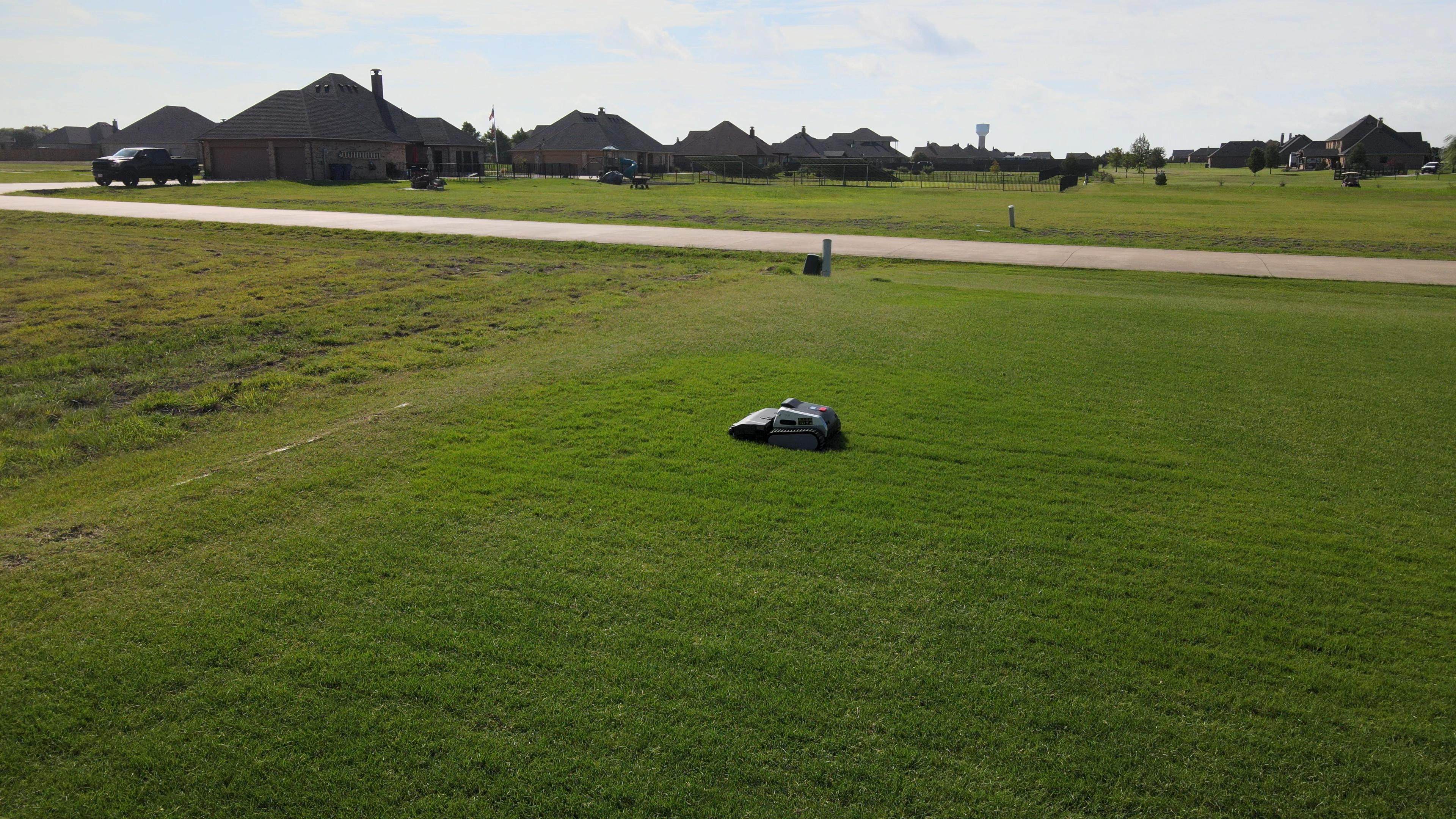
Lymow One lawn mowing robot (Photo/Enterprise)
36Kr: What opportunities did you find in the United States?
Gao Wangshu: To be honest, the biggest reason why it was difficult for Lymow to raise funds before was that we were making a non - consensus product. Even now, investors still ask, "Since there are so many opportunities in the large - scale scenario, why don't the leading enterprises do it?"
Combining public data and market analysis, we found that nearly half of the potential users in the US market use large lawns of over 1,000 square meters, while the proportion in Europe is less than one - third. It is this group of users who show the strongest purchasing willingness.
Since maintaining a large lawn is an extremely cumbersome physical labor, the larger the garden area, the stronger the users' pain points. Therefore, their willingness to pay for a solution is also the most obvious.
36Kr: For this group of users, what is the core decision - making motivation for them to switch from traditional lawn mowing tools to intelligent robot solutions?
Gao Wangshu: ROI (Return on Investment). They will calculate whether it is cost - effective to buy this thing. On the contrary, the more users focus on ROI, the more willing they are to buy our products. This is also a very counter - intuitive perception.
Many people default that lawn mowing robot products priced above $2,000 are mostly targeted at high - end groups. But in fact, this price is not unaffordable in the US market. Compared with luxury goods such as RVs, swimming pools, and yachts, its purchase cost is lower, and it can solve the biggest pain point of manual lawn mowing. In essence, it is an efficient labor - saving tool, which is very attractive to users in high - frequency usage scenarios.
What really determines the purchasing willingness is the intensity of scenario demand and the usage cost. For example, in the top - end wealthy areas on the west coast of the United States, even if the rich in these areas have lawns, they are mostly small - sized. The demand for large - scale scenario products is not high. Users can pay for manual lawn mowing once a week or every two weeks with the cost of a meal. Therefore, lawn mowing is not a "pain point" for them.
Our core target users are actually middle - class groups living in the suburbs and owning large lawns of over 1,000 square meters.
36Kr: What are the unique characteristics of this group of users?
Gao Wangshu: This is a large but often overlooked group. Most of them are commuting office workers living in low - density suburban communities. There are only seven or eight or a dozen households in a community, and each household has large front and back lawns. The cost of manual lawn mowing is extremely high, with a single - time fee exceeding $100.
Even if users buy a riding lawn mower, they need to operate it themselves, which consumes time and energy. When encountering uneven ground or slopes of over 20 degrees (ordinary riding lawn mowers have a risk of overturning), they also need to buy a push - type lawn mower additionally to make up for it.
Currently, the annual sales volume of riding lawn mowers in the United States is as high as 2.5 million units. This data also confirms the rigid demand for large - lawn scenarios. By precisely targeting the suburban middle - class population, the intensity of their demand and the perception of ROI constitute the direct purchasing power for our products.

Problem of passing through complex terrain (Photo source/Enterprise)
36Kr: Reflecting their needs in specific product performance, which dimensions will they pay more attention to?
Gao Wangshu: Durability. Durability is directly proportional to ROI. The higher the durability, the easier it is for users to perceive the long - term value when making a purchase decision, and thus they are more inclined to choose Lymow's products.
36Kr: How did you discover their needs?
Gao Wangshu: Behind these differences, we need to have a deep insight into users' pain points and cultural habits.
First, it is more data. Through quantitative verification for systematic analysis, we can find the common core pain points and quantify their intensity. Sufficient data results can effectively avoid being misled by scattered individual demands and ensure objective and practical judgments when determining the priority of product R & D and iteration.
Second, it is a deep understanding of the cultural form of users and knowing what kind of people the target users are. What kind of cars they drive, what kind of gardens they have, their weekend work habits, and the concept of lifestyle they carry. These understandings can only be obtained through long - term accumulation of immersive observation.
For example, the sensitivity to machine noise is different between Europe and North America. In Europe, since the garden areas are generally small, quiet operation is indeed a rigid demand. But in North America, with large lawns, the sound from a distance is almost inaudible.
36Kr: Which voices or demands will enter the product iteration process?
Gao Wangshu: For example, recognition ability. The optimization of the product's recognition function has an obvious "data accumulation dependence" characteristic. In the early stage, we could only train the model by artificially setting up scenarios, and the covered scenarios were limited. As the number of actual user usage scenarios increases, more real - world scenario data is provided, and the recognition accuracy and adaptability of the model can also be continuously improved.
There is no shortcut to solving these problems, and long - term investment is needed for precipitation. It is a systematic project, not just the technical difficulty of a single link.
From business problem monitoring, data collection and decision - making, to the legal and compliant implementation of the data transmission link, followed by subsequent data cleaning, extraction of core elements, and then determining the solution, and finally forming a closed - loop feedback to users.
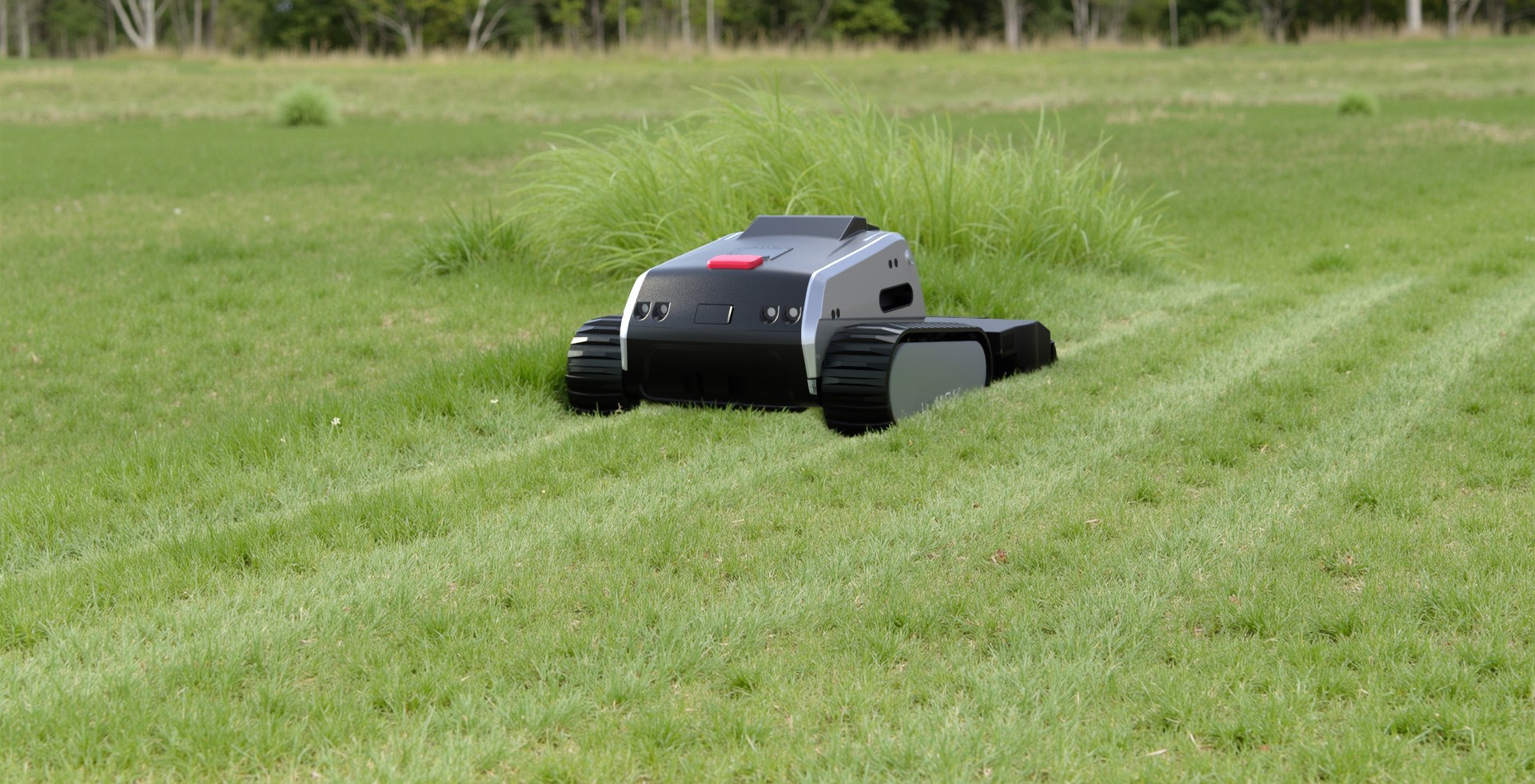
Ability to accurately perceive the spatial state of the surrounding environment (Photo source/Enterprise)
36Kr: What is the situation of offline channels in the United States?
Gao Wangshu: Considering the characteristics of the US market, since the current penetration rate of lawn mowing robots is less than 10%, users' awareness is low, and the sales conversion rate is limited, large KA channels such as Home Depot currently have no motivation to layout this category.
For such large KA channels, they usually only consider introducing a category when the penetration rate reaches 20%. So, this is not a suitable time to enter at present. What should be done now is to start from online and niche channels to gradually cultivate the market and build user awareness.
Intense Market Competition
36Kr: The competition in the intelligent lawn mower track has become increasingly fierce this year. As one of the participants, has Lymow noticed any changes in the market?
Gao Wangshu: The situation is basically in line with our prediction. Several major manufacturers are focusing on competing for the European market to grab market share and are engaged in a fierce price war in the entry - level price range below 1,000 euros.
Lymow's greatest advantage is that it entered the market at the right time, so it has not been directly involved in the head - on competition among the leading players for now, which gives us an opportunity to make arrangements.
Currently, Lymow's main market is still concentrated in North America. We learned a set of key data. In the garden category, the penetration rate of lawn mowing robots in the European market is five times that in the United States, which is contrary to the normal situation where "the scale of the US market exceeds that of Europe" in other categories. This is enough to show that there is still huge room for rapid growth in the North American market.
Of course, this year, limited by the mass - production schedule, due to historical factors such as the team size and R & D progress, the product was mass - produced relatively late, and we couldn't fully catch up with this year's lawn mowing season. We did encounter some problems.
This situation will improve significantly next year. After the team and the supply chain have been running in this year, the process has been straightened out, and we won't make mistakes in rhythm control again, and can accurately meet the market demand during the peak season.
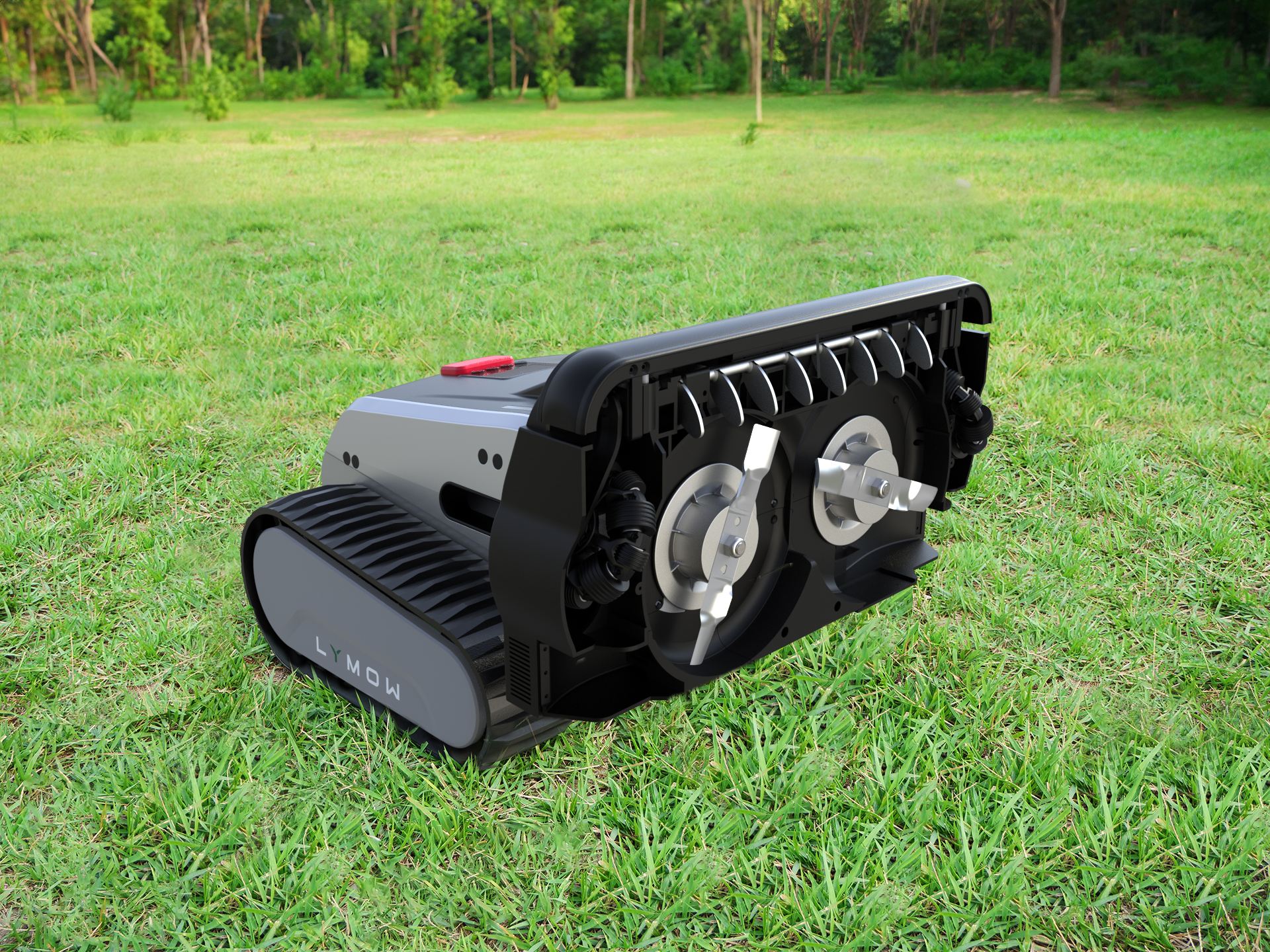
Self - developed grass - crushing straight blade and double - mowing disc structure (Photo source/Enterprise)
36Kr: Currently, most manufacturers in the market adopt a multi - SKU strategy, while Lymow still has only one product.
Gao Wangshu: The era of single - product dominance is over, and this judgment is clear. Multi - product line layout is an inevitable choice for all enterprises in the industry. We will also follow this trend, but it ultimately depends on the team's resource reserve. Next year, Lymow will form a multi - SKU product matrix to further complement it.
The ultimate core of competition will focus on the comprehensive strength comparison of each product line, that is, whether each product line and each product can lead the industry.
36Kr: For users, is functional expansion or an ecological product matrix a rigid demand?
Gao Wangshu: The key for functional expansion to become a rigid demand is whether it can replace users' pain - point scenarios. As long as it precisely hits users' high - frequency troublesome scenarios, users can instantly perceive the product's value, and at this time, its rigid - demand attribute will be fully highlighted.
However, a realistic situation is that users not only focus on how many functional concepts have been realized but also on the implementation quality of the functions.
Therefore, our team is very calm about whether to carry out ecological expansion. At present, Lymow's focus is still on lawn mowing, how to solve the recognition problem, and the problem of passing through complex terrain. In my opinion, these are the most painful points for our users.
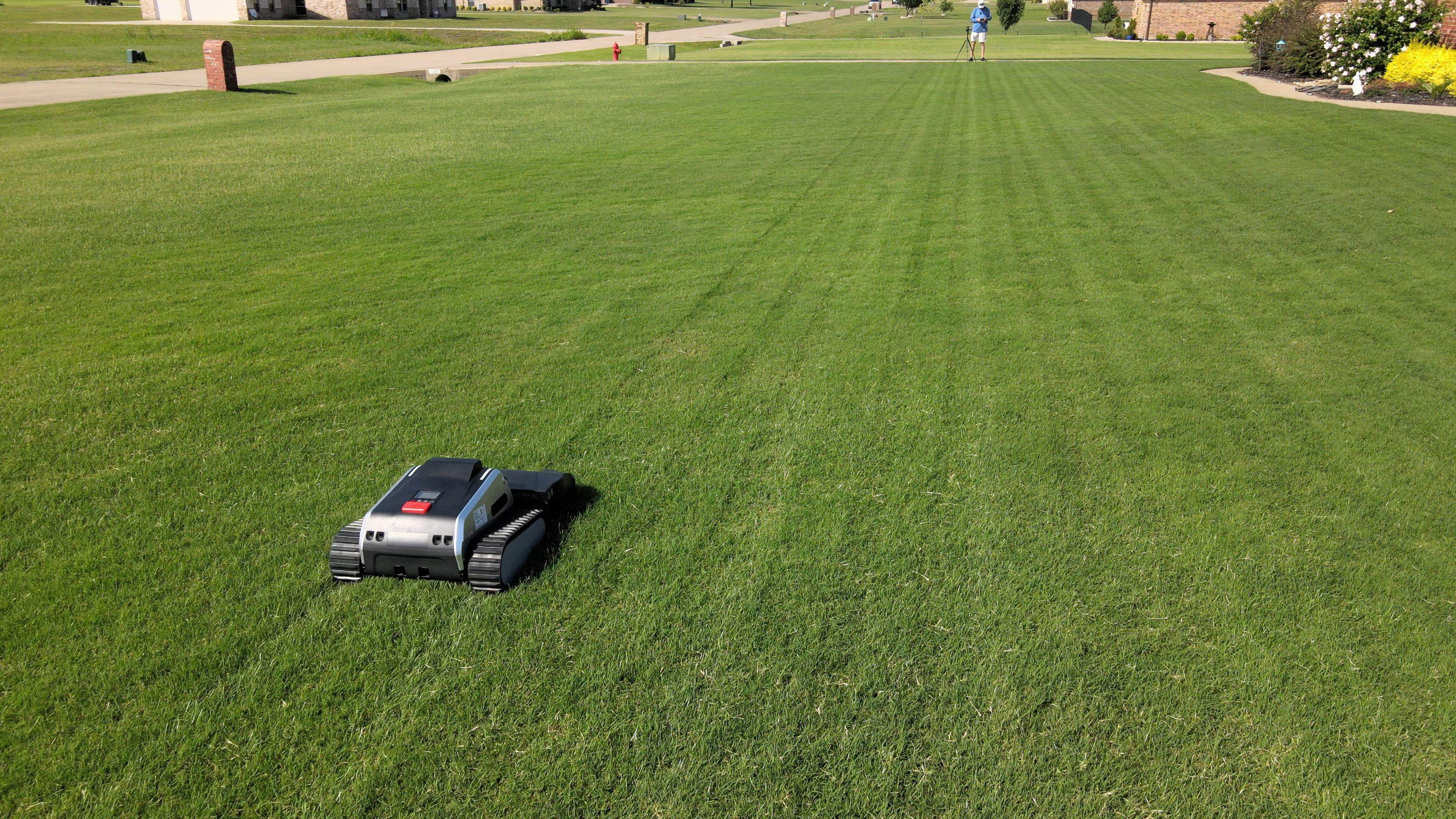
Lymow One lawn mowing robot (Photo/Enterprise)
36Kr: Is there still a chance for new companies?