A Conversation with Zhou Guang: Three Hit Models Position DeepRoute.ai at the Forefront of Urban Autonomous Driving
It has been a long time since the autonomous-driving industry saw a new winner.
At the recent Guangzhou Auto Show, DeepRoute.ai released its latest commercialization report: 200,000 mass-produced vehicles equipped with urban autonomous driving system have been delivered by the end of 2025. In October alone, DeepRoute.ai’s monthly market share in the China’s third-party urban autonomous driving supplier segment climbed to 40%.
It’s worth noting that just over a year ago, both numbers were simply zero. Going from zero to large-scale deliveries across more than 10 models took DeepRoute.ai only 14 months. This autonomous driving company has rewritten the market landscape like a "dark horse" in a short period, becoming one of the most notable "winners" this year.
The reshuffling of advanced autonomous-driving suppliers is approaching the end. Major third-party Tier1 suppliers have gained growing advantages, leading to a winner-takes-all pattern dominated by only a few players.
With its rapid momentum, achieving nearly 40% market share in a single month starting from zero in just over a year, DeepRoute.ai is regarded by the industry as having secured the last ticket to join the key players, forming a tripartite balance of power with Huawei and Momenta.
The year 2024 has witnessed DeepRoute.ai's commercial breakthrough when DeepRoute.ai secured the Wey's Lanshan SUV project, becoming a key supplier for Great Wall Motors(GWM) in the autonomous driving field.
DeepRoute.ai then completed mass production of full-scenario urban autonomous driving system in just 8 months. Once the Lanshan equipped with urban autonomous driving system launched, its monthly sales soared to 6,019 units—nearly tripling month-over-month.
The strong sales of the Wey's Lanshan smart-driving edition directly boosted GWM’s confidence. In November of the same year, DeepRoute.ai received a US$100 million strategic investment from Great Wall Motor in round C. The significance of this strategic investment lies not only in financial support but also in the deepening of this partnership.
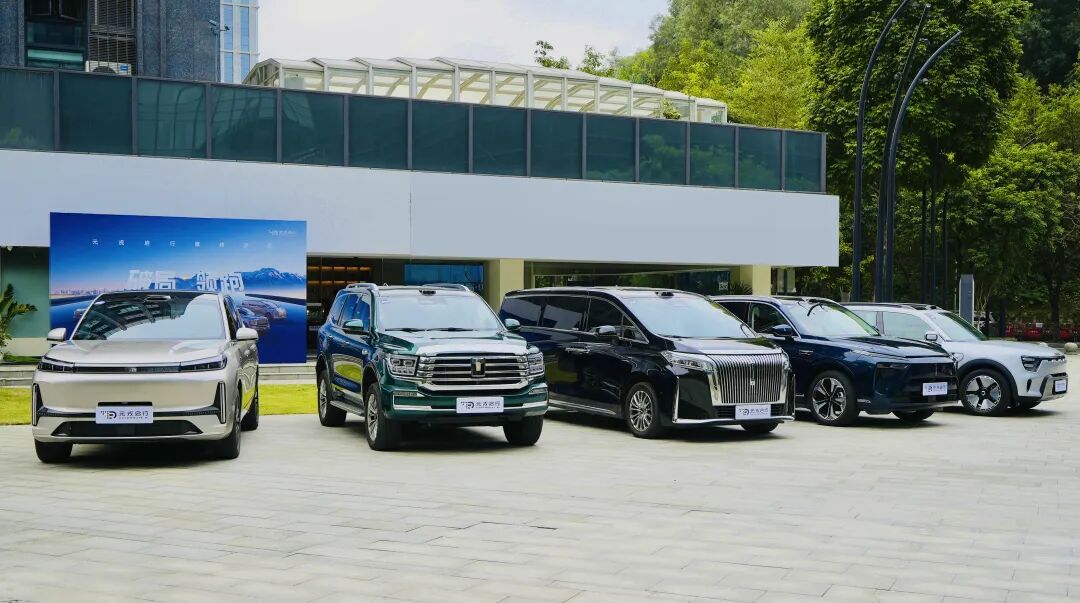
Today, Great Wall’s MPV Wey's High Mountain and SUV Tank 500 both carry DeepRoute.ai’s urban autonomous driving system. Unsurprisingly, after receiving these upgrades in autonomous driving , the models saw notable sales increases: the Tank 500 entered the top 10 of its segment, while the Wey's Gaoshan grew 5-10 times to nearly 10,000 units, currently topping the domestic October MPV sales chart.
As high-level autonomous driving shifts from an optional feature to a defining factor in automotive competitiveness, it is now directly influencing market performance and brand strength. GWM’s rapid success has further reinforced industry confidence in DeepRoute.ai, whose partnership ecosystem continues to expand.
In September 2025, Geely launched its Galaxy M9 equipped with DeepRoute.ai’s urban autonomous driving system, covering more than 300 cities nationwide with a user-verified pass rate of over 95% in complex scenarios. In its third month on the market, the Galaxy M9 surpassed 10,000 deliveries, becoming another model powered by DeepRoute.ai that is demonstrating strong market momentum.
With three high-performing models, Deeproute.ai’s cumulative deliveries have reached 200,000 units.
Reflecting on this rapid commercial progress, Zhou Guang, CEO of DeepRoute.ai told 36Kr that the company was once repeatedly rejected by automakers due to its lack of mass-production experience. “Back then it was, ‘You don’t have mass-production experience, so we can’t pick you.’ Now it’s, ‘Why can’t it be you?’ DeepRoute.ai is definitely at the table now.”
Recently, DeepRoute.ai secured another major partnership—a full-line, standard-equipment autonomous-driving program with a leading Chinese new-energy automaker. Zhou says this project puts DeepRoute.ai on track to achieve one million annual deliveries next year and to emerge as the industry leader in mass-produced urban autonomous-driving systems.
The explosive commercialization of mass-production autonomous driving is also accelerating DeepRoute.ai’s other core business—Robotaxi. In 2026, the company plans to roll out Robotaxi operations in Wuxi and Shenzhen. Mass-production autonomous driving and Robotaxi will enter a phrase of data-driven and mutually-reinforcing evolution.
As the autonomous-driving sector’s most commercially promising module, Robotaxi is approaching the key turning point from technical validation to scaled commercialization. Currently, numerous domestic and international OEMs and chip manufacturers are investing in Robotaxi deployment.
2026 is expected to see explosive growth for Robotaxi, and DeepRoute.ai's years of investment in the autonomous driving field will face the formal test of commercialization.
Standing at a new height—having started from zero and rapidly rewritten the industry landscape, how has DeepRoute.ai’s strategy and fundamental thinking evolved?
The following is 36Kr’s interview with DeepRoute.ai CEO Zhou Guang.
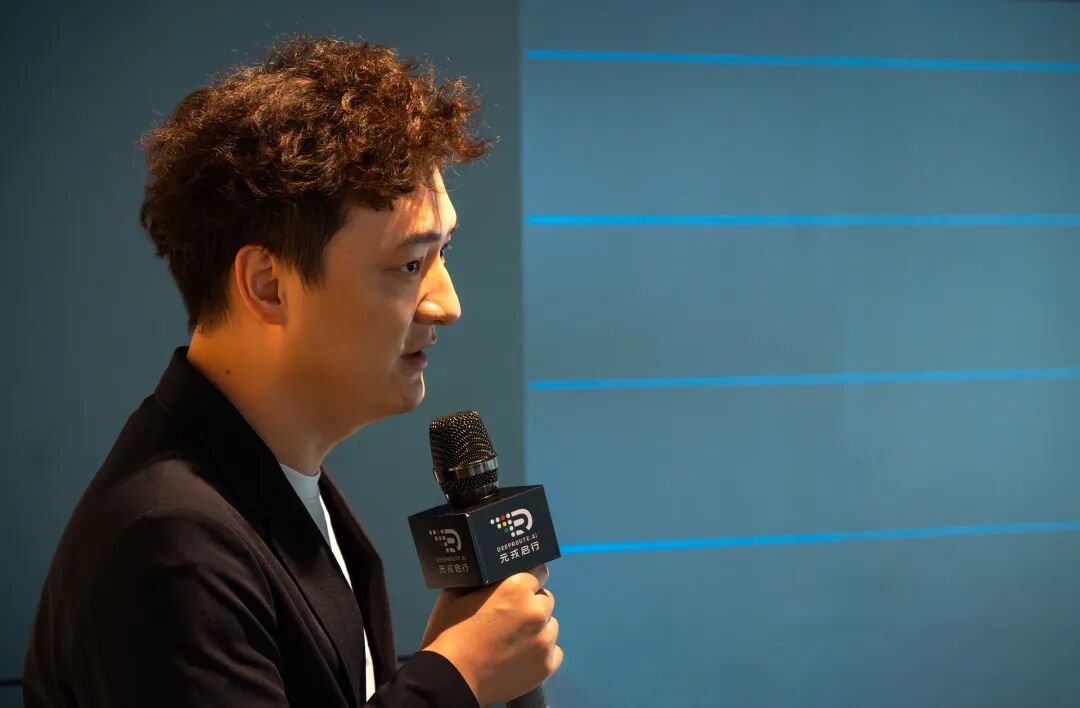
Zhou Guang, CEO of DeepRoute.ai
36Kr: What is the current landscape for third-party suppliers of high-level autonomous driving roughly like? Will the reshuffling continue?
Zhou Guang: When it comes to software, our monthly market share in October was roughly 40%. Right now, there are only three core players in the industry. That’s already few enough, so everyone will remain.
DeepRoute.ai follows the Apple model—doing only one or two models a year and focusing on high-quality, hit products. It’s the same in the auto industry: the Apple model will become mainstream, and the number of models will further decrease in the future.
36Kr: Going forward, will DeepRoute.ai continue focusing on a few flagship projects, or expand broadly for more clients?
Zhou:
We are still expanding our client base. Our core focus is whether the automaker is willing to give us their best-selling models.
36Kr: Will you stay focused on Chinese brands, or expand to joint-venture automakers?
Zhou:
We expect to have joint-venture projects this year. There’s no way we won’t enter that market. We’re also actively engaging central and state-owned automakers.
Regarding mass production, we certainly hope to capture more shares. Mass production is the foundation; Robotaxi is the ultimate goal for autonomous driving companies. What we aim to achieve is definitely “fully driverless.”
But without sufficient mass-production clients and enough data accumulation, you cannot achieve “fully driverless.”
36Kr: Do you plan to expand overseas?
Zhou: Compete on technology domestically, earn money overseas. Expanding into overseas markets will still take time, because consumers’ acceptance of autonomous driving abroad is far lower than in China.
36Kr: The battle for market share in the high-end market is intense. Some automakers have already announced impending L3 mass production. Consumers might think whoever mass-produces L3 first is more advanced. What is DeepRoute.ai’s take on this?
Zhou: We are prepared for L3 as well, but L3 is fundamentally an engineering problem. In the future, for companies to expand their Robotaxi business, success will rely on data-driven approaches rather than human intervention. Mass production sustains the company, while Robotaxi enables us to thrive.
36Kr: So you’re accumulating data through mass production?
Zhou: Exactly. Only with annual sales above one million units can a company effectively operate Robotaxi. After crossing that threshold, Robotaxi becomes essential. It is even better if we can reach two million annual units.
36Kr: Some OEMs that have their own self-developped intelligent driving solutions are also working on Robotaxi, but their annual sales are far less than 1 million units. DeepRoute has advantages in sales and data volume. Will you achieve Robotaxi faster?
Zhou: We have an edge, but it’s still uncertain for now. The difference between 500,000 and 1 million units isn't that significant in terms of data. I believe some OEMs will definitely succeed as well.
36Kr: Where does the difficulty lie in using mass-production data to drive Robotaxi? This technical path seems clear. Why are there still few companies that can do it well?
Zhou:
Because their AI capability is insufficient.
36Kr: How do you define “AI capability”?
Zhou: AI capability is closely linked to organizational structure, culture, talent, and fundamental cognitive frameworks. Without strong AI capability, no matter how much data you possess, it remains “dormant resources” that cannot be effectively leveraged. Our team is AI-native by origin, unlike some peers whose teams are composed of career-switchers or purely engineering-focused talent.
36Kr: What if competitors start building on AI capability?
Zhou:
Some traits are ingrained in a company's DNA. For companies built on extreme engineering discipline, transforming into an AI-driven organization is challenging, as the corporate culture is difficult to change. As an AI-native company, supplementing engineering capability is somewhat easier than building AI capability from scratch—but it was by no means painless.
In 2024, when bidding for projects, we often faced skepticism: “What’s the use of your impressive demo? Without mass-production experience and engineering capability, we can’t select you.” Over the past year, through the mass-production process with Great Wall Motor, we addressed our engineering gaps. We then collaborated with another major automaker with extremely strict quality control processes, which provided additional training in high-standard cooperation.
After being shaped by these two major clients, we have matured. Engineering is no longer a weakness. We no longer lose opportunities due to engineering limitations. Today, if any automaker is seeking an urban NOA supplier, DeepRoute.ai is undoubtedly a key player.
36Kr: Let's get back to the topic of mass production. The entire industry is now quite sensitive in cost. Combining software and hardware is a mainstream approach. There's a saying that self-developing chips can reduce the cost of autonomous driving systems down to 5,000 RMB, even below 3,000 RMB. How will DeepRoute.ai respond to this new price war?
Zhou:
For the autonomous driving business, developing in-house chips rarely makes economic sense. The R&D cost for a 7nm chip ranges from $3 to $5 billion USD. An annual installation volume of one million units for an autonomous driving system is already very strong. Even at three million units per year, the cost per vehicle would still be at least $100. How could you possibly amortize the R&D investment?
From an economic standpoint, self-developing chips is simply untenable. Some companies only pursue chip development after they have already monopolized the market. Unless you are a company like Huawei—with strong brand influence and not reliant on general GPU architectures like Nvidia’s—you cannot command a premium. The economic logic doesn’t hold.
Moreover, self-developed chips increase the risk of sanctions. How would you manage this when expanding overseas? This is a critical concern.
36Kr: Currently, only the hardcore players can make chips. But software companies can respond by forming alliances with chip companies. Does DeepRoute.ai have preparations for this?
Zhou: We certainly do. Whether it's Qualcomm, Horizon, or Nvidia, we have very close relationships. It's unrealistic to think one can devour the entire market alone.
36Kr: So in the long run, won’t DeepRoute.ai build hardware?
Zhou: No. I believe the industry requires division of labor. The previous generation favored vertical integration, but that model may not suit the new generation. Silicon Valley provides many examples—no single company does everything. Division of labor is essential.