Pony.ai has started generating self-sustaining revenue.
After its second listing in Hong Kong, Pony.ai has presented a brand - new report card.
On November 25, Pony.ai released its unaudited financial report for the third quarter of 2025. The total revenue in Q3 reached 181 million yuan, with high - speed revenue growth for three consecutive quarters. The Robotaxi segment, as the core business, achieved a significant 89.5% year - on - year increase.
Among them, an even more important signal emerged - Pony.ai's seventh - generation Robotaxi has achieved positive profit per vehicle on a city - by - city basis. This means that after nine years of entrepreneurship, Pony.ai has completed the initial verification of its economic model, proving that its business model is scalable. Since each vehicle can now make money, a new cycle of rapid growth and large - scale expansion will begin.
Amidst the ups and downs, a new chapter in the era of autonomous driving is unfolding.
A landmark moment: achieving profit per vehicle
The veil is lifted.
In the first three quarters of this year, Pony.ai's total quarterly revenues were 102 million yuan, 154 million yuan, and 181 million yuan respectively. In the third quarter, the total revenue soared by 72% compared to the same period last year. Among them, the core business, the Robotaxi segment, was particularly outstanding. In Q3 of 2025, the revenue reached 47.7 million yuan, a year - on - year increase of 89.5%, and the revenue from passenger fares increased by more than 200% year - on - year.
Since June this year, Pony.ai has cooperated with BAIC Group and GAC Group to start mass - producing the seventh - generation Robotaxi. After ramping up production capacity, it has entered stable production. On November 5, less than half a year after mass production, Pony.ai's seventh - generation Robotaxi was officially put into operation and successfully launched in Beijing, Guangzhou, and Shenzhen.
Specifically, the most core breakthrough of the seventh - generation model lies in the use of 100% automotive - grade components, which has significantly reduced the cost of the autonomous driving kit by 70%. It has a designed service life of 10 years or 600,000 kilometers. These structural breakthroughs achieved through technological optimization and supply - chain collaboration can effectively break the shackles of commercialization, reduce costs and increase revenues, and serve as the foundation for expanding the deployment of Robotaxis in first - tier cities and accelerating commercialization.
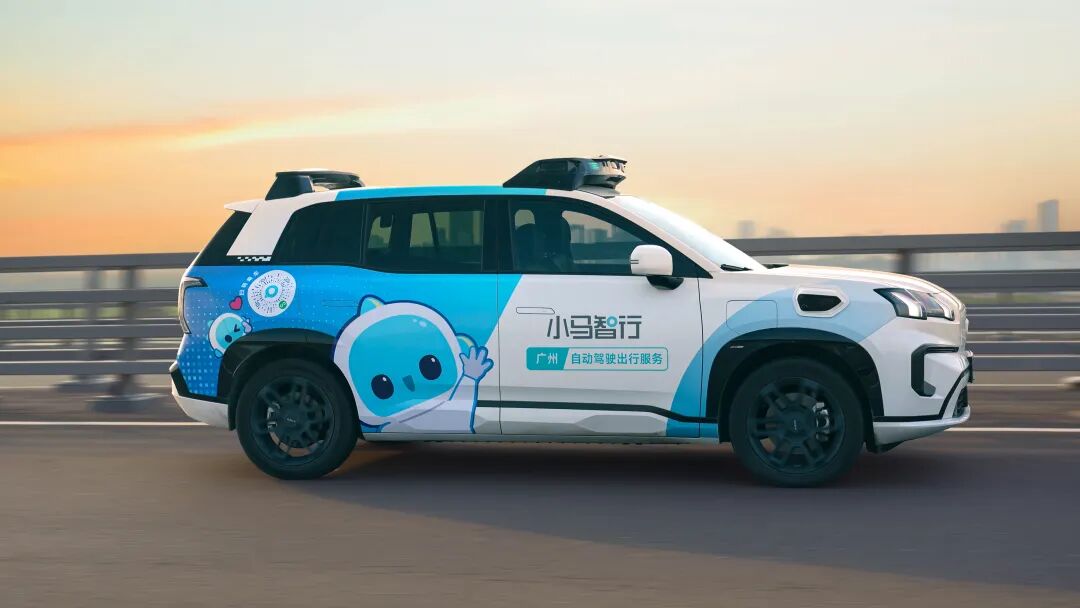
Pony.ai predicted in its financial report that the production cost of the seventh - generation Robotaxi will further decrease in 2026, with the BOM (Bill of Materials) cost of its autonomous driving kit dropping by another 20% compared to this year's level. It should be noted that each reduction in the BOM cost of the autonomous driving kit is a crucial step for autonomous driving companies to move from "technology verification" to "commercial profit."
Thus, a landmark moment arrived ahead of schedule. Based on the daily average operation data of the model in Guangzhou in the two weeks up to November 23 since the start of commercial operation, the seventh - generation Robotaxi in Guangzhou has achieved positive profit per vehicle, with an average of 23 orders per vehicle per day. In simple terms, each vehicle can now make money, which is the phased foundation for autonomous driving companies to bid farewell to burning money and ultimately achieve profitability.
In terms of mass production, as of November 23, the total number of the company's Robotaxi vehicles has reached 961, of which 667 are the seventh - generation Robotaxis. Pony.ai expects to achieve the goal of having a fleet of over 1,000 vehicles ahead of schedule and has provided a scale guideline for its Robotaxis in 2026. It plans to triple the scale by the end of 2026, reaching over 3,000 vehicles.
Recall that Peng Jun, the founder and CEO of Pony.ai, previously revealed that "it was originally expected to deploy a thousand vehicles between 2025 and 2026. Now this upsurge has come earlier, indicating that the public's imagination of the transformation of transportation by fully driverless vehicles has exploded."
In addition, the revenue of Pony.ai's Robotruck (autonomous truck) business in Q3 was 72.5 million yuan, and the revenue from technology licensing and application business was 61 million yuan. Not long ago, the company announced that it will cooperate with Sany Heavy Truck and Dongfeng Liuzhou Motor respectively to develop the fourth - generation Robotruck model, which will be mass - produced and gradually put into operation in 2026, with an expected scale of over 1,000 vehicles in the future.
Despite the high - speed revenue growth, Pony.ai is still in the loss - making period. The most important reason is that the company is still in a high - investment stage to accelerate the mass production of the seventh - generation Robotaxi. In addition, accelerating large - scale commercial operation has also led to more personnel expenses. This is a necessary investment to build a technological moat and an inevitable path for the large - scale mass production of Robotaxis.
From burning money to self - sufficiency: after nine years of entrepreneurship, the inflection point has arrived
Looking back, Pony.ai's trajectory has become a microcosm of the Chinese autonomous driving industry.
Back in 2016, the year when autonomous driving in China was surging, Peng Jun and Lou Tiancheng decided to enter the market. Time waits for no one. Pony.ai was founded at the end of this year, with Peng Jun as the CEO and Lou Tiancheng as the CTO. In October of the following year, they established the Chinese headquarters and R & D center in Guangzhou.
Even before starting the business, the two founders were already well - known in the industry. Peng Jun and Lou Tiancheng are both alumni of Tsinghua University and met at Baidu. Peng Jun once served as the chief architect of Baidu's autonomous driving department, responsible for the overall strategic planning and technological development of Baidu's autonomous driving. Lou Tiancheng is the first - batch student of Tsinghua's Yao Class and a world - famous computer programming expert, known as "Master Lou." He joined Baidu in 2016 to work with Peng Jun and was once the youngest T10 - level employee at Baidu.
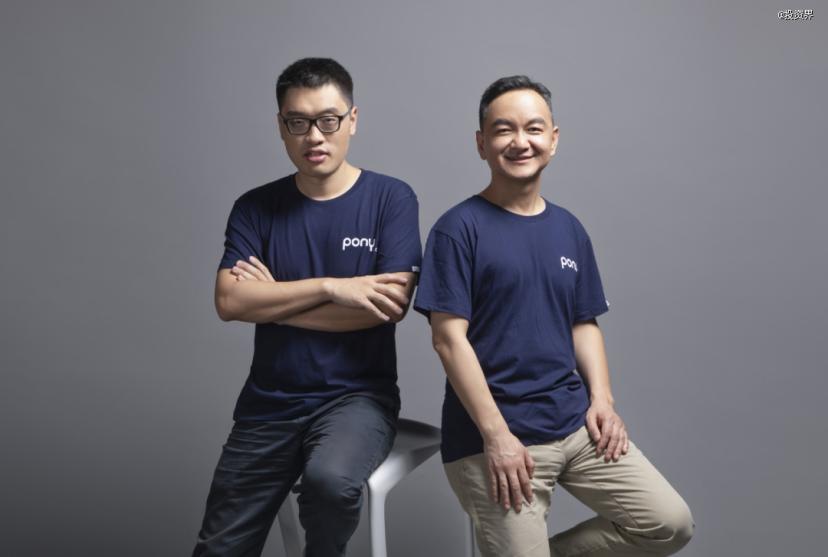
(Left/Lou Tiancheng; Right/Peng Jun)
When Pony.ai was just founded, the entire industry was still in a stage where "concepts outweighed reality." Amid the capital frenzy, few people thought about how to make money from technology.
But at that time, Peng Jun judged that in the end, it would definitely be Robotaxis that could achieve large - scale commercial implementation of autonomous driving earlier, and the full - stack self - developed L4 - level autonomous driving technology would be the driving force behind it. Therefore, in the early days of entrepreneurship, Pony.ai's main task was to focus on technology. In 2018, Pony.ai launched its first autonomous driving ride - hailing service (Robotaxi), "PonyPilot," achieving a breakthrough from 0 to 1 in technology.
Commercial exploration has always been accompanied. In 2021, Pony.ai obtained the first domestic commercial operation license for Robotaxis, achieving a leap from testing to commercialization. So far, Pony.ai is the only domestic company that provides fully driverless Robotaxi paid operation services in Beijing, Shanghai, Guangzhou, and Shenzhen. The total operation area in first - tier cities exceeds 2,000 square kilometers, and it has a total of over 961 Robotaxis, of which 667 are the seventh - generation Robotaxis.
In addition, Pony.ai has accumulated over 55 million kilometers of autonomous driving road - test mileage. It has established R & D centers in Silicon Valley, Beijing, Shanghai, Guangzhou, Shenzhen, and Luxembourg respectively, and has deployed autonomous driving businesses in 8 countries and regions such as South Korea, Luxembourg, Saudi Arabia, the UAE, Singapore, and Qatar, achieving the overseas expansion of technology and products.
It can be said that Pony.ai has witnessed the explosive development of autonomous driving in China.
This journey has been long and difficult, requiring continuous financing. According to incomplete statistics, Pony.ai received a total of 8 rounds of financing before its IPO on the Hong Kong Stock Exchange, with a total financing scale of nearly $1.8 billion. Behind it are Sequoia China, IDG Capital, Morningside Venture Capital, China Merchants Capital, ComfortDelGro of Singapore, NEOM of Saudi Arabia, the Ontario Teachers' Pension Plan of Canada, as well as Toyota Motor, BAIC Group, GAC Capital, and FAW Group.
On November 27, 2024, Pony.ai officially listed on the NASDAQ. On November 6 this year, Pony.ai rang the bell in Hong Kong and officially listed on the main board of the Hong Kong Stock Exchange. After the greenshoe option, the fundraising amount reached HK$7.7 billion, making it the largest IPO in the global autonomous driving industry in 2025.
So far, Pony.ai has completed dual primary listings on the "Hong Kong Stock Exchange + NASDAQ," building a new barrier for "technology and business." 90% of the funds raised from this Hong Kong listing will be invested in the R & D of L4 technology and large - scale commercial implementation in the next five years. At this moment, Pony.ai has sufficient ammunition.
In the public's impression, autonomous driving has always been an "unprofitable" business, with high costs, a long commercial implementation cycle, and even a vague profit path. But looking at it today, Pony.ai has reached a phased milestone in commercialization. With the extreme cost reduction at the vehicle model end, the efficiency improvement at the operation end, and the support at the capital level, Pony.ai has achieved positive Unit Economics (UE) per vehicle in Guangzhou first. This means that the deployment of this vehicle no longer means "burning money," and the model can truly achieve a break - even in operation.
From one to one hundred and then to one thousand, the profit per vehicle proves that such a business model is tenable. After breaking through from 0 to 1, large - scale profitability is just around the corner. For early - stage growth - oriented technology companies, this is a more core development priority and the foundation for subsequent explosive growth.
As Wang Haojun, the CFO of Pony.ai, said, "We are constantly strengthening the profitability of the Robotaxi business. The achievement of positive Unit Economics (UE) of the Robotaxi in Guangzhou, a first - tier city, has laid a good foundation for the subsequent large - scale vehicle deployment and the practice of the asset - light model, promoting the company to strengthen its self - sufficiency ability and ultimately achieve profitability." This replicable "model room" will also be verified in other domestic cities and overseas.
Embracing the era of autonomous driving
In the wave of the global technology competition, the autonomous driving track has always attracted the attention of the industry and capital.
During the capital frenzy from 2016 to 2020, a large amount of capital poured in, giving rise to a boom in technology R & D. However, at that time, the industry's focus was on algorithm breakthroughs and road - test verification. The progress of technology implementation was slow, and the business model was still in a hazy exploration stage. Eventually, it fell into the dilemma of concept hype of "only burning money without making money." After 2021, the ebb of capital led to the bursting of the bubble. Star companies such as Argo AI withdrew from the market due to the lack of sustainable profit support. The cruel reality made the entire industry wake up - no matter how advanced the technology is without a commercial closed - loop, it is difficult to support long - term development.
Now, this situation has been completely rewritten.
As previously predicted by Gartner's AI development curve, the autonomous driving industry has passed the trough period and reached a critical inflection point, entering an accelerated period of commercialization. The industry consensus has completely shifted from "whether the technology can be implemented" to "whether the business can be profitable."
Profitability is not achieved overnight but is the result of years of technology and operation accumulation. For example, NVIDIA went from the breakthrough of GPU technology to the large - scale application of data - center chips, and AMD went from the breakthrough of the Zen architecture to the recovery of its market share in the PC/server CPU market. They all witnessed the reconstruction of a new valuation logic. They continuously invested in R & D at the bottom stage to build barriers. After achieving breakthroughs in core technology or commercialization, they crossed the critical point and then started exponential growth.
Now, more and more people regard 2025 as the first year of autonomous driving commercialization.
The report released by Citibank in November further confirms this trend. Since 2025, the valuation anchor points of the capital market for autonomous driving companies have been concentrated on the "three dimensions of commercialization progress," namely, the scope of policy permission, the expansion speed of the fleet scale, and the narrowing amplitude of the cost - revenue gap.
From the above dimensions, Pony.ai has now achieved full coverage in Beijing, Shanghai, Guangzhou, and Shenzhen, which has not only expanded the operation scope but also reduced the labor - cost expenditure. The total number of Robotaxi vehicles is approaching one thousand. The production cost of the seventh - generation Robotaxi will further decrease, and the kit cost has decreased by over 70% compared to the early stage. It has achieved positive profit per vehicle on a city - by - city basis, sounding the clarion call for this era of change.
These practices prove that the commercialization of the autonomous driving business is no longer a distant goal but an established result that can be achieved through in - depth exploration of scenarios, model innovation, and efficiency improvement. In the era of AI, the profit model of autonomous driving is being re - evaluated.
Amidst the ups and downs, the autonomous driving industry is on the eve of large - scale commercial implementation.
Recall that Lou Tiancheng once said that he knew he was climbing the Everest of autonomous driving, but he didn't know if the path he was taking was the one leading to the summit. "The only way to truly prove whether this path is correct is to reach the summit." And now, the dawn has emerged.
There will be more and more driverless vehicles shuttling through the traffic. Chinese entrepreneurs have been waiting for this day for a long time.
This article is from the WeChat official account "Investment World" (ID: pedaily2012), author: Yang Jiyun, published by 36Kr with authorization.