Why are automakers from China, South Korea and other countries flocking to the Japanese EV market?
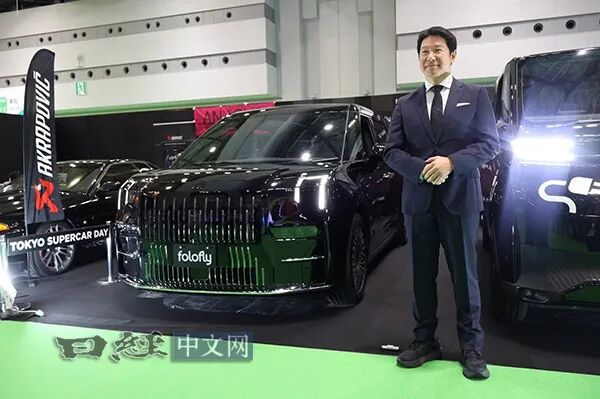
The "Zeekr 009" sold by Folofly (October 29, Koto-ku, Tokyo)
"There is no 7-seater luxury EV in Japan. This is a unique market." The flagship MPV "Zeekr 009" of Zhejiang Geely will enter the Japanese market in 2026. Kia will also launch the medium-sized EV van "PV5" in the spring of 2026. Why do these happen when the penetration rate of EVs in Japan is low and consumers are very picky...
Companies from mainland China, South Korea, and Taiwan are flocking to the Japanese market for pure electric vehicles (EVs). At the "Japan Mobility Show 2025", companies from these countries and regions competed to showcase new EV models. All these companies are actively launching models that meet Japanese specifications and are committed to building a maintenance network. If they can increase their market share in Japan, where consumers are very discerning, their brand appeal will be enhanced, and it will also give an impetus to their export offensive in Asia. These automakers regard the Japanese market as a "dragon gate" for enhancing their brand power. Can they break through?
"There is no 7-seater luxury EV in Japan. This is a unique market." Folofly (Kyoto), a Japanese company engaged in the development and sales of commercial EVs, will start selling vehicles of the EV brand "Zeekr" under China's Zhejiang Geely Holding Group from 2026. Hiroyasu Koma, the president of Folofly, showed confidence in expanding his business at the "Japan Mobility Show".
Geely is the second-largest automobile manufacturer in China after BYD. Its brand Zeekr is a high-end EV brand established in 2021. In the Chinese market, Zeekr is well-received for its emphasis on acceleration performance, safety, and outstanding design capabilities.
In Japan, Folofly will first start accepting pre-orders for the 6- to 7-seater all-electric flagship MPV "Zeekr 009" within this year. Vehicle deliveries will start in 2026. To enter the Japanese market, in addition to adopting Japanese-compliant specifications, it also attaches particular importance to building an after-sales maintenance network in Japan.
The vehicles sold in Japan will support the unique Japanese fast-charging standard "CHAdeMO". In terms of after-sales service, it will use the maintenance network and guarantees of its partner, Mitsui Sumitomo Insurance, to dispel concerns about Chinese products.
The starting price of the vehicles in the Japanese market is 13 million yen (about 600,000 yuan). Although the price is relatively high, President Koma said, "There will be a certain demand from corporate customers who need to achieve environmental protection." The company believes that there are few manufacturers of pure electric MPVs in Japan, so there are business opportunities. It aims to obtain hundreds of orders within about one year.
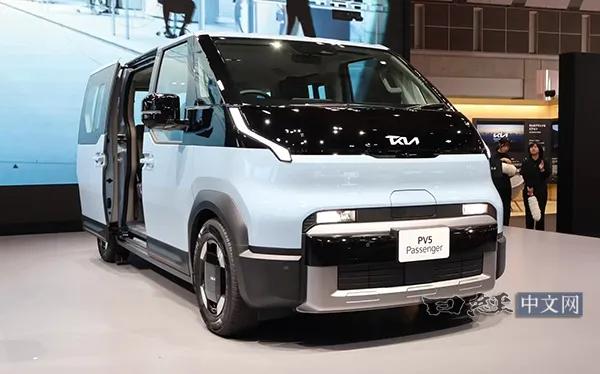
The large pure electric vehicle "PV5" that Kia will launch in Japan in 2026 (October 29, Koto-ku, Tokyo)
Kia, a subsidiary of the South Korean Hyundai Motor Group, will also launch the medium-sized EV van "PV5" in the spring of 2026. The "Cargo" version, which can carry 2 people and has the largest cargo space, starts at 5.89 million yen (about 270,000 yuan), and the "Passenger" version, which can carry 5 people, starts at 6.79 million yen (about 310,000 yuan).
Kia has also partnered with Japanese companies to enter the Japanese market. "Kia PBV Japan", established by the Japanese company Sojitz, will be responsible for sales. It will first set up dealerships in 8 locations across Japan. It will use the maintenance network of a Japanese non-life insurance company to build 100 maintenance points.
Kia's EV van can change the interior design according to camping specifications and wheelchair use. The interior design will be entrusted to a Japanese company that produces truck cargo beds to provide vehicles that meet consumers' needs.
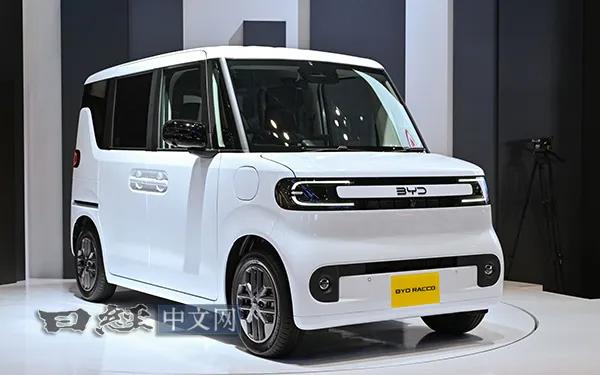
The light pure electric vehicle "RACCO" launched by BYD (October 29, Koto-ku, Tokyo)
BYD made its first showcase of the light vehicle EV "RACCO" at the Japan Mobility Show. Previously, imported vehicles from foreign automakers mainly targeted the Japanese pure electric SUV market. BYD will launch light EVs and large EVs, launching an all-round offensive in the Japanese market.
Hon Hai Precision Industry from Taiwan is also trying to penetrate the Japanese market. Its subsidiary, Sharp, plans to launch an EV based on the vehicle body developed by Hon Hai in fiscal year 2027. The concept car "LDK+" was unveiled at the Japan Mobility Show.
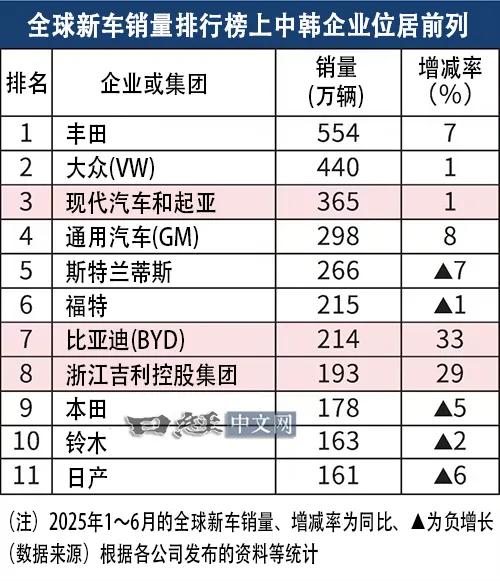
In the global new car sales from January to June 2025, the South Korean Hyundai Motor Group ranked third, and BYD and Geely ranked seventh and eighth respectively, all making it into the top 10. Their sales also exceeded those of Honda (ninth) and Nissan (11th). Chinese and South Korean automakers with stronger sales capabilities than Honda and Nissan are gathering in Japan.
The reason why companies from mainland China, South Korea, and Taiwan attach importance to the Japanese market is that Japan is regarded as a "dragon gate" for launching an export offensive in overseas markets. BYD, Kia, and Hon Hai also hope to expand their sales in Southeast Asia and other regions with large markets. Japanese consumers are very picky. If they are recognized in the Japanese market, their brand appeal will be enhanced.
Among Japanese automakers, Suzuki and Honda have also successively launched new EV models. In Japan, which has the lowest penetration rate among developed countries, the competition for the dominance of EVs will become increasingly fierce.
This article is from the WeChat official account "Nikkei Chinese Net" (ID: rijingzhongwenwang). The authors are Sota Tanaka and Risako Kojima. It is published by 36Kr with authorization.