Is the next stop for trading cards to break out of their niche?
On October 28th, the live - shopping platform Whatnot announced the completion of a $225 million Series F financing round (approximately RMB 1.6 billion), with a valuation of $11.5 billion.
Headquartered in Los Angeles, USA, Whatnot was founded in 2019. Initially, it was just a platform where users could auction collectible products such as trading card games (TCG), sports cards, comic books, and Funko dolls through video live - streaming. This allowed it to stand out in a market that had been dominated by giants like eBay for over two decades.

The product categories recommended by Whatnot to users, with TCG being the first one.
Whatnot's founder once recalled that back then, investors were highly skeptical about a platform for trading second - hand collectibles through live - streaming. They faced great difficulties in financing and only obtained a $300,000 startup fund after negotiating with over 100 investors.
Initially, Whatnot directly integrated with eBay to attract sellers. Sellers who listed their products on Whatnot could sell to buyers on both platforms simultaneously. Meanwhile, the team stayed up late to develop a pricing algorithm, enabling sellers to better understand product liquidity and maximize profits. As a result, the platform gained popularity in the card and trendy collectibles circles.
Later, Whatnot gradually expanded to products such as clothing and sports shoes, competing with Amazon Live, eBay Live, TikTok Shop, etc. It also brought its live - auction business from the US to Canada and the European market, thus creating an increasingly large capital story. (This was also driven by the sports card boom in 2021.)

Whatnot held a coin exhibition, including the display of various rare collectibles, to promote coin sellers and users.
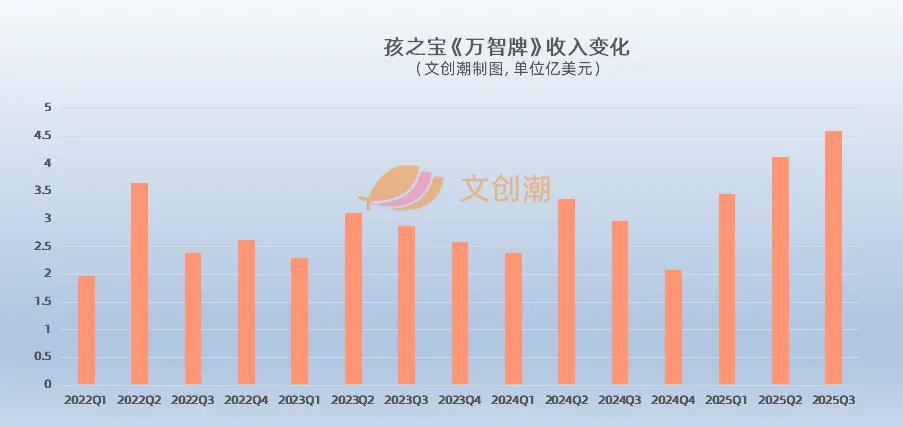
On October 23rd, Hasbro released its financial results for the third quarter of 2025. The financial report showed that the operating profit of just one IP, "Magic: The Gathering", was close to about 90% of Hasbro's entire group's net profit.
Hasbro's secret to making "Magic: The Gathering" a huge success lies in the IP collaboration "Universes Beyond". The "Final Fantasy" collaboration launched in June this year set a new record by selling $200 million worth of products in a single day, surpassing the sales volume of the "The Lord of the Rings" collaboration, which took six months to achieve the previous year.
In September this year, "Magic: The Gathering" launched a collaboration with "Marvel Spider - Man". In November, it will collaborate with the animation "Avatar: The Last Airbender". In the future, it plans to collaborate with IPs such as "Teenage Mutant Ninja Turtles", "The Hobbit", "Star Trek", and "Marvel Super Heroes".
Hasbro revealed that at this year's "Magic: The Gathering" annual event, MagicCon, the sales of VIP badges exceeded 51,000, a 29% year - on - year increase. Interest indicators such as event participation, search metrics, and player growth are all at record - high levels.

New product planning for "Magic: The Gathering".
WenChuangChao noticed that not only are American platforms and brands promoting TCG (trading card games) to a more diverse user base, but Japanese brands such as Bandai, Tomy, and Pokémon also focus on breaking the card game out of its niche.
Happinet, a leading Japanese toy distributor, recently conducted a survey on "the current demand for card games among adults".
The survey results showed that the main consumer groups for cards are adults aged 20 - 29 and 30 - 39. Approximately 30% of men aged 20 - 39 and about 20% of women in their 20s have experience buying cards. Among those who buy cards after adulthood, men in their 30s account for 28.4%, men in their 20s account for 28.2%, and women in their 20s account for 21.2%. These three age groups have relatively large proportions.
Meanwhile, half of the people who started buying cards after adulthood entered the circle in the past three years. The top three reasons for buying cards are collection, love for the IP, and the joy of opening packs.
Overall, the Japanese card market has recently shown the following characteristics: a shift from male - dominated players to a more diverse player base, an influx of female players with new card releases, cards breaking out of their niche and attracting new players through IPs, and the digital development of card games.
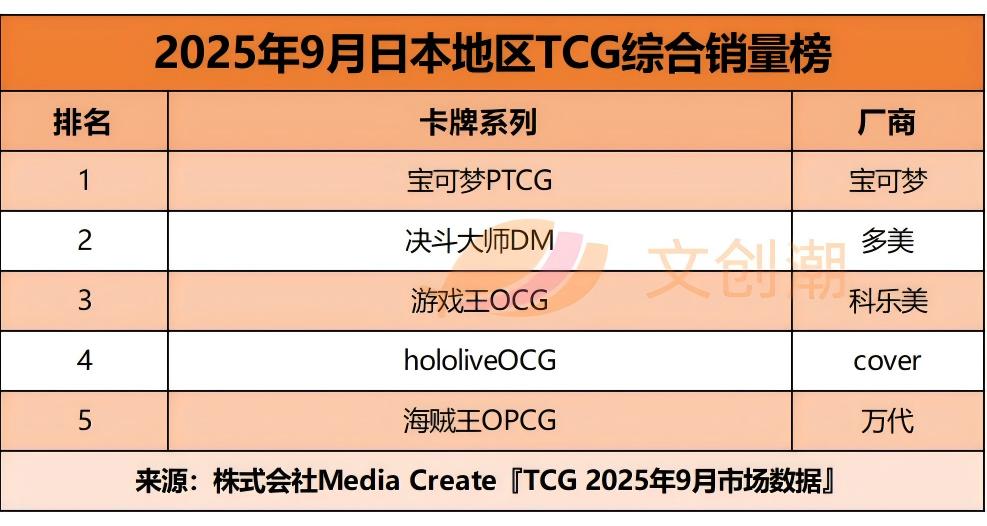
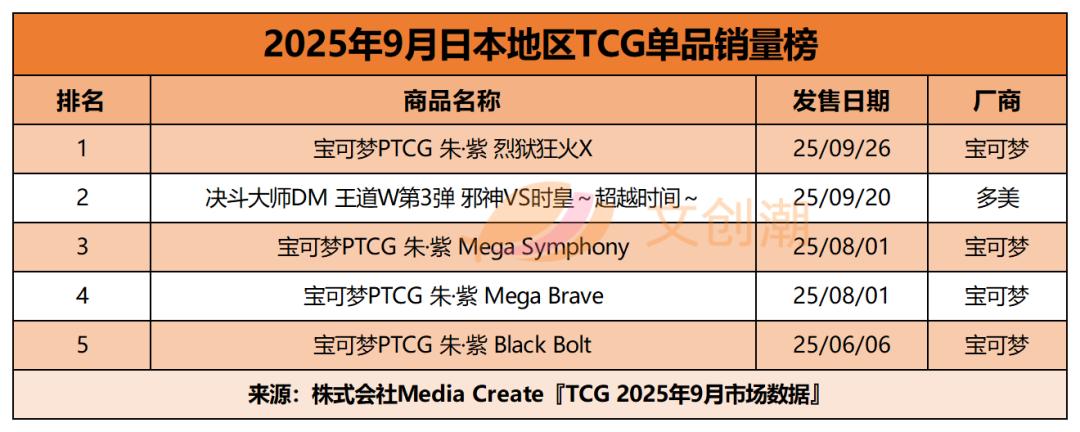
Data from September showed that Pokémon PTCG in Japan showed a dominant presence. Both new card packs and re - released packs performed well, occupying 4 out of the top 5 positions. The new card pack of "Duel Masters" (DM) ranked second, and the sales of the entire series remained high. The "Yu - Gi - Oh! OCG" series maintained a stable performance, with its market share remaining in the top 3.
Notably, the "Hololive OCG" series has been growing steadily. Each time a new card pack is launched, it can firmly enter the rankings, steadily establishing its position. The "One Piece OPCG" has shown stable growth. New card packs of the main series have led the market, and the power structure among series is gradually changing.
Next, WenChuangChao will take a closer look at the latest developments of major TCGs in Japan in the third quarter and how they are promoting their products to a wider audience.
Bandai: The Mobile Suit Gundam card game performs well
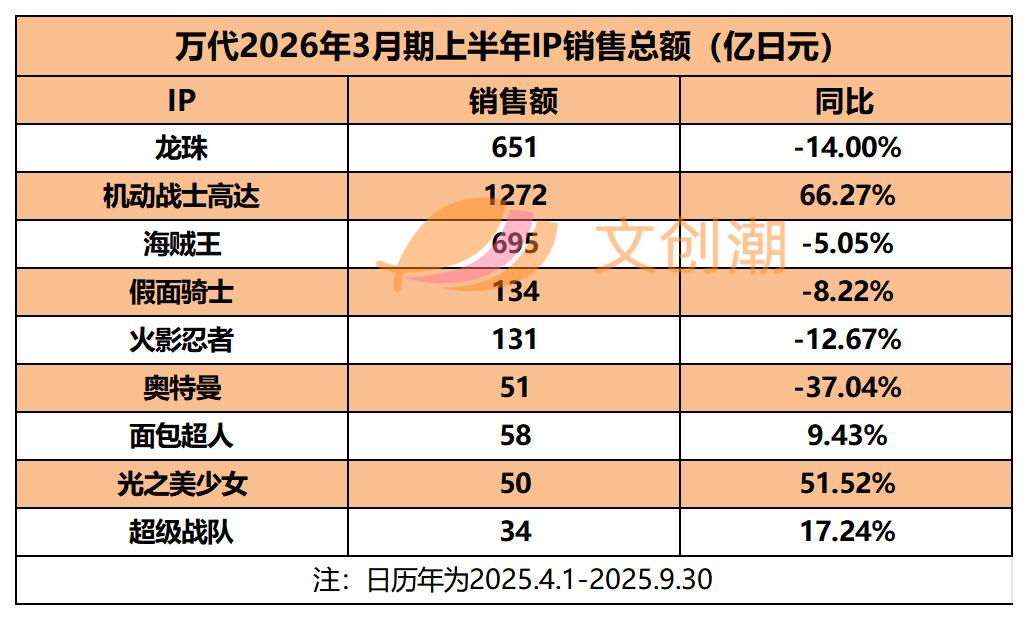

From the first to the third quarters of 2025, the sales of Bandai's toy products for each IP are as shown in the above figure.
Among them, Gundam, with the triple boost of "new animation + new cards + World Expo", surpassed One Piece to become Bandai's best - selling toy IP. The cumulative sales in the third quarter reached 67.3 billion yen, a 21.26% year - on - year increase.
The sales of "One Piece", which ranked second in the toy sales list, reached 66.7 billion yen, a 4.06% year - on - year increase, mainly contributed by the card game. "Dragon Ball" ranked third, with sales of 1.9 billion yen, a 8.65% year - on - year decrease, mainly due to the lack of new products.
In terms of card games, Bandai established a dedicated division to seriously build trading card game brands. Currently, it mainly has six major brands: One Piece, UNION ARENA, Gundam, Digimon, Battle Spirits, and Dragon Ball. Only the last two have not released simplified Chinese versions.
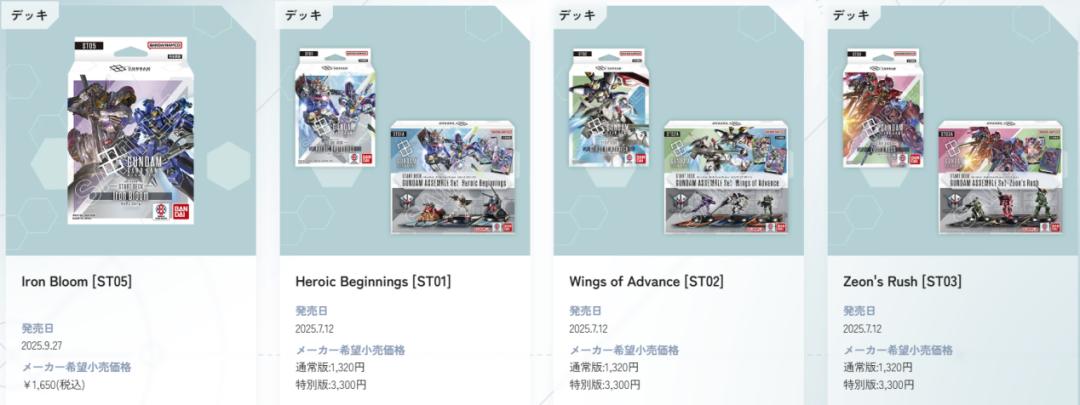
In July, Bandai's Gundam GCG was officially launched in 54 countries and regions around the world. In the third quarter, a total of 6 basic card sets and booster packs were released. Among them, sets 01 - 04 were available in a regular version (1320 yen) and a tournament version (3300 yen). The tournament set included 3 Gundam model kits and replacement cards for use. The game strategy of using Gundam models in battles is highly consistent with the film and television works, which is very popular among players. The popularity of Gundam GCG in Europe and the United States far exceeded expectations, and the market response was enthusiastic.
After the official release of the cards, Bandai actively carried out offline battle events around the world, with a very tight schedule.
For example, in July, it participated in Bilibili World 2025 in China and held teaching activities on - site; in August, it held its first large - scale official event, First Combat; in September, it held the first stage of the New Human Challenge 2025, along with various store battles and novice exchange meetings. The "Gundam Card Champions Tournament 25 - 26" also kicked off in October, and regional qualifiers are being held in countries around the world.
The One Piece OPCG only released 2 Japanese - version booster packs in the third quarter, while the simplified Chinese version released 4 new card sets and booster packs. It is particularly worth mentioning that to ensure the freshness of the game and player retention, the official announced in July that it would officially launch a new tournament system starting from April 1st, 2026 - the Standard format (with a regularly updated card pool) and the Open format (where players can freely use all the cards that have appeared so far). The deluxe booster pack released in July included content related to the new tournament system, which drove up sales.
Meanwhile, OPCG is actively conducting national and regional selection tournaments for global competitions. For example, in mainland China, it held the 2025 Mainland China series of tournaments, including the Spring Finals, Autumn City Tournaments (Shenyang/Hangzhou/), store qualifiers, and the Mainland China Open.
In Japan, it not only held tournament selection tournaments, parent - child tournaments, and exchange meetings for primary and middle school students, but also held large - scale offline celebration events and a 3 - year anniversary special promotion, including co - branded products with McDonald's. Offline events are in full swing.
The Digimon Card Game (DCG) has the evolution of Digimon as its core mechanism. Players engage in battles by deploying Digimon eggs, Digimon, and Tamer cards. Since April last year, based on DCG, an original online comic and novel, "Digimon World Re: Arise", have been serialized to expand the game's world - view. In April this year, the Japanese, simplified Chinese, and English versions achieved the same environment and simultaneous product releases. Only 2 booster packs were released in the third quarter, and it is also conducting qualifiers for the 2025 tournament, including the Asian Open and store qualifiers.
Bandai is also promoting the digitalization of its card games. It plans to launch the mobile game "Digimon World Re: Arise" this year. Based on the world - view of "Digimon World Re: Arise", the game allows players to experience card battles using the fully immersive VR device T.A.L.E.S and the deck box - type tool D - STORAGE through smartphones, and expand gameplay with original cards.

UNION ARENA released 6 Japanese - version card packs and 5 new simplified Chinese - version products in the third quarter, involving IPs such as "Rurouni Kenshin", "Monogatari Series", "Sakamoto Days", and "Arknights".
The feature of this product is the IP crossover. Players can enjoy characters from various popular anime and games in one game, attracting fans of different IPs and generating a cross - media effect. Therefore, the game has maintained a good level of popularity. It is holding various qualifiers for the UNION ARENA Champions Tournament.
Battle Spirits released 2 expansion packs in the third quarter and held qualifiers for the World Championship, as well as official competitions such as the Super Battles Cup 2025 and Battles Ranking 2025. In addition, it is actively carrying out collaborations and will successively release co - branded booster packs with IPs such as Ultraman Z. Next year, it will also launch new co - branded battles in nationally recognized stores.
Dragon Ball Super has a slow update speed. Only 1 booster pack was released in the third quarter, and it is also conducting qualifiers for the 2025 tournament.
Tomy: IP card games successfully attract a wide range of new players
In the third quarter of 2025, Tomy's single - quarter sales reached 68.405 billion yen, a 1.91% year - on - year increase, and its operating profit was 7.133 billion yen, a 13.05% year - on - year decrease.
Among them, the sales of action toys, including card games, reached 1.25 billion yen in the third quarter, a 14.68% year - on - year increase. The performance of card games far exceeded that of the same period last year. Duel Masters and Disney Lorcana showed steady growth.
