With a remarkable 21.8% surge in revenue, why is Walmart China leading in performance?
On November 20th, Walmart released its financial report for the third quarter of fiscal year 2026 (FY26 Q3). The report shows that Walmart's revenue in this quarter reached $179.5 billion, a year-on-year increase of 5.84%. The revenue growth rate has been rising quarter-on-quarter for two consecutive quarters, continuing its steady expansion trend.
Looking at different regions, Walmart's business in China is particularly eye - catching. In Q3 of FY26, it achieved a net sales of $6.1 billion, a year-on-year increase of 21.8%. This not only far outpaced the average growth rate of 10.84% in the international business segment but also maintained a year-on-year double - digit growth for multiple consecutive quarters, becoming a key engine driving global performance growth.
Viewed from the macro - perspective of the industry, Walmart's performance in China is even more resilient. Compared with the average growth rate of 4.4% in China's social retail supermarket industry in the first three quarters of 2025, Walmart China achieved significant excess growth. In the current environment of stock competition where consumption has returned to rationality and traditional supermarkets are generally facing the pain of transformation, this report card of breaking through the trend is particularly valuable.
Facing such a significant differential performance, the market can't help but wonder: What exactly has Walmart China done right?
Sam's Club on One Hand, E - commerce on the Other
For a long time, physical retail and e - commerce were regarded as a zero - sum game. However, in Walmart's layout, the two have long been integrated, complementing each other's advantages and becoming the core factor behind the high - growth performance. Among them, two sets of data are particularly worthy of attention:
Firstly, in the third quarter, Walmart China's e - commerce sales increased by more than 30%, and the proportion of e - commerce sales exceeded 50%.
This is a milestone moment, which means that for Walmart China, the online business is no longer a supplement to the offline business but has already occupied half of the market.
Online retail requires strong supply - chain management capabilities and offline fulfillment capabilities. Supply chain has always been Walmart's strength, and in terms of fulfillment, Walmart's performance has also surprised the market.
Walmart disclosed that currently, nearly 80% of domestic e - commerce orders can be delivered within an hour. This is due to the empowerment of fulfillment capabilities by digitalization. Walmart China is building a digital and intelligent supply - chain system covering the entire link of prediction, production, warehousing, distribution, and sales through intelligent technology. Its digital and intelligent supply - chain system has fully covered all logistics centers, Walmart stores, Sam's Club stores, multiple regional fulfillment centers, as well as more than 400 front - end warehouses and cloud warehouses, ensuring the accuracy and efficiency of product flow.
Doug McMillon, Walmart's global CEO, also sincerely praised during the earnings conference call: "China is more advanced in digital retail than any other Walmart market."
Secondly, the transaction volume of Sam's Club stores increased in double - digits, and Sam's Club opened 8 new stores in the past 12 months (including 1 new store in this quarter).
In 2025, Sam's Club had the most intensive store - opening rhythm since entering the Chinese market. It is expected to open 10 new stores throughout the year, and currently 8 have officially opened, including the first stores in four new cities: Jiaxing, Hefei, Zhongshan, and Yangzhou. In December, the Pudong East store in Shanghai and the Liwan store in Guangzhou will also open, further consolidating its grid density in first - tier cities.
On November 21st, right after the release of the financial report, the grand opening of the Sam's Club store in Changping, Beijing, was the most vivid footnote to Sam's Club's popularity in China. From the on - site pictures, although the opening was on a weekday, members' enthusiasm for Sam's Club remained undiminished. There was already a long queue before the store opened. Some media reported that during the peak hours, the waiting time exceeded 2 hours, intuitively showing Chinese consumers' desire for high - quality and cost - effective products.
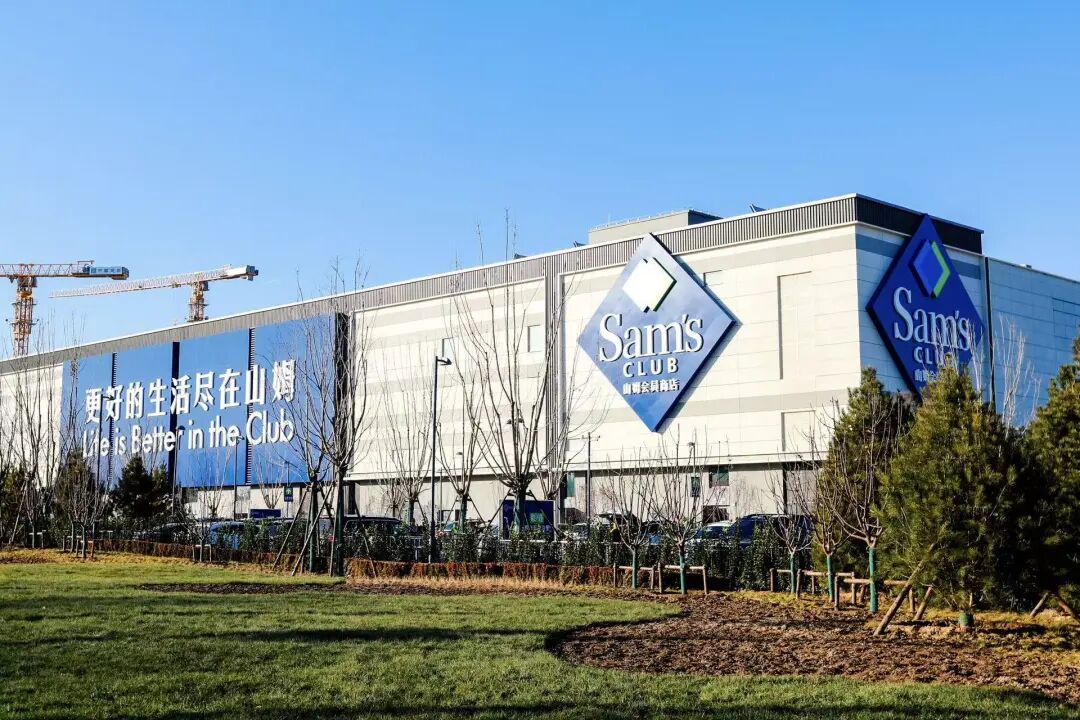
This grand occasion strongly proves that the high - speed growth of performance is essentially an active choice of members "voting with their feet". At the same time, while the stores are expanding on a large scale, the membership number, renewal rate, and activity of Sam's Club have all maintained a stable upward trend. The transaction volume of Sam's Club stores also increased in double - digits this quarter. This growth does not simply rely on the "one - time traffic" from new store openings but is driven by both the improvement of the activity of existing members and the precise expansion of the incremental market.
From a macro - financial perspective, the membership income in Walmart's international business increased by 34% year - on - year, and Sam's Club in China played a decisive role. After an on - site inspection of the new store in Hefei, Doug McMillon, Walmart's global CEO, specifically mentioned the "excellent performance" of this store during the earnings conference call. This is not only an affirmation of the performance of a single store but also an approval of the Sam's Club model in China.
New Growth Pole: Large - scale Launch of Community Stores
If Sam's Club focuses on "stockpiling" and "treasure - hunting", and e - commerce focuses on "convenience", then the last piece of the puzzle in Walmart China's business map is the ultimate penetration of "high - frequency daily" consumption.
A notable signal this quarter is that Walmart has finally pressed the accelerator button on the "community store" model.
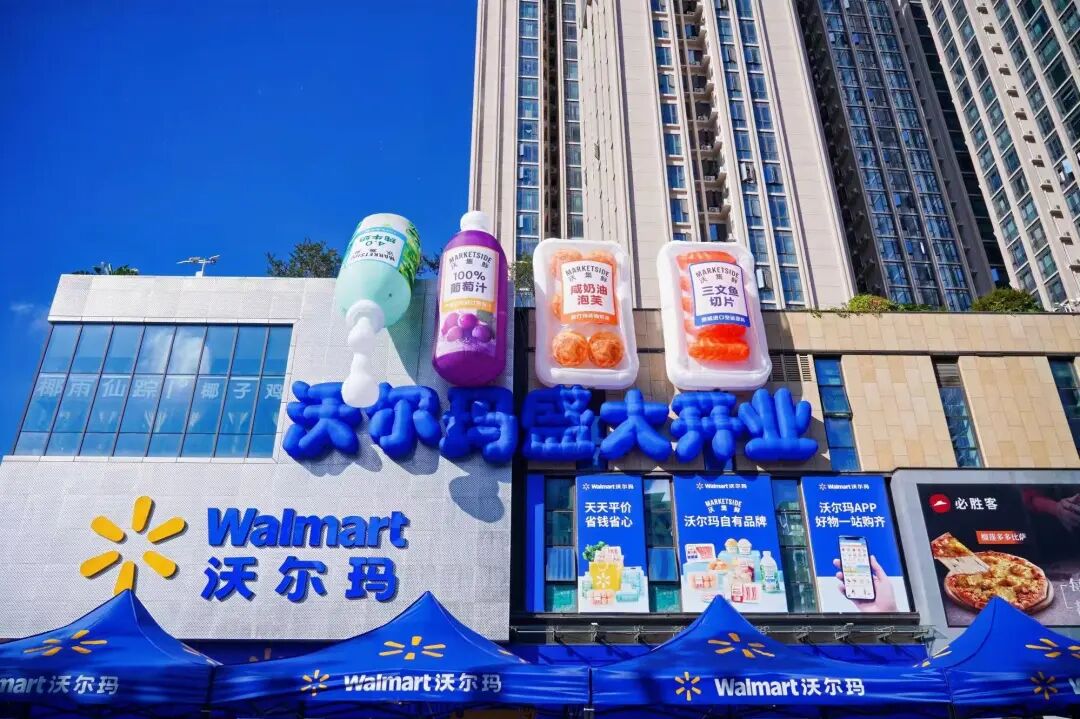
Looking at Walmart's core business matrix, there was a vacuum in one scenario before. For example, large stores focus on "leisurely" one - stop shopping, offering a wide range of fast - moving consumer goods and non - food products, which are suitable for weekend shopping. The e - commerce platform breaks through the limitations of time and space through flexible fulfillment methods. However, when it comes to extremely fragmented and immediate needs such as "going downstairs to buy a bottle of soy sauce" or "buying a bunch of vegetables on the way home from work", there is still a mismatch between fulfillment cost and time window.
Walmart has never been deeply involved in offline daily immediate replenishment in the past, and community stores are the strategic move to fill this key link.
On September 13th, Walmart announced the official opening of its fourth community store in Bao'an, Shenzhen. This marks that after a long - term test, verification, and iterative upgrade, Walmart's "community store" model has run through the single - store model and officially entered the stage of "large - scale launch".

Different from traditional hypermarkets that are often tens of thousands of square meters and have tens of thousands of SKUs, Walmart's community store strategy can be summarized in three words: small, refined, and close.
Small: The main store type is controlled at about 500 square meters. This size greatly reduces the difficulty of site selection, allowing Walmart to be flexibly embedded in various mature communities. At the same time, it also significantly reduces operating costs such as rent and labor.
Refined: Community stores do not pursue large - scale and all - inclusive products but focus on "five meals a day" (breakfast, lunch, afternoon tea, dinner, and supper), carefully selecting about 2,000 high - frequency, high - cost - effective products. This requires Walmart to have extremely strong product turnover control capabilities, and each product on the shelves must be a "high - frequency and essential" item verified by data.
Close: Walmart put forward the concept of a "10 - minute walking life circle". Community stores directly penetrate into the capillaries of high - density urban communities and become the "family refrigerator" closest to consumers.
With the large - scale replication of community stores, Walmart China has actually built a three - dimensional retail network that is well - structured and combines dynamic and static elements, enabling Walmart to more precisely meet the diverse needs of the same core customer group at different times and in different scenarios. This not only increases the imagination space for Walmart's performance but also enhances the company's risk - resistance ability.
Upgrade of "Marketside", Strengthening the Supply - chain Foundation
Looking at Walmart's business map, whether it is the explosion of Sam's Club, the acceleration of e - commerce business, or the large - scale launch of community stores, the underlying foundation supporting this business building remains unchanged - that is, the ultimate product strength and supply - chain efficiency. In the current context of rational consumption, retail competition has shifted from simple traffic competition to a contest of "cost - performance". Those who can truly penetrate the cost structure and achieve "good products at low prices" can survive economic cycles.
This quarter, Walmart's private brand "Marketside" announced a strategic upgrade. With the core proposition of "Simple for Freshness", it launched and upgraded nearly a thousand products, becoming a highlight of Walmart stores. "Simple" has two meanings: simple ingredients, fresh raw materials, and fresh origins, ensuring better quality. At the same time, Walmart offers stable "every - day low prices", making the shopping experience of customers simpler.

This "high - quality and low - price" is not just a marketing slogan but a product of shortening the supply - chain and economies of scale. Through in - depth collaboration with leading suppliers, Walmart has abandoned the traditional multi - level distribution model. By directly sourcing from the origin, streamlining SKUs, and mass - producing on an industrial scale, it has successfully eliminated unnecessary costs in the intermediate links, achieving long - term stable low prices across all channels while ensuring profit margins.

In terms of quality control, Walmart has established a high - standard management system for food safety, quality control, and compliance management for the "Marketside" brand. Through two major dimensions (product control and supplier control) and three major links (access link, production link, and sales link), it realizes end - to - end quality control management across the entire supply - chain and forms a sustainable, measurable, and traceable standardized process.
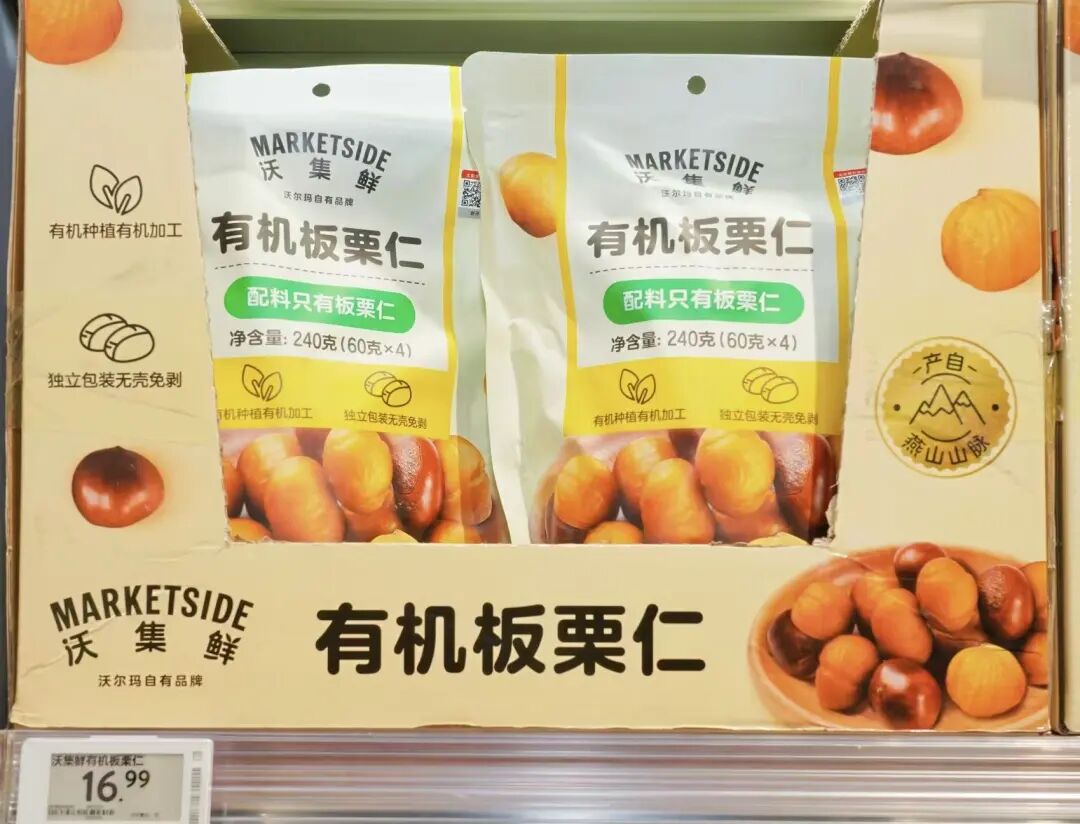
For example, in the access link, Walmart has set up six - level reviews, including relevant national qualification reviews, Global Food Safety Initiative (GFSI) certification, Walmart's business - side screening, supplier due diligence, social responsibility review, and on - site food safety review. At the same time, "Marketside" attaches great importance to upstream traceable quality management and implements an "ingredient disclosure mechanism", requiring suppliers to fully disclose information on main raw materials, production processes, and upstream sources.
At the same time, Walmart has specifically established a closed - loop mechanism from pre - launch evaluation to post - launch tracking to ensure that customer feedback can be immediately reflected in the product optimization process, forming a closed - loop of "customer feedback must be implemented" and establishing a clear product exit mechanism, thus continuously improving product strength. It is this meticulous control of the supply - chain that allows Walmart to ensure that product quality is "measurable and traceable" while establishing its competitive barriers in the retail battlefield.
A New Sample of Value Leap
Overall, Walmart's FY26 Q3 financial report not only presents beautiful financial data but also provides a sample of the "value leap" of a multinational retail giant in the Chinese market.
Looking at Walmart's strategic layout in recent years, it has seized the dividends of consumption upgrading through Sam's Club, the dividends of online retail through digital transformation, the dividends of near - field retail through community stores, and the dividends of quality return through the reshaping of its private brand.
Walmart China has also proven to the industry with its explosive growth in performance that on the long - term and promising retail track, as long as it returns to the essence of business - centering around customers, providing better products, more ultimate cost - performance, and more convenient services, even a giant can break through the growth boundary and complete a value leap from a traditional retailer to an omni - channel retailer.
—————————————————— Brand Special Feature ——————————————————
*Disclaimer:
The content of this article only represents the author's views.
The market is risky, and investment should be made with caution. In any case, the information in this article or the opinions expressed do not constitute investment advice for anyone. Before making an investment decision, if necessary, investors must consult professionals and make careful decisions. We have no intention of providing underwriting services or any services that require specific qualifications or licenses for all parties in transactions.