A mysterious Silicon Valley company that was involved in the operation to kill Osama bin Laden has a market value exceeding $400 billion.
What kind of business logic and technological secrets are hidden behind Palantir's mysterious veil?
On May 1, 2011, the U.S. Navy SEALs successfully killed Osama bin Laden in Pakistan.
While the outside world focused on the bravery of the U.S. special forces, few people knew that behind this precise raid was the technological support of a Silicon Valley company - Palantir. Its data integration ability has long become a powerful weapon for the U.S. military in the fight against terrorism.
Today, this once - secret startup that served the CIA has seen its market value soar from $17 billion at the time of its listing to $400 billion. It has grown into a technology giant spanning defense, finance, and healthcare. Even OpenAI has emulated it to form relevant teams, and Bank of America has said that it has "irreplaceable competitive advantages."
So, what kind of business logic and technological secrets are hidden behind the mysterious veil of this company named after the "seeing - stones" in "The Lord of the Rings"?
"Rebirth" from the Ruins
September 11, 2001, is an indelible painful memory in American history.
After the tragedy, Americans found that their intelligence system had unavoidable fatal flaws. At that time, the data systems of intelligence agencies such as the CIA and the FBI were fragmented, and much of the pre - warning intelligence was missed due to the inability to conduct associated analysis.
It was this disaster that led to the birth of Palantir.
In 2002, Peter Thiel, who had just sold PayPal to eBay, suddenly realized when reviewing the experience of combating fraud on the payment platform that if PayPal's technology for identifying financial crime networks could be applied, it might also solve the dilemma of the intelligence system.
"Terrorists' actions are not random. Just like fraudulent transactions, they form recognizable networks." This judgment from Thiel laid the core logic of the new company and coincided with the U.S. military's concept of reshaping intelligence agencies.
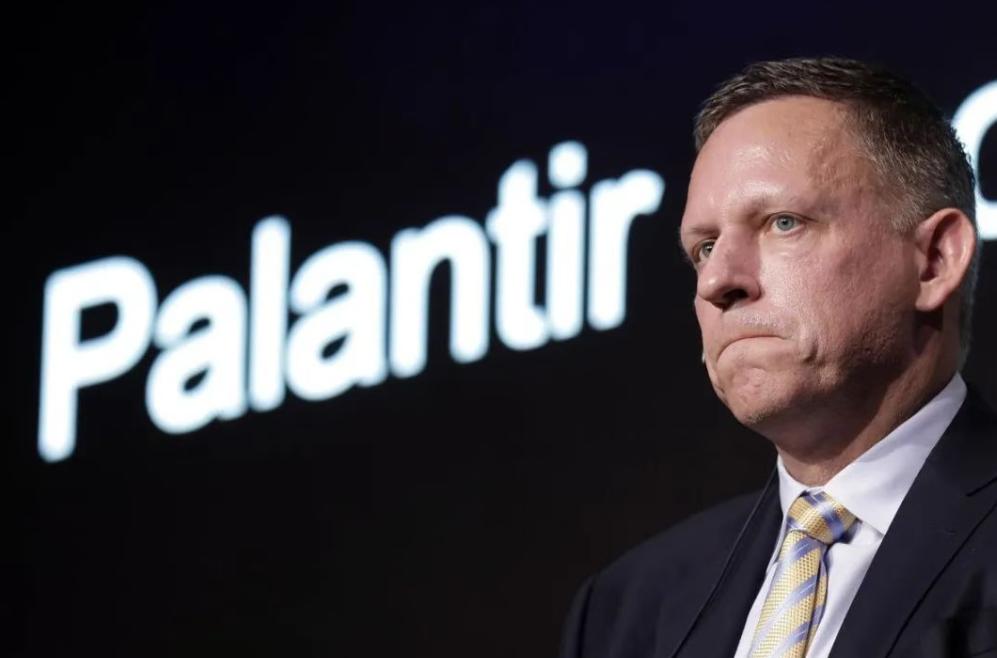
In 2003, Palantir was officially established. Its name is taken from "palantíri" in "The Lord of the Rings" - the "crystal ball" that can see far away but may also mislead the user.
This name actually implies the long - standing thinking of Thiel and co - founder Alex Karp. They always believed that technology is a "double - edged sword." It should reveal the truth and avoid being misused.
Due to Thiel's reputation in early - stage investments, Palantir in its startup phase quickly received a $2 million seed investment from In - Q - Tel, a venture capital firm under the CIA.
The other party's demand was clear: to quickly develop analysis software for intelligence agencies that could integrate heterogeneous data, so that all intelligence could be analyzed and feedback in a timely manner.
However, reality gave Palantir's team a heavy blow. The U.S. intelligence agencies were very dissatisfied with the initial products, believing that these "junk" wasted a lot of time.
The reason was simple. Due to the high confidentiality of intelligence work, Palantir's engineers could not access real - world business scenarios and obtain effective requirements. The traditional software development model of "sales collecting requirements and engineers developing remotely" simply didn't work. Either the information was distorted, or the data was lagging and disjointed.
After noticing this, after multiple discussions with the client, Palantir's team was finally allowed to go to the front line and analyze the situation together with intelligence analysts. This model, later systematized by Shyam Sankar, was the prototype of the FDE (Forward Deployed Engineer) model that later shocked Silicon Valley.
To ensure that intelligence was not leaked, Palantir set up its enterprise like a fortress. It not only had various security access controls but also deliberately kept a low profile. It neither accepted interviews nor participated in industry conferences.
No one could have predicted that this unremarkable "workshop" would leverage a market value of tens of billions in the future.
For Palantir at that time, their main task was to ensure the safety of U.S. military operations through intelligence analysis as much as possible.
On the Iraqi battlefield at that time, roadside bombs were always a nightmare for the U.S. military. Traditional patrol and inspection were both dangerous and inefficient. Soldiers urgently needed a tool that could quickly mark risks and provide early warnings.
During the same period, the Palantir FDE team, living and working with the soldiers, also realized that what front - line soldiers needed most was the ability to "accurately mark suspicious roads on the map."
So, Palantir's engineers immediately took action and stayed up all night to develop a simple map tool. Soldiers only needed to click on the screen to mark suspicious risk roads, and other comrades could see these updates in real - time.
It was this seemingly simple function that helped U.S. soldiers avoid danger many times during missions.
A Weapon Tempered on the Battlefield
However, what really made Palantir stand out was the operation to hunt down Osama bin Laden in 2011.
At that time, the CIA learned from prisoners that there was a core courier with the nickname "Kuwait" around Osama bin Laden, but that was all the clue, and there was no more useful intelligence.
Fortunately, by then, Palantir's Gotham platform had a mature graph database technology. It had already constructed a complete knowledge graph of the "Al - Qaeda" organization through the analysis of data such as suspects, communication records, fund flows, and activity locations.
This decade - long hunt also fully demonstrated the technological value of Palantir. Its Gotham platform integrated about 3 million telegrams, 170,000 satellite images, and 8,000 hours of phone recordings, and compressed the fund flow tracking that originally took 72 hours to just 12 minutes.
For example, once intelligence showed that a phone number appeared in both the communication list of terrorists' families and the monitored system, the data platform would immediately issue an alarm and conduct 24 - hour continuous and close tracking.
Relying on the powerful tracking and analysis capabilities of this system, the U.S. finally located a mysterious mansion in Abbottabad with no network, no phone, but abnormal domestic waste, and determined it to be Osama bin Laden's hiding place and issued a capture order.
Just before the capture operation, the Gotham platform also constructed a 1:64 simulation model of the mansion based on satellite images, providing an accurate basis for the Navy SEALs' drills. It also relied on the portable data link it created to synchronize the on - site dynamics, allowing the White House to monitor and make decisions throughout the process.
This great success not only accumulated valuable combat experience for Palantir but also made it well - known in the U.S. intelligence system.
However, for founders Thiel and Karp, the successful military application was just a small test for Palantir. They had already planned a broader blueprint.
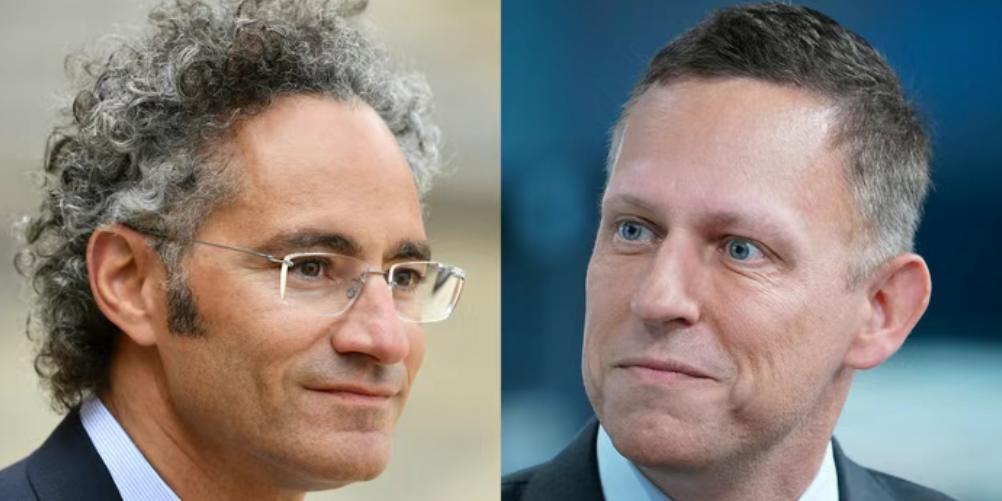
In a sense, Palantir's unique character comes entirely from the peculiar combination of its two founders.
Peter Thiel is a libertarian capitalist, while Alex Karp is a philosopher and lawyer. The two have very different personalities, but they have jointly shaped Palantir's DNA.
Thiel was born in Frankfurt in 1967. After studying philosophy at Stanford University, he switched to law. He is very good at drawing inspiration from philosophy and has a deep insight into market trends and human behavior patterns.
Karp has a more diverse identity. After obtaining a law degree from Stanford University, he went to Goethe University in Frankfurt to obtain a doctorate in philosophy. He has in - depth research on the thoughts of philosophers such as Adorno, Foucault, and Arendt, so he is also extremely low - key.
Although their entrepreneurship can be said to be a "perfect match," with Thiel bringing the vision and funds and Karp bringing conscience and culture, there are still fierce arguments between them, and sometimes they even ignore each other for weeks.
However, they still share a belief: Palantir should not just be a data company pursuing profits, but a "creator" with a mission.
This seemingly abstract philosophical thinking is deeply imprinted in Palantir's product design. For example, Karp insisted on adding a transparency mechanism to the code, requiring software development to have functions such as audit tracking, permission layers, and context annotations.
This persistent requirement is actually the common understanding of the two founders. They believe that Palantir, which relies on algorithms, should not be the "judge" that dominates everything. It can only enhance human judgment and let humans hold the final decision - making power.
In fact, this decision is based not only on the historical and philosophical thinking of the two founders but also on business needs.
Ontology: Translating Business into a Dictionary that Machines Can Understand
After 2010, the global "big data" boom emerged, but traditional enterprises faced a similar dilemma to that of intelligence agencies in the past: data was scattered in different systems, and effective insights and judgments could not be formed.
So, Palantir smoothly transformed the technology tempered on the battlefield into enterprise service capabilities and launched the Foundry data analysis platform for commercial customers, once again receiving a lot of praise.
In fact, from the anti - terrorism battlefield to business operations, Palantir's ability to solve problems is not limited to building databases but also lies in its unique "Ontology" framework.
Here is an explanation. In the field of data and software engineering, "Ontology" is a framework for systematically defining and organizing knowledge. It does not deal with the data itself but builds an independent semantic layer to give unified business meanings to messy data.
Simply put, ontology is a precisely defined "business dictionary" and "relationship map," allowing Palantir to organize abstract data into entities that can be flexibly reused, thereby "compiling" enterprise operations into a logical framework that machines can understand.
When developing the anti - terrorism system in the early days, Palantir did not directly build a "terrorist database" out of habit. Instead, it extracted basic objects such as "people, places, and events" and analyzed them by finding possible association rules through algorithms, thus more accurately depicting a large and detailed "knowledge graph of terrorist organizations."
When Palantir entered the financial and business fields, it only needed to replace these objects with "accounts, transactions, and customers" to quickly adapt to new scenarios and once again demonstrate its amazing data analysis and construction capabilities.
For example, after a merger, an international chemical enterprise had a chaotic data system in its existing multiple systems. It couldn't even determine "whether two materials were the same," and this problem had troubled it for several years. After introducing Palantir's ontology framework, it sorted out the data logic in just two weeks.
Palantir's successful implementation of this "Ontology" is inseparable from its established talent deployment model, FDE (Forward Deployed Engineer).
FDE, or Forward Deployed Engineer, is a technical service model that deploys engineers to the customer's site and deeply participates in the business. That is, the technical personnel deployed to the enterprise not only need to understand technology but also understand the business and be able to quickly respond to the customer's actual problems in data integration and process optimization.
It is worth mentioning that this model may not be unfamiliar to the domestic software industry because it is very similar to the long - practiced B2B (Business to Business) software development model in China, such as "on - site development and project - based delivery," which are in line with the FDE logic.
However, compared with traditional IT consulting, FDE emphasizes "product - based consulting," requiring the extraction of general capabilities from customized services and feeding them back to platform iteration, rather than simply providing consulting services.
Compared with the remote and lightweight model of European and American SaaS, FDE is also more suitable for the current stage where AI products need to be deeply adapted to the business. Therefore, when promoting the implementation of enterprise AI, the FDE model can easily achieve the real integration of the AI platform and business scenarios.
Palantir's FDE team usually adopts a unique dual - team model, generally composed of two roles: Echo (responsible for identifying key problems and managing customer relationships) and Delta (responsible for transforming ideas into feasible software prototypes and deploying them).
Theoretically, if "Delta" is more inclined to be a technical implementer, then "Echo" is closer to the role of a product manager. That is, it is an efficient collaboration mechanism where one is responsible for "understanding" and the other is responsible for "implementation."
However, in Palantir's unique project practice, this boundary is actually not obvious.
FDE: On - Site "Special Operations Team"
From the outside, Palantir may seem like a mysterious "black box." But internally, it pursues a "hierarchy - free" organizational culture, where whoever can solve the problem has the final say, regardless of your title or length of service.
"Hierarchy - free" sounds very attractive, but it also comes with a high level of autonomy and responsibility.
In fact, the Echo team is more like a flat - structured analyst team. Some of them are experts with in - depth domain knowledge, such as former army officers, healthcare experts, or financial risk - control experts, but they have clear divisions of labor.
In Palantir's FDE model, whether it is "Delta" or "Echo," their responsibilities highly integrate the characteristics of business strategy consultants, business analysts, product managers, software engineers, etc. They together form a powerful FDE hybrid, deeply penetrate into the customer's business hinterland, and design, configure, and implement innovative workflows and applications.

For example, Echo members in the team need to have the characteristics of "rebels" - not only understand the existing work methods but also recognize their deficiencies and be able to imagine better solutions.
The Delta team are "prototype experts" for rapid implementation and need to provide specific and feasible implementation plans. Even in recruitment, Palantir does not pursue perfectionist craftsman - type talents but engineers who can deliver workable solutions within a specified time.
This dual - team combination is like a mini "special operations team," looking for unconventional solutions in complex situations to deal with data - centered challenges.
Therefore, the industry also vividly compares the FDE process to the cycle of "dirt roads" and "highways." The work team lays "dirt roads" at the front line. Although they are not perfect, they can immediately solve the customer's urgent problems. The headquarters team is like a "contractor" that carefully evaluates all the "dirt roads" laid by the FDE teams, identifies the most valuable sections, and builds them into standard, stable, and scalable "highways."
At the same time, the operation of the FDE model also strictly follows three "execution principles": only work on the top five problems that the customer's CEO is most concerned about; always be vigilant against becoming an outsourcing team for handling miscellaneous tasks; if the execution is ineffective, stop the loss immediately and return the relevant funds.
It can be said that Palantir's "Ontology" and the FDE model form a wonderful complementary relationship. The personalized requirements collected by FDE at the front line are abstracted into general capabilities through Ontology. And the flexible architecture of