Replacing Humans with Machines: What Kind of Technological Future Do We Need?
“Automation machines replacing humans can ensure quality. This aspect is definitely under control. For example, when a human is welding, they may have certain emotions that could affect the work.”
“Every day at work, you just need to place the materials, and the machine will do the rest on its own. That's it.”
These voices from the factory mark the coming of an era belonging to machines. Automation has not only rewritten the rhythm of factories but is also reshaping the lifestyles of each and every one of us. Although machines are merely supposed to assist in production, they are gradually pushing humans into the role of assistants. People are beginning to believe that machines are omnipotent and even superior to humans.
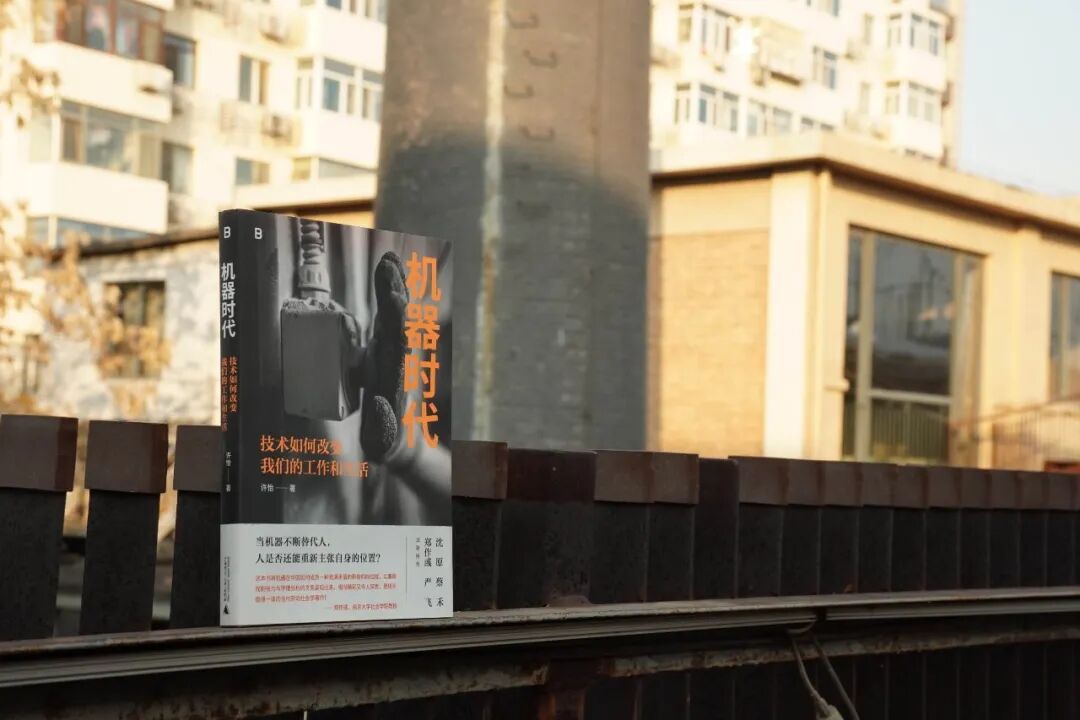
In this seemingly irresistible wave, Xu Yi, a sociology professor at Sun Yat - sen University, delved into the front - lines of the intelligent manufacturing and autonomous driving industries. As both a researcher and a worker, she uncovered another side of the technological myth: Machines are not neutral. They gain authority through social construction and gradually dominate the labor process. Only by breaking free from various “machine myths” can we envision a more just, democratic, and human - centered technological future.
In recent years, the rapid development of technology and its replacement of the labor force have invaded our living world at an astonishing speed. Some technologies, under the guise of “providing convenient services,” have quietly penetrated into our daily lives, such as QR - code ordering in restaurants, self - checkout in supermarkets, and self - service business handling in banks. Other technologies seem to have emerged out of nowhere, and their impact on work and the transformation of work and consumption patterns are earth - shattering. For example, ChatGPT and other large - language models of artificial intelligence, as well as the driverless taxis (Robotaxis) that have appeared on the streets of major cities in recent years.
There are also some technologies, such as industrial robots and CNC machine tools. Although they are out of the public eye, they are gradually replacing workers in factories and becoming the core force of production, efficiently and tirelessly producing various consumer goods we need in our lives. All these phenomena reveal a fact: We are accelerating into an era of automation and robotics, and our work and lifestyles will surely be rewritten by it.
Where Will Workers Go When Machines Come?
With the progress of technology, there may be fewer and fewer jobs left for humans in the future. Human society may enter a “job - less world” in the not - too - distant future. In 1930, economist John Maynard Keynes coined the term “technological unemployment.” Alongside it was an optimistic prediction that technological progress would lead people to an economic utopia, where people would have a lot of leisure time and work no more than 15 hours a week. However, the actual development is very different from Keynes' prediction. Today, workers only feel worried about technological unemployment and have not entered the economic utopia or gained more leisure time. Technological progress has not truly liberated workers from heavy labor.
Lei Yawen, a sociology scholar at Harvard University, explains the different attitudes of workers towards “machines replacing humans” from the perspective of “life stages.” She believes that workers at different life stages have different social identities and responsibilities. For example, young workers in their twenties are not worried about unemployment because they want to try different jobs and industries and think they are young enough to learn new skills. Therefore, most of them do not have the anxiety of technological unemployment. Workers in their thirties have elderly parents and young children to support, so they care more about job stability and are more worried about unemployment. Workers in their forties and fifties who are approaching retirement mostly don't care about the trend of “machines replacing humans” because their children are mostly adults, and they have fulfilled their most important life responsibilities.
Lei Yawen's view is indeed quite explanatory. The views of the workers I contacted in the field on “machines replacing humans” also confirm her statement to some extent.
Actually, from the day you enter the factory, you know that everyone is just exchanging their labor for money, right? Everyone knows their own level. If you don't want to work, you can leave, and he (referring to the factory manager) won't stop you. Because you're just a tiny screw... You're just an ordinary worker, and your status is completely unequal.
— Xiao Yu, an ordinary worker at Foxconn, 23 years old
If the factory doesn't need people in the future (fully automated), there will be no work to do. Then I'll go back to the countryside and farm.
— A Li, an ordinary worker at Xinxing Football Factory, 34 years old
If I don't drive a taxi in the future, I'll either be a security guard or go to a factory to do assembly work. There aren't any good jobs these days. All jobs are difficult.
— A taxi driver in Wuhan, 40 years old
(Question: Are you worried that driverless taxis will affect your work?) I'm not worried. I'm about to retire. I can't work for more than two years.
— A ride - hailing driver in Wuhan, 50 years old
I'm working now just for fun. When doing ball - assembling work, I just need to meet the basic quota. I don't want to be too tired... My son is 27 years old and works in sales. He often travels around the country on business. He earns a lot of money, but he never gives me any. As soon as he has money, he buys a car and spends it on his girlfriend... I just hope he gets married and has a child soon. Then I'll go back home to take care of my grandson. Now that I don't have a grandson to take care of, I have nothing to do at home. I either lie in bed or play mahjong, which is not good for my health.
— Aunt Deng, a ball - assembling worker at a football factory, 50 years old
Young workers in their twenties are full of vigor and have the ability to take action. They are easily dissatisfied with reality, but their dissatisfaction is often due to working conditions rather than machines. Middle - aged workers in their thirties and forties are constrained by their livelihoods, and their action decisions often prioritize how to ensure their livelihoods or defend their existing interests. Workers approaching retirement age are mostly indifferent to changes. They are probably the awakened ones in consciousness—based on their years of work experience, but bystanders in action.
However, the “life - stage theory” only explains the general attitudes of workers of different ages towards machines to some extent and is not sufficient to explain whether they take action or not. Workers' attitudes and actions towards machines are not only related to their life stages but also to their specific situations. More importantly, it depends on whether they have received ideological enlightenment, whether they have formed a critical awareness of machines and an awareness of collective action.
The Anxiety of “Technological Unemployment”
As a Japanese - funded automobile seat manufacturing enterprise, Fengchi Factory was also affected by the strike wave in the automobile industry in 2010. After that, it established a collective wage negotiation system. Every year, the enterprise union represents the workers in collective negotiations with the employer. The workers' salary levels have been continuously rising. Thanks to the booming development of the automobile industry in those years, the workers in Fengchi Factory enjoyed good welfare benefits. Coupled with the annual salary increase, the workers were willing to work in the factory for a long time.
Since 2015, the factory has gradually carried out the “replacement of humans with machines,” and there has been a surplus of welders in the core positions. Originally, due to the high - skill requirements of the welders' work and the exposure to harmful substances such as dust in the working environment, welders enjoyed additional skill allowances and environmental allowances, which were 200 yuan and 150 yuan per month respectively. These 350 yuan were included in the welders' fixed salary, and the corresponding overtime pay and year - end bonus were also calculated based on the fixed salary. After the introduction of welding robots, a large number of welders were forced to become ordinary workers. The management once issued a notice stating that they would cancel the allowances that welders originally enjoyed on the grounds that welders no longer needed to engage in welding operations.
This measure of reducing benefits caused complaints and dissatisfaction among the welders and even triggered collective action. About ten welders on one production line expressed their dissatisfaction by going on strike. They complained to the management:
“We entered the factory as welders... Now you find reasons not to let us weld. It's not our fault that we don't weld.”
However, the strike action on this production line did not cause much of a stir and did not receive support from workers on other production lines. The management quickly transferred multi - skilled workers from other production lines to fill the positions, and production was quickly restored. All the workers who participated in the strike were later fired, and the employer gave them full economic compensation according to their years of service.
Although other welders disagreed with the employer's plan to reduce benefits, they did not dare to take any radical protest actions after seeing what had happened. Since the enterprise implemented a collective bargaining system, important policies could not be passed without the consent of the union. The welders could only choose to refuse to sign the company's resolution and continuously asked the union to negotiate and communicate with the management. Finally, after a year of coordination between the two sides by the enterprise union, the employer and the employees reached a compromise—The allowances of welders who no longer engage in welding operations were reduced to 120 yuan per month, and the treatment of welders who still engage in welding remained unchanged.
It is difficult for workers to interpret this result as their “victory” because the welders' treatment has been reduced, while the employer continues to lay off employees through the so - called “rational reduction of personnel” plan.
High - level managers and long - serving workers were all interviewed and negotiated for resignation. Employees who negotiated for resignation could receive at least “N + 1” months' salary as economic compensation. Since the enterprise implemented automation, the number of employees has decreased from more than 1,000 before 2012 to about 700 in 2018, a reduction of about one - third. In addition, most of the newly recruited employees are temporary workers, including dispatched workers and interns. The salaries of the latter two types of workers are only at the local minimum wage standard, and they do not enjoy other welfare benefits, which is far lower than the cost of hiring full - time employees.
Four years after finishing the interviews with the workers at Fengchi Factory, I happened to meet Mr. He, a former employee of the factory, in a ride - hailing car in the area where Fengchi Factory is located. I further learned some details about the employer's lay - off plan that year. Mr. He was one of the earliest employees to enter Fengchi Factory. He was promoted from a front - line employee to an on - site manager and had worked in the factory for 11 years. Due to his long years of service and high - level salary, Mr. He was naturally one of the targets of the enterprise's lay - off plan.
He recalled that in those two years, the factory specially recruited a human resources section chief to be responsible for laying off old employees. The usual trick of this section chief was to first find mistakes of the target employees in their daily work and collect evidence, and then invite them for a negotiation on resignation. Under compulsion, Mr. He accepted the resignation negotiation plan.
After leaving Fengchi Factory, Mr. He did not return to his hometown but chose to stay in the local area and drive a ride - hailing car. When I asked him what the difference was between his current job and his previous job, he said, “It feels different. My income was more stable before, but I couldn't control my working hours. Now my income is not as stable as before, but my working hours are more flexible.”
I then asked him, “If the employer hadn't asked you to leave, would you have chosen to continue working in the factory?” He replied, “Probably.”
Embracing Technological Progress
Not all workers have a negative attitude towards technological progress or intend to resist the domination of machines. Some workers have an optimistic attitude towards technological progress and belong to those who embrace technological change. In fact, whether to resist or embrace technological innovation has never been a simple choice.
I first met Xiaojun in May 2017. At that time, I took my students to visit the Sunflower Social Work Service Center. Xiaojun and other workers were invited to share and communicate with the students. At that time, he was still in the recovery period after a work - related injury. When talking, he often deliberately covered his injured finger with his other hand, looking a bit nervous and uncomfortable. Through that sharing activity, I learned about Xiaojun's first work experience and his work - related injury.
At the age of 19, Xiaojun graduated from a technical school majoring in mechatronics and then entered a shipyard as an electrician. The work in the shipyard was not only hard but also accompanied by high safety risks. Sure enough, within less than two years, he suffered a work - related injury. One day, due to the factory's rush to meet the schedule and a shortage of manpower, he was arranged to operate an anchor machine that he had never used before. As a result, due to improper operation, a steel plate on the anchor machine fell and injured his left index finger. After the injury, the supervisor asked him to go to the factory's infirmary for treatment. The factory doctor lied that it was just a skin injury and simply disinfected and bandaged it. Later, when the wound continued to bleed, the supervisor took him to a district - level hospital. The doctor told him that the injury was serious and that he needed to have his bone ground and then sutured, and he had to be hospitalized. Xiaojun, who had never experienced such a thing before, was very scared and worried that he would become disabled.
Moreover, after the injury, the factory director talked to him and advised him not to report the work - related injury. The director said that if they “settled privately,” the factory would give him 20,000 yuan. Xiaojun knew in his heart that reporting the work - related injury would affect the management's performance appraisal and also have a certain impact on the factory. Soon after, the factory arranged for the team leader and colleagues to visit Xiaojun in the hospital, and they all advised him not to make a big deal out of it. Later, with the advice and help of the Sunflower social workers, Xiaojun insisted that the factory report the work - related injury. Eventually, he was rated as having a tenth - level disability and received the corresponding work - related injury benefits.
After the recovery period, he left the shipyard—as he himself said, “I developed a psychological shadow about heavy - industry enterprises.” In the following six months, Xiaojun returned to his hometown and tried to do some small business. However, he lost tens of thousands of yuan in just a few months and had to go out to work again.
At the age of 24, he applied for a technical position in the engineering department of Shuran Factory. The minimum educational requirement for this position was a college degree. Fortunately, Xiaojun had been improving his education level in the past few years. He took the adult college entrance examination and was about to obtain a college diploma. Maybe the factory was eager to recruit technical talents, so Shuran Factory approved his job application, even though he was still five months away from officially getting his diploma when he joined the factory.
After joining the factory, Xiaojun was sent to the factory's robot supplier to learn how to operate and debug robots and obtained a robot operation certificate issued by the manufacturer. There were two technicians in the engineering department. Xiaojun was responsible for the maintenance of the control system, and the other technician was responsible for robot debugging. At the same time, they also needed to train the robot operators in the automated production department and make and debug samples when new equipment was introduced. His monthly take - home salary was nearly 7,000 yuan, 1,000 - 2,000 yuan more than his monthly salary at the shipyard. Xiaojun also planned to take the upgrade - to - undergraduate - degree exam to continue improving his education level. The factory also promised to send him to the UK for study and training in the future and even gave him a chance to go to overseas branches to teach local workers skills. At that time, he was full of confidence in the future and no longer deliberately hid his incomplete finger when communicating with others.
“I think the field of artificial intelligence (automation) will always be on the rise and will not decline. The country wants to develop this field. Once I learn this, I'll be able to make a living in the next ten or twenty years.”