The PayPal Mafia: From Payment Disruptors to the Confluence of Capital and Politics
By closely examining the development trajectory of the "PayPal Mafia," one can not only see how a startup became the "Whampoa Military Academy" of the Silicon Valley innovation system but also capture the early germination of Elon Musk's "First Principles." More importantly, it also offers a glimpse into how today's Silicon Valley has undergone a crucial transformation through the convergence of technological capital and power.
In the history of Silicon Valley innovation, there is a group whose name is always firmly associated with the word "disruption" - the "PayPal Mafia."
From Tesla's reconstruction of the electric vehicle industry, SpaceX's breakthrough in the boundaries of space commercialization, to LinkedIn's reshaping of workplace social networking, and YouTube's definition of the video content ecosystem, behind these business miracles that have rewritten industry rules, there are the same group of people.
Of course, they are not "mafia" in the traditional sense.
In 2007, Fortune magazine used this metaphor to describe how these former PayPal employees, after leaving their old employer, carried the technological genes and capital accumulated in the payment field, supported each other like a "family," and shared opportunities. Eventually, they created a series of myths in fields such as new energy, aerospace, social media, and enterprise software.
Today, the Silicon Valley group that emerged from PayPal has founded or co - founded companies with a valuation in the trillions of dollars. Their investment portfolio covers more than 20 countries around the world, directly affecting the production and lives of billions of people.
By closely examining the development trajectory of this group, one can not only see how a startup became the "Whampoa Military Academy" of the Silicon Valley innovation system but also capture the early germination of Elon Musk's "First Principles." More importantly, it also offers a glimpse into how today's Silicon Valley has undergone a crucial transformation through the convergence of technological capital and power.
1
The Forging of PayPal's Anti - Traditional Genes
The whole story begins with the birth of PayPal.
In 1998, the global internet boom was surging, but traditional payment methods were inefficient and difficult to meet the needs of rapid transactions in the online world. There was no mature solution in the online payment field at that time.
At that time, several Silicon Valley entrepreneurs, including Max Levchin, Peter Thiel, and Luke Nosek, jointly founded the Fieldlink company. Their initial goal was to develop security software for handheld devices.
With the changes in the business environment and the emergence of the mobile internet, they acutely perceived the huge potential of digital payments and resolutely shifted their business direction to e - wallet services. They renamed the company Confinity and focused on online payment business.
Thanks to the encryption and anti - fraud algorithms developed under Levchin's leadership, Confinity not only effectively dealt with the risks of internet transaction fraud in the early days of its startup but also laid a solid foundation for digital payment technology. Thus, the prototype of PayPal was born.
Almost at the same time, X.com, founded by Elon Musk, also entered the online payment arena.
Different from Confinity, which focused on "optimizing payment security," X.com's ambition was to build an "all - in - one online financial empire" covering banking, insurance, and investment, aiming to challenge the boundaries of the traditional financial industry.
Under the pressure of market competition, these two seemingly parallel entrepreneurial directions finally converged in 2000. X.com merged with Confinity, which was operating the PayPal business, and was unified and renamed PayPal in the following year.
This merger was not only an integration of the two sides' advantageous resources and technologies but also put PayPal at a new starting point, kicking off its journey in the online payment field.
In fact, since its birth, PayPal has been full of a strong "anti - traditional" flavor, and its recruitment policy is quite unique.
PayPal's senior management was not very interested in MBA graduates favored by Wall Street at that time but instead preferred those who "gave up their doctoral degrees" and talented oddballs with unique thinking.
Inside the company, Chief Operating Officer David Sacks actively implemented a policy of "not holding unnecessary meetings." As long as he found that a meeting lacked substantial content, he would immediately interrupt it.
Meanwhile, PayPal was also very user - friendly. All information was open, and employees were allowed to view key data such as customer records, revenue streams, and fraud losses.
It was through this open and efficient culture that PayPal not only cultivated employees' sense of ownership but also significantly improved decision - making efficiency.
In fact, within just a few months after its establishment, PayPal completed two major transformations: from the handheld computer platform to the website - based model, and from P2P payment to e - commerce payment. Such agility is extremely rare even in Silicon Valley, which is known for its high efficiency.
However, like all startups, PayPal's growth path was not smooth. It always faced doubts from traditional financial institutions, competition from emerging payment companies (such as Billpoint under eBay), and various regulatory challenges.
Fortunately, after a series of explorations and confrontations, PayPal finally won the market with its excellent user experience and strong technological strength.
In 2002, PayPal successfully went public, but just a few months later, it was acquired by eBay for $1.5 billion.
After being acquired by eBay, PayPal's core members all obtained huge wealth and successively chose to leave eBay.
But they did not "retire from the arena." Instead, they still maintained close contact and began to be active in various fields in Silicon Valley, gradually forming a unique group later known as the "PayPal Mafia" by the media.
That period of working together at PayPal, as well as the culture, technology, and connections they accumulated, quietly laid the foundation for the Silicon Valley landscape in the next two decades.
2
The "Mafia" from the Payment Arena to Cross - Domain Disruption
Each member of this talented team actually had a bigger entrepreneurial blueprint in mind.
Elon Musk is undoubtedly one of the most prominent stars in the "PayPal Mafia." After leaving PayPal, his entrepreneurial journey has been like a legendary science - fiction blockbuster. Since there are too many reports about it, it will not be repeated here.
Other entrepreneurs also continued to delve deeply into their respective fields after leaving and wrote equally wonderful chapters.
Peter Thiel is undoubtedly the most strategic "planner" in this group's "fission." He quickly transformed the capital obtained from selling PayPal into a bargaining chip for insights into the future.
In 2004, when social media was still regarded as a "virtual toy," Thiel defied the majority and invested $500,000 in the little - known Facebook. This investment later yielded a return of more than ten thousand times, becoming one of the most praised investments in Silicon Valley's investment history.
But he did not stop there. The Founders Fund he founded clearly adheres to the "anti - consensus" investment philosophy and always focuses on supporting hardcore companies that can achieve "from 0 to 1" breakthroughs and build technological monopolies.
Therefore, behind a series of "unicorn" companies such as SpaceX, LinkedIn, Palantir, and Yelp that emerged in Silicon Valley later, there was Thiel's early capital.
It can be said that Peter Thiel is not only the "golden hand" of the "PayPal Mafia" but also successfully transformed from a "payment pioneer" into the "investment brain of Silicon Valley." He also wrote the book "Zero to One," which is regarded as a bible by countless entrepreneurs.
Co - founder Max Levchin also continued to adhere to the belief of "using technology to solve core problems" and integrated it into his entrepreneurial ventures.
After leaving PayPal, he founded the fintech company Affirm in 2012. He then upgraded and iterated the anti - fraud algorithms and risk - control models developed during his time at PayPal and applied them to the consumer credit field. With its transparent "buy now, pay later" service, Affirm dominates the fintech industry.
In the field of content dissemination, three former PayPal employees, Steve Chen, Chad Hurley, and Jawed Karim, staged a miracle of "accidental innovation."
Just because of a complaint that "it's too troublesome to share party videos," they jointly founded YouTube in 2005.
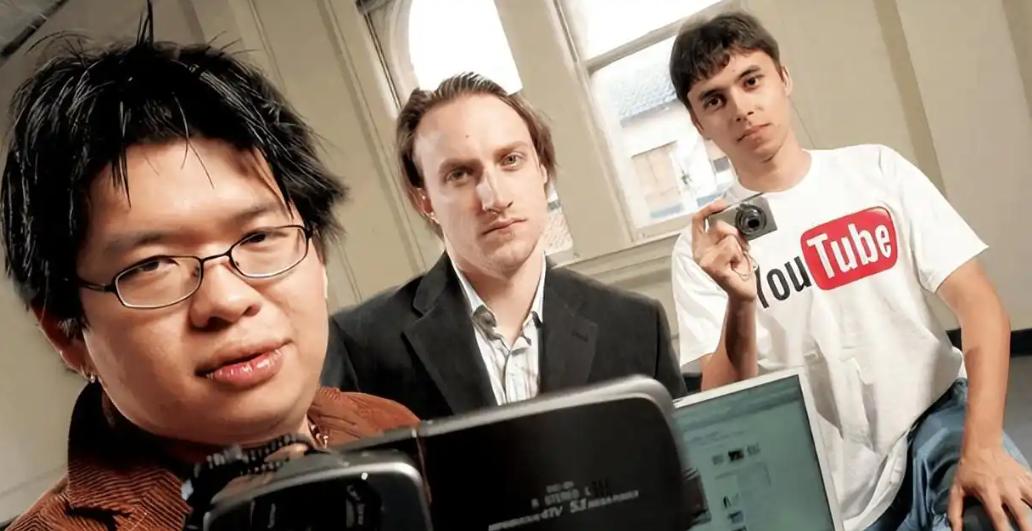
This online video platform, with its excellent user experience (unlimited uploads, one - click sharing) and open UGC model, instantly ignited the enthusiasm of netizens for content creation and sharing, attracting the attention of many investors.
In 2006, after Google acquired it for $1.65 billion, YouTube gradually developed into the core infrastructure for global cultural dissemination. Its value is not only more than a hundred times the acquisition price but also completely reshaped the contemporary media ecosystem.
Core member Reid Hoffman founded LinkedIn, which connects professionals around the world and was eventually acquired by Microsoft for $26.2 billion. David Sacks founded the enterprise social platform Yammer, which was also acquired by Microsoft for $1 billion. Keith Rabois, an early core member of Square, single - handedly revolutionized the real - estate transaction process in North America.
Almost overnight, these "former PayPal employees" became the "core engines" driving the Silicon Valley innovation ecosystem. Their influence extends from space exploration, social networks, and fintech to enterprise services and video entertainment, painting a magnificent "map of disruptors."
3
The Underlying Logic of the "PayPal Mafia"'s Continuous Breakthroughs
Why can the members of the "PayPal Mafia" continue to achieve success in completely different fields?
Perhaps, it has to start from their common experience at PayPal, a time of "tempering in the fire."
First of all, inside PayPal, although everyone believed that cutting - edge technology was the only way to build a moat, these people with an "anti - traditional" gene in their bones did not blindly believe in authority and replicated this attitude in their subsequent entrepreneurial endeavors.
For example, the Founders Fund specifically bets on "niche tracks" ignored by mainstream venture capital; Palantir uses big - data analysis to solve national - defense security problems; Tesla reconstructs the automotive industry through autonomous - driving algorithms; and Affirm challenges traditional finance by building a new credit model.
It can be said that it is the "challenger" thinking developed over the years that allows them to always disrupt traditional industries with new thinking and discover and develop various blue - ocean markets.
However, more powerful than the cultural gene is the "mutual - assistance network" based on deep trust among them. It is a friendship forged in a high - pressure environment and the most valuable trust and tacit understanding in business.
In the investment field, members of the "PayPal Mafia" have always given priority to investing in each other's projects, even if these projects are not favored by the public.
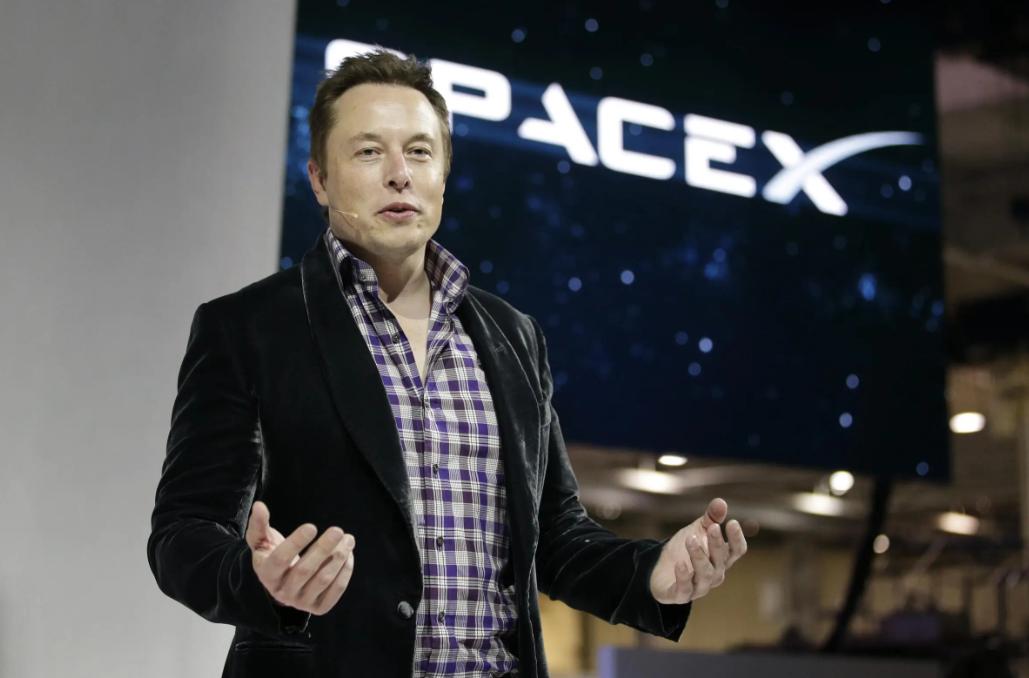
For example, when everyone was mocking the consecutive launch failures of Elon Musk's SpaceX, it was Peter Thiel who silently supported him behind the scenes.
During YouTube's most difficult startup period, not only did the three founders bet their entire fortunes on it, but other members of the "PayPal Mafia" also provided a large amount of financial support.
In addition to funds, they also recommended core backbones to each other. Most of the early PayPal team members later became new senior executives of companies such as SpaceX, LinkedIn, and YouTube.
In daily life, they also shared cutting - edge trends and key information through regular gatherings, forming an extremely efficient resource - cooperation team.
This professional support from the team also greatly reduced the trial - and - error costs of innovators.
When Elon Musk's rocket - development failed repeatedly, in addition to Peter Thiel's financial support, he also received professional advice from Levchin from a technical perspective. When Steve Chen was thinking about YouTube's growth strategy, Hoffman contributed his profound insights in the field of social networks.
This professional and selfless support is like giving each member a top - level "think tank" at the same time, always providing professional and timely help at critical moments.
By 2010, the total valuation of the companies founded or invested in by these former PayPal members had exceeded $100 billion.
It can be said that the success of the "PayPal Mafia" is not only a unique cultural system incubated in Silicon Valley. The members also use the model of "technology first, challenging tradition, and deep binding" formed during their time at PayPal as a portable "operating system" and gradually cover various fields, reshaping the global technology - industry landscape.
After completing the transformation from "payment disruptors" to "business disruptors," the ambitions of the "PayPal Mafia" did not stop at business success.
4
The Leap from Business Disruption to Technological Hegemony
Since 2010, the "PayPal Mafia" has gradually shown its amazing ability to bind technology with state power.
Among them, Palantir, founded by Peter Thiel, is the most typical representative of the "mafia."
Palantir is originally a big - data analysis company that provides customized AI platforms for government and business customers. Its core products include the Gotham platform for the government sector (focusing on national security and intelligence) and the Foundry platform for the business sector (focusing on business information and data), which are decision - support systems.
Relying on its rich and professional big - data analysis capabilities, the Gotham platform has gradually become an indispensable "decision - support system" for the US military and various intelligence agencies today. The Vantage platform it is equipped with is also a core tactical component of the US military's "network - centric warfare."
Elon Musk's SpaceX follows almost the same pattern. By leveraging the reusable - rocket technology deeply bound to NASA, it not only occupies the dominant share of the global commercial - launch market. Its "Starlink" system has also deeply intervened in real - world geopolitical scenarios such as the Russia - Ukraine conflict, enabling a private enterprise to directly influence the process of modern warfare for the first time.
A series of "business - state bindings" have enabled the influence of the "PayPal Mafia" to go beyond Silicon Valley, giving rise to a new - era "tech - industrial complex" dominated by data, algorithms, and private platforms, which is gradually penetrating into all fields in the United States.
Even, the "PayPal Mafia" has the ability to reshape social - public opinion and public - discourse rules through media - dissemination channels.
For example, after Elon Musk acquired Twitter and renamed it the X platform, he immediately carried out drastic reforms on its content - moderation rules, advocating so - called "freedom of speech" and showing his ambition to redefine the rules of public dialogue.
