NVIDIA's good performance is bad news for Xiaomi.
Author | Ding Mao
Editor | Zhang Fan
On November 19th, NVIDIA released its report for the third quarter of fiscal year 2026.
Data shows that in Q3 of FY26, NVIDIA achieved revenue of $57 billion, a year - on - year increase of 62%. The quarter - on - quarter revenue growth reached a record $10 billion, with a growth rate of 22%, far exceeding market expectations. Among them, the revenue of the data center business, which attracted the most market attention, reached $51.2 billion, a year - on - year increase of 66% and a quarter - on - quarter increase of 25%.
In terms of profit, in this quarter, NVIDIA's gross profit margin reached 73.4%. The net profit in the same period was $31.91 billion, a year - on - year increase of 65%, corresponding to a net profit margin of 56%.
NVIDIA's strong performance and its powerful responses to core concerns such as the AI bubble during the earnings call have, to a certain extent, alleviated the market's recent concerns about the overvaluation of AI and strengthened the expectation that the demand for computing power is still in an exponential explosion stage.
However, this rigid demand for computing power is rapidly translating into huge pressure on the key upstream supply chain. During the earnings call, NVIDIA pointed out that links such as foundry, storage, and power supply have become the key bottlenecks for future growth.
Since the beginning of this year, driven by the strong demand for AI, memory chips represented by HBM have entered a super price - increasing cycle. This has not only significantly increased the cost of AI servers but also, through the "butterfly effect" of capacity transfer, brought unprecedented impacts on the traditional consumer electronics market.
So, how exactly did NVIDIA perform this quarter? What is the underlying logic behind the price increase of memory chips? And what impacts will it have?
High certainty of future performance
Overall, in this quarter, benefiting from the full - scale release of products based on the Blackwell architecture and the resonance of the three platform - level demands of accelerated computing, complex artificial intelligence models, and "agent" applications, NVIDIA's server - side orders in cloud computing, the Internet, and traditional industries have continued to increase, driving its performance to reach a new historical high.
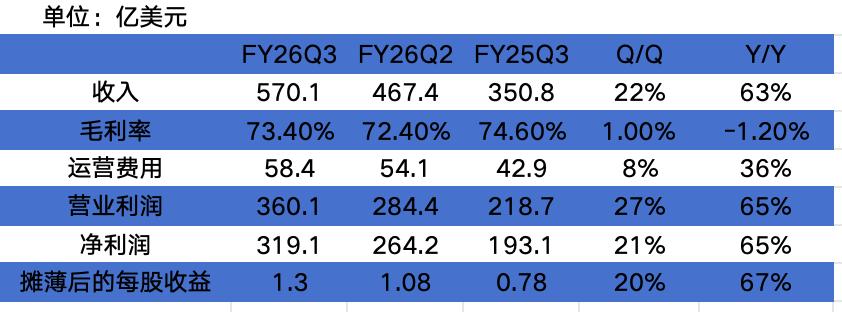
Chart: NVIDIA's quarterly performance. Data source: Wind, compiled by 36Kr
On the basis of the high bases in fiscal years 2024 and 2025, NVIDIA's revenue in this quarter still maintained a year - on - year growth rate of over 60%. Jensen Huang even directly stated that "the sales of Blackwell exceeded expectations, and the cloud GPUs were also sold out", demonstrating the market's rigid demand for AI computing power. To a certain extent, this has alleviated market concerns and re - established NVIDIA's leading position and cyclical resilience in the field of AI infrastructure.
Beyond the strong performance, what is more important is NVIDIA's optimistic guidance for the next quarter.
The company expects its revenue in the next quarter to reach $65 billion, a quarter - on - quarter increase of nearly 14%, still significantly better than the consensus forecast of institutions. At the same time, benefiting from the impetus of the BlackWell product cycle, the gross profit margin is also expected to further increase to 74.8%.
Regarding the new - generation Rubin platform, the company further confirmed that the next - generation Rubin platform is still on track for increased production in the second half of 2026, and it has received the first chip, further consolidating its accelerated product technology roadmap rhythm of "one generation per year".
At the previous GTC conference, NVIDIA also disclosed that it expects the cumulative shipments of Black + Rubin to reach 20 million units by the end of 2026, corresponding to revenues of about $500 billion. During this earnings call, Jensen Huang further stated that with strong demand support, there is every opportunity to further expand the scale on this basis, which undoubtedly strengthens the market's certainty about NVIDIA's performance growth in 2026.
Surge in AI demand drives up memory chips
In the past few years, benefiting from the surge in the shipments of NVIDIA's AI accelerators, the GPU industry chain represented by optical modules, PCBs, copper cables, and liquid cooling has witnessed both volume and price increases. This year, the wave of AI has further spread to memory chips.
Since the second quarter, due to tight production capacity, the prices of traditional memory chips such as DDR4 have bottomed out and entered a new price - increasing cycle. Especially in June, when giants such as Samsung and Micron announced their withdrawal or reduction of DDR4 production capacity, it triggered panic - buying by downstream equipment suppliers, exacerbating the price surge of traditional memory. The average spot price of mainstream DDR4 increased by more than 60% in that month.
After a brief adjustment, in September, the wave of memory price increases resumed.
Under the continuous imbalance between supply and demand, suppliers such as Micron and SanDisk suspended product quotations at the end of September and slightly raised prices. In October, OpenAI's visit to South Korea pushed this price - increasing wave to a climax.
At the beginning of October, OpenAI's CEO visited South Korea and established strategic partnerships with Samsung and SK Hynix, locking in advanced memory chips for the "Stargate" project. According to OpenAI's estimate, to run its advanced AI models, it will require a monthly production capacity of 900,000 DRAM wafers. This demand accounts for about 57% of the total production capacity of the three major DRAM suppliers (Samsung, SK Hynix, and Micron) by the end of this year.
Goldman Sachs estimates that if all 900,000 wafers are converted to HBM, the scale would be roughly equivalent to 114% of the total DRAM revenue of the three companies this year; if all are converted to server DRAM, the scale would be about the total DRAM revenue of the three companies.
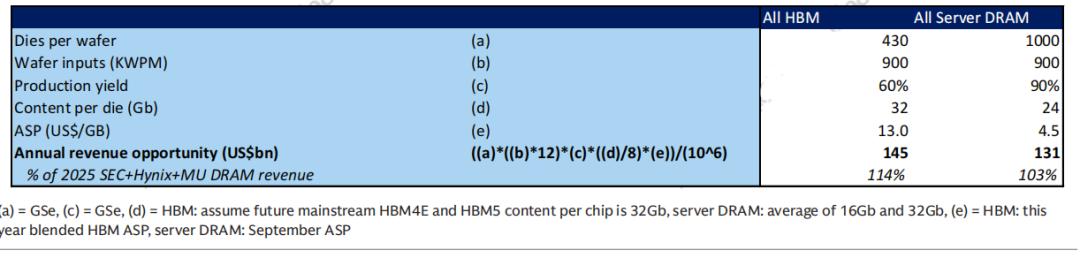
Chart: Goldman Sachs' calculation of OpenAI's additional memory demand. Data source: Goldman Sachs, compiled by 36Kr
After OpenAI stepped in to lock in production capacity, the market's expectation of tight memory chip supply further intensified, triggering a significant price increase of advanced memory since October and further spreading to the traditional memory field.
Data shows that as of November, the average spot price of mainstream DDR5 has increased by more than four times since the beginning of this year. The price increase has been significantly amplified since October. The price increased by 100% month - on - month in October, and the price has increased by more than 50% so far in November. Meanwhile, due to capacity mismatch, the average spot price of mainstream DDR4 has increased by nearly 10 times, and there has been an obvious price inversion (DDR4 price is higher than DDR5) since June.
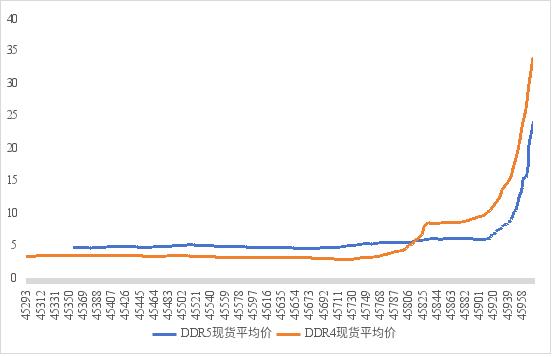
Chart: Performance of memory chip prices. Data source: Wind, compiled by 36Kr
Looking at the underlying logic, it can be divided into two levels, and the driving factors are slightly different.
On the one hand, for advanced memory such as HBM and DDR5, it is a typical price increase driven by demand. This is mainly because the market's demand for high - performance memory chips has reached an unprecedented level due to the surge in AI. Take NVIDIA's HGX H100 8 - GPU server as an example. A single server needs to be equipped with 640GB of HBM and 2 - 4TB of DDR5, which is 4 - 8 times that of traditional servers.
To meet the incremental demand, memory manufacturers have not only transferred their existing production capacity to high - end memory on a large scale but also maintained high capital expenditures to expand production to cover the new demand. In this context, memory suppliers will inevitably require a higher return on investment to justify their strategies, thus driving up the premium of high - end memory products. In particular, the quantity - locking actions of leading players such as OpenAI have accelerated the price increase of high - end memory.
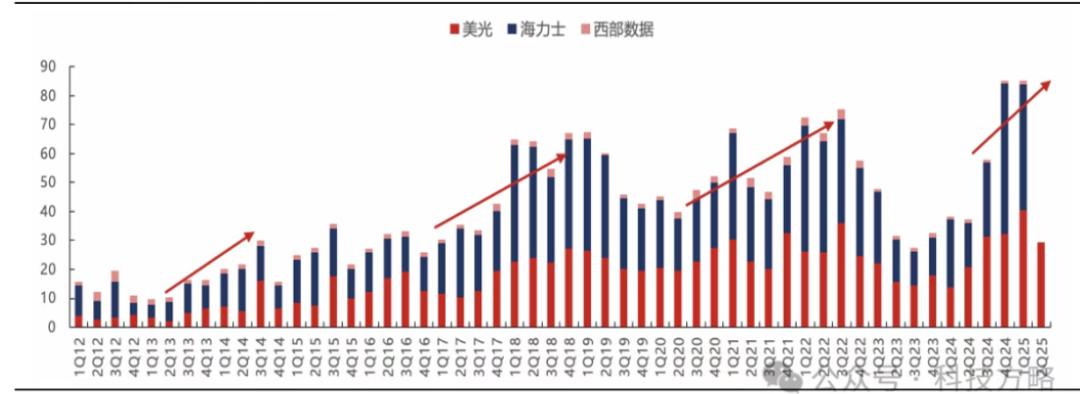
Chart: Capital expenditures of memory suppliers. Data source: Minsheng Securities, compiled by 36Kr
On the other hand, to meet the surge in demand for high - end memory, memory manufacturers have actively adjusted their original capacity allocation. Since June this year, leading suppliers such as Samsung, SK Hynix, and Micron have accelerated their withdrawal from DDR4 production capacity and transferred a large amount of capacity to high - performance memory.
This structural adjustment has led to a continuous shortage of traditional memory production capacity. Coupled with geopolitical conflicts, it has triggered panic - buying by downstream equipment manufacturers, accelerating inventory depletion. Finally, under the "crowding - out effect", prices have rebounded sharply. It can be seen that the essence of the price increase of traditional memory products is not an explosion in demand but a structural imbalance due to supply mismatch.
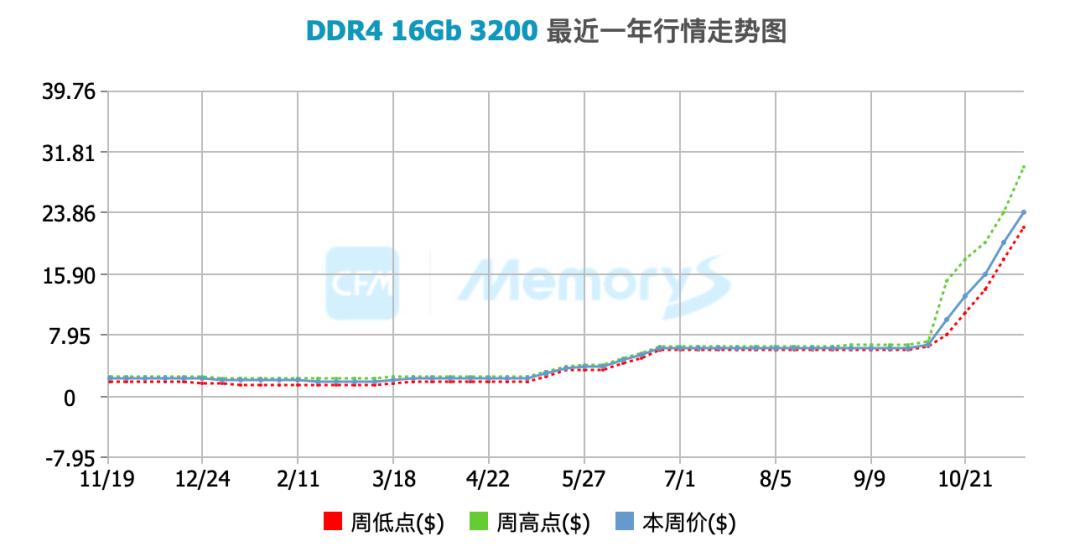
Chart: Rapid increase in traditional memory prices. Data source: Flash Memory World, compiled by 36Kr
How big is the impact?
From past experience, the recession period of the memory industry lasts for 4 - 8 quarters, and the prosperity period lasts for 4 - 9 quarters. The prices stabilized last year, but the price - increasing cycle generally started in the second quarter of this year. Currently, the entire industry is still in the early stage of price increases.
Moreover, according to the mainstream view in the market, this round of price increases is not simply driven by supply - side contraction but by the strong support of AI demand. The huge incremental demand is rapidly digesting the new production capacity. Especially NVIDIA's optimistic shipment forecast for 2026 further underpins the high demand for memory chips.
Considering the long expansion cycle and high mass - production difficulty of high - end production capacity such as HBM, under the continuous supply gap, cloud service providers and chip giants such as NVIDIA have tried to sign long - term agreements for 2 - 3 years to lock in production volume. This significantly enhances the bargaining power of memory suppliers. It is expected that this round of price increases will last longer than previous ones and may continue until 2027.
So, if the prices of memory chips continue to rise, what impacts will it have?
For AI servers, the cost can be passed on, but there are strategic risks in the game. Considering the relatively rigid demand for computing power at present and the strong bargaining power of core server suppliers such as NVIDIA, under the situation of reduced volume and increased price, the premium of servers may be further increased. Cloud service providers (CSPs) may increase their capital expenditures to ensure computing power. However, due to the overall shortage of computing power, it is not difficult to pass on the cost to downstream users. Therefore, from this perspective, unless there is an uncontrollable and continuous price increase of memory chips, the impact on the entire AI industry chain is relatively limited.
However, a potential risk is that computing power players represented by NVIDIA have achieved deep - seated binding with memory giants. They are not only in an upstream - downstream supply relationship but also collaborative innovation partners in technology. This strategic partnership of deep - seated cooperation is a double - edged sword. Although it helps NVIDIA and others lock in high - performance memory chips in advance and weakens the supply risk to a certain extent.
However, high - level customization also increases the difficulty and cost for NVIDIA to switch suppliers or introduce new suppliers, thereby indirectly enhancing the voice and bargaining power of memory suppliers and forcing NVIDIA to make concessions on price and technical terms during annual negotiations.
More importantly, as the supply - demand gap continues to widen, in order to maximize profits, memory suppliers are very likely to use the scarcity of production capacity as a bargaining chip and tilt the new or flexible production capacity towards customers who are willing to pay higher prices. This will undoubtedly weaken the flexible supply of NVIDIA's production capacity, thereby affecting the shipment speed of its high - end chips and the certainty of its future revenue forecast.
The impact of the price increase of memory chips is not limited to the field of AI servers. For mobile phone manufacturers, this short - term impact will be more obvious.
As mentioned above, the capacity transfer of memory chip suppliers has led to a continuous contraction of the production capacity of traditional memory used in mobile phones and other hardware. The inventory depletion has significantly exceeded expectations, leading to a rapid surge in prices. At present, hardware devices such as smartphones have entered the stage of stock competition, and the bargaining power of mobile phone manufacturers is relatively limited, making it difficult to pass on the cost to downstream consumers.
Considering that the cost of memory in mobile phones accounts for a relatively high level of 6 - 20%, the price increase of memory will significantly increase the material cost of mobile phones, especially for entry - level and mid - range models. This means that mobile phone manufacturers need to bear most of the pressure of the rising memory cost, resulting in a significant squeeze on gross profit, affecting overall performance expectations, and even impacting their performance in the capital market.
According to the view of Bocom International, there is generally a 1 - 2 - quarter delay in the transmission of the price increase of memory chips to the gross profit margin of mobile phone manufacturers. For example, in the 2023 cycle, after the price of NAND started to rise in November, the gross profit margin of Xiaomi's smartphones declined from 16.4% to 14.8% in the first quarter of 2024. Since this round of memory chip price increases started in the second quarter of this year, it is expected that the negative impact will gradually be reflected in the financial reports of mobile phone manufacturers such as Xiaomi starting from the fourth quarter.
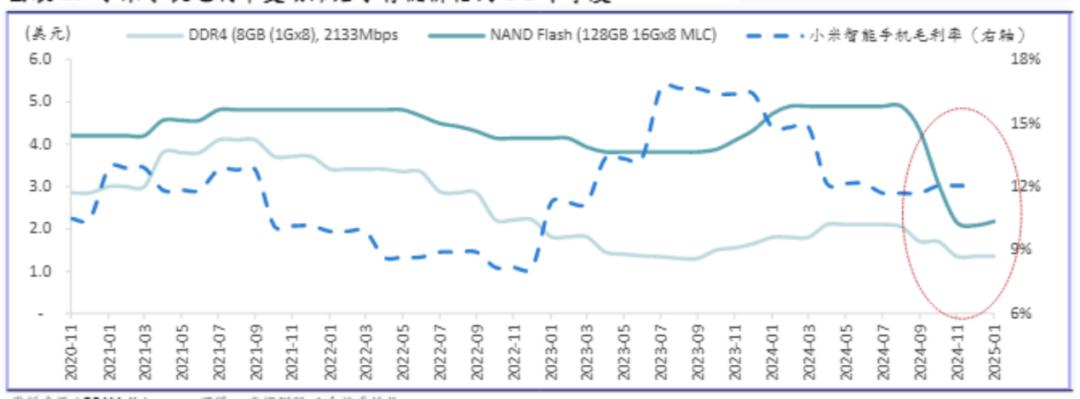
Chart: Comparison of memory chip prices and gross profit margins of mobile phone manufacturers. Data source: Bocom International, compiled by 36Kr
In fact, in early November, many institutions including Goldman Sachs have downgraded the target stock prices of mobile phone manufacturers such as Xiaomi due to the rising memory cost.
So, if mobile phone manufacturers transfer the incremental cost to downstream consumers by raising the overall price, will the situation improve? Although transferring the incremental cost to downstream consumers is beneficial for hardware manufacturers to maintain stable gross profit in the short term, in the current consumption environment, cost - effectiveness is the key means for most mobile phone manufacturers to gain market share. If they blindly raise prices, it may delay the terminal replacement cycle, thereby impacting the overall demand for smartphones