Is it already "in the ICU" so soon for Li Auto's i series?
Li Xiang has set many goals this year, mostly centered around the Li Auto i series. Looking back now, many of them have backfired.
When the Li Auto i8 was delivered on August 20th, Li Xiang set a target for the team to deliver over 8,000 units in September, preferably reaching 10,000. However, in September, only 5,716 units of the Li Auto i8 were delivered, falling far short of the target.
As the delivery volume did not meet expectations, Zhang Xiao, the person in charge of Li Auto's product line, explained on September 28th that due to changes in the supply chain and the impact of Typhoon "Huajiaisha", the delivery of vehicles for 72 small - order customers would be postponed to October 4th. He particularly emphasized that the Li Auto i8 and i6 have independent production lines, and the production rhythm of the i8 is not affected.
However, when the October delivery results were out, Li Auto's delivery volume was only 5,749 units, failing to break through the 6,000 mark.
LatePost visited Li Auto's Changzhou factory in October and saw hundreds of brand - new i8s parked in the parking lot. The normal two - shift production line was only running one shift.
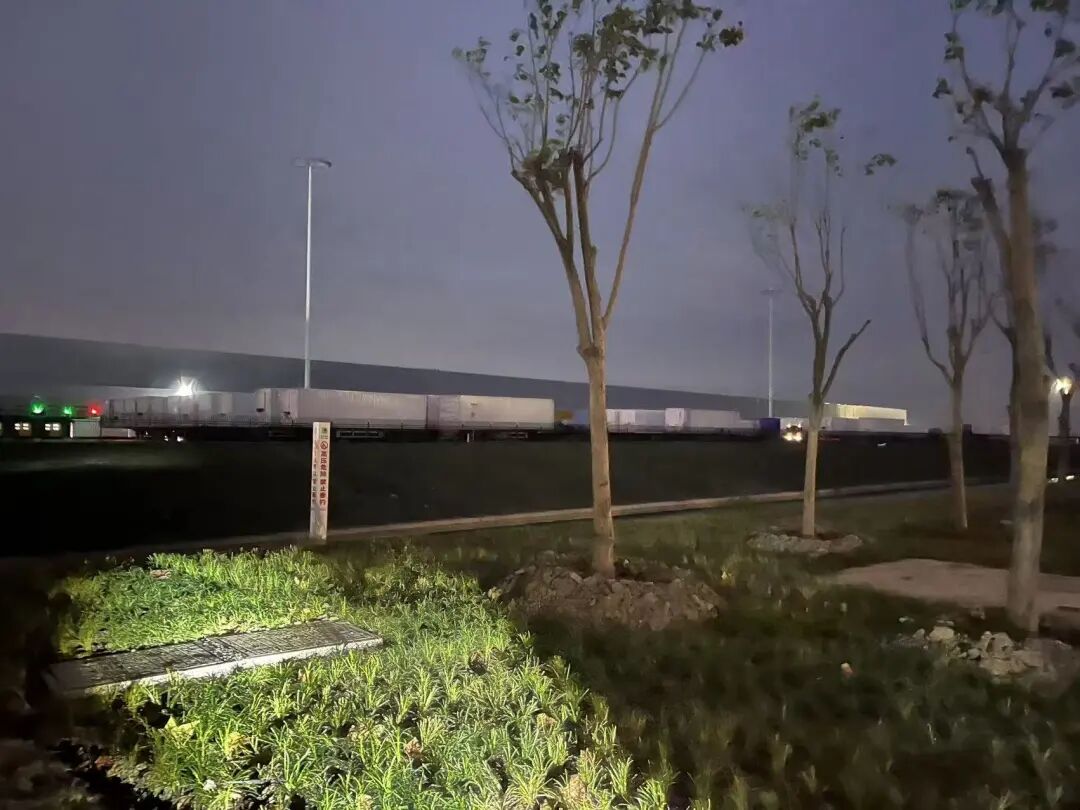
Zimubang conducted an on - the - spot visit to Li Auto's Changzhou factory. Not many inventory vehicles were found, but the workers at Li Auto were indeed in a less busy state. According to the workers, Li Auto's factory cannot reach full production capacity. Workers have more than ten days off a month, and there are also far fewer large trucks coming to transport vehicles. Many workers do not have enough workload.
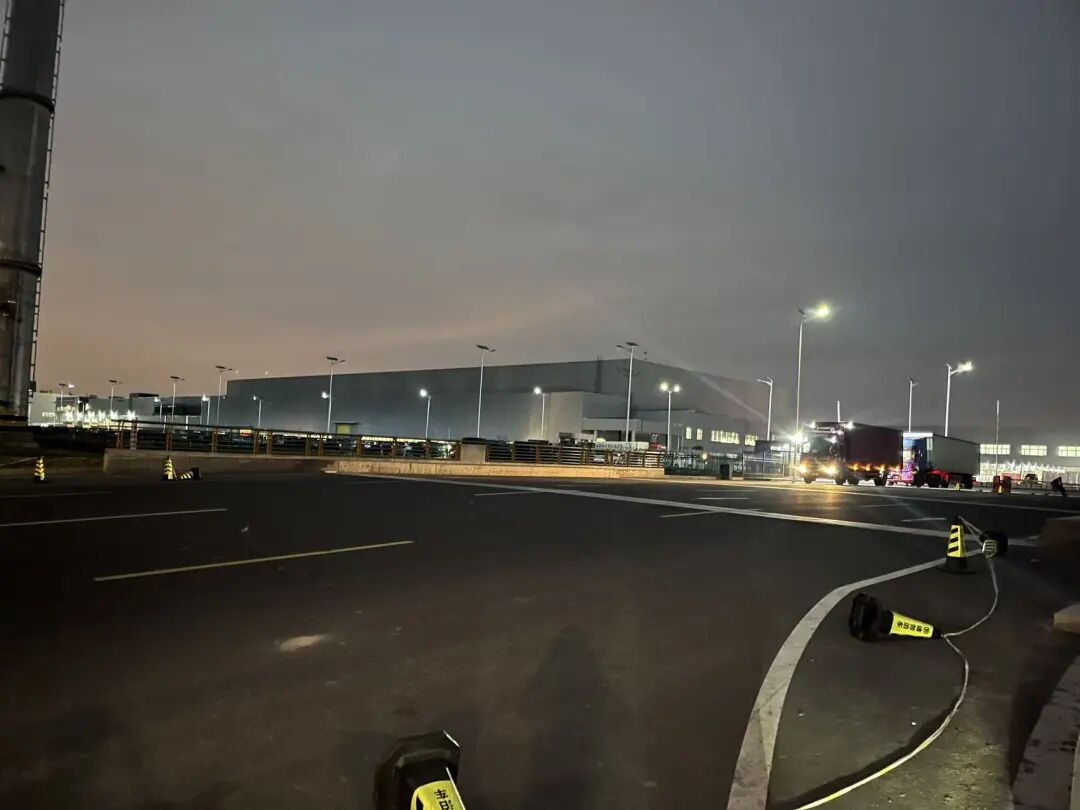
Zimubang contacted the relevant person in charge of Li Auto to inquire about the reason for the workers' insufficient working hours but has not received a positive response for the time being.
The inability to reach full production capacity also means that the official - announced large orders in five - digit numbers for the i8 cannot be fulfilled in the short term. Where exactly does the problem lie?
Li Auto stated in answering netizens' questions that the 90.1 - degree 5C ternary lithium battery shown at the i8 press conference, which passed strict tests, is produced by Sunwoda through a self - developed and outsourced production model. The battery jointly developed with CATL also needs to pass all the same tests. All i8 batteries comply with a "standard" that exceeds the new national standard, with a total of 930 safety tests covering items not required by the national standard.
Of course, it is also possible that the strict battery tests have restricted the sales and delivery of the Li Auto i8.
However, according to the official introduction of the Changzhou government, 30% of the component suppliers for the newly launched Li Auto i8 are located in Changzhou, 50% in Jiangsu, and 80% are concentrated in the Yangtze River Delta. Meng Qingpeng, the vice - president of Li Auto's supply chain, revealed that by 2026, 70% of the key components are expected to be supplied locally, and the radius of the core supplier circle will be controlled within about 100 kilometers, enabling an efficient response within 2 hours.
An industry insider in the automotive field revealed that under normal circumstances, the issue of component supply should have been fully considered during the factory construction and site - selection stage. Most importantly, according to the normal procurement process of automobile manufacturers, sales forecasts are communicated six months in advance, and suppliers will prepare their production schedules according to the forecasted volume. It has been more than three months since the i8 was launched, and the component supply still lags behind. Either the reasons are not sufficient, or Li Auto's supply chain management needs to be improved.
On September 1st, Li Xiang planned a high - end pure - electric strategy on Weibo. By the end of the year, Li Auto aims to "secure the fifth place and strive for the third place" in the high - end pure - electric market. The specific sales targets are: a stable monthly sales volume of 6,000 for the i8, 9,000 to 10,000 for the i6 after it stabilizes. Including the Li Auto MEGA, the overall stable monthly sales volume of Li Auto's pure - electric models is expected to reach 18,000 to 20,000.
Li Xiang said that there are many strong competitors in the pure - electric market, and it will definitely be very difficult to achieve this goal, but he is full of confidence.
There is less than one and a half months left until the end of 2025. Time is running out for Li Xiang. Whether it is the i8 or the i6, Li Xiang needs to go all out to reach the goal.
A
Standing in the parking lot of the Changzhou factory, hundreds of brand - new i8s were in sight. This was the situation that LatePost saw at Li Auto's Changzhou factory in October.
It had just been a little over a month since Li Xiang set the goal of "delivering over 10,000 units in September".
The workers at Li Auto told Zimubang that in the first half of the year, the recruitment for Li Auto's Phase III factory was very grand. Many people fought tooth and nail to get in, and many experienced masters were rejected. Everyone thought they could make money at Li Auto. Li Auto offers good treatment in Changzhou, but there is little overtime after the production line starts running. Workers can only work about 8 hours a day during normal shifts, and assembly - line workers mainly rely on overtime pay to earn money.
This is in contrast to what Zhang Xiao, the person in charge of Li Auto's product line, said a month ago when he attributed the lower - than - expected delivery volume to the supply chain and the typhoon.
Public information shows that Li Auto's Phase III Changzhou factory was completed in the first half of this year, mainly producing the i8 and i6 models. The construction of Li Auto's Phase IV Changzhou factory started in the first half of this year and is still under construction. The completion time is yet to be determined.
Judging from the investment in the factories, Li Auto seems to have high hopes for the pure - electric i - series models, hoping to solve the orders for new models through the number of factories invested in.
However, the reality is that even with the factories, the production - capacity problem still cannot be solved.
Since the Li Auto i6 also has production - capacity and delivery problems, Li Xiang said that the orders for the i6 exceed 70,000, far exceeding expectations. Li Auto is working with suppliers to solve the production - capacity problem and speed up the delivery process.
As a new model launched at the end of September, it may be excusable that the i6 has production - capacity and delivery issues. However, as a model that has been in delivery for three months, the monthly sales volume of the i8 is still around 5,700 units. Compared with Li Auto's own hit model L7 or the LeDao L90 and other hit cars, it seems a bit lacking in strength.
Looking at the Li Auto L7 horizontally, it was launched in February 2023, with a sales volume of 7,702 units in March and 10,500 units in April, accounting for about 40% of Li Auto's total sales. Looking at the LeDao L90 vertically, in the first month of its launch and delivery in August, its sales volume exceeded 10,000 units and continued to increase steadily thereafter.
The production - capacity and delivery problem mentioned by Li Xiang seems more like an excuse that could be solved but has not been fully addressed. It not only covers up the fact that the pure - electric i8 has not reached the expected level of a hit model but also masks Li Auto's strategic mistakes in this pure - electric product.
The problem with the i8 is straightforward - an awkward pricing. With a starting price of over 320,000 yuan, it directly competes with the Tesla Model Y L. It is about 60,000 yuan more expensive than the LeDao L90 from NIO, which is priced at less than 265,800 yuan. More importantly, the rental - battery version of the LeDao L90 starts at 165,000 yuan, greatly reducing the threshold for car purchase.
Li Auto tries to convince consumers to pay an extra 60,000 yuan with selling points such as "5C super - charging, lower wind resistance, quieter, C - class size with D - class space", but the market is not convinced.
More importantly, competitors are also making progress. The sales volumes of the LeDao L90 in August, September, and October were 10,500, 11,000, and 11,700 units respectively, showing a steady upward trend. The new NIO ES8 delivered over 10,000 units in October, setting the fastest record for a pure - electric vehicle priced over 400,000 yuan to reach a delivery volume of over 10,000 units.
LatePost reported that a person who participated in the i8 sales training put it more bluntly: "We spent two full days in a closed - door training session to build up confidence in this car. How can users spare so much time?"
Unless it is priced very low.
B
In fact, the i6 has achieved a lower price, but it is precisely because of the early launch of the i6 that the situation of the i8 has worsened.
A Beijing - based salesperson at Li Auto told Zimubang that nearly half of his potential customers have switched from the i8 to the i6. Most of the users who were waiting and watching for the i8 switched their orders to the i6 after its release. In consumers' perception, there is no essential difference between five - seat and six - seat models. "Anyone can do the math when there is a price difference of 70,000 to 80,000 yuan."
Compared with the i8, Li Auto's salespeople are more willing to promote the i6 because it is cheaper and has a higher conversion rate. The salespeople have also summarized a set of experiences. If they instill too much the concept of buying a six - seat pure - electric car in consumers, consumers will compare it with other competing products, and the cost - effectiveness advantage of the i8's pure - electric version may not be so obvious. Instead of losing orders, it is better to directly promote the i6.
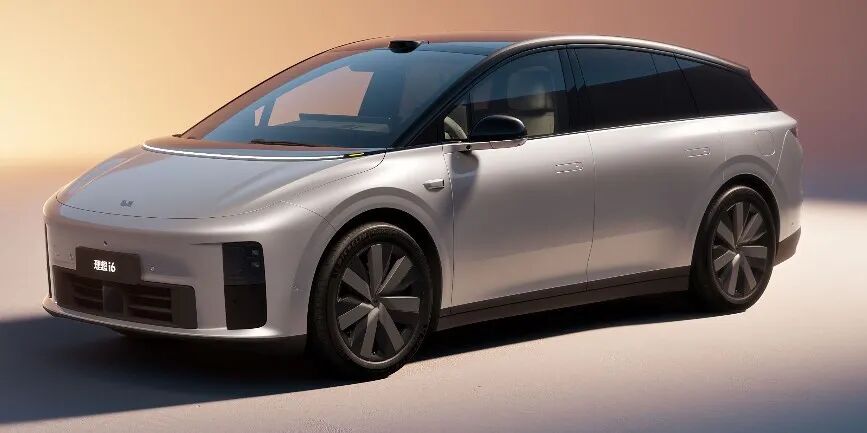
Squeezed between the new NIO ES8 on the high - end side and the LeDao L60 on the more affordable side, the i8's positioning is indeed awkward as it is neither high - end enough nor affordable enough.
Li Xiang proposed the goal of "securing the fifth place and striving for the third place" on September 1st. Judging from the current situation, it seems not easy to achieve this goal.
Now, there are two sets of data in front of Li Xiang. One is that the Li Auto i6 received over 10,000 orders in just 5 minutes after its launch, and the total orders exceeded 70,000. The other is the search data from Dongchedi, which shows that only over 5,000 units of the i6 were delivered in October, and even the reserved 7,000 in - stock vehicles were not fully sold.
Shortly after the launch of the Li Auto i6, Li Xiang personally announced that the production capacity of the i6 this year is only 45,000 to 50,000 units, and there were only 7,000 in - stock vehicles in September. This statement immediately stimulated many people's purchasing psychology, as they were afraid of missing out on the purchase due to long waiting times.
As of the time of publication, Zimubang has not received an official response from Li Auto regarding the authenticity of the data that 5,000 - plus units of the Li Auto i6 were delivered in October.
Currently, these large - order customers are chasing Li Auto for delivery on various platforms. For Li Auto, two consecutive pure - electric models are facing production - capacity limitations, and Li Auto's supply chain management may need to be re - evaluated.
Currently, Li Auto is fighting on two fronts. It needs to open up the pure - electric market while also defending its position in the range - extended market. At present, both fronts are putting a lot of pressure on Li Xiang. Li Xiang's personal Weibo updates stopped half a month ago, and the update frequency is not as high as before.
In the pure - electric field, the i8 has an awkward positioning and insufficient sales; the i6 performed well in the early stage, but the delivery cannot keep up.
In the range - extended field, consumers' range anxiety has been greatly alleviated by pure - electric technology, and the market is shrinking overall. In addition to competitors eroding market share, Li Auto's pure - electric products are also squeezing the market share of its range - extended vehicles.
The Li Auto L6 used to be a sales pillar. In August 2024, the monthly delivery volume of the Li Auto L6 exceeded 20,000 units. Along with the main models L7, L8, and L9, Li Auto reached a historical high of 48,100 units in total delivery volume. However, the situation took a turn for the worse this year. The delivery volume in July decreased by 39.7% year - on - year, and the year - on - year decline in August widened to 41%, with a total sales volume of only 28,500 units.
Comparing with the Wenjie M8, which sells a stable 20,000 units per month, this single model alone is equivalent to two - thirds of Li Auto's total sales volume in October. Undoubtedly, Li Auto's range - extended vehicles are also facing a sharp decline in sales.
Looking at the entire range - extended market, it is also shrinking overall. The sales volume soared by 181% last year, but it has been declining for several consecutive months this year. Consumers' willingness to switch to pure - electric or plug - in hybrid vehicles is obvious.
In a Li Auto store in Beijing, a customer who originally considered buying a Li Auto range - extended vehicle decided to give up the L6 and choose the i6 after test - driving the pure - electric i6. The salesperson of the Li Auto i6 told him that more and more charging stations are being built, and refueling is not cost - effective. Li Auto's sales system is also actively promoting pure - electric models.
After comparison, the customer found that the Li Auto i6 costs just over 230,000 yuan, only 20,000 yuan more expensive than the L6, but it is more cost - effective to drive on electricity.
In other words, the popular sales of the i6 not only squeeze the market share of the i8 but also put some pressure on Li Auto's range - extended vehicles. After all, the brand has the same high - end image, the pure - electric model has higher - end configurations, and the price is lower.
C
In fact, Li Auto is not out of options. Before the launch of the Li Auto i6, Zimubang wrote an article called "Li Auto Still Has Three Lifesavers". Now, it seems that it's time for Li Auto to use these three lifesavers.
Although price cuts are the last resort for automobile manufacturers, for Li Auto, what would happen if they were willing to sacrifice some profit and reduce the price of new models by 20,000 to 30,000 yuan? The answer