When NVIDIA flaps its wings, Chinese mobile phones will see price hikes in 2026.
Text by | Qiu Xiaofen
Edited by | Su Jianxun
Who could have thought that a meal Huang Renxun had in South Korea would cause the wallets of hundreds of millions of smartphone consumers around the world to “bleed” in 2026.
At the end of October, Huang Renxun, the founder of NVIDIA, invited Lee Jae-yong, the chairman of Samsung Electronics, to have fried chicken and beer at a small shop in Seoul. The shop is called “Kkanbu Chicken”, which means “close friend” in Korean.
At the dinner table, Huang Renxun specially presented a gift box of NVIDIA DGX and personally wrote “To our cooperation and the future of the world”. South Korean media reported that Huang Renxun's trip was intended to strengthen the relationship with Samsung and secure Samsung's HBM storage production capacity.
While Lee Jae-yong and Huang Renxun were chatting and laughing, the supply chains of major Chinese mobile phone manufacturers were in trouble. In early November, everyone received the news that the price quotation of Samsung's LPDDR 5, which had been soaring in 2025, was suspended due to a lack of production capacity.
HBM and LPDDR are two forms of memory storage units. LPDDR is like building storage units into “low-rise townhouses” and is mainly used in consumer electronic products such as mobile phones, laptops, and tablets. HBM, on the other hand, is like stacking storage units into skyscrapers. It is the most complex and expensive form of storage technology and is mainly used in AI computing centers for training large models.
In 2025, to support AI applications and large model training, NVIDIA had to squeeze a large amount of LPDDR production capacity. Under the limitation of limited storage production capacity, the mobile phone industry had to face the dilemma of shortages, production cuts, and price adjustments.
Price increases and configuration reductions are almost the foreseeable future for Chinese mobile phones in 2026.
Recently, a group of mobile phone industry executives and professionals could no longer remain silent and took to Weibo to voice their opinions.
Lu Weibing of Xiaomi said, “The increase in storage costs is far higher than expected and will continue to intensify.” Lei Jun also sighed, “The price of memory has increased too much.”
Wang Ziru warned in a live broadcast that the prices of mobile phones may further increase in 2026. 'When the memory supply chain faces a price increase wave, the cost fluctuations will definitely be balanced through price increases or configuration reductions.' He also emphasized that this is not a marketing hype.
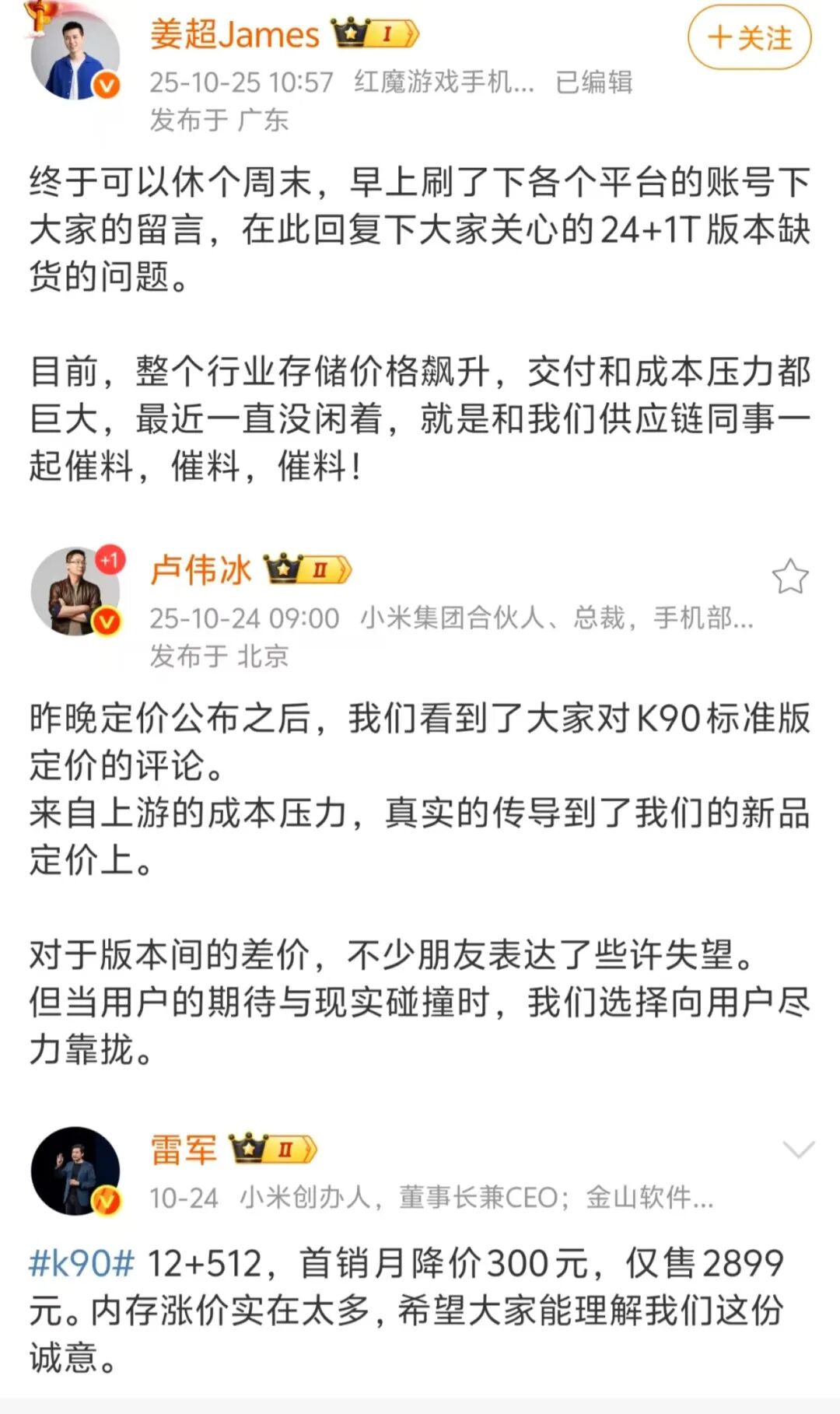
△Mobile phone manufacturers' executives have recently spoken out collectively
A scene of the butterfly effect is playing out in the Chinese mobile phone industry in 2025.
NVIDIA Hijacks Storage Chips
“The price of storage has skyrocketed, even more than gold,” a senior person in the storage industry told Intelligent Emergence.
Take Samsung's LPDDR 4X as an example. It had two major price increases in March, April, and October this year. The price soared from the original $6 to $25, a three-fold increase. In addition, the more advanced LPDDR 5 also had the same increase this year, and the price quotation was directly suspended in November.
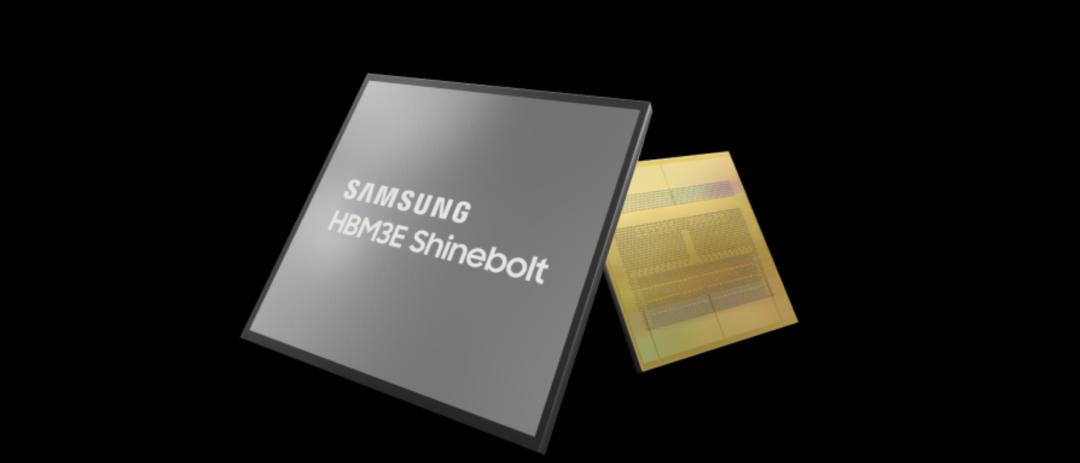
△Samsung HBM3E
In the past, the storage industry has always shown a cyclical fluctuation of “two good years, two bad years”:
When the storage industry is in an upward cycle, major storage manufacturers often increase production capacity. Subsequently, the oversupply leads to price declines. When the storage industry enters a downward cycle, everyone cuts production collectively, which promotes price increases and drives a new round of upward cycles.
The aforementioned industry insider said that according to industry rules, 2025 should have been the beginning of a period of rising prices and shortages. However, NVIDIA's aggressive competition for production capacity has directly exacerbated the already supply-short market situation. The original cycle of the storage industry has been disrupted.
NVIDIA is currently the largest buyer in the storage industry. To show its sincerity, Huang Renxun not only built relationships with the leaders of major storage manufacturers but also targeted the pain point of payment terms. He paid sky-high advance payments to storage suppliers such as Micron and SK Hynix to secure their future HBM production capacity. In contrast, mobile phone manufacturers usually settle accounts quarterly.
Intelligent Emergence roughly calculated how many HBM chips NVIDIA has swept up this year.
In 2025, NVIDIA's GPU shipments are expected to be 3 - 4 million units, and each GPU is roughly equipped with 80 - 140GB of HBM (Note: The H100 has 80GB of HBM3, and the H200 has 141GB of HBM3e).
Conservatively calculated, NVIDIA will use at least 240 million GB in a year. Taking a mobile phone with 12GB of running memory as an example, the memory consumption of NVIDIA's chips in a year is equivalent to the total memory of 20 million mobile phones, which is almost 1/10 of China's annual mobile phone shipments.
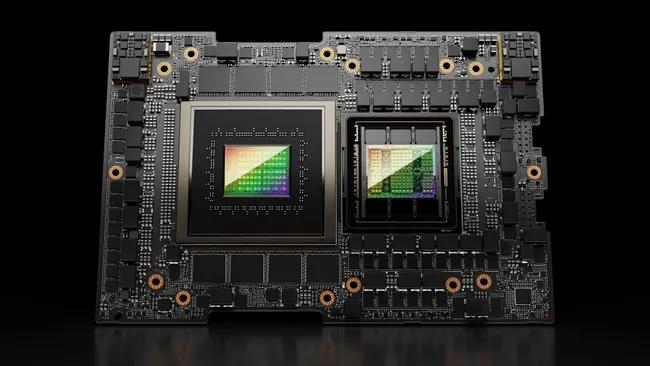
△H200 GPU
Major storage manufacturers may also welcome NVIDIA's hijacking. Normally, the price of HBM is several times that of mobile phone LPDDR storage, and the latest HBM is becoming more and more valuable. For example, HBM3E is 50% more expensive than the previous generation HBM3.
Currently, the revenue from AI and data centers has accounted for 15% - 20% of the production capacity of Samsung and SK Hynix, showing a trend of overtaking the mobile phone market, which accounts for 30% - 35%.
In order not to miss the opportunity of the AI wave, in addition to doubling the production capacity for NVIDIA every year, major storage manufacturers have also initiated a large-scale shift of production capacity.
For example, both Samsung and SK Hynix have decided to prioritize the production capacity of advanced processes for HBM and significantly cut the production of traditional products such as LPDDR4 with lower profits. Even the LPDDR5 used in high-end mobile phones has been squeezed by HBM.
Facing the storage manufacturers' “robbing Peter to pay Paul” strategy, many industry insiders predicted to Intelligent Emergence that it may take a longer time to bridge the storage supply-demand gap, and the shortage wave will at least last until 2027 or even longer.
“The situation this year is unprecedented in the past few decades,” a senior person in the storage industry judged to Intelligent Emergence. “We may have entered a super cycle in the storage industry.”
Mobile Phone Manufacturers are in a “Trials”
Chinese mobile phone manufacturers are struggling to get through the “super cycle”.
The aforementioned senior person in the storage industry told Intelligent Emergence that the storage market is currently a seller's market, which has led to a subtle change in the supply chain. In the past, the cooperation mode between mobile phone manufacturers and storage suppliers was that mobile phone manufacturers placed orders with storage manufacturers according to their quarterly plans.
Now, these demands may not be fully met. For example, a major mobile phone manufacturer had 30% - 40% of its demand cut off by the storage manufacturer after reporting its demand recently. “Now, it's not about how much demand you have as a mobile phone manufacturer, but about how much inventory Samsung and SK Hynix can allocate to you.”
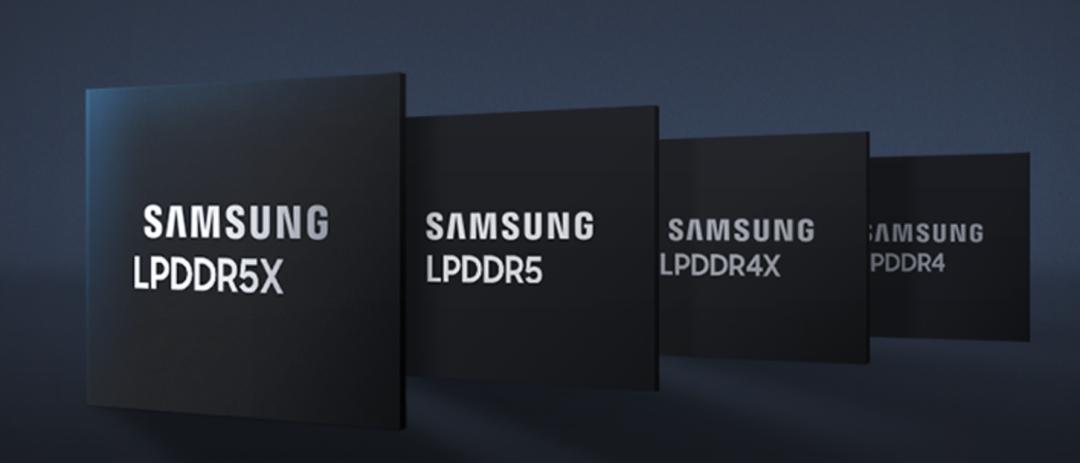
△Samsung LPDDR storage chips
For mobile phone manufacturers, the larger the sales volume of a product series, the greater the storage gap, which means greater cost pressure.
If you pay attention to the recent wave of flagship mobile phones, you can also see that the pressure of storage shortages has emerged.
The memory war launched by mobile phone manufacturers a few years ago showed a trend of ceasing fire in 2025. The 24GB + 1TB configuration, which was once known as “launching a storm to popularize large memory”, was rarely used by major mobile phone manufacturers this year (except for Redmi and Red Magic). The highest configuration of the running memory of top flagship models has also been basically changed to 16GB.
In terms of pricing strategy, the starting price of models with a 16GB configuration has basically increased by several hundred yuan compared with last year.
Mobile phone manufacturers cannot sit idly by. Jiang Chao, the product general manager of Red Magic gaming phones, recently posted on Weibo that the price of the storage industry has skyrocketed. He has been “urging the supply chain colleagues for materials! Urging! Urging!”
In order to use the expensive storage effectively, a person from a mobile phone manufacturer told Intelligent Emergence that many mobile phone projects with low profit margins and uncertain sales have been cancelled.
Amid the storm, some domestic storage manufacturers are among the few players who have benefited.
A senior person in the storage industry told Intelligent Emergence that recently, Xiaomi has been looking for storage in the supply chain. Even some domestic storage manufacturers that could not enter the mobile phone supply chain before have received inquiries and obtained cooperation opportunities.
On the other hand, Intelligent Emergence learned that Huawei, with deep pockets, is directly booking the production capacity of a leading domestic storage manufacturer.
However, consumers who need to replace their mobile phones will ultimately bear the cost of the storage price increase. Guo Tianxiang, a research manager at IDC China, predicted the future trend of the mobile phone market to Intelligent Emergence:
The significant increase in costs caused by storage may lead to further price increases for high-end flagship mobile phones.
The price increase of mid-range products will be smaller, but it may delay the replacement demand of some users.
Low-end products are under the greatest pressure. Since there is no room for cost reduction, the product lines and shipments may be reduced.
Guo Tianxiang predicted that due to cost limitations, mobile phone products in 2026 may have reduced configurations in many aspects, and the overall product upgrade may not be significant.
Perhaps, the most effective advice for consumers in the wave of storage price increases is to buy a mobile phone as soon as possible.

end

end