What lessons can the delayed Tesla Optimus teach Chinese humanoid robots?
It can be said that the global upsurge of the humanoid robot track in 2025 owes much to Elon Musk and his Tesla. From the public release of the concept map of the humanoid robot named Optimus in 2021, to the unveiling of the prototype and the second - generation (Gen 2) product in 2022 and 2023 respectively, there was a step forward each year in these three years. In 2024, Optimus didn't launch a new version but only demonstrated some functional scenarios, which whetted the industry's appetite for 2025.
In March 2025, Musk announced at Tesla's all - hands meeting that 5,000 Optimus robots would be produced within the year. However, just four months later, the information about the insufficient production capacity of this robot was confirmed in the earnings conference call, indicating that the progress target of Optimus had been missed within the year.
At the third - quarter earnings conference in late October, Musk announced that Optimus V3 would be launched in the first quarter of next year and mass production would start at the end of next year.
Considering Musk's past record of making over - optimistic promises, it's hard to say whether there will be more setbacks for this humanoid robot he places high hopes on and its mass - production prospects.
Perhaps people may wonder why Tesla, led by this "Contemporary Iron Man" and a company with the most comprehensive resource and technological endowments globally and one that is most adept at promoting its corporate narrative with a series of successful cases, has failed to make significant progress in the humanoid robot track they've heavily invested in for two consecutive years. What kind of inspiration does this offer to the currently booming domestic players in the humanoid robot field?
01
Differences in Scenarios
The difference in scenarios for humanoid robots may be the primary divergence between American humanoid robot companies represented by Tesla's Optimus and the leading domestic players in this track.
From the start, Musk emphasized that the goal of his robots was to serve both industrial and civilian scenarios. Looking back at Tesla's two concentrated disclosures of the progress of the Optimus project in the first and second half of 2024: one was the deployment in the factory in the first half, and the other was the demonstration of its abilities such as walking the dog and mowing the lawn in the home - consumption scenario in the second half.
In July 2025, Tesla's so - called "the world's first super - charging station restaurant" opened for business on the west coast of the United States. One of the selling points that attracted trendy people to the store was that Optimus robots, acting as waiters, served customers with fries and other food.
Considering Musk's "exaggerated" description of the future prospects of the humanoid robot field, he seems to have set a significant part of the expected scenarios for Optimus in the consumer - oriented general service industries such as households and even health care.
Coupled with the recent demonstration of functions like "folding clothes" by Figure AI03 humanoid robot, it can be said that the leading American humanoid robot companies have all set their sights on the goal of "entering households".
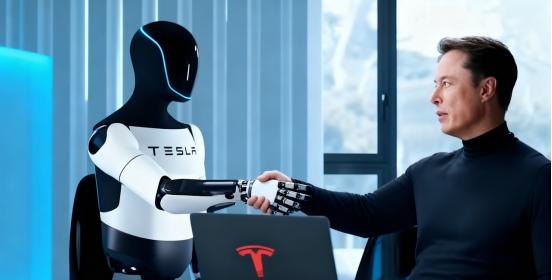
In contrast, domestic humanoid robot players almost all place their expected scenarios in the B - end market. Currently, for leading companies such as Unitree and Ubtech, all their major orders come from the B - end, and many robot training scenarios are also set up within partner enterprises. Even for a small number of commercial performances, they are "demonstration - type" scenarios within the scope of public services, which are just automated performances after the robots are pre - programmed and don't involve much "intelligence".
Why is Tesla so eager to get humanoid robots into the home - service scenario? Of course, there are technical considerations such as data training. In addition, in the remaining manufacturing industries in North America, the penetration rate of existing industrial robots is relatively high, and the iteration process and system are well - established. It's difficult to create a huge B - end market that can support Tesla's imagination in a short time.
At the same time, the author believes that as a "flagship product" to make up for the potential shrinkage of the future electric - vehicle market, Tesla wants the mass - produced Optimus to repeat the penetration - and - dissemination path of its electric - vehicle brand among C - end users as soon as possible.
As the backbone of American wealth has gradually shifted from traditional middle - class groups to new - economy groups represented by tech tycoons in the past few decades, the latter naturally have a higher preference and acceptance for products with a "techy" feel. If the price is right, humanoid robots with the Tesla logo are likely to become a new tool for this group to showcase their value and identity, which may trigger a certain follow - up effect.
The situation in China is quite different. Different from their American counterparts, who rely on software ecosystems and large - scale basic models to break through in the AI layer of the robot's "brain", domestic players have chosen a different customer strategy. Currently, they are more focused on accelerating the implementation in specific industrial scenarios by leveraging the rapidly developing supply chain to seize the market.
For example, Tesla's approach is to focus on internal development first, while domestic players are taking the "learning through competition" approach to strengthen their capabilities.
Some domestic Internet consumer companies have invested in some humanoid robot companies. For instance, Alibaba has invested in Unitree and Xinghaitu, JD.com has invested in Zhiyuan and Zhongqing, and Meituan has also made relevant arrangements. It is believed that these increasingly "granular" consumer - level companies can provide many experimental and training scenarios for domestic humanoid robots in the future, helping them accelerate their penetration and implementation in the B - end market.
02
Technical Challenges
The missed deadline and the delayed mass - production plan of Optimus reflect many challenges still existing in the humanoid robot track, especially at the technical level.
For example, there is the "dilemma of dexterous hands" that is clearly visible.
At the end of October, the humanoid robot IRON launched by XPENG Robotics made a stunning debut. The dexterous hand of IRON has 22 degrees of freedom, which is on par with the dexterous hand of Optimus launched in November last year and is close to the 27 degrees of freedom of a real human hand. IRON's performance also received praise from Musk, its "rival", on social media.
However, media reports this year show that Tesla is still struggling to make progress with its new - version dexterous hand, which has hit a technical bottleneck. Although nearly a year has passed, Tesla's team still seems unable to solve the standardization problem that must be faced after mass - production. As a whole component, the dexterous hand faces problems such as limited usage time. Some almost - completed Optimus models cannot be finally assembled due to the lack of corresponding components such as dexterous hands.
At last year's Robottaxi event, there was also an embarrassing situation where Optimus knocked over a drink, which also shows that the existing dexterous hands still have many performance limitations when interacting with the whole machine. This may also be the reason why Musk, who deeply understands Steve Jobs' concept of "showing perfection", has let Optimus "show off" less in public this year.
This is just the technical problem related to the "appearance" of the robot. In addition, there are also many difficulties in a series of aspects related to the robot's "brain", such as AI and data collection.
If even Tesla is facing such problems, what should domestic humanoid robot manufacturers, who still have shortcomings in AI chips and large - scale basic models, do?
Looking for external partners is of course a solution. We can see that companies including Unitree are trying to make up for the gap in AI and the "brain" through this path.
In terms of data collection, compared with Tesla's previous end - to - end VLA path for data collection, which led to high costs, there have emerged so - called "light - weight data collection" "data providers" in China. In addition, some upstream companies provide a data - collection method of "simulation - to - reality transfer", which is to generate training data in a simulated environment and then enable the robot to have certain basic capabilities through methods such as comparative learning, and then conduct professional data training according to different sub - fields. However, the data collected by these methods has some limitations in the reality - transfer process and needs to be overcome in the future.
03
Cost Control
As a global giant, Tesla may not have major problems in terms of its own funds and resource endowments. However, domestic players in this track have to consider these factors.
Fortunately, on the one hand, as a popular track, the investment and financing atmosphere around the humanoid robot track has been enthusiastic this year. In the first half of this year alone, there were more than 140 financing events in the entire embodied - intelligence industry chain in the primary market, with the amount approaching 20 billion yuan. There have also been numerous news about the IPOs of leading companies in the track. On the other hand, the government has introduced a series of policies. Some of these policies will directly affect the companies in the track, and more often, they will inject confidence into the B - end market for the humanoid robot industry.
The mass production of orders received by downstream humanoid robot manufacturers, in turn, drives the growth of upstream demand, technological improvement, and cost reduction, and has promoted the general prosperity of related concept stocks in the secondary market.
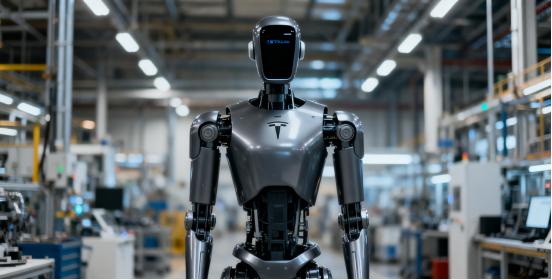
However, even Tesla has to address the "cost - performance" balance issue if it wants a product to truly become a consumer - level commodity.
According to industry data disclosed in a recent Goldman Sachs report, Zhaowei Electromechanical estimates that with the development of the industry, the price of a dexterous hand is expected to gradually drop from $17,000 per hand to $7,000 per pair, which is about one - fifth of the original price.
Making full use of the domestic supply - chain support has become a necessary path for domestic humanoid robot players.
An industry insider said in an interview with Caixin magazine that the main reason why Unitree Technology can achieve profitability is that after years of in - depth development in this track, they have strong hardware - control capabilities. "A commercializable robot is not about piling up components but choosing the most suitable and cost - effective solutions at each step."
In terms of performance, aiming mainly at reliability and consistency, more and more domestic manufacturers of whole - body humanoid robots are choosing to cooperate with suppliers with maturity and cross - border technological accumulation. The most obvious example is XPENG Robotics. It is believed that they have transferred some of their precision - manufacturing and management capabilities accumulated in the automotive field to the R & D of robots.
In summary, the development of Tesla's Optimus project, on the one hand, has a "model - setting" effect on the integration of the humanoid robot supply chain. On the other hand, as a downstream player, it can provide a certain degree of guidance to upstream suppliers at the industrial level to prevent them from going astray. In the future, its huge production - capacity demand will also ensure that the companies in the supply chain can keep operating. In addition, Tesla's endorsement and leading - effect also contribute to the spread of the reputation and perception of the entire humanoid robot industry among a larger group. Therefore, whether Optimus will continue to miss deadlines in the future will be an event that may cause fluctuations in the humanoid robot industry.
In short, it is hoped that domestic humanoid robot manufacturers can answer the market's questions well and provide solutions that meet the needs of customers. This is the real path to success for players in the future.
This article is from the WeChat official account "Caiguan Erjie", author: Erjie. Republished by 36Kr with permission.