From the high ground of traffic to the long slope of retail: Twenty years later, Autohome has completed its transformation in the era.
This concept, first proposed by a Chinese e - commerce giant nearly a decade ago, is no longer new today. Ten years ago, the chain retail industry began to explore new retail. This concept, born in the context of e - commerce, has been given different definitions and practical forms in different industries.
Initially, its connotation was limited to the integration of online and offline channels. However, as we enter the consumption era driven by AI and O2O, new retail is no longer just about the interconnection of channels. It is a reshaping of the entire industrial structure.
Especially at a time when the century - old automotive industry is undergoing structural transformations such as electrification and intelligentization. The chain of automotive consumption has undergone fundamental changes.
With the rise of the direct - to - consumer (DTC) model represented by Tesla, automotive brands are actively reconstructing their relationships with users in the new retail paradigm. From the distribution system to the marketing logic, the entire retail chain is being redefined by efficiency, trust, and experience.
This is the era's proposition that Autohome, which has just crossed the 20 - year mark, is facing. On November 8th, Autohome, which has always been committed to "making it easier to buy good cars", for the first time entered the e - commerce field and officially launched the Autohome Mall. Along with the launch of this new species in automotive retail, Autohome also welcomed 15 brands to settle in, including traditional powerhouses and new - force brands such as Leapmotor, Audi, and Avatr.
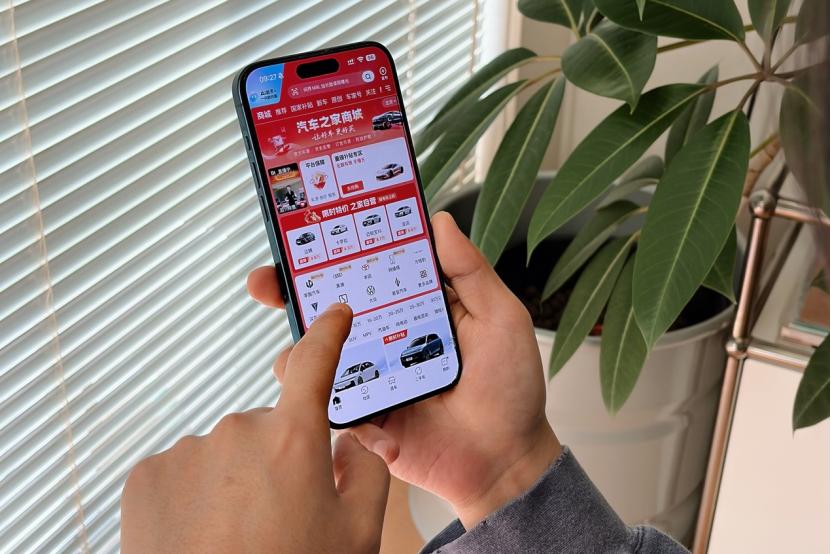
If Autohome was once a medium for communication between automobile manufacturers and users, now it is more like a "friend circle" in the automotive industry. It is no longer just a channel for users to view cars. Instead, it has become an industry partner that helps automobile manufacturers sell cars. It is not content to be just a vertical media platform. It seeks innovation and change to explore the vitality of content and collaborates with the upstream and downstream of the industry to build a new ecosystem for automotive retail.
Why Autohome? Recently, 36Kr had a chat with Yu Le, the retail director of Autohome, trying to find out how a 20 - year - old vertical media platform, when deciding to enter the car - selling business, can reshape the entire experience of automotive consumption with a trinity model of "content + transaction + service".

Automotive retail in the era of "dual - line integration",
Why is it Autohome's turn to take action?
For most people, buying a car is a major purchase second only to buying a house.
Compared with fast - moving consumer goods, this is not only because of its high unit price. With an average per - capita car ownership of 0.24 vehicles, it is destined to be a low - frequency consumption that highly relies on real - life experience and trust guarantees. This typical characteristic of durable consumer goods has led to a relatively slow online transformation of traditional automotive consumption.
However, it has not been completely without an "online transformation". In the wave of the Internet era, the online transformation of automotive retail has been extremely cautious and difficult.
The first stage was the automotive portals in the mid - to - late 2000s. Their core mission was to move the information about car viewing and selection online, solve the information asymmetry problem, and enable users to make pre - purchase cognitive decisions through content such as text, pictures, reviews, and price lists.
The second stage was the O2O model around 2014. With the popularization of mobile Internet, automotive retail began to try a new path of "acquiring customers online and delivering offline". Automobile manufacturers and platforms used methods such as group - buying, special sales, and subsidies to divert leads from the online to 4S stores, achieving a partial closed - loop of transactions.
This period saw the first wave of upsurge in automotive e - commerce platforms. However, since the supply chain and inventory system were still in the hands of dealers, the coordination cost between online and offline was high, and the experience gap was obvious. O2O mostly remained at the level of traffic and promotion.
It was not until 2017 that the DTC model emerged. New - force brands represented by Tesla, NIO, and XPeng were the first to break the traditional distribution system and sell directly to users. This model allowed automobile manufacturers to gain control of user data and sales touchpoints, and also integrated the car - buying experience from online viewing to offline delivery.
However, with the intervention of AI technology, today's automotive consumption is shifting from being "offline - dominated" to "deeply integrated online and offline".
On the one hand, users' decision - making process has been advanced. More than 80% of users have a clear preference for a car model before visiting a store, and offline channels are gradually evolving into "experience centers" and "delivery centers". This advancement is due to the trust advantage created by vertical media such as Autohome through professional content.
On the other hand, the transaction process has been digitized. Driven by the Internet - based transformation of new - force brands, the "locking in an order with an online deposit" model has become the mainstream in the industry. More and more users are starting to accept the car - buying method of "placing an order online and taking delivery offline". As of now, the proportion of online orders for some brands has exceeded 30%.
Finally, the function of offline channels has been reconstructed. When users can make most of their decisions online through content, data, and word - of - mouth, the role of offline channels has also changed. They are no longer just sales terminals but have become key touchpoints for experience and delivery.
"The essence of dual - line integration is the transfer of the trust foundation in automotive consumption." Yu Le told 36Kr. This transformation is not simply about moving the transaction process online. It is about promoting the dual improvement of retail efficiency and user experience through a closed - loop of "content - data - service".
In this process, Autohome can understand users through its past professional content, use data accumulation to understand users' car - buying needs, and then use car sources, payment methods, and offline service networks to achieve a closed - loop of the car - buying experience. In the context of the AI and O2O era, Autohome's "new retail" is no longer limited to the integration of online and offline channels. It uses technological means to build an automotive retail ecosystem with efficiency, trust, and experience.
Behind this is both Autohome's "ability to understand users" as a professional content platform and its "industrial coordination ability" accumulated through years of deep involvement in automotive retail. When the industry undergoes new changes, Yu Le said, "Autohome is very fortunate to stand at this stage and do something truly valuable for the industry with automobile manufacturers and partners."


15 automobile manufacturers gather at the Autohome Mall
to start the "ecosystem co - construction" of new retail
The traditional retail system has become a structural constraint for automobile manufacturers.
Under the dealer system that has lasted for nearly a century, automobile manufacturers can usually only reach 4S stores and cannot see the real users. The overly long channel chain makes it difficult for automobile manufacturers to know where their users are and what kind of cars they need.
Especially in the current wholesale - sales model, automobile manufacturers sell cars in bulk to dealers, but the inventory has been piling up in 4S stores for years. Once the market fluctuates or the sales volume fails to meet expectations, the inventory pressure on dealers will quickly increase. Meanwhile, automobile manufacturers still supply goods according to the established production rhythm, resulting in a typical disconnection between production and sales.
On the user side, the pain points are also obvious. Traditional car - buying is often a long, fragmented, and information - asymmetric process. Users need to make repeated phone calls, visit 4S stores, and compare prices and negotiate to make a decision in a market with opaque information and fluctuating prices.
There is a lack of unified price and service standards between online and offline channels, and the user's car - buying experience is artificially prolonged. Automobile manufacturers cannot see the users, and users cannot reach the brand. There has long been a gap between them, which has trapped the efficiency of automotive retail in the old system.
If there is a new platform form that allows users to directly communicate with the customer service of the brand flagship store and the car - buying butler in the mall online while seeing their favorite car models, the car - buying process no longer needs to go through a two - stage inquiry: users first leave their phone numbers, then wait for callbacks, and face countless future phone harassments. It can be said that the Autohome Mall, as an important annotation of the upgraded new retail strategy, represents the leading nature of an innovative O2O model.
As a newly - built online car - buying platform by Autohome, the Autohome Mall is essentially an online platform for car - buying, but its value connotation has gone beyond car - buying itself.
First, it uses content to drive user decision - making. With 20 years of accumulated professional reviews, real - owner word - of - mouth, and video content, Autohome directly links them to specific car models, configurations, and price quotes through AI, building a trustworthy decision - making foundation for users.
Second, it seamlessly undertakes transactions. When the user's purchase intention is stimulated to the maximum by the content, the Autohome Mall provides an immediate transaction entry. From car model selection, discount checking to order payment, the whole process is transparent. The platform simplifies the traditional two - stage inquiry process to "place an order once the decision is made", significantly improving the conversion efficiency.
Finally, it provides full - process service guarantees. A transaction is not the end but the start of an experience. The Autohome Mall introduces the Kataichi service network and 30,000 offline outlets of Haier to provide users with standardized after - sales services such as delivery, finance, and insurance, achieving "place an order online and have a worry - free offline experience".

More importantly, Autohome still provides guarantee for users' rights and interests after the transaction is completed. If there are problems such as vehicle damage during transportation, defects, or "three - package" issues during the car - buying process, or even after - sales disputes with the brand, the platform can intervene and coordinate to assist users in safeguarding their rights, ensuring that the problems are resolved quickly and fairly.
This is exactly what a platform should do - not only facilitate transactions but also be responsible for trust. The Autohome Mall conducts unified supervision on the service quality of the entire chain, ensuring that every delivery and every service is traceable, standardized, and implementable.
The trinity model of the Autohome Mall is not a simple superposition of functions but a deep coupling of data and processes, building an organic ecosystem. It solves the pain points of opaque information in traditional car - buying, bringing users a new, convenient, transparent, efficient, and reassuring car - buying experience. It also provides automobile manufacturers with a business growth path that combines brand building and sales effectiveness.
As the first automobile manufacturer to test the waters, Leapmotor has presented an unexpected report card. According to the data provided by He Jie, the general manager of channel market and user operation at Leapmotor, from the trial operation of the mall on September 20th to before its official launch, the Autohome Mall had delivered 4,380 Leapmotor orders. In the past 30 days, it accounted for two - thirds of the total sales volume on the whole - network platforms, and the first - touch rate of users reached 32%.
Just three days after the mall was launched, the traditional e - commerce festival of "Double 11" arrived. On that day, the order volume of the mall reached 5,519, of which Leapmotor accounted for 3,731.
The settlement of brands is the cornerstone of ecosystem prosperity. Based on the three core capabilities of the Autohome Mall, namely incremental customer acquisition, user conversion promotion, and channel reinforcement, automobile manufacturers and Autohome are no longer just in a buyer - seller relationship. They have become a community with a shared future, jointly exploring the market and serving users.
In the new retail ecosystem of Autohome, a synergy effect centered on complementary capabilities and co - creation of scenarios is taking shape.
The traditional retail logic of "disconnection between production and sales, long chains, and opaque information" is being reshaped by a new model characterized by data - driven and scenario - integrated features. Brands can directly understand user needs, and users can complete the whole experience from decision - making to delivery on the same platform. In this new ecosystem, Autohome no longer acts alone. Instead, it collaborates with ecosystem partners such as Tmall and Alipay, forming a "1 + 1>2" aggregation effect through strategic complementary capabilities.
Tmall has broken down the scene barriers between lifestyle and automotive consumption, integrating car - buying into users' daily consumption chains. Alipay has transformed payment credit into trust in car - buying, lowering the transaction threshold and increasing the certainty of purchases. The essence of this ecosystem collaboration is an upgrade from traffic exchange to complementary capabilities and co - creation of scenarios.
As the mismatch between supply and demand, long chains, and opaque information in traditional automotive retail are gradually being broken, automobile manufacturers, dealers, platforms, and users are forming a new retail order based on efficiency and trust.

Starting from content and growing towards value
In 2005, the Chinese automotive industry had just entered an acceleration phase. At that time, China's automobile production was only 5.707 million vehicles, and automotive consumption was still in the early stage of popularization. There was still a long way to go before reaching the current market position of producing over 30 million vehicles annually and ranking first in the world.
At that time, buying a car was more of a symbol of the era. A car was not only a means of transportation but also an external manifestation of social status and an ideal lifestyle. However, the information channels were relatively narrow at that time, and the car - buying experience highly relied on 4S store sales guides, print media advertisements, and word - of - mouth.
With opaque prices, information asymmetry, and a long decision - making cycle, buying a car