The first batch of HEYTEA franchisees are facing the toughest year in history | Deep Dive
Text | Xiao Sijia
Editor | Qiao Qian
In the current November, Heycha franchisees are facing a crucial decision.
In November 2022, Heycha opened its doors to franchisees. Three years later, the first batch of contracts is about to expire. Whether to renew the contracts has become a decision that every "old partner" must make.
On the other hand, Heycha has already hit the brakes voluntarily: In February this year, Heycha suddenly announced a suspension of franchise expansion. Prior to this, over 70% of its stores were franchise - operated. Meanwhile, a large number of underperforming stores were also phased out.
According to Jihai data, as of the end of October this year, the number of Heycha stores was 3,977. At the end of last year, the number was 4,477 - a closure rate of about 500 stores a year, higher than other brands in the industry.
"The store closures were achieved by stepping on the corpses of us franchisees," said Heycha franchisee Chen Lin angrily to 36Kr.
The conflict between the two parties once intensified. According to Chen Lin, some franchisees, dissatisfied with store closures and strict management, planned to go to Heycha's headquarters in Shenzhen for negotiations at the beginning of May. However, the company got hold of their personal information in advance. On that day, not only were some people intercepted at the railway station, but there were also law - enforcement officers stationed downstairs at the company headquarters.
In the eyes of franchisees, their desire for dialogue was regarded as a potential threat. The foundation of trust was shaken at an accelerated pace.
From Chen Lin's perspective, the root of this store - closure crisis was actually planted when Heycha first opened to franchisees. "At that time, there was no market segmentation. They just blindly pursued the number of stores without considering whether the stores could operate healthily in the later stage."
It wasn't until February this year that Heycha finally publicly announced the suspension of franchise expansion in an internal letter, stating that "the new tea - beverage industry is still in its early stage of development. In the short term, the dead - end of 'numerical games' and'scale involution' is not the end of the industry."
However, some franchisees put it more bluntly: Heycha suspended franchise expansion for two reasons. First, the rapid expansion in the past two years has put pressure on management. Second, negative news related to franchising has been frequent on social platforms. Continuing to expand would only make the situation more out of control. It's better to slow down and focus on refined internal management.
Just as the sudden price cuts and opening to franchisees in 2022 were unexpected, Heycha's sudden halt was equally surprising. In an era when everyone is vying for a ten - thousand - store franchise model, this decision seems bold and lonely.
It is not only an organizational contraction but also a strategic choice: that is, to abandon the pursuit of large - scale expansion and instead maintain brand reputation through product innovation, thereby safeguarding profits.
In 2025, Heycha is indeed more constricted and restrained than ever.
It has suspended franchise expansion, slowed down store - opening, and reduced the frequency of co - branding. Even in the takeaway war that has swept across the entire industry, Heycha has long remained an onlooker.
Outside the battlefield, Heycha has devoted more energy to product innovation: Pistachio drinks in January, guava and litsea cubeba drinks in February, cheesy glutinous rice drinks in spring, and bayberry drinks in early summer... There is a new product launched almost every half - month.
Meanwhile, the prices of new products have quietly increased, rising from eighteen or nineteen yuan to within twenty - five yuan - slightly lower than the prices when Heycha was first established but significantly higher than during the franchise era.
Especially when the takeaway war is in full swing this year, "When you open your phone today and see all kinds of 0 - yuan, 3 - yuan, and 5 - yuan deals, will you still choose Heycha?" questioned a franchisee. It wasn't until August that Heycha finally joined the discount activities on Meituan and announced its entry into Taobao Flash Delivery, issuing free - order cards and cautiously entering the fray.
In 2025, new tea - beverage brands such as Guming, Mixue Bingcheng, and Bawang Cha Ji have successively gone public. Their keys to success are standardization, efficiency, and scale. Heycha, on the contrary, stands on the opposite side.
"Heycha popularized fresh - fruit tea and created the most amazing products, but it didn't become the biggest beneficiary. It was companies like Guming and Cha Baidao that used more complete supply chains and lower prices to sell similar products to the sinking market, achieving greater scale and profits," commented a consumer investor who has long followed the tea - beverage industry.
From direct operation to franchising and then to suspending franchising, Heycha has come full circle and is back to the original question:
When "standardization" and "scalability" are regarded as the only answers in the industry, where will a company that highly adheres to product ideals but has relatively high operating costs end up?
01 The Tortuous Franchise Path
"When Heycha opened to franchisees back then, in the words of people in our circle, it was like the emperor's daughter finally getting married," joked franchisee Chen Lin, which actually reflects the real mentality of tea - beverage industry franchisees. Although in his view, it was a somewhat sudden decision.
On November 3, 2022, when the pandemic had not fully subsided, Heycha unexpectedly announced a shift from a decade - long direct - operation model to opening up to franchisees.
The outside world was initially shocked. Wu Bai, who had worked in a Heycha directly - operated store in a new first - tier city for four years, remembered that the headquarters had issued multiple announcements and internal letters clearly stating its stance against franchising. The Heycha he knew had always been cautious in external cooperation - "You couldn't even place Meituan's power banks in the store."
Why did this brand, which had once written "does not accept any form of franchising" on its official website, change its attitude?
A widely circulated version in the tea - beverage industry is that the decision to open to franchisees was not the will of Heycha founder Nie Yunchen himself but was driven by the listing requirements of the investors.
Multiple industry insiders told 36Kr that the person in charge of the "Business Partnership Center" for the franchise business at that time was the vice - president of the strategic center.
This executive, who did not come from the catering industry, had extensive experience in the financial sector.
Heycha officially denied the claim that "opening to franchisees was due to capital pressure."
At that time, Heycha explained that opening to franchisees was a long - term consideration to serve a wider range of consumers. Meanwhile, the relatively mature supply chain, management, and training systems also provided the conditions for this transformation. Heycha emphasized that it didn't just want to be a niche brand.
Objectively speaking, Heycha had indeed hit a growth bottleneck at that time.
Although the price cuts at the beginning of 2022 brought some benefits - in its tenth - anniversary report, Heycha revealed that since June of that year, the average daily sales per store and the total monthly sales had both increased by about 20% year - on - year.
However, this short - term recovery did not change the overall trend: After the pandemic in 2020, Wu Bai witnessed firsthand the store's business decline from the peak of monthly sales of one million yuan and daily sales of forty to fifty thousand yuan on weekends to thirty thousand, a few thousand, and even just over a thousand yuan in turnover.
According to Jiuqian Consulting data, Heycha's annual sales in 2022 were only about 4.694 billion yuan, failing to maintain the momentum and lower than the 5.352 billion yuan in 2021.
Anyway, franchisees had been waiting for this day for a long time. Chen Lin said that after the news of franchise expansion was released, 100,000 people submitted resumes, "attracting the best franchisees from across the country."
It was by no means easy to become a Heycha franchisee at that time. According to public information, at the beginning of opening to franchisees, Heycha had the following hard - line requirements for franchisees: being able to provide proof of legal cash or assets worth over one million yuan; having received higher education, with successful business experience or more than five years of enterprise management experience; being familiar with the local market and having high - quality business resources.
Before obtaining the final franchise qualification, franchisees had to go through a rigorous process similar to a job - hunting process: first, pass multiple rounds of online screening, and then go to the Shenzhen headquarters for a final interview.
In February 2023, Chen Lin finally made it to the final round. He still remembered his nervousness at that time: The hall was full of franchisees waiting to be called. They were grouped and entered the meeting room one by one for Q&A.
This was different from his previous franchise experiences. "As experienced franchisees like us, we usually just had a chat in the past, but at that time, it really felt like an interview," recalled Chen Lin. "It was like taking the college entrance examination."
Chen Lin revealed that Heycha had poached many employees from Luckin at that time and also preferred candidates with Luckin backgrounds during the franchisee selection process. So, before the franchise information was made public, the company had actually signed contracts with a group of Luckin franchisees.
As one of the Luckin franchisees, Chen Lin finally managed to join Heycha. However, he came a bit late and couldn't grab the prime locations in prefecture - level cities. The options offered by the recruitment staff made him hesitate: "There are no locations in the urban area. Only county - level locations are available now. Do you want one?"
Chen Lin was in a dilemma. His rational side told him that with Heycha's high customer - unit price, it might not be profitable in a county - level area. But on the other hand, he had gone through so much to get this entry ticket and was almost there.
"It's like buying a house. When prices are rising and everyone is crowded in the sales office, you'll get carried away," he said. He couldn't miss this star brand that had once achieved a valuation of 60 billion yuan.
Franchisees like Chen Lin flocked to Heycha, quickly lifting the brand out of the trough.
In the year before opening to franchisees, the number of Heycha stores declined for the first time, dropping to about 850. Just one year after opening to franchisees, in 2023, the total number of stores exceeded 3,200, with over 2,300 business - partnership stores; the scale skyrocketed by 280% year - on - year, making it the fastest - expanding tea - beverage brand at that time.
The direct - operation system also recovered accordingly - official data showed that in 2023, the sales of Heycha's directly - operated stores increased year - on - year for 12 consecutive months, with the highest monthly increase reaching 80%.
"At that time, many people thought they could easily make money," recalled Wu Bai. The booming market even made him consider becoming a franchisee himself. Before that, due to the poor business, he had considered leaving the company several times.
Heycha's decision to open to franchisees kept him on board. He applied to join the training department of the Business Partnership Center, responsible for training employees and familiarizing franchisees with the business.
At the beginning of the establishment of the Business Partnership Center, the team only had fifty to sixty people, "not even enough store supervisors." Wu Bai remembered that it wasn't until after the Spring Festival in 2023 that the training department was officially formed. It was a difficult start, and he could only rest four days a month.
His leader told them that for franchising, "every step was like crossing a river by feeling the stones," and no one knew what lay ahead.
The rapid scale - up in the short term also brought unprecedented management challenges to this brand that had adhered to direct operation for ten years.
Some early franchisees thought that Heycha wasn't fully prepared at that time. "When we first joined the franchise, they were still trying to figure out how to manage us," revealed one franchisee. At the busiest time, Heycha set up 15 WeChat groups for communication, and the same policies were repeatedly shared in different groups.
Franchisee Chen Lin also had the same feeling. He pointed out that some brands value store - operation experience more when screening franchisees, but Heycha's initial focus was different.
He remembered that during the interview, a young man from Guangdong who had worked in a milk - tea shop for a few years was in his group. In Chen Lin's view, candidates with long - term practical experience in stores were actually worthy franchisee candidates. But this young man was quickly eliminated.
Most of the candidates who finally stayed were those with money and resources, either with connections in the system or relationships with shopping malls. In short, they had the ability to open multiple stores quickly.
According to Jihai data, as of February 2025, when Heycha announced the suspension of franchise expansion, the total number of stores was about 4,400.
Heycha, which was advancing rapidly on the franchise path, was like a river that suddenly changed its course. The water volume increased sharply, but the river channel didn't have time to widen. And undercurrents were quietly forming in the unseen places.
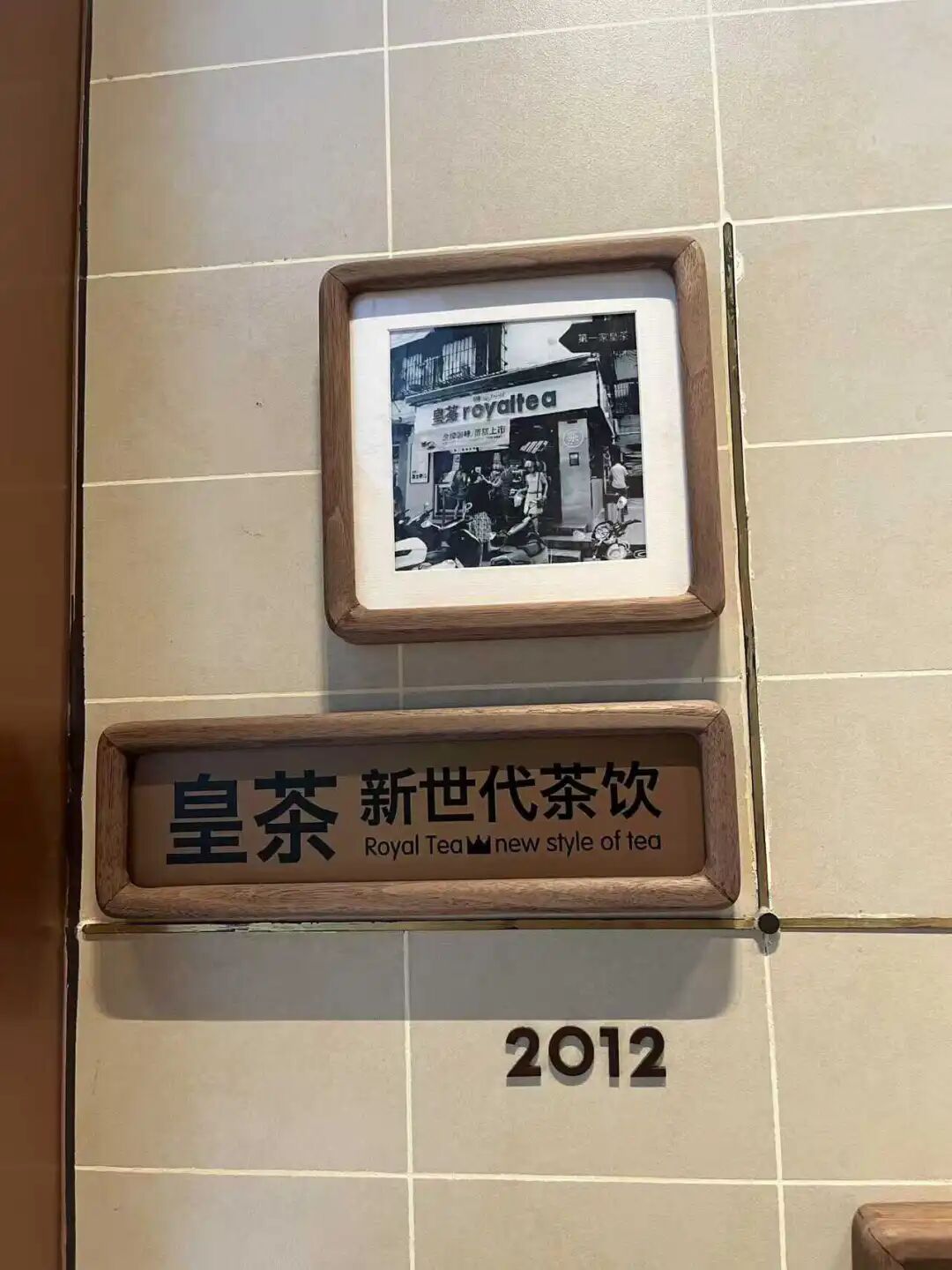
In 2012, Heycha was born in a corner shop in Jiangmen
02 The Question of "Doing Well or Doing Big"
In directly - operated stores, many Heycha employees have had similar experiences: Woken up by the DingTalk notification sound in the middle of the night - the R & D department was notifying the latest formula adjustments.
When Wu Bai was still a store manager, he once randomly checked the clerks' knowledge of the formulas during a morning meeting. The results made him laugh and cry: Three clerks who were checked gave three different formulas. One recited the version when the new product was launched, one still remembered the version from the previous day, and the other remembered the version that had just been updated in the middle of the night.
A person close to Heycha told 36Kr that this was because after a new product was launched into the market, the team would observe and collect consumers' opinions through offline investigations and online social channels. Once the feedback became consistent, the R & D department would immediately respond and make adjustments.
"Even if the internal tests are very comprehensive, they are not all - encompassing. When it comes to a larger market, new feedback will always emerge, and you can't ignore it," explained the above - mentioned person.
Each tea - beverage brand has its own growth trajectory. For Heycha, product innovation has always been at the core of its brand DNA.
Different from the easy - to - operate light milk tea and fruit tea on the market, Heycha's products are more unique and the production processes are more complex. To pursue the most exquisite taste, Heycha insists on making all ingredients fresh: The milk foam is freshly whipped, the fruits are freshly cut and squeezed, and many ingredients also need to be prepared on - site and strictly follow the formula to the smallest detail.
Take the brown - sugar boba as an example: It needs to be boiled for 30 minutes, simmered for 25 minutes, added with brown - sugar powder and simmered for another 10 minutes. The boba also needs to be sieved before being put into the pot. Wu Bai explained that this was because the surface of the tapioca pearls often had fine impurities, which would ruin the taste if boiled directly.
The production processes of the products also have their own rules. For example, for lemon tea, ice cubes must be added first, followed by lemons. This way, the aroma of the lemon pulp can be released while crushing the ice. In addition, the weight of the lemons must be accurately measured with an electronic scale, and the number of times of pounding is also strictly regulated. "It must be exactly the specified weight."
After Wu Bai left Heycha and worked in other tea - beverage brands, he found that this kind of standardization was not common in the industry. Many brands often added ingredients in a haphazard way.