The crucial showdown in the internal strife of ST Lutong is over. Has "capital tycoon" WU Shichun successfully "bought at the bottom"?
“I legally own 10.46% of the shares. After the shareholders came today, he suddenly cancelled the meeting. Is this a violation of regulations or laws? Who would joke with their own money?” Well - known investor and founding partner of Plum Ventures, Wu Shichun, as the largest shareholder, refuted on the spot.
At the second extraordinary general meeting of shareholders of ST Lutong (300555.SZ) in 2025, a crucial showdown took place between Wu Shichun and the former actual controller's forces over the control of this listed company.
After a series of dramatic scenes, including the sudden announcement of the meeting's postponement by the chairman, a physical conflict between the two sides, the unplugging of key equipment, and the reorganization of the meeting, after hours of intense battle, the director nominated by Wu Shichun's side was finally elected and was subsequently elected as the chairman at the board meeting.
However, the general meeting of shareholders has fallen into a “Rashomon” situation. The two sides hold different views on the validity of the resolution. At the same time, the new board of directors of ST Lutong currently has only one non - independent director, which does not meet the requirement of at least three non - independent directors.
Has Wu Shichun's side secured the position of chairman, and is the battle for control of ST Lutong completely over?
As of the close on November 12, the stock price of ST Lutong was reported at 12.16 yuan per share, up 1%, with a total market value of 2.4 billion yuan.
Two Sides Face Off at the General Meeting of Shareholders, Wu Shichun's Side Secures the Chairman's Position
At 3 p.m. on November 7, ST Lutong held its second extraordinary general meeting of shareholders in 2025. However, the meeting, which was considered by minority shareholders to change the fate of ST Lutong, was full of gunpowder from the start.
According to reports from many authoritative media such as “Cailian Press”, shareholders attending the meeting were required to hand in their mobile phones, which triggered the first round of dissatisfaction. After the meeting started, Chairman Qiu Jingwei did not directly enter the process of deliberating the proposals but gave a nearly one - hour introduction to the company's situation, during which he was interrupted by shareholders several times.
Then, a dramatic turn came. Qiu Jingwei suddenly announced that the company's board of directors had decided on November 3 to postpone this general meeting of shareholders. According to the “Rules for the General Meeting of Shareholders of Listed Companies”, this should have been announced at least two working days before the originally scheduled meeting date, but the company did not follow this procedure.
This postponement decision became the fuse for this conflict. According to a report from “National Business Daily”, Wu Shichun, the largest shareholder, said on the spot: “I legally own 10.46% of the shares. After the shareholders came today, he suddenly cancelled the meeting. Is this a violation of regulations or laws? Who would joke with their own money?”
In the intense debate, Qiu Jingwei and some directors, supervisors, and senior executives who supported him chose to leave the venue. According to the announcement of ST Lutong on November 8, the scene fell into chaos and “needed to be reorganized”. According to reports from “Blue Whale News” and other media, there was even a physical conflict during this period, and key meeting equipment was unplugged.
However, the struggle did not end there. The remaining shareholders on the spot elected independent director Huang Yuanzheng as the new meeting host. The meeting resumed at 17:45 that day.
After the resumption of the general meeting of shareholders, the proposals to remove Qiu Jingwei and Fu Xinyue from their directorships each received 87.17% of the votes in favor. Among the minority shareholder camp, the proportion of those supporting the removal of Qiu Jingwei reached 95.86%.
In addition, at the extraordinary general meeting of shareholders, “Regarding the Election of Non - Independent Directors of the Fifth - term Board of Directors of the Company”, among the six director candidates, only Tan Wenshu, nominated by Plum Ventures, was elected.
According to the “Announcement of the Resolution of the 20th Meeting of the Fifth - term Board of Directors” issued by ST Lutong on November 8, after the general meeting of shareholders, the new board of directors took swift action and elected Tan Wenshu as the chairman. The new board of directors adjusted the positions of the company's senior management, including removing Gu Zhonghui from the position of general manager of the company; removing Fu Xinyue and Wang Lumin from the positions of deputy general managers of the company; and appointing Yu Tao as the general manager of the company.
Image source: Can Stock Photo
The General Meeting of Shareholders Falls into a “Rashomon” Situation, Is the Battle for Control Completely Over?
Although the general meeting of shareholders has ended and the new management has taken office, the battle for control of ST Lutong does not seem to have subsided, and there has been a “Rashomon” situation regarding the general meeting of shareholders.
Early on November 9, the official WeChat public account of ST Lutong, “Lutong Vision”, issued a “Serious Statement”, strongly condemning “individual shareholders for illegally convening an extraordinary general meeting of shareholders” and stating that its procedures seriously violated the relevant provisions of the “Company Law”, the “Rules for the General Meeting of Shareholders of Listed Companies”, and the “Articles of Association of the Company”, and the resolution has no legal effect.
According to a report from “National Business Daily”, in response to the removal of his directorship on November 9, Qiu Jingwei replied via WeChat: “In the current situation, it ultimately depends on the judicial decision. Dual - headed boards of directors are not uncommon in the capital market.” Qiu Jingwei said that there may be relevant judicial determinations later. Whether the (separately convened general meeting of shareholders) procedures are legal and valid requires legal support.
However, on the evening of the same day, ST Lutong issued a “Clarification Announcement” on the officially designated information disclosure platform, clearly stating that “the resolution of this general meeting of shareholders is legal and valid” and emphasizing that all major matters shall be subject to the announcements.
This “Clarification Announcement” emphasizes that the procedures for convening and holding the above - mentioned meeting, the voting methods, and the content of the resolution all comply with the relevant laws and regulations such as the “Company Law” and the “Articles of Association of the Company”, and the resolution is legal and valid. In addition, Zhejiang Tiance (Shenzhen) Law Firm issued a legal opinion on the legal validity of this meeting.
According to the legal opinion issued by Zhejiang Tiance (Shenzhen) Law Firm on the extraordinary general meeting of shareholders of ST Lutong: “The lawyers of our firm believe that the procedures for convening and holding the company's current general meeting of shareholders, the qualifications of the convener and the attendees, and the voting procedures of the meeting all comply with the laws, administrative regulations, and the ‘Articles of Association of the Company’, and the voting results are legal and valid.”
It is worth noting that, except for Tan Wenshu, nominated by Wu Shichun, who was elected as the chairman and Huang Tao, who was not elected as a director, the other candidates also failed to pass. Therefore, the new board of directors of ST Lutong currently has only Tan Wenshu as a non - independent director, which does not meet the requirement of at least three non - independent directors in the “Company Law” and the “Articles of Association of the Company”.
Yuan Shuai, the co - founding initiator of the New Intelligence School's New - Quality Productivity Salon, said that from the perspective of corporate governance and development, a board of directors structure with only Tan Wenshu as a non - independent director is not conducive to the company's establishment of a scientific and perfect governance mechanism. A reasonable board of directors composition should include representatives with different backgrounds, professional expertise, and interests to achieve mutual supervision and complementarity. The current single - sided structure may lead to an imbalance in corporate governance and affect the company's long - term stable development.
Image source: Can Stock Photo
In addition, in July 2025, ST Lutong sued Wu Shichun and several other relevant parties in the People's Court of Changping District, Beijing, for disputes over securities and liability for damage to the company's interests, with the involved amount being 2.5 million yuan. The core claim is that Wu Shichun's continued increase in shares without disclosing the equity change report is a violation of regulations, and it is required to restrict the voting rights of his relevant shares.
ST Lutong pointed out that the documents such as the “Detailed Report on Equity Changes” submitted by Wu Shichun on May 10 could not be disclosed because the transaction arrangements did not meet the regulatory requirements. According to the former chairman Qiu Jingwei, the exchange mainly had doubts about issues such as the source of his funds and the fact that the acquisition entity had not been established.
This case was heard in Changping Court on October 20, and no verdict was given in court.
When Will ST Lutong Recover Its “Vitality”?
In March 2025, after 259 rounds of fierce bidding, Wu Shichun purchased 14.8751 million shares of ST Lutong held by its former controlling shareholder, Huasheng Yuncheng, at a price of approximately 150 million yuan, accounting for 7.44% of the company's total share capital. Thus, Wu Shichun became the largest shareholder of ST Lutong overnight.
At this time, Lutong Vision was no longer the star enterprise known as the “Pearl of Binhu” when it was listed in 2016. During the four - year tenure of the former actual controller, Lin Zhu, the company's total assets not only shrank from 800 million yuan to over 500 million yuan but also experienced continuous losses. From 2021 to 2024, the company's net profit was negative for four consecutive years.
Moreover, from 2021 to 2022, Lin Zhu and his affiliated parties non - operationally occupied 156 million yuan of the listed company's funds in the name of prepayments for goods. This incident led to the company being subject to other risk warnings in February 2023 and being labeled “ST”. By 2025, Huasheng Yuncheng itself was also ruled to undergo bankruptcy liquidation.
After becoming the largest shareholder, Wu Shichun continued to increase his holdings, raising his shareholding ratio to 10.46%, and attempted to restructure the board of directors. This attempt was strongly resisted by the previous board of directors, and the contradiction between the two sides gradually became public.
After the game between multiple parties gradually escalated, the core of the struggle revolved around the restructuring of the company's board of directors and the ownership of actual control. After months of battle for control of ST Lutong, the latest situation is that the candidates for chairman and general manager nominated by Wu Shichun have taken office.
Even if the battle for control has temporarily come to an end, when will ST Lutong recover its “vitality”?
On October 23, ST Lutong released its third - quarter report for 2025. In the first three quarters, the company's operating income was 62.92 million yuan, a year - on - year decrease of 26.7%; the net profit attributable to the parent company was a loss of 36.27 million yuan, and the net cash flow from operating activities was - 11.7 million yuan. In the third quarter, ST Lutong's operating income was 20.16 million yuan, a year - on - year decrease of 28.3%. As of the end of the third quarter, the company's total assets were 552 million yuan, a decrease of 7.7% from the end of the previous year.
In addition to the profit indicators, the net cash outflow from operating activities in the first three quarters was 11.7073 million yuan, and the accounts receivable of 215 million yuan at the end of the period accounted for approximately 55% of the current assets.
Moreover, the problem of fund occupation by the former actual controller has not been completely resolved, and the company still wears the “ST” label. As of the end of the first half of 2025, there was still 8.6936 million yuan of fund occupation fees and interest that had not been repaid.
Wu Shichun Makes Two Moves on “Problematic Companies”
It is worth noting that this is the second time this year that Wu Shichun has made a move on a listed company with poor performance, a small market value, and certain management problems.
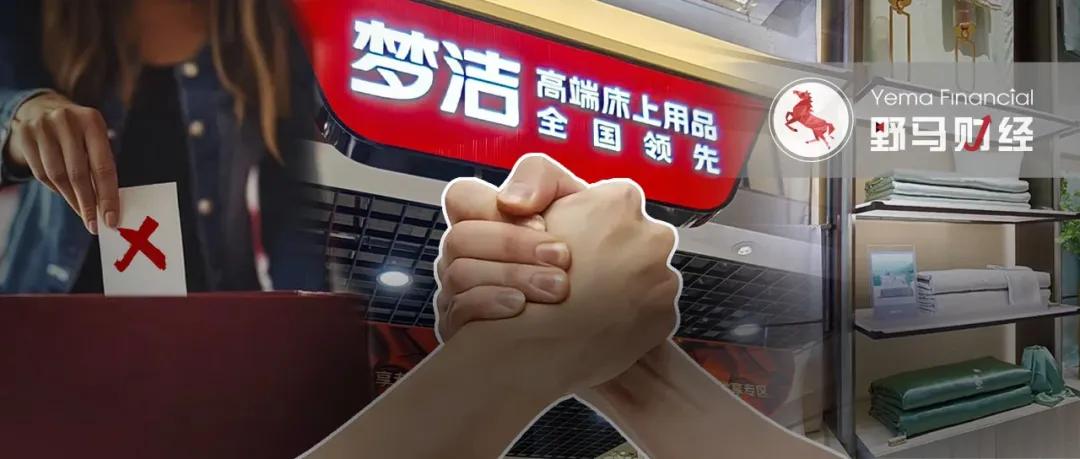
Previously, on January 6, Wu Shichun spent 230 million yuan to take over 10.65% of the shares of Jiang Tianwu's ex - wife, Wu Jing, and entered Mengjie Co., Ltd. (002397.SZ). The board of directors of Mengjie Co., Ltd. itself was also in a state of “internal strife”. Since female director Chen Jie was elected as a director of the company on February 3, 2023, she has voted against or abstained from voting on proposals at every board meeting, but all the proposals reviewed by the board of directors have passed.
After voting against proposals 13 times in a row and making a real - name report, on October 20, the Shenzhen Stock Exchange and the Hunan Securities Regulatory Bureau issued a “Supervision Letter” and an “Administrative Supervision Decision” to Mengjie Co., Ltd., its chairman Jiang Tianwu, general manager Tu Yunhua, and chief financial officer Li Yunlong. The problems involved mainly included financial problems.
The Hunan Securities Regulatory Bureau and the Shenzhen Stock Exchange found that from 2022 to 2024, the company's direct - sales counters and its subsidiary, Fujian Dafang Sleep Co., Ltd., had situations of cross - period recognition of direct - sales business revenues and costs, cross - period offsetting of sales rebates against operating revenues, and cross - period accrual of employee salaries and social security. In addition, Fujian Dafang Sleep Co., Ltd., a subsidiary of Mengjie Co., Ltd., provided financial assistance to Ye Moufeng through inter - company funds. As of December 31, 2021, the balance of the loaned funds to Ye Moufeng totaled 66.03 million yuan; as of September 30, 2025, the balance of the loaned funds to Ye Moufeng was 63.38 million yuan. The company and its subsidiaries have imperfect financial management and internal control systems and are negligent.