Dialogue with LI Chao of DeepCloudAI: How should robots be commercialized?
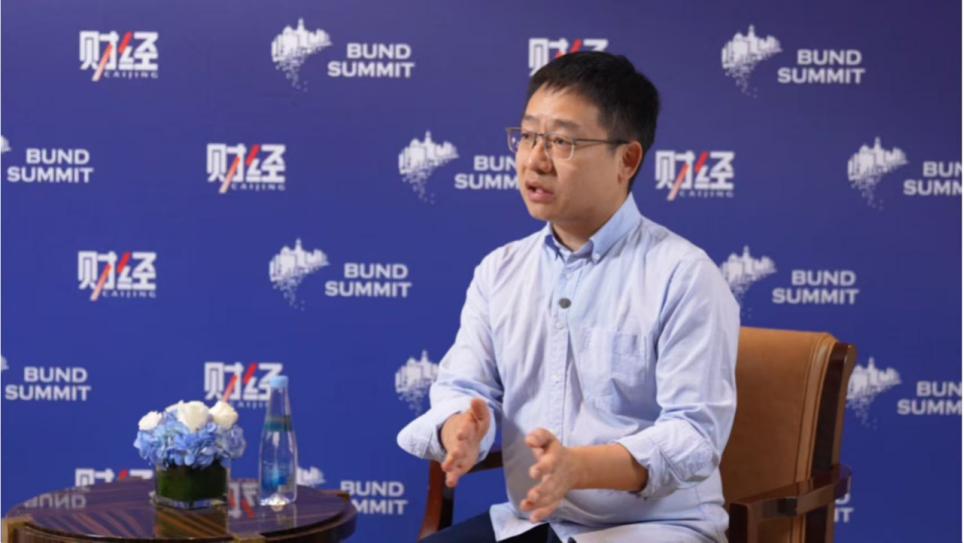
On October 24th, at the Bund Annual Conference, Li Chao, the co-founder and CTO of DeepRobotics, was interviewed by Caijing Magazine.
The industry's popularity has brought more orders and attention to robot companies, along with pressure.
Embodied intelligence is the hottest innovation and entrepreneurship field globally this year. Many newly established startups have quickly reached the "unicorn" stage (valued at over $1 billion). In the first half of this year, the financing in the field of embodied intelligence has already exceeded that of the entire last year. In the secondary market, many listed companies have seen their stock prices soar due to the robot concept. Traditional manufacturing enterprises, automobile manufacturers, mobile phone manufacturers, and Internet companies are all entering the field of embodied intelligence across industries.
Among them, the most attention - grabbing are the leading startups. Since DeepSeek became a global sensation at the beginning of this year, the market has new expectations for technology startups.
DeepRobotics, known as one of the "Six Little Dragons in Hangzhou," is a startup in the field of embodied intelligence with relatively rapid commercialization progress. Founded in 2017, DeepRobotics currently has three main types of products, including quadruped robots, wheel - legged robots, and humanoid robots. Its robotic dog series products have been applied in fields such as power inspection, emergency firefighting, and security patrol.
In December 2024, DeepRobotics' Jueying series robotic dogs "started work" in the power transmission cable tunnels of Singapore Power Group. This is the first domestic industry - level quadruped robot to be applied overseas in the power system.
On October 24th, at the Bund Annual Conference, Li Chao, the co - founder and CTO of DeepRobotics, was interviewed by Caijing Magazine. He mentioned that the commercialization of robots should not only focus on factory scenarios and replacing human labor. More importantly, robots should help humans complete dangerous work. Robots should be human partners rather than competitors for jobs.
The soaring popularity of embodied intelligence has also further promoted the commercialization of DeepRobotics. Previously, Zhu Qiuguo, the founder of DeepRobotics, revealed that in 2024, DeepRobotics' revenue increased by more than 100% year - on - year. Li Chao mentioned that in 2025, DeepRobotics' shipment volume increased by 3 to 5 times compared to last year.
As of now, DeepRobotics has completed a total of 7 rounds of financing. The latest round was nearly 500 million yuan in financing completed in July this year, jointly led by Fortune Capital and Guoxin Fund, with follow - on investments from institutions such as Beijing Robotics Industry Development Investment Fund, Qianhai Mother Fund, and CCTV Media Convergence Fund.
On November 3rd, DeepRobotics Co., Ltd. changed its name to Hangzhou DeepRobotics Co., Ltd., and its enterprise type changed from "other limited liability company" to "other joint - stock company (non - listed)." At the same time, several senior executives changed. The industry believes this is in preparation for listing. A relevant person in charge of DeepRobotics responded externally that "this shareholding reform is mainly due to the company's development needs and to complete the corresponding preliminary preparations."
Building robots is difficult
Caijing: Embodied intelligence entrepreneurship is very popular this year. The industry generally believes that the current embodied entrepreneurship ecosystem has formed an obvious pattern. Where do you think DeepRobotics stands now?
Li Chao: In terms of the overall market share, we are in the first echelon. In the current embodied intelligence industry, quadruped robots still account for a relatively large proportion.
Caijing: Do you mean the market share of quadruped robots or the overall embodied intelligence?
Li Chao: For quadruped robots, DeepRobotics has the second - largest market share globally. In the vertical field of quadruped robots, we are number one in the "big dog" segment.
Caijing: What is the definition of "big dog"?
Li Chao: Around 50 kilograms and can be truly put into use, such as generating labor value in fields like power inspection and emergency firefighting.
Caijing: What is the proportion of the shipment volume of quadruped robots and humanoid robots now?
Li Chao: Last year, the data showed that more than 80% were quadruped robots. This year's data is not fully available yet, but the shipment volume of humanoid robots has increased significantly this year.
Caijing: DeepRobotics was founded in 2017 when the discussion about robots was not very high. How did you see this direction?
Li Chao: At that time, there were already some robot - related products in the world, such as those from Boston Dynamics. They started to shift from performance - type robots to robot applications. At that time, people had already started discussing how to make robots more practical and began to solve problems such as navigation.
We saw the opportunity at that node. We were all still in school at that time and had done a lot of algorithm research in the laboratory, but there was no platform or specific hardware to present our results. Maybe engineering students are naturally interested in robots. We would watch those robot videos frame by frame. Robots are really cool. We believe that Chinese companies can make better robots.
Caijing: Later, how did DeepRobotics develop robots for practical applications?
Li Chao: As entrepreneurs coming from universities, we naturally pay more attention to the application of research results. We have always been working from both commercial and technical dimensions. The technical difficulty of robot application is very high, so we first tried some industries with relatively mature business models. For example, in the power system, wheeled robots were previously used, but there were some deficiencies in the process, such as crossing obstacles. Quadruped robots can make up for these deficiencies.
Caijing: How long did it take from the founding of DeepRobotics to making a truly usable robot?
Li Chao: Three and a half to four years. It was really difficult.
Caijing: Where was the difficulty?
Li Chao: The difficulty was comprehensive. First, the robot had to be able to walk. Second, it had to be usable and adaptable to various environments. Then, the robot had to enter actual business. Finally, it had to work stably without frequent breakdowns.
We made two Jueying series robots in 2018. One was bought by an Internet company for demonstration, and I kept the other one at home.
It wasn't until 2022 that we could say we achieved real industry applications.
What does the popularity bring?
Caijing: What has the emergence of large models brought to the robot industry?
Li Chao: Before the emergence of large models, robots mainly relied on the "cerebellum" to work, which was more like automated work driven by rules. Large models give robots a "brain" and enable more intelligent operations.
However, overall, the combination of the "brain" and the body is not yet perfect. The "brain" is very smart, and the body is also good, but how to transmit the will of the "brain" to the body is still in the process of matching. We need better algorithms to solve this problem and can first make attempts in vertical fields to get some functions up and running.
Caijing: How much has DeepRobotics invested in the "brain," or large models?
Li Chao: Currently, not much. At this stage, this is not our strength. We can cooperate with the world's best companies in this area. The characteristic of DeepRobotics is application - driven. We must do a good job in the dimensions of robot functions, cost, and stability.
Caijing: Embodied intelligence is the hottest field this year. Is there a specific node that suddenly made this industry popular?
Li Chao: We didn't expect embodied intelligence to be so popular this year. The most direct reason should be that Elon Musk announced the performance of his robots. I think this is also a strange thing in this industry. We talked a lot, but the public and investors didn't believe us. Once Musk said it, they believed it. There still needs to be someone to stand up.
Caijing: Does the market's enthusiasm help with your financing or getting more new orders?
Li Chao: It is definitely beneficial, but the overall impact is not significant. After all, customers are very smart. They hope that the order can generate some value and won't spend a lot of money on robotic dogs or humanoid robots just because of what Musk said.
The impact is that people's awareness has increased. This year, there have been many new orders from the civilian field for non - industry applications. We don't even know what these customers are buying the robots for. For example, golf courses, shopping malls, and some scenic areas. Some customers are using robots for delivery, which we didn't expect. After we gained some fame, people would buy our robots for their own purposes.
Caijing: After the industry became popular, more and more people are getting involved. What impact will this phenomenon have?
Li Chao: Definitely, many people are coming in with different purposes. But I think the better situation is that people have seen the value of robots, and in the future, robots may become a popular intelligent terminal.
We have been in this industry for more than eight years and have experienced many ups and downs. This is a normal development trajectory for an industry. I hope that when the industry is not so hot, people can still persevere and not cause trouble.
Caijing: What do you mean by causing trouble?
Li Chao: Price cuts and a lot of poaching of talents. When the heat subsides, they will leave, but it will put some pressure on us, the persevering startups.
Caijing: How many more orders does DeepRobotics have this year compared to last year?
Li Chao: Three to five times more. The core reason is the improvement of product strength. People have found that robots can be used. Recently, in the semi - finals of the Scottish Premiership, a customer used our robot equipped with live - streaming equipment for on - site live - streaming. Another customer took our robot to Hoh Xil to shoot a documentary. The robot wore a Tibetan antelope costume and mixed with the herd for close - range shooting. These are scenarios we couldn't have imagined before. Users are more imaginative than us.
Caijing: Will there be a problem with difficult delivery?
Li Chao: It will definitely be a little more difficult than before. Building the supply - chain system is a long - term task. It's a bit like when you've prepared meals for two tables of guests and suddenly five tables of guests come. You have to quickly make up for the other three tables and go shopping for ingredients again.
Caijing: Then how to ensure the same quality as when you only prepared meals for two tables?
Li Chao: We need more professional partners. We have so many excellent supply - chain companies. We don't need to cook all the dishes ourselves. Let companies in Guangzhou cook a few and those in Shanghai cook a few. The overall efficiency will be improved.
Caijing: Is DeepRobotics profitable?
Li Chao: It's not in the red.
Caijing: A previous investor mentioned that the current embodied intelligence industry is selling products to customers who know the products are not good enough because the current robots are not very useful.
Li Chao: That's his personal understanding. This year, we can clearly see the value of robots.
Caijing: He believes that only when the cost of a robot is lower than the labor cost of a person can it be considered commercially usable.
Li Chao: I don't agree, and our investors don't have such an idea either. Robots are a very new thing. The scenarios where robots can be applied definitely won't be just the ones we can see now. Why do we have to let robots replace human labor? Why not let robots do some more dangerous work?
For example, there are some jobs that require workers to go deep into tunnels, which is dangerous. Robots can do these jobs. Another example is fire rescue.
Caijing: What are your definitions of "usable" and "good - to - use"?
Li Chao: If a customer places an order, it means the product is usable. If a customer buys the product and then makes a repeat purchase, such as 100 units, 300 units, or 500 units, it means the product is good - to - use.
Caijing: Taking power inspection as an example, how do you operate in this industry?
Li Chao: There are about 20,000 substations in China. The inspection work is highly repetitive and the rules are relatively consistent, so we can achieve replicability, and the technical difficulty is not that high.
Caijing: What's the difference between robotic dog inspection and drone inspection in previous years?
Li Chao: They are quite complementary. Both forms have their own deficiencies. Drones can see the overall situation from the sky, while robotic dogs can have a close - range look on the ground. There are some tunnels that drones can't see into, but robotic dogs can go in. Now, many substations use both robotic dogs and drones together, setting up a "drone nest" and a "dog nest" side by side.
Caijing: Many overseas customers are also using your robotic dogs for inspection. How do you layout the overseas market?
Li Chao: Overseas customers found us after seeing our products. Their demand is even more urgent than that in the domestic market. For example, in Singapore, the labor cost is much higher than in China, so they are more willing to use robots to complete some work.
The competition in this industry is still very fierce because there are also many excellent robot companies overseas. DeepRobotics can get some orders mainly because we consider things from the customers' perspective on how to use the robots, including the subsequent after - sales technical services. It's not just about whose technology is better. Technology can be divided into many different directions. Some are for performances, and some are for sports - like applications. Commercial applications require your technology to be more precise, stable, and safe.
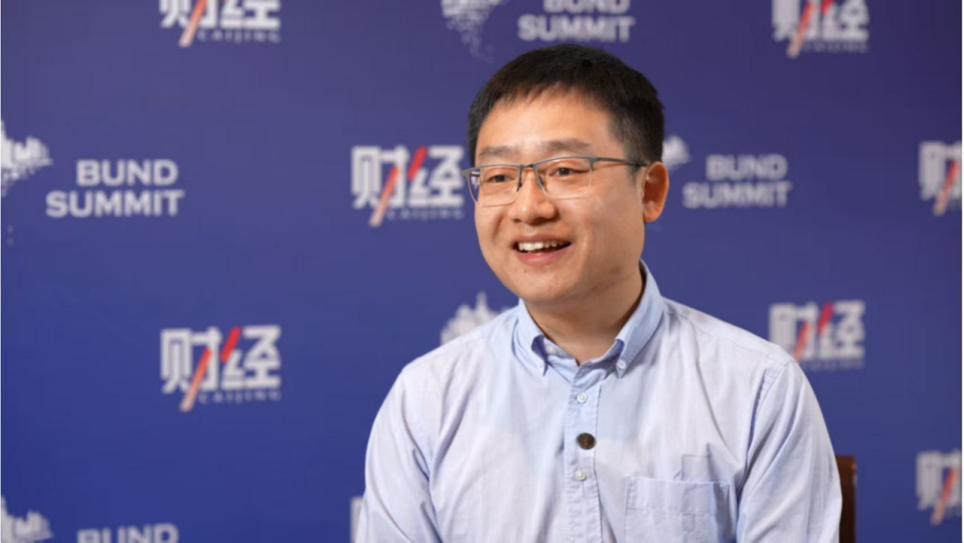
Li Chao believes that robots should be human partners rather than competitors for jobs.
Caijing: Many practitioners have mentioned that it is very difficult to obtain data for embodied intelligence.
Li Chao: Yes, the biggest problem in this industry currently is data. For example, in autonomous driving, there are so many cars on the road, and data can be collected from human - driven vehicles. But there was no such data for embodied intelligence before.
Caijing: What problems will the lack of data bring?
Li Chao: It will lack generalization ability. Special adjustments need to be made in application scenarios, and it's impossible to achieve intelligent general - purpose capabilities.
Caijing: Currently, there are two directions for data in the industry: synthetic simulation data and data collected from actual scenarios. Can synthetic data be used?
Li Chao: Yes, it can be used. We are mainly doing reinforcement learning now and don't rely too much on data. We mainly let the robots train themselves and generate their own data.
Caijing: With the industry being so popular, has there been obvious progress in data this year? How far are we from general - purpose intelligence for robots?
Li Chao: Maybe it doesn't seem very obvious, but there are so many smart people around the world working hard. Maybe one day, there will be a breakthrough.
Caijing: The main product of DeepRobotics is quadru