Automobile companies jointly target black public relations: In the predicament where all are victims, who is nurturing the "bad-mouths" in the automotive circle?
Recently, a crackdown on online chaos has unveiled the shady side of business competition in the automotive industry.
On November 12th, the Cyberspace Administration of China reported that accounts such as "Yiche Bang" and "Sun Shaojun 09" had been legally dealt with for fabricating false sales rankings. These seemingly neutral rankings are actually weapons of unverified or even fabricated data, which not only mislead consumers' decisions but also disrupt the normal operations of enterprises.
Almost simultaneously, the legal department social media accounts of car - makers like BYD, NIO, Li Auto, and XPeng emerged densely, building an anti - smear defense line in the industry like mushrooms after rain. Car - makers all claim to be "victims", and the reward amounts for soliciting clues have risen from millions to tens of millions. The cost of anti - smear public relations is even enough to build 3,000 super - charging stations.
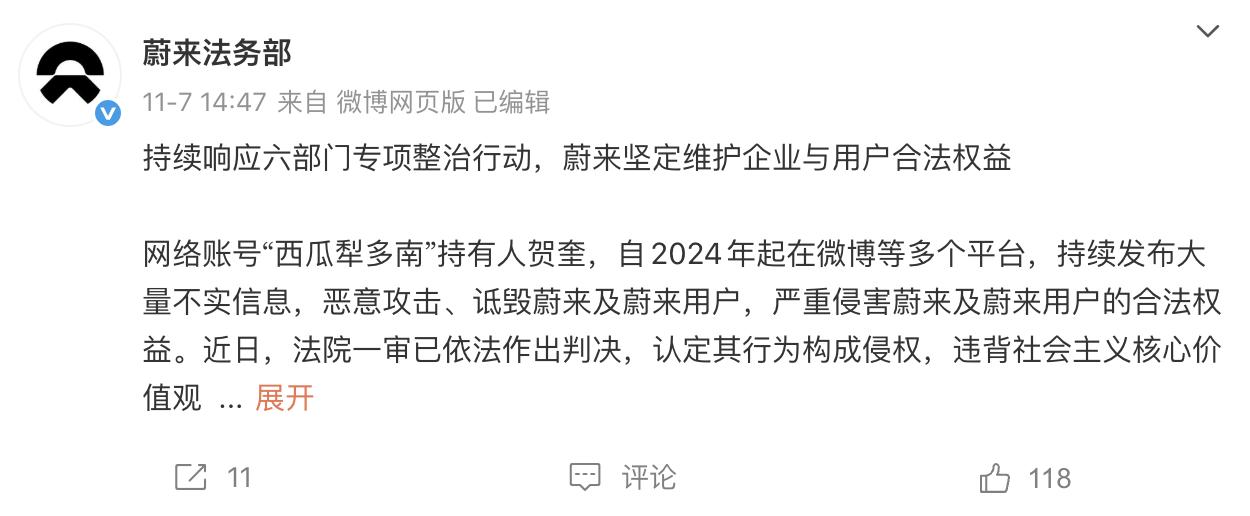
However, in this collective counter - attack, a question has emerged: When almost all car - makers claim to have been attacked by smear campaigns, who are the perpetrators exactly?
Are the legal departments of car - makers collectively "drawing their swords" just for anti - smear public relations?
In early February 2025, a statement from NIO's legal department kicked off the annual anti - smear public relations campaign of car - makers: "From now on, we publicly solicit clues about smear campaigns and online trolls' malicious attacks against NIO, with rewards ranging from 10,000 to 1 million yuan."
Just one month later, the Hongmeng Zhixing account spoke out, directly pointing out that hundreds of thousands of similar malicious comments were suspected of slandering the Zunjie S800, and announced a reward of up to 5 million yuan for clues. From the passive rights - protection of individual enterprises to the active offensive of the entire industry, the "centralized" combat of car - makers' legal departments has become a new trend.
It's not difficult to find by sorting out the industry trends in the past three years that the "presence" of car - makers' legal departments has been increasing exponentially.
In 2021, BYD took the lead in launching the reward model and upgraded the "maximum 5 - million - yuan reporting reward" to a long - term mechanism at the end of 2023; Great Wall Motor launched a 10 - million - yuan reward plan at the 2023 New Energy Dry Goods Conference and initiated a special campaign to clean up the Internet; Since 2024, GAC Aion has launched an online reporting center, Geely's legal department has launched a clue - solicitation campaign with rewards ranging from 50,000 to 2 million yuan, and the legal accounts of Li Auto and XPeng have also frequently released the results of rights - protection.
These accounts are no longer limited to issuing legal statements but regularly publicize the handling results: NIO has cumulatively blocked more than 2,000 malicious accounts, and all 13 lawsuits it filed have been won; BYD has held 27 self - media bloggers accountable through judicial channels, with the cumulative amount involved in the cases exceeding 10 million yuan.
The "collective awakening" of car - makers' anti - smear public relations stems from the fatal damage caused by smear campaigns.
At the end of last year, the Hongmeng Zhixing Zunjie S800 was hit by a targeted public opinion attack: Hundreds of thousands of similar comments such as "false range" and "poor handling" suddenly appeared in the early morning, and 80% of the accounts were registered less than a month ago; Subsequently, the comparison test document that circulated deliberately tampered with the power consumption data, and the rumor of "the Maybach's tires being deflated" even led the technical discussion to a trust crisis.
For new - energy car - makers, brand reputation is directly linked to market sales. The false information created by smear campaigns is enough to shake consumers' confidence and even affect the valuation in the capital market.
XPeng, Lei Jun, Xiaomi, BYD, Geely, Changan... Almost no enterprise dares to say that it has never been smeared. Statistics from the China Association of Automobile Manufacturers show that since 2022, the number of malicious slander cases against new - energy vehicles has increased by 217% year - on - year. Monitoring data shows that from January 2024 to April 2025, the spread volume of topics related to "online trolls" and "smear campaigns" exceeded 210,000 times.
The question is, when "anti - smear" has become an industry consensus, why do smear campaigns still persist? When car - makers all claim to be "victims", why do some consumers still doubt their "innocence"? When legal departments keep "drawing their swords", why do malicious attacks still keep coming?
Platforms that prioritize traffic provide a breeding ground for smear campaigns
The collective counter - attack of car - makers has torn off the mysterious veil of the smear - campaign industry. This gray chain centered on traffic monetization has already formed a complete ecosystem composed of demanders, executors, and disseminators. MCN agencies, self - media, and trolls are like a well - coordinated combat force, turning public opinion manipulation into a "business".
Li Bin, the founder of NIO, once revealed that the monthly cost of smear trolls targeting NIO is as high as 30 million to 50 million yuan, but the industrial chain is hidden, and it's almost impossible to obtain evidence. For ordinary self - media and small media with a registered capital of 100,000 yuan, if they are sued by car - makers and ordered to pay compensation of 2 million yuan, the company will just go bankrupt in the end.
In addition to the improper competition needs of some car - makers, there are also specialized gray - industry companies that undertake "reputation maintenance" orders. According to an investigation by CCTV.com, a car blogger with 600,000 followers charges as much as 18,000 yuan for short - videos and 38,000 yuan for long - videos. Even more, some agencies can make a single profit of up to millions of yuan by "boosting one and stepping on the other".
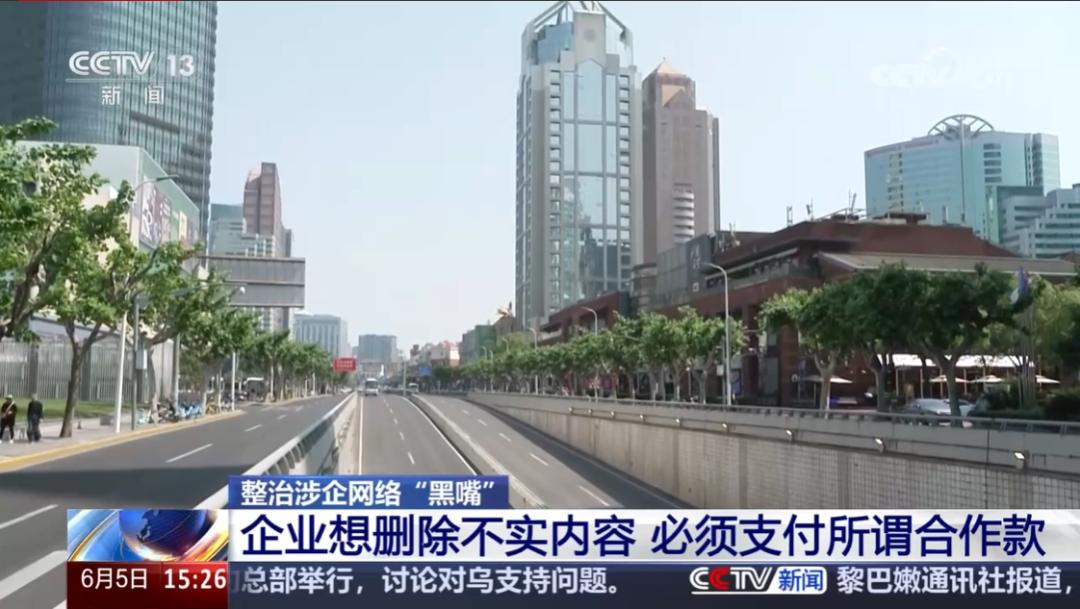
Tan Qianfan, an industry insider who has worked as a public - opinion disposal specialist in a state - owned enterprise for 8 years, revealed to the "Front" column of CCTV.com the evolution process of smear campaigns: from "forum spamming" in the PC Internet era, to "controlling comments" in the Weibo and WeChat era, to "negative comments" and "rights - protection at auto shows" in the short - video era, and now to using generative AI to create content that is hard to distinguish between true and false.
The abuse of technology has given smear campaigns an extra boost. Using technologies such as mainframe computers and generative artificial intelligence, new - type "online trolls" can produce false content, create false popularity and trends, avoid platform monitoring, and seek illegal benefits.
In the attack on the Zunjie S800, a large number of "pseudo - professional" documents appeared, deliberately magnifying the power consumption data and selectively comparing parameters, making it difficult for ordinary consumers to distinguish between true and false. To avoid platform review, these agencies also design "phrase libraries", replacing sensitive words with homophones or metaphors. For example, they use "small batteries" to refer to battery problems and "steering not following hands" to imply handling defects.
The "fueling" of platform algorithms has given an extra boost to the spread of smear campaigns. Under the logic of traffic supremacy, negative content gets a higher weight because it is more likely to arouse emotional resonance, and the platform's recommendation mechanism will automatically push controversial content to more users.
And the lag in the platform's recognition of similar content allows these malicious messages to be deleted only 4 - 6 hours after dissemination. This "traffic - first" algorithm design objectively provides a breeding ground for smear campaigns.
Are car - makers victims, or could they also be perpetrators?
"We are victims of smear campaigns!" This is the unified statement of almost all car - makers when facing public - opinion crises, but the "smear - campaign" mystery between Geely and Great Wall has exposed the industry's hidden rules:
Many car - makers that claim to have been victimized are also playing the role of perpetrators at the same time.
In 2024, Great Wall Motor publicly reported that a certain Geely model "was suspected of false publicity", and then a large amount of content slandering Geely's technology appeared on the Internet; Soon after, Geely's legal department counter - attacked, saying that it had found that the MCN agency commissioned by Great Wall had fabricated "owner complaints". The two sides presented evidence against each other and had a fierce confrontation. Eventually, the case reached a deadlock due to insufficient evidence, and this farce ended in a lose - lose situation.
This mystery is not an isolated case but a microcosm of the vicious cycle of using smear campaigns to fight smear campaigns in the industry. In this game of hunters and prey, no one is innocent.
Tracing back to the starting point of the cycle, it is often an enterprise's defensive counter - attack: After Enterprise A is attacked by Enterprise B's smear campaign, instead of choosing legal means, it chooses to fight fire with fire and entrusts a gray - industry company to attack Enterprise B; Enterprise B is not willing to be outdone and launches a more violent counter - attack, forming a dead cycle of "attack - counter - attack - re - attack".

The transformation of car - makers from a victim mentality to perpetrator behavior stems from the intensification of industry competition.
In 2025, the penetration rate of the domestic new - energy vehicle market has exceeded 60%, and the market - share gap between leading car - makers is often less than 1 percentage point. The reputation of a model directly determines its market position. Under the pressure of "winner takes all", some enterprises choose to take shortcuts. Instead of investing billions in researching new technologies, it's more effective to spend a few million to smear competitors.
And the concealment of smear campaigns makes it extremely difficult to hold the perpetrators accountable: Most of the attack content is posted by anonymous accounts, and the cooperation between MCN agencies and car - makers is mostly oral agreements, lacking written evidence. Even if they are investigated, they can shift the blame to "unauthorized operations by third - party agencies", and the deterrence of judicial punishment is limited.
The lack of industry self - discipline has further intensified the vicious cycle. Although most car - makers have signed the "Self - Discipline Convention on Fair Competition in the Automobile Industry", the convention lacks mandatory binding force and has become a "paper promise".
Some car - makers even incorporate smear campaigns into their regular marketing means, setting indicators for guiding public opinion about competitors in internal assessments and linking smearing opponents with the commissions of sales staff. This distorted assessment mechanism has turned smear campaigns from an emergency measure into a regular operation, forming a deformed competitive perception of "if you don't smear your opponents, you will be smeared by them".
Ultimately, consumers become the biggest victims of this vicious cycle. When car - makers focus on slandering each other, R & D investment will inevitably be squeezed. At the same time, false information disrupts consumer decisions: Consumers who want to buy new - energy vehicles are misled by rumors of "battery explosions" and confused by false reviews of "false range". Most consumers postpone their car - buying plans due to the conflicting information on the Internet, which undoubtedly hinders the healthy development of the entire industry.
Conclusion
People follow where public opinion leans and attack whom public opinion points at.
The collective action of car - makers to combat smear campaigns has made us see a cruel truth: The perpetrators of smear campaigns are never a single entity but a "toxic - tumor ecosystem" composed of the gray industrial chain and deformed competitive mentalities.
In this ecosystem, car - makers are both victims and perpetrators, consumers become innocent victims, and the innovation vitality and credibility of the entire industry are constantly being eroded by this endless public - opinion war.
For car - makers, they might as well think about whether they want to win individual public - opinion battles or lose the future of the entire industry. In the unprecedented great change in the global automotive industry in a century, Chinese car - makers have achieved "changing lanes to overtake" through new - energy vehicles. But if this promising industry is eventually devoured by smear campaigns, it will be a tragedy of an era.
This article is from the WeChat official account "Electric Vehicle Connect", author: Electric Vehicle Connect. Republished by 36Kr with permission.