Two key points have achieved breakthroughs, and small nucleic acids are booming again.
Major pharmaceutical companies have been actively involved in the oligonucleotide field recently.
On November 8th, Eli Lilly and Shenyin Biotech reached a cooperation agreement worth up to $1.2 billion to jointly develop and commercialize RNAi therapies for metabolic diseases.
Not long ago (October 30th), Innovent Biologics also publicly disclosed the siRNA patent WO2025223537A1, which involves the R & D progress of oligonucleotide drugs targeting the INHBE gene. INHBE is mainly expressed in the liver and has been proven to be positively correlated with human insulin resistance and body mass index. Innovent Biologics has also joined the ranks of self - developed oligonucleotide drugs.
On October 26th, Novartis reached an acquisition agreement with Avidity Biosciences for a total price of $12 billion, becoming the largest merger and acquisition event in the oligonucleotide field. Avidity is a pioneer in the AOC (Antibody - Oligonucleotide Conjugate) field. Through the AOC drug form, it can target and deliver oligonucleotide drugs to muscles, hearts, and other areas. Through this acquisition, Novartis will obtain Avidity's neurology pipeline and differentiated technology platform, including three late - stage clinical pipelines: Del - zota, Del - desiran, and Del - brax.
Coupled with the earlier layout of Sanofi and CRISPR in this field, we can see that oligonucleotide drugs have become active again. At the technical level, with the breakthrough of delivery technology, the application scope of oligonucleotide drugs has expanded beyond the liver, greatly expanding the commercial space; at the commercial cooperation level, MNCs have carried out a series of project collaborations and even large - scale mergers and acquisitions in the oligonucleotide field.
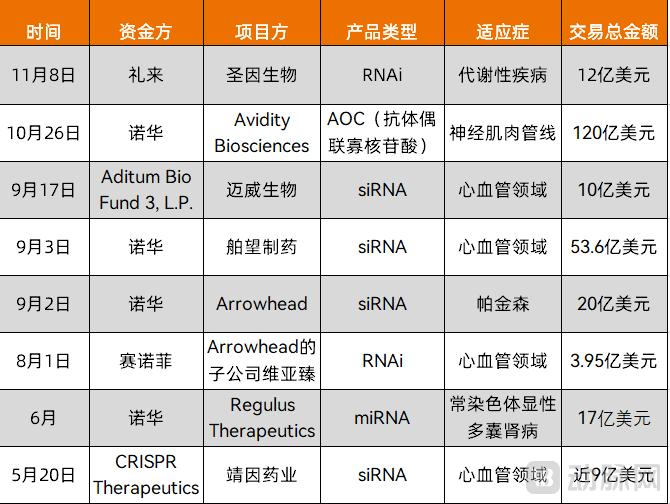
Figure 1. Major project collaborations in the oligonucleotide field in the past six months (Source: Compiled by Arterial Network)
In particular, Novartis has launched an all - out offensive, carrying out a series of layouts in the oligonucleotide drug field in two directions: expanding indications and improving delivery systems. These two directions are also the key points restricting the development of oligonucleotide drugs. With the breakthroughs made by domestic and foreign innovative pharmaceutical companies in these two directions, the oligonucleotide field has welcomed a new wave of development opportunities. The current development stage of the oligonucleotide field is like "a car getting on the highway entrance and starting to accelerate", as Wang Meng, the general manager of Youjia Biotech, made an vivid analogy to Arterial Network.
Expansion of indications
Since 2016, several oligonucleotide drugs have been approved for marketing successively. After 2018, the first siRNA drug was approved, but the application scope was concentrated in liver - related indications. Taking siRNA as an example, among the 7 globally approved siRNA drugs, 6 use GalNac for delivery and 1 uses LNP delivery, and the target organ is the liver for all of them.
However, developing drugs only for liver - targeted indications has little difference in delivery efficiency and relatively fierce competition. With the breakthroughs made by innovative pharmaceutical companies in large - scale indications such as cardiovascular diseases and tumors, the application scope of oligonucleotide drugs has been expanded, and the commercial value has also been magnified.
Novartis' siRNA drug Leqvio targeting PCSK9 is the first oligonucleotide drug approved for chronic diseases. This drug was approved by the FDA for marketing in 2021 and is approved for the treatment of adults with atherosclerotic cardiovascular disease (ASCVD) or heterozygous familial hypercholesterolemia (HeFH) who need additional LDL - C reduction on the basis of combination diet therapy and maximum tolerated dose of statin therapy. That is to say, the initially approved indication of Leqvio is adjuvant therapy for statins. Leqvio only needs to be injected twice a year to continuously and effectively reduce LDL - C.
On July 31st, 2025, Novartis announced that the US FDA had approved the application for expanding the indications of Leqvio, allowing it to be used as a single drug in combination with diet control and exercise to reduce LDL - C levels in adult patients with hypercholesterolemia. Since then, Leqvio has become a first - line drug for the treatment of hypercholesterolemia, greatly expanding the commercial space.
From 2021 to 2024, the sales of Leqvio increased from $12 million to $754 million. In the first half of 2025, it increased by 66% year - on - year to $555 million, and it is expected to become a blockbuster drug with sales exceeding $3 billion in the future. The successful commercialization of Leqvio has led siRNA drugs into the field of common diseases.
Currently, the R & D pipelines of global innovative pharmaceutical companies in the oligonucleotide field are continuously increasing, and the number of in - progress pipelines for two types of indications, tumors and cardiovascular diseases, ranks among the top. Taking domestic siRNA drugs as an example, the number of in - progress pipelines in the field of cardiovascular diseases ranks among the top, and most of the R & D progress is in the early clinical stage, indicating that domestic innovative pharmaceutical companies are starting to enter this field rapidly.
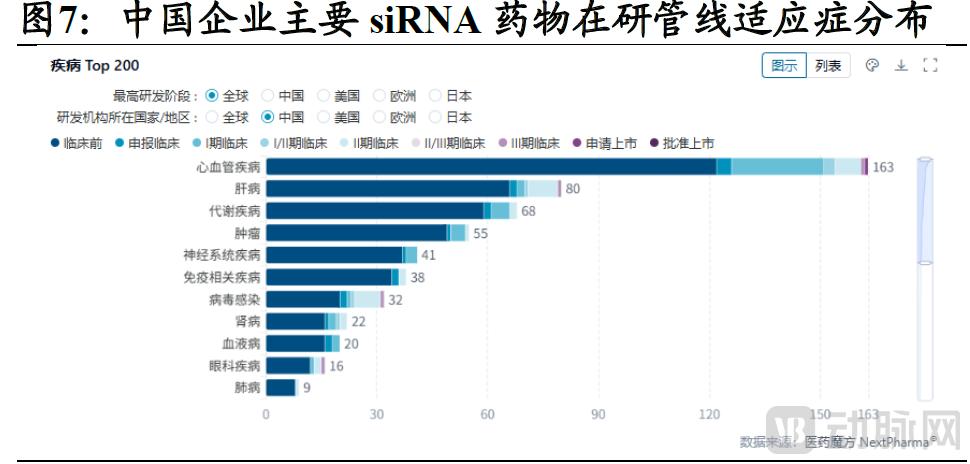
Figure 2. Indications of domestic siRNA drug in - progress pipelines (Source: Guotai Haitong Securities)
Currently, all the oligonucleotide drugs in the leading position in the clinical progress in China follow the siRNA route. Among them, VSA003 of Viazhen Biotech has advanced to the Phase III clinical stage.
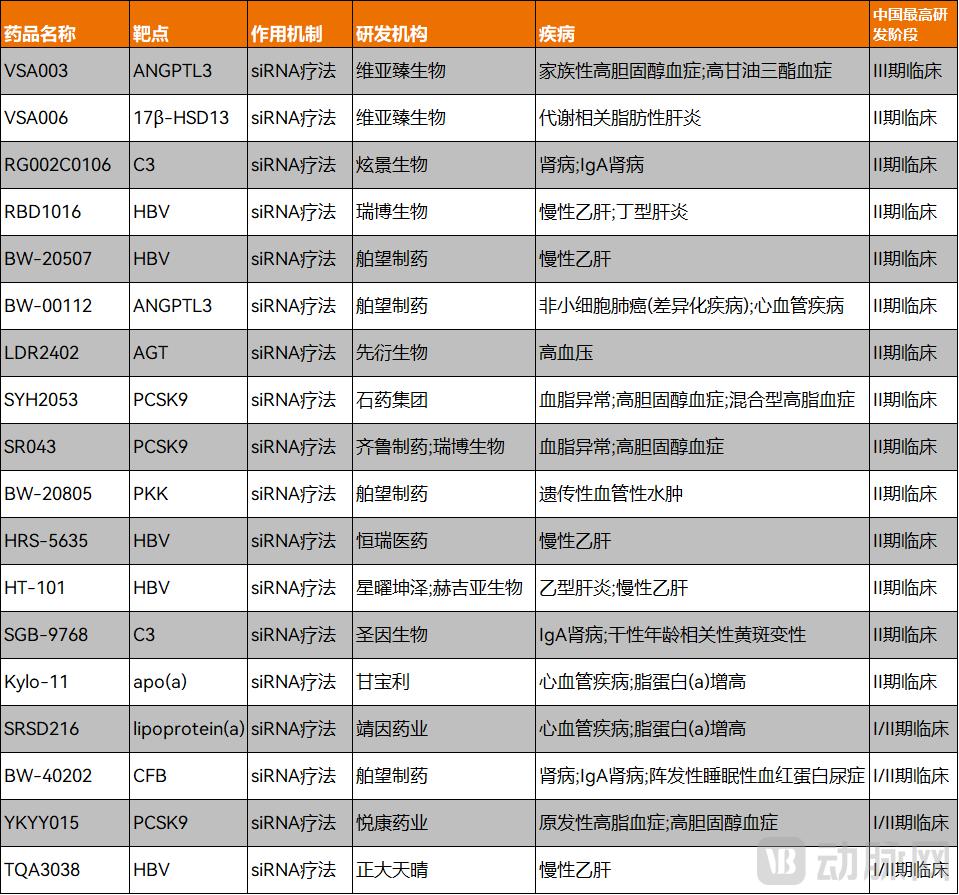
Figure 3. Oligonucleotide drugs in the leading position in clinical progress (Source: PharmaCube)
On December 18th, 2024, VSA003 successfully completed the first patient dosing in the Phase III clinical trial at Peking Union Medical College Hospital, Chinese Academy of Medical Sciences. VSA003 is an innovative siRNA drug targeting ANGPTL3. This drug can effectively reduce LDL - C levels in patients with HoFH (homozygous familial hypercholesterolemia) through both LDLR - independent and LDLR - dependent lipid - lowering mechanisms. The target of VSA003, ANGPTL3, is different from the targets of clinically recommended drugs such as statins, PCSK9 inhibitors, cholesterol absorption inhibitors, antioxidants, bile acid sequestrants, nicotinic acid, and fibrates.
In view of the novel mechanism and therapeutic potential of VSA003, VSA003 was granted the breakthrough therapy designation for HoFH by the CDE in January this year and is expected to become the world's first approved oligonucleotide drug targeting the ANGPTL3 gene.
In terms of the number of pipelines, Bowang Pharma, a "dark horse" in the oligonucleotide field, has the largest number of in - progress pipelines. Currently, 4 of its products have advanced to the Phase I/II and Phase II clinical stages. Domestic innovative pharmaceutical giants such as CSPC, Hengrui, and Chia Tai Tianqing also have in - progress R & D products, and the indications of the products have expanded from liver diseases to major diseases such as cardiovascular diseases and tumors.
Notably, some products for large - scale indications have attracted the attention of innovative pharmaceutical companies. For example, the oligonucleotide drug targeting the INHBE gene mentioned at the beginning of the article. INHBE encodes the Activin E protein and is closely related to fat metabolism. Oligonucleotide drugs targeting the INHBE gene have begun to attract the attention of Biotechs.
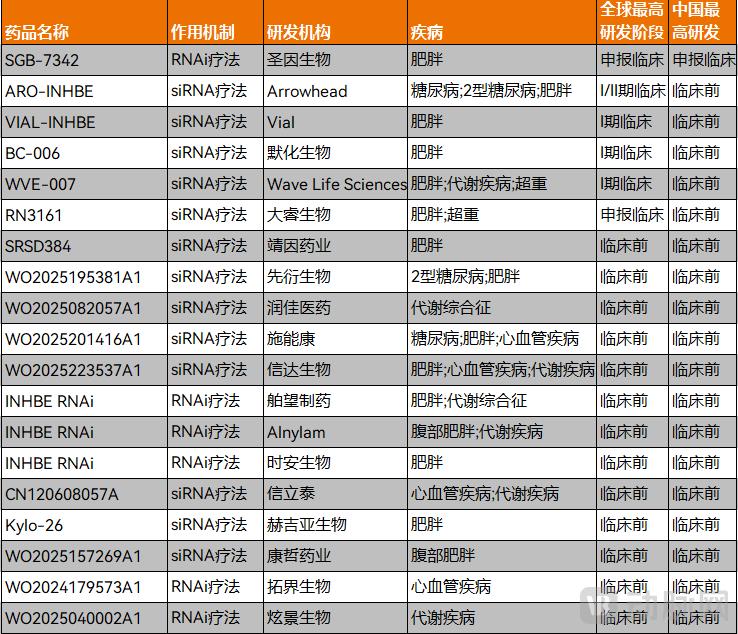
Figure 4. Domestic INHBE oligonucleotide drugs are emerging (Source: PharmaCube)
Breakthrough in delivery technology
In addition to expanding indications, breakthroughs in delivery technology have become another direction for the development of oligonucleotide drugs.
Delivery methods and efficiency are the keys to whether oligonucleotide drugs can enter cells and exert their effects. There are two major challenges for oligonucleotide drugs to enter cells. First, RNA is easily degraded by RNase enzymes in plasma and tissues when exposed in the blood; second, negatively charged RNA has difficulty crossing the cell membrane to enter cells. Chemical modification of nucleotides can improve substrate specificity and enhance the stability against nucleases, and the discovery of GaINAc technology has solved the delivery problem of oligonucleotide drugs.
GalNAc can specifically recognize the asialoglycoprotein receptor (ASGPR) highly expressed on the surface of hepatocytes, achieving efficient liver targeting and bringing a sufficient amount of nucleic acids into cells. The delivery system is the core barrier for the industrialization of oligonucleotide drugs, and GalNAc has become the mainstream strategy for liver - targeted delivery. Therefore, the core challenge for extra - hepatic delivery lies in how to find other receptors highly expressed in specific tissues, just as GalNAc recognizes the liver, and design delivery tools that can overcome complex biological barriers such as the blood - brain barrier, so as to achieve targeting of tissues such as kidneys, central nerves, and muscle fat.
Currently, gradual breakthroughs have been made in extra - hepatic delivery, and extra - hepatic delivery methods such as AOC, TRiM, and C16 have emerged.
AOC is composed of oligonucleotides (such as siRNA or ASO) conjugated to specific targeting antibodies through site - specific or non - site - specific conjugation. AOC uses the high affinity of antibodies for specific cell - surface antigens for precise recognition and binding, and then is internalized into cells through endocytosis. After entering the cells, the linker is cleaved in a specific intracellular environment, thereby efficiently releasing the oligonucleotide payload. AOC can effectively combine the high - precision selectivity of nucleic acid drugs with the targeting delivery ability of antibodies.
Avidity Biosciences is the leading company in the AOC field. Its proprietary AOC platform can target previously inaccessible cell types and reduce off - target effects. Currently, three AOC projects in Avidity's pipeline targeting three different rare diseases, type 1 myotonic dystrophy (DM1), facioscapulohumeral muscular dystrophy (FSHD), and Duchenne muscular dystrophy (DMD), are in the clinical development stage. In addition, AOC drugs for other DMD, rare neuromuscular diseases, and rare precision heart disease projects are also in progress.
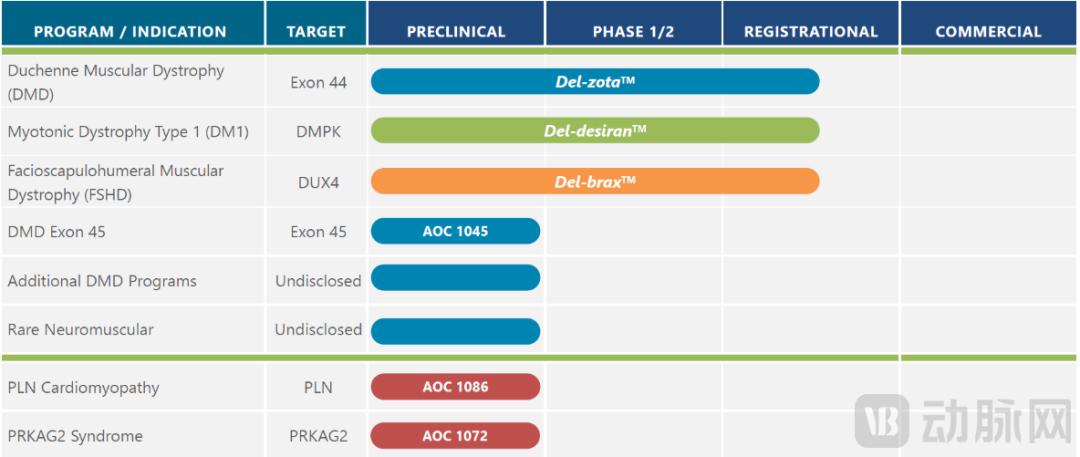
Figure 5. Avidity Biosciences' in - progress pipeline (Source: Company's official website)
Del - zota is a notable product in Avidity's pipeline. It is composed of a monoclonal antibody targeting the type 1 transferrin receptor (TfR1) conjugated to an oligonucleotide. TfR1 is highly expressed in muscle tissues. The monoclonal antibody targeting TfR1 can bind to the receptors on the surface of muscle cells, enhancing the muscle - specific delivery of oligonucleotides.
In September this year, Avidity Biosciences announced that Del - zota had obtained positive new data in the EXPLORE44 and EXPLORE44 - OLE trials. The analysis showed that Duchenne muscular dystrophy (DMD) patients who had continuously received Del - zota treatment for one year showed a reversal of disease progression in multiple functional indicators and presented "unprecedented" improvements compared with the baseline and natural course of the disease. Del - zota has been granted the breakthrough therapy designation for Duchenne muscular dystrophy patients eligible for exon 44 skipping treatment.
Not long ago, Novartis acquired Avidity Biosciences for $12 billion, setting the largest merger and acquisition case in the oligonucleotide field this year, which undoubtedly shows Novartis' great recognition of the potential of the AOC technology platform.
Currently, domestic innovative pharmaceutical companies have also started to layout in the AOC field, and many companies such as Jiajing Biotech and Youjia Biotech have stepped into this area.
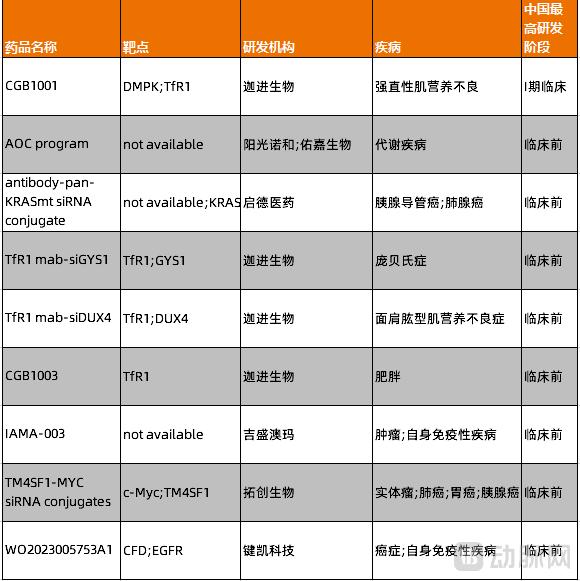
Figure 6. Pipelines of domestic innovative pharmaceutical companies in the AOC field (Source: PharmaCube)
Jiajing Biotech's CGB1001 is currently in the Phase I clinical stage in China for the treatment of patients with type 1 myotonic dystrophy (DM1). Recently, CGB1001 has been granted the orphan drug designation by the FDA and is expected to fill the domestic gap in this field.
Based on the verified GalNAc liver - targeting platform, Youjia Biotech has deeply laid out the AOC technology platform. In this technology system, antibodies are responsible for "precise positioning", and oligonucleotides undertake "targeted intervention". These two independent technologies are relatively mature; the key to determining whether a product can become a drug, its safety, and cost control lies in "connection", that is, the level of the conjugation process is directly related to the success of drug development and the clinical application value. Through its self - built site - specific conjugation platform and joint development with listed pharmaceutical companies, Youjia Biotech has promoted multiple pipelines to the pre - clinical stage and has taken the lead in achieving a full - process closed - loop from design to verification.
In addition to AOC technology, Youjia Biotech also focuses on the R & D of "dual - target - triple - target" drugs. Wang Meng, the founder and general manager, told Arterial Network that multi - target drugs need to deliver longer oligonucleotide fragments at one time, which poses extremely high requirements for the drug - loading capacity, tissue selectivity, and metabolic stability of the delivery system. For this reason, Youjia Biotech's R & D team is continuously iterating the dynamic conjugation and tissue - specific release technologies to meet the technical challenges brought by multi - target collaborative treatment.
The oligonucleotide drug field is welcoming its "golden development period". Relying on the platform - based technological advantages, Youjia Biotech has successively reached cooperation agreements with multiple listed pharmaceutical companies and biotechs to jointly promote the industrialization process of pipelines in the fields of metabolic, cardiovascular, and autoimmune diseases. The commercialization process of oligonucleotide drugs has entered a stage of full - speed acceleration.
In addition to AOC technology, other delivery platforms are also under development. To solve the problem of CNS delivery, Alnylam has developed the C16 conjugate delivery platform. The core technology of this platform, C16 delivery, is a drug delivery system that utilizes the interaction between lipid chains and cell membranes. Hexadecyl (C16) is a short lipid chain attached to siRNA. Its lipophilicity allows it to interact with cell membranes, helping the drug penetrate the blood - brain barrier or pulmonary blood vessels for precise delivery. C16 can be absorbed by a variety of cells, including cells in the central nervous system and lungs.
ALN - APP, developed based on the C16 platform, is an RNAi