Musk's rivals are really here.
At XPeng Motors' annual "Technology Day", the spotlight wasn't on the latest electric vehicles but a humanoid robot named "IRON".
It stepped onto the stage with a light and smooth "catwalk" that engineers described as "as if walking in space". He Xiaopeng, the chairman and CEO of XPeng Motors, called it the "most human - like" humanoid robot. However, within hours after the demonstration video spread across the global internet, a very different narrative began to take shape.
On social media and investment forums, comments poured in, with a surprisingly consistent core view: "It's too smooth. There must be a real person inside."
This sudden "real - person impersonation" storm and XPeng Motors' subsequent dramatic response provide us with an excellent window to not only glimpse the strategic "ambitions" of this electric vehicle manufacturer but also understand the balance among capital, technology, and trust in the trillion - dollar embodied intelligence track.
01 The "Real - Person Storm" and Market Paradox: Why Is Authenticity More Valuable Than Perfection?
For He Xiaopeng and his humanoid robot team, the public's doubts were a "bittersweet" pill.
On the one hand, the "real - person impersonation" evaluation indirectly confirmed that IRON had made amazing breakthroughs in gait simulation; on the other hand, it almost negated the team's seven - year research and development efforts.
To quell this public relations crisis, He Xiaopeng took an extremely unusual move in the history of technology releases. He released a "one - take, no - editing" video to show the details of IRON up close to distinguish the truth from falsehood.
The real value of this storm was reflected in the dramatic reaction of the capital market within the next 24 hours.
On November 5th, after the stage demonstration at the Technology Day, XPeng Motors' stock on the NASDAQ not only didn't rise but fell by more than 3%. The market interpreted it as another carefully planned "pie in the sky" or "good news exhausted". However, on November 6th, after He Xiaopeng released the one - take video aimed at "debunking the false", XPeng Motors' stock in the Hong Kong market rose sharply, soaring in the afternoon and once rising more than 6%.
Jiedian Finance believes that the market's logical chain is crystal clear. In an era when everyone is talking about large AI models, investors have become numb to gorgeous presentations and CG special effects. What they truly crave is "verifiable authenticity". It wasn't until He Xiaopeng broke the fourth wall with the most primitive and unadorned evidence that the market really began to re - evaluate XPeng Motors' engineering capabilities. In the field of embodied intelligence in 2025, verifiable "authenticity" has become a stronger market catalyst than technical parameters themselves.
So, what kind of technology is hidden beneath this controversial "shell"? If the market's reaction is the "surface", then IRON's hardware configuration is the "core" that gives XPeng Motors the confidence to place its bets.
IRON stands 178 cm tall and weighs 70 kg. Its core driving force comes from three self - developed "Turing" AI chips by XPeng, with a total computing power of up to 2,250 TOPS. This computing power level far exceeds the needs of most current smart cars and is closer to that of a mobile data center.
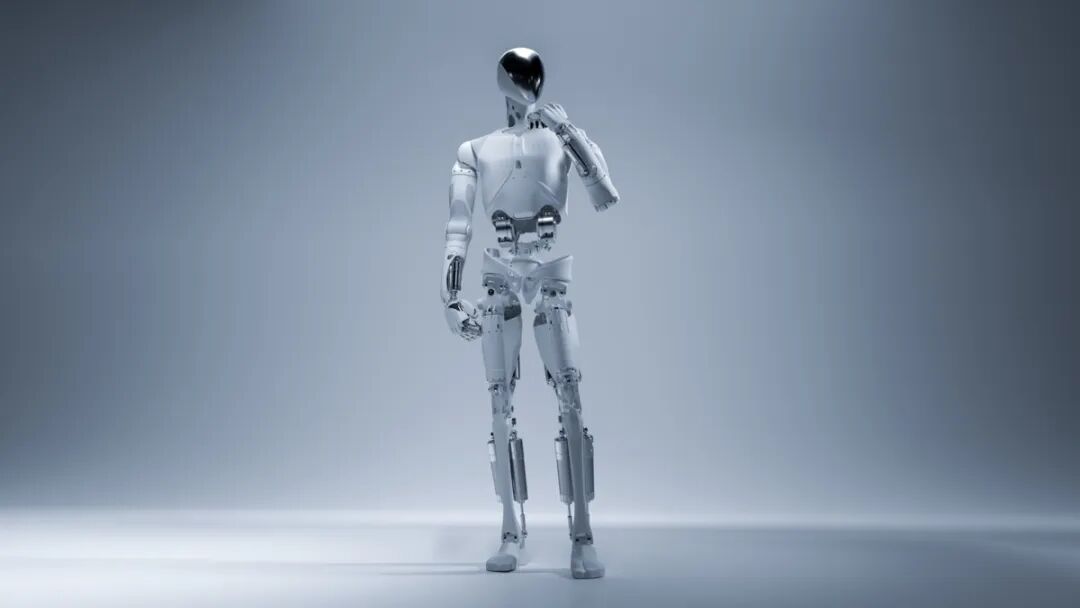
But IRON's real breakthrough lies in two key points: the power source and the design philosophy.
IRON is the first humanoid in the industry to announce the use of "all - solid - state batteries".
This is not just an iteration. The safety issues of traditional lithium - ion batteries have always been a concern. For humanoid robots operating indoors (such as in shopping malls and offices), the safety requirements are even higher than those for cars. The "extreme safety" feature, higher energy density, and lighter weight brought by all - solid - state batteries are the cornerstones for IRON to achieve flexible movement and commercial deployment. XPeng Motors has directly applied its battery technology accumulated in the electric vehicle field to humanoid robots.
IRON's design goal is to be "warmer and more intimate", so it is covered with "synthetic skin" all over.
But the most controversial part is its appearance. XPeng Motors boldly deviated from the commonly used masculine or neutral industrial design in the industry. IRON showed an obvious sense of curves and a more feminine form at the press conference, and XPeng also disclosed a more muscular "male" version.
A mechanical design practitioner told Jiedian Finance that the logic behind this so - called "extreme anthropomorphic" mechanical design is that instead of creating a machine that "almost looks like a human" and thus triggers the "uncanny valley" effect, it's better to create a humanoid robot that is "clearly a human" (including clear gender characteristics). This clear social gender coding may help humans classify it psychologically faster, thus crossing the "uncanny valley" and establishing social acceptance more quickly.
02 From a New - Energy Automobile Startup to a Global Embodied Intelligence Company
Releasing robots has never been about selling robots. This is an attempt by XPeng Motors to achieve an "identity leap".
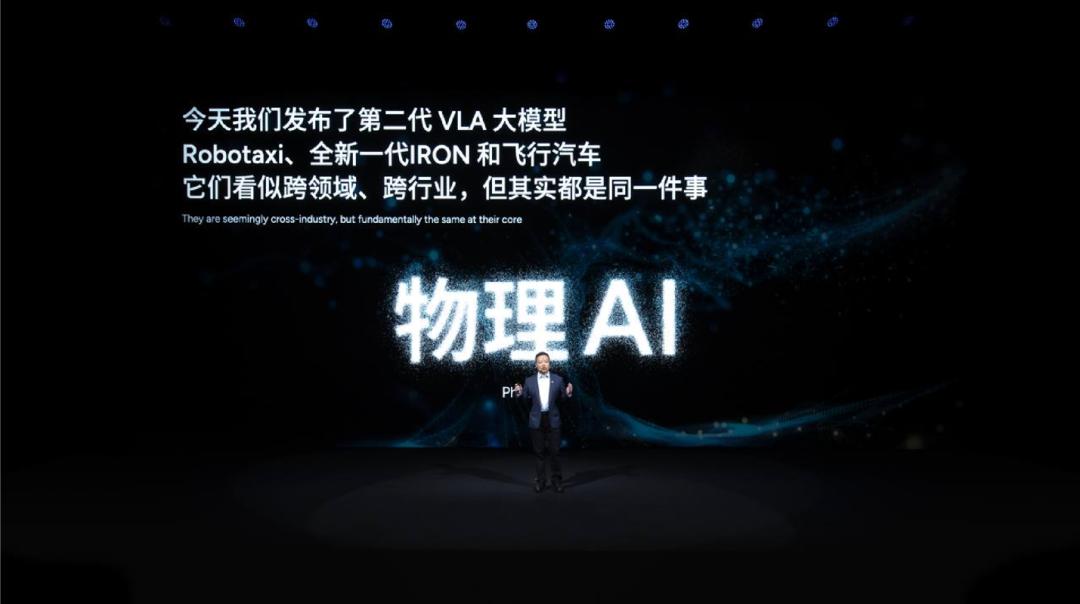
He Xiaopeng's speech clearly showed that he is following Tesla's script, redefining XPeng Motors from a "car company using AI" to an "AI company manufacturing cars, robots, and flying cars".
XPeng Motors also announced an amazing investment plan. It will invest 100 billion RMB in the humanoid robot field in the future. The real core of this investment is not IRON itself but the "brain" driving IRON - XPeng's second - generation VLA large model.
VLA 2.0 is the technological cornerstone of XPeng's entire "Physical AI" strategy. It is designed as a unified AI architecture to drive all products in the XPeng ecosystem simultaneously, including the autonomous driving assistance system of smart cars, the perception, dialogue, and action of humanoid robots, the autonomous driving and flight of flying cars, and the upcoming L4 - level autonomous driving ride - hailing services.
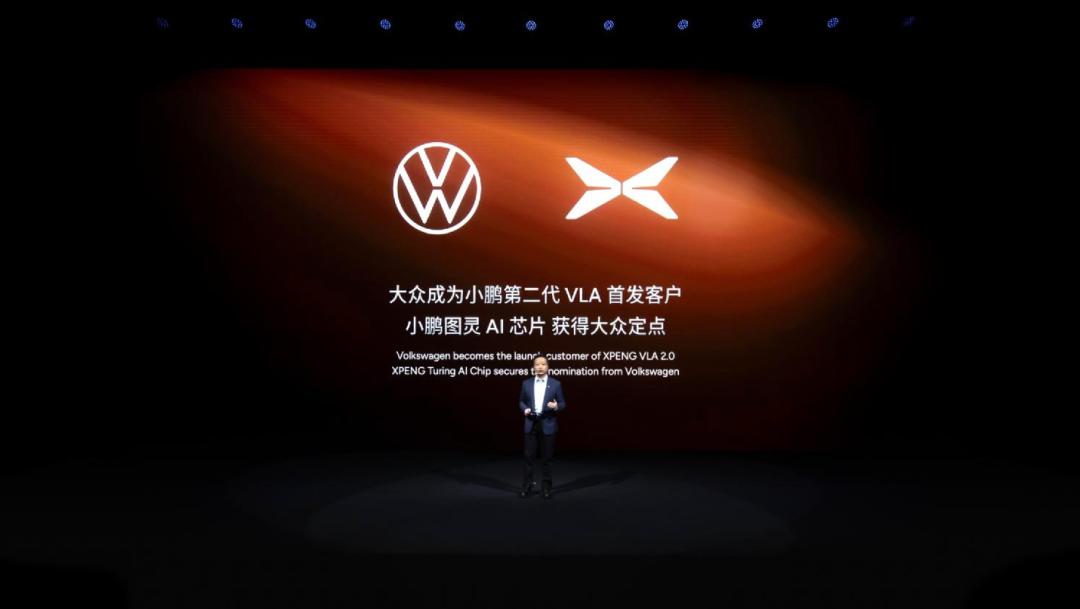
Shortly after the Technology Day, XPeng Motors' partner, Volkswagen Group, announced that it will equip its new Volkswagen - branded models to be launched in China in 2026 with XPeng Motors' Turing AI chips and the driving assistance system driven by VLA 2.0.
Jiedian Finance analyzes that the significance of this deal is extremely significant. It not only verifies this core driving technology at the technical level but also, at the commercial level, XPeng's "Physical AI" strategy has received commercial endorsement from a global top - tier automobile giant. It also makes XPeng Motors' future value not limited to the C - end but also lies in the B - end - selling its verified technical models and chips to other traditional manufacturers.
03 The Track Choice for Humanoid Robots: Why Not Do Housework or Enter Factories?
The humanoid robot track is becoming more crowded than ever.
The track is filled with giants. Tesla's Optimus is being tested in factories; UBTECH, the "first humanoid robot stock" in China, has sent its Walker S robot to "intern" in an automobile factory; even XPeng's competitor, Li Auto, established a humanoid robot department in June.
However, He Xiaopeng publicly "went against the grain". He clearly stated that it is "still not the best application scenario" for humanoid robots to enter factories to "tighten screws" or enter households to do housework at this stage.
He Xiaopeng's logic is very practical, pointing directly at the core pain point of current humanoid robots - the hands.
He explained at the Technology Day that in the factory scenario, the dexterous hands of humanoid robots are the most expensive and easily worn - out components. Tests have found that when performing repetitive industrial tasks such as tightening screws, the mechanical hands wear out extremely quickly. "The manufacturing cost of a humanoid robot's hand is very high, equivalent to the cost of hiring a worker for several years." Economically, it doesn't make sense at all. In the household scenario, the biggest challenge is safety. The unstructured and unpredictable nature of the household environment far exceeds that of a factory, and any mistake could be catastrophic.
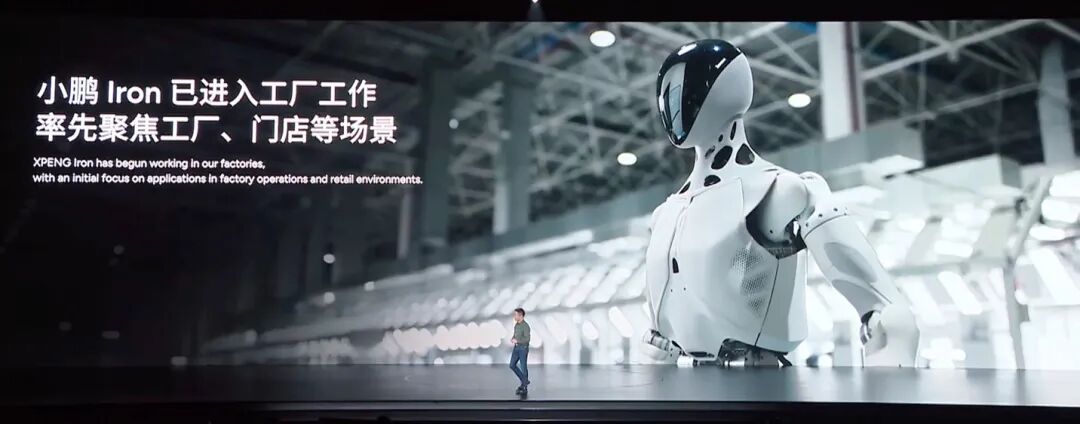
Based on this judgment, XPeng Motors has chosen an extremely shrewd "minimum viable market" for IRON, giving priority to entering commercial service scenarios, such as serving as receptionists, tour guides, personal shopping assistants, etc. For example, it plans to let IRON enter XPeng Motors' offline stores in 2026 to undertake explanation and service work.
In addition, XPeng announced that Baosteel will become its ecological partner, but IRON's task is not to tighten screws but to explore applications such as inspection in complex industrial environments.
Jiedian Finance believes that whether it's being a receptionist or an inspector, the core value of these tasks lies in the visual perception, navigation, and interaction capabilities of VLA 2.0 behind them, as well as the affinity brought by the extreme anthropomorphic design. These tasks hardly require complex and high - intensity "two - hand" operations. This means that XPeng Motors can skillfully bypass the most expensive and difficult - to - solve problems of dexterous hands and force feedback in the entire industry and take a path with lower risk, more controllable cost, and faster speed to achieve commercialization first.
04 Is the Automobile Industry "Surrounding" Embodied Intelligence?
XPeng's IRON robot is just the tip of the iceberg.
Recently, many automobile companies such as GAC Group, BYD, Leapmotor, Geely, SAIC, and BAIC have accelerated their layout in the humanoid robot track through independent research and development or strategic cooperation. This cross - border move is not simply diversified business operation but a profound "great convergence" driven by technology and the market.
Jiedian Finance believes that the reason why automobile companies are flocking to the embodied intelligence track is the inevitable result of three driving forces: technological homology, internal demand, and capital narrative.
First of all, automobile companies' layout of humanoid robots doesn't start from scratch but is a natural extension of their core technology stack. There is a high degree of commonality in the underlying technology between humanoid robots and autonomous driving cars. Secondly, automobile companies are not only the manufacturers of robots but also their largest potential customers and perfect test fields. Automobile factories are regarded as the scenarios where humanoid robots may be deployed first. In addition, by deploying robots in their own factories, automobile companies can create a closed, efficient, and low - risk data flywheel, which is an advantage that pure robot companies can hardly match. Moreover, intelligent connected cars with artificial intelligence as the core have become a key variable related to the survival and development of enterprises, and naturally, it is also the new story that investors are most interested in.
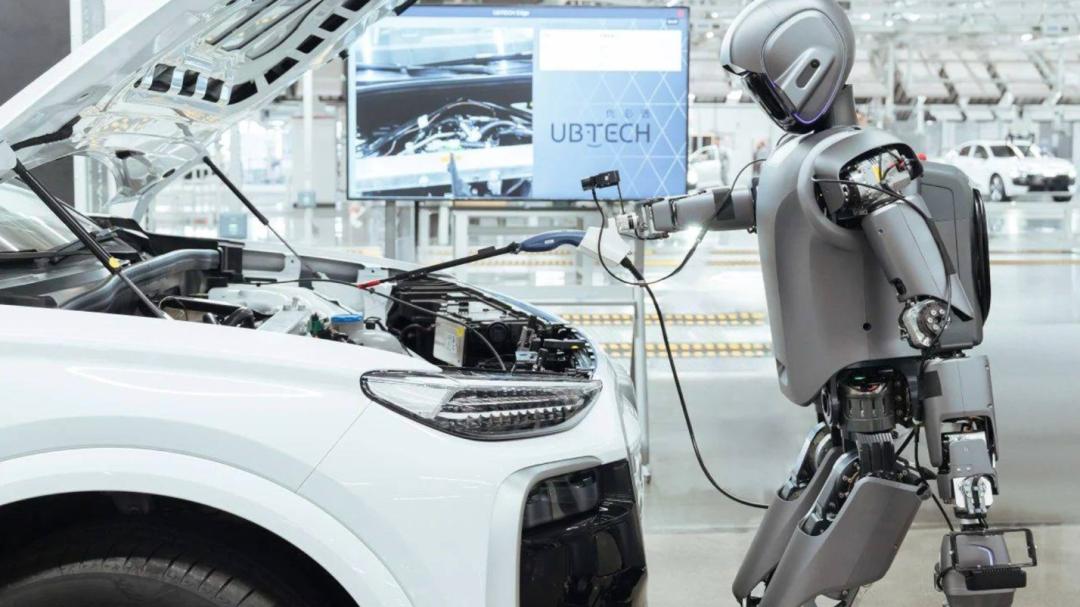
The automobile companies' huge investment in this field is not just for the automation of production lines but for a more far - reaching business transformation.
One is the self - iterative automated production line. In this process, humanoid robots are not only productive forces but also the "mother machines" of productive forces. They assemble cars in factories and may also maintain, repair, or even manufacture other robots in the future, thus building a virtuous production cycle.
Secondly, in the long run, the goal is to become an AI platform service provider in the "physical world", packaging the "AI brains" verified in autonomous driving and robots into services and licensing them to industries such as logistics, retail, healthcare, and third - party manufacturing that need physical intelligent agents.
Thirdly, it is a strategic narrative for the capital market. As analysts from Morgan Stanley predict, the potential value of the humanoid robot market is as high as 5 trillion US dollars. By entering the embodied intelligence track high - profile, automobile companies clearly convey a message to investors that their target market has expanded by at least two to three times, which provides reasonable valuation support for their continuous huge investment in research and development.
05 Conclusion
The year 2026 is becoming the first key node for the industry to "deliver". For XPeng Motors, this is the ultimate test of its "self - identity". For the entire industry, this is the turning point from "promising the moon" to "making profits".
The dramatic reaction of the market to the "real - person storm" of XPeng's IRON robot has sounded the alarm for all players. The patience of capital is running out, and gorgeous presentations are no longer valuable. In the next 18 to 24 months, the focus of competition will quickly shift from "whose demonstration is smoother" to "who can achieve verifiable large - scale deployment first" and "who can run through the commercial closed - loop first".
Whether IRON's career as a "receptionist" is successful or not, it has completed its historical mission. It has forced the market to re - examine XPeng's AI capabilities. Now, the only remaining task for all automobile companies that have entered the field is to prove that this seemingly "too good to be true" technology can also bring real profits.
This article is from the WeChat official account "Jiedian Finance" (ID: jiedian2018), author: Wang Haochun, published by 36Kr with authorization.